Hello and welcome back to my character-creation marathon. This week we’re going to create a Klutz, a seemingly regular woman who happens to actually be a very small Giant (who still breaks things as easily as a normal-sized Giant, because the world is unfair like that). Now, I feel like my offerings so far have been a little pedestrian – a timid nerd Creep and a skeevy lawyer Jerkass is honestly playing it very close to type. The two-fisted occult investigator Hoarder was a little better, but still… let’s try to do something different with our Klutz than “well-meaning guy who keeps knocking things over.”
So here’s my idea: instead of being awkward and ungainly, this character actually breaks a lot of things by accident precisely because she’s always rushing around and indulging her need for speed. She loves fast cars, and she considers speed limits to be timid suggestions at best. Let’s call her Zelda Zoom.
Driving, in Monstrous Mishaps, is handled by an Ability called Joyriding. Joyriding is a Derived Ability – you don’t put points in it, you calculate it as the average of two other, Primary Abilities, in this case Fitness (for the reflexes and sheer ruggedness required to operate high-powered vehicles) and Nerdery (for knowing how an engine works). Thus, we’ll start Zelda off with Basic (4) Fitness and Basic (4) Nerdery so she can stay on the road at least some of the time.
Continuing with the theme of a woman who’d fit right into Mad Max, we’ll give her Limited (3) Camping, and of course she’ll need Limited (3) Grit to dare to push the pedal to the metal. We’ll round it out with Limited (2) Keenness to look where she’s going (when she remembers) and Limited (2) Paperpushing to fill out all those insurance forms.
I figure that Zelda was darting around on her tricycle as soon as she was old enough to stand, so we’ll give her Metabolism of a Hummingbird for childhood. In school, she was actually kind of popular as a tough biker chick (a Cool Kid), and these days she’s a mechanic (a Technical Type) to be close to the beautiful engines. That bumps her Nerdery and Fitness up to Basic (5) and her Schmoozing up to Limited (2). Finally, her Breed Abilities as a Klutz are Nerdery and Fitness, so they get further increased to Basic (6).
For Dooms, we’ll take Basic (4) Titan’s Prowess – Zelda will need the Made of Iron Basic power from that Doom to give herself some extra resilience for all those crashes. That means that she has Basic (4) Pretension, meaning a solid amount of respect from her fellow Monsters, but Limited (2) Respectability since the repair bills are really doing a number on her bank account.
For Values, we’ll give her Excellence (she does so love a good race!) and Innovation (you can’t know that this shortcut doesn’t work until you’ve tried it…). All in all, Zelda ends up looking like this:
ZELDA ZOOM
Breed: Klutz
Childhood: Metabolism of a Hummingbird Adolescence: Cool Kid Adulthood: Technical Type
For Zelda’s first Friend, we’ll create someone who’s equally invested in speed and vigour, though in her case it translates into a fanatical devotion to the local woman’s curling team. Call her Olive Oatley. We’ll give her the Sportsfan Stereotype, the Out to Get Me Problem (the fans of rival teams don’t appreciate her heckling) and the Crackpot Discord (… nor does much of anyone appreciate her sacrificing black hens on the curling court to ensure home team victory).
ZELDA’S FRIEND #1: OLIVE OATLEY
Zelda and Olive met on the curling team in high school and immediately hit it off. However, while Zelda likes the sport, for Olive it’s an all-consuming passion, and she’s in a state of holy war with anyone rooting for any team but the one she coaches. As many people whose happiness is tied up with something they have no reasonable way of controlling, Olive also holds to a startling number of private superstitions (that have little to nothing to do with the sort of magic that actually does exist in Monster World).
Stereotype: Sportsfan Problem: Out to Get Me Discord: Crackpot
For Zelda’s second Friend, let’s shake things up a little and make him a fellow Monsters… and for that matter, let’s make him Zelda’s love interest. Friends aren’t necessarily platonic, after all – they can be significant others or even family members, the important thing is that the character wants to stay on good terms with them and that that is sometimes difficult.
We’ll call Zelda’s fellah Gabe Gawdhelpme and make him a Pushover – that is to say, a Werewolf, but one with a tendency to be super-timid and over-eager to please. Let’s give him the Romantic Stereotype, and the Bullied Problem and the The Ball and Chain Discord to represent the troubles the happy couple are facing.
ZELDA’S FRIEND #2: GABE GAWDHELPME
Gabe is Zelda’s on-again, off-again boyfriend. The reason for their rocky path has less to do with Gabe’s personality, which is agreeable to a fault, than with his mother, Gladys Gawdhelpme, and her intense resistance to Gabe doing anything but taking care of her in her old age. Gabe, desperately eager to please both his mother and his girlfriend, keeps drifting out of Zelda’s orbit whenever his mother is especially demanding, only to come slinking back when he spots an opening.
Stereotype: Romantic Problem: Bullied Discord: The Ball and Chain
Since one of Zelda’s Friends is a Monster, let’s further break with standard practice and make her Rival a standard vanilla human. We haven’t used the Parasite Approach or the Familial Feud yet, so let’s go with those, and add the Good Times Redemption for some residual feelings of kinship.
ZELDA’S RIVAL: ZACHARY ZOOM
Zelda’s lazy good-for-nothing brother doesn’t hold any animosity for her, honestly. It’s just that her frequent car crashes and similar disasters is all that distracts their parents – of whom he is dependent for his standard of living – from his disasters. As such, he is all too happy to bring attention to whatever Zelda has done wrong this time, all to get himself another few months of respite.
Approach: Parasite Feud: Familial Redemption: Good Times
Finally, for an Enemy, we won’t do anything fancy. Reversing Zelda’s stats gives us a characters who’s big on keeping her eyes on stuff (since Keenness is opposed to Fitness, one of Zelda’s strong suits), so let’s go with that and give our speed demon a stern, finger-wagging disapprover: a Muckraker, which is a sort of Slayer who’s a natural moral guardian and busybody.
ZELDA’S ENEMY: EDITH CLEBB
Senior citizen Edith lives down the street from Zelda and was Called as a Slayer after being woken up from her midday nap by screeching tires one time too many. Now she’s determined to warn the entire neighbourhood about how this maniac is endangering their children and pets. Which… is perfectly fair, to be honest. Hey, Slayers are the antagonists of the game, but that doesn’t mean they’re always wrong…
Special Abilities: Basic (5) Calling, Basic (5) Respectability
Pools: HP 7, GP 1, SP 3, BP 5
So that’s it! We’re two thirds of the way through now, leaving only our Moocher (commonly known as a Vampire) and our Loudmouth (politely identified as a Harpy). We’ll do the latter next – I think I’m going to make him the world’s biggest, meanest nurse…
Continuing our wallowing in nostalgia, this time we’re going back to 1984. In more than one way, as it happens – because we’re going to be looking at Paranoia!
Yes, Paranoia, to this day the world’s premier comedy roleplaying game! It’s got a special place in my heart, in fact, since lazily snarking at stuff is my default mode of commentary, and Paranoia is written entirely in that tone. In fact, I wouldn’t wonder if I didn’t semi-consciously imitate it for a lot of sections in Monstrous Mishaps. It’s honestly a bit odd that not more games lean into the ridiculousness that always seems to creep into roleplaying, no matter how straight-faced it tries to be; let’s face it, when you have half a dozen players who are barely paying attention to what the GM is saying and whose most immediately accessible mechanic is rolling attack, things are always going to be primed for farce.
The game came in a box, because again, we’re in The Before Times here, and games always came in a box with a few pamphlet-sized books in it. Possibly by the time the 90s rolled around, it was realised that the GM might need something heavy and sturdy to hit players over the head with if they got rowdy? But regardless, the books presented here are the Player’s Handbook, the Gamemaster’s Handbook, and the Adventure Handbook.
PLAYER’S HANDBOOK
Straight off the bat, we’re introduced to Alpha Complex, a massive underground bunker existing after some vaguely defined disaster, where a population of survivors endure under the guidance of a deranged Computer. People are no longer born, they are vat-grown in batches of six identical clones, and once they’re old enough to work they are assigned a colour-coded security clearance from INFRARED (black), through RED, ORANGE, YELLOW, GREEN, BLUE to ULTRAVIOLET (white). Any and all information is available only if you meet its security clearance, and knowing too much is treason. All equipment and vehicles, likewise, are painted in the colour of its minimal security clearance, and using (or wearing) something beyond your clearance is treason.
Treason abounds just generally. Some people have hidden mutations, which is treason (did the Computer say you could diverge from the regulated human genome?!). Some people are members of secret societies, which is treason. A nefarious force known as “the commies” is constantly scheming to overthrow the Computer, and lending them any sort of aid and comfort is definitely treason.
The Computer employs special agents called troubleshooters for odd jobs. Troubleshooters are sent at intractable problems and frequently get shot full of holes in the line of duty. Nonetheless, it’s a great honour to be a troubleshooter. The Computer says so, and disagreeing with the Computer is treason. The PCs, needless to say, are going to be troubleshooters. They are also going to be mutants and members of secret societies. This will make their lives very interesting, and probably quite short.
We’re given a brief example of play, which includes the players shooting a squirrel on the assumption that it’s an alien invader (knowledge of anything outside of Alpha Complex is treasonous, you see) and we’re informed of three ways that this game differs from those: firstly, it’s comedic, secondly, the other players are not on your side and in fact probably more dangerous to you than the NPCs, and thirdly, you have five “spare characters” in the form of your character’s clones that means that getting killed isn’t quite so much of a big deal.
Character creation involves rolling a bunch of stats, your Service Group (basically your day job – none of them are all that interesting), your mutation and secret society, and then putting some points into your skills. Stats are your basic ones: Strength, Resilience, Dexterity, Agility, Moxie (intelligence… but this being Paranoia, it’s more like low cunning) and Chutzpah (effectively charisma, but technically more like shamelessness). Skills have an interesting system whereby the first few points you put into them go into increasingly narrow categories before you reach the point where you have skills like “laser pistols” or “fishing.” That’s nicely realistic, in a way that is admittedly probably wasted on this game.
Speaking of fishing, a lot of these are outdoor-survival type skills, actually. I guess getting sent “Outside” and having to scramble to survive in an inhospitable environment without any training was intended as a frequent occurrence?
You make skill rolls by rolling under a percentage with a d100. You can also make straight stat roll, in which case you roll a number of d10s depending on the difficulty and try to roll under a target number. Seems like there was no need for two different mechanics there, but okay. Certain stats also give you bonuses or penalties to certain groups of skills.
Character can acquire five kinds of points over the course of play: skill points that they can invest in more skills, credits that they can use to buy stuff in the limited market economy of Alpha Complex (and in the more extensive black market), commendation points that lets them get closer to a higher security clearance, treason points that lets them get closer to getting put in front of a firing squad, and secret society points that lets them aspire to higher rank within their secret society. The player is not informed when they gain any of the last three kinds.
Before every mission, the players will be given their official orders from the Computer. Each player will also be given secret orders from their secret society, which will likely contradict the official orders. They will also be assigned their equipment. This equipment will often be experimental, faulty, or something entirely different from what it says on the box. Losing or damaging equipment is treason.
The players may be assigned robot helpers, in which case one of the players will be their operator and they won’t take orders from anyone else. The operator can assign an “heir” who’ll take over as operator in case of their demise. This will give the replacement even more reason to accidentally-on-purpose push them over a cliff. However, if the mission failed because the operator didn’t assign a replacement and then got killed, he will be guilty of treason (which doesn’t sound like a big deal given that he’s dead, but his next clone will get treason points for being related to such a vile saboteur!).
The Gamemaster’s Handbook is forbidden for players to read. This is not to say that they shouldn’t, but if they admit to having read it, or show signs of knowing what’s in it, their characters will get assigned treason points for it.
The book wraps with a choose-your-own-adventure segment. Heh. I miss those. Guess we won’t be seeing them ever again, now that video games have gotten able to do the same thing only better. Ah well. Anyway, here it’s a fun way to give a taste for how the game might run. Also, I totally managed to get brownie points from my secret society for killing a guy and also turn in my other teammate for killing him, so that was fun. I got a treason point for asking how my gun worked, though. Apparently that showed a suspicious interest into classified information.
GAMEMASTER’S HANDBOOK
In this book, we get something more like the real score. Turns out, Alpha Complex started out as one of many bunkers built to survive an asteroid impact, but the asteroid’s actual impact confused the Computer responsible for ensuring its safety and made it default to some very old legacy code. These antiquated data banks gave it the impression that it was under attack by “the commies,” whoever those were. It desperately tried to warn all the other Computers running all the other bunkers, but they soon started bickering among themselves and ended up certain that everyone had been co-opted by the commies but them. The result? A hundred different Alpha Complexes, run by a hundred different Computers, all considering themselves at war with each other and all certain that enemy infiltrators are everywhere.
The interesting part here is that there is explicitly more than one Alpha Complex, which I don’t remember as being the case from later books. I think the idea here is that you can blow up one of them and then set the next time in another one without skipping a beat, and that you can change whatever you like from one campaign to the next since it can be set in a similar-but-differing-in-detail complex next door. I think the game eventually decided that it didn’t really need an excuse to have no serious continuity, though.
Clones in Alpha Complex are kept asexual by a drug regimen, and indeed have no idea that sexual reproduction is even a thing – again, new citizens are grown in vats. In fact, everyone is just generally drugged to the gills all the time, all the better to keep them happy (or at least happy-looking enough not to be executed for being treasonably morose).
Living quarters range from barracks where INFRARED citizens live, to dorm rooms for RED to ORANGE citizens, to personal cubicles for YELLOW and then increasingly snazzy digs as a citizen climbs the ladder. The Computer has cameras everywhere (whether they work or not is another issue). Food is algae-based and served in communal cafeterias, with “real” food being available only to high-ranking citizens or through the black market. Personal possessions are limited for most citizens; you can carry all your worldly goods around with you without problem (so much like an adventurer, then).
ULTRAVIOLET citizens are known as High Programmers. They are allowed to actually edit the Computer’s code, so technically they could fix the whole mess if they wanted to… but of course they’re every bit as inept and deranged as everyone else in Alpha Complex, so most of their edits are in pursuit of their own selfish, short-term goals and only manage to create more and more contradictions and inefficiencies to make the Computer even crazier and more erratic.
Next up, stats and skills get detailed a bit more. I’ll note that social skills include such items as bootlicking, con, fast-talk and spurious logic (the latter of which is the only social skill that works on robots). There are also a lot of skills for repairing or modifying equipment (the latter is, of course, treason). You end up with a pretty good idea of what you’re going to be doing, I think.
I do feel that the rules are, again, kind of crunchy and nitpicky for a game that runs mostly on rule-of-funny. I think later editions streamlined things considerably – when your chance to succeed at most things is going to be, approximately, “a snowball’s in hell,” remembering whether to add a +5% to it seems like more trouble than it’s worth.
One skill that stands out is Communist Propaganda, which is kind of like a mental virus. See, if you successfully spout Communist Propaganda at someone, you have a chance to inflicting a few points in the same skill on him… so now he’s a traitor by definition and you can blackmail him. Of course, if it doesn’t “take” then he absolutely knows that you’re a traitor and he will probably turn you in to be executed. Fine times.
The combat section starts with the declaration that Paranoia combat is intentionally simple and streamlined for easier fun! Then it goes on for ten pages of modifiers and weapon types and cover and stun and… uff. Okay, what they mean with it being simpler seems to just be that the damage system is simplified. Rather than having to count hit points, you just note your current state of being. An attack can merely stun you, it can inflict a wound, it can incapacitate you, it can kill you, or it can vaporise you (the difference between the last two being, in the former case reccussitation might be possible. In the latter… not so much).
Different kinds of armour reduce the impact of different kinds of weapons by such-and-such amount. Of particular note is reflec armour, which protects against laser… but only if the armour is partly made from a colour that’s the same as the laser’s. Remember how lower-clearance citizens can’t wear anything of a colour above their own rating? Yeah, turns out that socio-economic boundaries determine how zappable you are.
There are instructions for what happens when you die and one of your backup clones get activated, which all seems a little overly complicated and involves redistributing some skill points and making other adjustments. All very realistic within the premise of the game, but… again again, it seems to halfway ruin the whole point of having clones in the first place, since it means you still have to do some of the work of creating a new character. Again something that I think later editions dropped.
If your treason points rise too high above your commendation points, the Computer will try to execute you! You can attempt to run away and flee from Alpha Complex, but of course even if you succeed that clone is out of the game for good. However, your next clone will get a nice boost to his secret society rank, since he’s related to a hero of the resistance who the Computer could not catch.
Paranoia has insanity rules. Okay, that’s a bit unexpected. They’re not especially well-defined, though; mostly, you have to roll when the GM thinks you’ve had a serious shock, but it can’t be every time you have a serious shock, so… just when the GM feels like maybe having you temporarily cuckoo, I guess? It’s temporary, though; the Computer may be nuts itself, but it’s apparently quite good at getting troubleshooters back into some kind of working order through liberal applications of psychopharmaca.
The mutations get listed… yeah, they weren’t listed in the player’s section except by name. What, you expect to know how your own mutations work? That’s the sort of thing only a commie mutant traitor would know! Take a treason point for even contemplating it! Anyway, mutations strike a balance of being decidedly unimpressive and with a lot of inconvenient caveats while at the same time being soooooort of useful with some creativity. Which tends to be how most RPG powers are, but here it’s presumably intentional. There are things like super-senses, pyrokinesis, mind-reading, the ability to eat and digest any sort of organic matter no matter how tough or toxic.
Secret societies! There are a bunch, and they’re set up to be at each other’s throats far more than they manage to be at the Computer’s. There are hyper-capitalists, machine worshipers, nature nuts (who have only the vaguest idea of what “nature” is, since they’ve never actually been Outside), mutant supremacists, and of course a few who just want to smash things up in interesting ways. Not all secret societies are even anti-Computer, per se – there is even one that worships it as a god. Membership in those is still treason since it’s unsanctioned, but you won’t get executed if you’re found out to be a member. Instead, your superiors will just file it away for if they ever feel like executing you for some unrelated reason and need an excuse. Stalin would be so proud.
There is a section of GMing advice, which is basically to do a lot of things that would make you a bad GM in other games. None of that “remember, you’re not the players’ enemy” here – you are absolutely supposed to be out to get the players and screw them over in every inventive way you can think of. In particular, you know how it’s usually best practice to set the players up and make sure they understand the situation, and interpret their actions in light of the fact that their characters are competent and non-suicidal? Yeah, we don’t do that here. The player characters are ignorant, frantic, drugged up, and the products of a dysfunctional society where everyone works at cross purpose. When they try to do anything the least bit complicated, you should demand specifics of their approach. And if they ask someone for help, then so sorry, but that information is not available at their security clearance.
Still, you are cautioned to not go too far with it. The players should usually have a chance to pull off some kind of win, just an exceedingly slim one.
It is suggested that inspiration from Paranoia scenarios can come from five genres: detective mysteries, spy thrillers, war stories, future sci-fi, and post-apocalyptic sci-fi. Hmm, okay. I suppose I can see what they mean, but coming up with scenarios for this game strikes me as the hardest part – there is only so many directions you can take a setting that’s mostly a bunch of guys in identical overalls running around a bunch of sterile steel tunnels. That said, the sheer amount of scenarios that have been published for the game suggests it is possible to stretch it pretty far, even if I understand that the writers got sort of desperate during the late second edition…
ADVENTURE HANDBOOK
The adventure handbook, finally, starts off with a long equipment section. This game really does love its freaky high-tech toys, even if it also loves to have them malfunction. There are a ton of weapons, vehicles and bots, and rules for how to include them in combat. Like in most games, it leaves me sort of cold.
Then follows the sample adventure, Destination: CBI Sector. In it, a bunch of pre-gen characters of RED clearance are sent to an abandoned part of Alpha Complex to retrieve a missing robot. Each one, of course, also has been fed some disturbing rumours (accurate and otherwise) about the others and have their own agendas from their secret societies. They are sent along with a powerful NPC who is fully intending to get them killed along the way so they can’t rat him out for not having any intention of going through with the mission.
The mission, even aside from that, is probably impossible. It involves dealing with a rogue High Programmer turned cyborg overlord who has fortified CBI Sector to the teeth. There will be killer robots every step of the way. The players are walking into a near-guaranteed TPK. So… again, pretty much par for the course, as introductionary adventures go, except here it’s probably intentional.
Still, while I appreciate the honesty in admitting that the players aren’t supposed to get very far… I do feel like running the game that way would be kind of unsatisfying for the GM? I mean, if the players don’t get to the end, you don’t get to show them the cool stuff you’ve prepared. Or, in this game, the funny slapstick stuff you’ve prepared. It means they’ll miss the joke. That seems like a shame.
Still, I guess that’s a nitpick. The only other comment I have is that the villain, Menlo, stands out for being actually competent and terrifying. I think he might have been the first and last Paranoia villain who was played straight – in every other product I’ve seen, the bad guys are as hapless and fundamentally screwed as the players.
FINAL THOUGHTS
Honestly? Paranoia is probably not my cup of tea, at the end of the day. I’m too soft-hearted to really try to hurt my players, and I’m just not interested enough in the sort of sci-fi that the game parodies – gear porn tends to bore me, and you can’t properly appreciate a parody of something you don’t like on at least some level. Likewise, while I appreciate that the game proves that you can take a fairly limited premise and make a lot out of it, I feel like I’d get bored with Alpha Complex pretty soon. I prefer a setting that’s not quite such a challenge to put some variety in.
Still, it’s certainly fun to read, and I do appreciate it in concept.
Welcome back to my efforts to create pregens for the quickstart adventure of my upcoming game, Monstrous Mishaps! This week, we will be creating a Jerkass, also known as a Demon – a creature of the nethermost pit, or at least someone who has a major stick up his own nethers. We’ll call him Joachim Yapper.
Being a lawyer, Joachin of course needs Basic (4) Paperpushing (to know all the interesting legal loopholes) and Basic (4) Dramatics (to engage in courtroom theatrics in best Ally McBeal tradition). He’ll also need a strong will and at least some people skills to win arguments, so let’s give him Limited (3) Grit and Schmoozing. Finally, we’ll give him Limited (2) Mindgames to be a better liar, and Limited (2) Asskicking to defend himself against irate defendants. Being a Demon bumps his Paperpushing up to Basic (5) – they’re good at writing watertight contracts – and his Weirdness up to Limited (2).
I figure that Joachim learned at an early age that he could get most anything if he just yelled loudly enough, so he’s got the Tantrum Thrower childhood. In school that strategy didn’t work out so well but made him a Bully Victim, and of course these days he’s an lawyer, which counts as a sort of Bureaucrat. That puts his Dramatics up to Basic (5), his Hiding up to Limited (2), and his Paperpushing up to Basic (6).
Joachim is nothing if not hard-working, even if the things he’s working at are less than admirable, so he’s got the Value of Stoicism. He’s also mentally flexible and admire ambition, so he has Innovation. Finally, he’s actually devoted to the idea of people getting what’s coming to them – it’s just that his idea of what they’ve got coming to them depends mostly on whether they annoy him or not. He’s thus got the Justice Value.
Being a well-educated professional, however skeevy, he should probably have a decent amount of Respectability, and I don’t think he actually depends that much on magic – he works within the system, such as it is. Thus, we’ll just give him the bare minimum of Minimal (1) Devil’s Craft, which gives him Minimal (1) Pretension and Basic (5) Respectability.
For Joachim’s first Friend, I feel like I want to create his complete opposite. So let’s maker her a nun, why not? I’ll give her the Stereotype of Goodie-Two-Shoes, the Problem of One Born Every Minute (the downside of seeing the good in everyone being that sometimes you see it even if it isn’t there…) and the Discord of Religion and Politics.
JOACHIM’S FRIEND #1: SISTER AGNETA
A nun at the local convent, Sister Agneta has seized upon Joachim and determined to save his sinful soul, much to the annoyance of Joachim, who likes his sinful soul the way it is. However, he can’t entirely deny that it’s a strange and not-unpleasant sensation to have someone think well of him, even if Sister Agneta tends to think well of anyone and everyone, including convicted axe murderers. Joachim spends surprising effort on the twin tasks of not disappointing Agneta too much, and keeping her from being taken in by someone who’s an even more unscrupulous bastard than he is.
Stereotype: Goodie-Two-Shoes Problem: One Born Every Minute Discord: Religion and Politics
For the second Friend, let’s go to the other extreme and create someone who’s so skuzzy that even Joachim feels the need to reign him in sometimes. We’ll go all out with the Stereotype of Cynic, the Problem of Despised, and the Discord of Unwholesome Habits.
JOACHIM’S FRIEND #2: HERB BITTERMAN
One of Joachim’s frequent clients, Herb has long since given up on being the least bit respectable or liked, which makes him one of the few people who’ll hang out with Joachim voluntarily. Even so, Herb’s determination to commit every misdemeanour and petty felony in the book can conflict with Joachim’s admittedly-self-serving sense of justice. Still, it does mean that he keeps being in the market for a cheap public defender.
For a Rival, let’s create a competing attorney who’s the opposite of Joachim’s free-wheeling approach to the law, someone who’s so dry that he crackles when he turns around too quickly. We’ll give him the Approach of Spoilsport, the Feud of Professional, and the Redemption of Professionalism (though it’s less than obvious that Joachim himself sees that as any sort of redeeming feature!).
JOACHIM’S RIVAL: BONEFATIUS HARRIS
Joachim’s greatest professional adversary, Bonefatius works for the rival law firm of DeSieve, Connive, Bamm-Boozle & Harris. Frequently hired by the more upscale people who Joachim’s clients hire him to sue, he has made it his life’s mission to tangle Joachim up in as many obscure bylaws and precedents as possible – whatever it takes to slow down his antics.
Approach: Spoilsport Feud: Professional Redemption: Professionalism
And finally, as usual we turn Joachim’s stats inside-out to get our Enemy. Given Joachim’s leanings, I think the only proper Legend for his arch-enemy is that of Lout – a Conan Barbarian wannabe who despises the civilised trappings that Joachim is shamelessly exploiting.
JOACHIM’S ENEMY: SIEGWARD TROUT
A few years ago, Joachim sued local gentleman-about-town Siegward for scowling at his dinner, thus causing untold anguish to the cook. The shameless display of jury manipulation and disregard for the spirit of the law so infuriated Siegward that he was Called as a Slayer and has since then devoted himself to bringing down Joachim’s evil empire (or at least his struggling one-man law firm). Distrusting all that is legal or bureaucratic, he lives alone in his crumbling house and has been known to fly into a rage at the sight of people bearing papers, which has not made him popular with the mailman.
Special Abilities: Basic (4) Calling, Basic (6) Respectability
Pools: HP 6 (+4 from Calling), GP 1, SP 2 (+4 from Calling), BP 6
So, that brings us midway through our character-creation marathon. I should probably start thinking about how the remaining characters can fill out holes in the roster. So far, we’ve got a timid geek, an over-zealous occult investigator, and a fiendish lawyer. Next time, we’ll be creating the Klutz, the character who’ll normally serve the role of the big guy of the group. Let’s see if we can think of something interesting for them…
For some reason I took to rereading The Suethulhu Files this week. Much like The Binder of Shame, it’s the sort of trainwreck that just endlessly amuses the geeky mind. But I have to admit that the years have changed my view on it a bit over the years. These days, I’d describe it like this:
It’s the story of how the worst kind of GM runs a game for the worst kind of player in the worst kind of setting, and how it drives both of them crazy.
Now, the first and the last part of that is simply the text as written. The GM (referred to as “Marty”) does just about every single thing that GMs ought not to but that most GMs invariably end up doing when first starting out. He not only railroads, but railroads ineptly, creating scenarios that are ridiculously fragile and kept together solely by GM fiat. He takes everything personally and uses his control over the world to stomp down on anyone he doesn’t like. He is firmly opposed to the players actually doing stuff, seeing their role as just fawning over the majestic awesomeness of his settings and his NPCs. And he thinks he’s much, much smarter than he actually is.
And the setting… well, it’s CthulhuTech, which may just be the gold standard for games that learned all the wrong things from the World of Darkness. It’s really no wonder that Marty took to it, because it seems to have been created by a whole bunch of Martys. The whole thing is a constant, breathless gushing about the omnipotence of clandestine organisations, with the players existing to be tiny cogs in the machine, at best. A lot of people consider it to be depressing, because the players can’t save anyone. I consider it to be boring, because it’s so abundantly clear that the players don’t have to save anyone – the writers aren’t going to let their pet NPCs fail, so the world will be saved without the players’ involvement. Proper dark fantasy games call on you to be a hero, because if you don’t do it, no one else will. In CthulhuTech, your best bet is really to hunker down somewhere and wait for the Ashcroft Foundation to fix everything.
So that much I’m on board with, but honestly now… the narrator (“ZeRoller”) is no prize either. In fact, he seems like the sort of player who’d make my grey hairs multiply. He nitpicks. He scoffs. He demands to short-circuit the GM’s scenarios through what he considers super-clever solutions, and treats it as an outrage when he can’t. He behaves, all in all, as every bit as much of a control freak as Marty – it’s just that while Marty is a lazy, self-satisfied control freak, ZeRoller is a neurotic, overzealous one. Neither sounds like they’d be much fun.
Now, I think that ZeRoller would probably defend himself here, and claim that he’s not normally like that, but Marty’s smug insistence that his shoddy worldbuilding is the work of GENIUS!!! just drove him up the wall and made him want to disprove it. And I can absolutely believe that! Marty no doubt brought out the worst in him… but I wonder if he didn’t bring out the worst in Marty, too. If I ran a game for someone and they kept trying to break the setting by invoking bits of science that I simply had no clue about (and that they might not understand as well as they thought – ZeRoller admits himself in a few places that he was actually mistaken about something he argued for), I’d start itching to take them down a peg. That’s no excuse for Marty, of course, because just because you’re tempted to abuse your position it doesn’t mean you should, but yeah… I may not condone, but I sympathise.
In particular, ZeRoller keeps claiming that what drove him into those apparently endless arguments about the finer points of chemistry and physics with Marty was that Marty just wouldn’t back down and admit that ZeRoller’s ideas would work, but that it’d be a lot more convenient for the game if he just pretended not to have thought of it. And again, that would definitely have been the mature way to do it.
But.
But if some odious know-it-all was all up in my face and insisting that there was obviously a way to break a setting I’d poured my heart and soul into crafting… I’d need to swallow my pride pretty hard to agree with him. It’d feel like… “yes, it’s true, you’re much smarter than me, but please take pity on my poor, feeble intellect and treat me with kid gloves!”
I mean… I’m forty-five years old, and the idea still sets my teeth on edge. Marty was still in college at the time, presumably absolutely bubbling with youthful testosterone. I’m… not really surprised that his reaction was more like, “oh yeah? Bring it on, bro! Do your worst! My man-brain can beat your man-brain with one hemisphere behind its back!” Again, it’s not what a wiser man would have done, but… yeah.
All the same, like I said, it’s absolutely worth going back and reading more than ones. We can all use the reminder to not be like Marty. And ZeRoller… well, at least he’s entertaining, I have to give him that much!
I’ve been too listless to finish another character this week, so let’s take another nostalgic dive into the past instead. This time, let’s look at another grand old game, Mike Pondsmith’s Cyberpunk from back in 1988. For one that was never in the big leagues, it’s actually doing pretty well for itself even today – there’s been a big-budget video game that seems to be pretty well-liked (once they fixed all the bugs, at least) and an anime Netflix show. It ain’t Shadowrun, but that’s the price you pay for taking yourself halfway seriously when your target audience are all about making a complete mockery of everything.
Here’s how old this game is: it came in a box.
In the box are three slender little volumes: one for rules, one for settings, and one for combat rules, though all three are honestly spread sort of haphazardly through all three books.
RULES: VIEW FROM THE EDGE
The rules book, View From the Edge, starts out with a cursory description of the setting (see what I mean?) and what it means to be a cyberpunk. Basically, it’s the distant future of 2013 and technology has taken such a huge leap that most people can’t keep up – cybernetics, human/machine interfaces, artificial tissues and orbital stations are commonplace, and that has made most people so overwhelmed that they just sit back and let governments and corporations (insofar as there is a difference anymore) have their way with them. But not you, for you are a cyberpunk! You embrace the metal! You charge full thrust into the future! And you’re probably going to die horribly in a futile bid to make your mark on an uncaring world, but by golly you’ll look awesome doing it!
So that’s basically the mission statement here. Look cool, stand up and be counted, and never ever play it safe. Heh. That might just be the exact opposite to my personal way of life, but okay, I can dig it in theory.
We’re also given the nine basic character classes right away: rockers, solos (who are assassins or mercenaries), netrunners (hackers), techies, medias (journalists), cops, corporates, fixers (wheelers and dealers) and nomads (your rootless bikers roaming the land). The presentation of them all felt a little confusing to me the first time I read it, since they all seem framed to be idealistic crusaders of one sort or another, while the game seems to be more about an amoral quest for getting more money. But, knowing a little more of the genre now, I think I get it – you’re supposed to have some ideals that you want to chase, but you also have to keep yourself fed, and you’re meant to be angsty and tormented about the conflict between the two. I think in a modern game that would have been better explained, but this was ’88 and the unspoken assumption was still that you were going to get most of your narrative direction from fiction.
Having chosen your class, you then roll for how many character points you get and distribute them over your nine main stats: Intelligence, Reflexes, Cool, Technical Ability, Luck, Attractiveness, Movement Allowance, Body Type and Empathy. You also get skills, but those are gained through a quirky lifepath system where you choose and roll for various parts of your upbringing and background, and get to pick up some skills depending on what you end up with – for instance, if you grew up on the street, served a stint in the military, got a formal education, and so on. You also roll for a special incident for every year of your adult life, which can result in you gaining enemies, connections, extra money, heartbreaks, and such things.
I like it in theory – you can see how it’s meant to set up a checkered past with lost loves, friends in unexpected places, simmering resentments, and all the sort of things that a cyberpunk character definitely ought to have. I do feel it’s a little barebones, though. It kind of assumes you’re really familiar with the setting, so that you can come up with characters and situations in it on the fly. Great if you’re very into the genre or if you’ve played the game before, but a bit harder if you’re me and you’ve read maybe one or two William Gibson books and watched Johnny Mnemonic and that’s about it.
Then, of course, there’s the main event: cybernetics! You’ve got a bunch of gear you can bolt onto your feeble human form. Cybernetic eyes for seeing into the infrafred spectrum, reflexes boosters that pump up your all-important REF stat, chipware that lets you gain the basics of a skill you don’t naturally have, interface plugs that lets you become one with your gun or your car… You’re limited partly by your starting funds (which you can double by selling your soul to a crime syndicate, corporation, or the army!), partly by the fact that each piece of cyberware adds to a tally that permanently reduces your EMP stat, with EMP 0 resulting in “cyberpsychosis” and needing to make a new character. Which does, funnily enough, make EMP something you need lots of if you want to play a stone-cold cyborg – not because you’ll be using it, but because the amount of cyberware you can handle is capped by how high it started out.
I do feel a little like cyberware is underpowered, both compared to how powerful it tends to be in fiction, and how much the game is meant to center on it. Is it really worth crippling your stats for a +2 to some very specific rolls? But then, I guess I’m probably just not being cyberpunk enough. Form over function, attitude is everything, live on the edge – you’re supposed to rip out parts of your living brain just so that you can take phone calls in your head, because that’s how you show that you’re a complete badass who don’t give a shit, man!
Next up are rules for running around the Net. You basically have a program that interprets the stuff you run into when hacking a database or whatever, so that you see it as a fantasy dungeon, a Noir city, or a glowy Tron-style virtual universe. You go in carrying a selection of programs that you can throw out like spells to do things like smash through a door or defeat defensive software. You’re limited to five programs, but you can cheat by loading a bunch of them into a “demon” which counts as a single program but gradually deteriorates every time you use it. Pretty cool and flavourful, though I don’t know if it’d work well as a mini-game – a lot of the rules feel like you just roll repeatedly to pass an obstacle until you succeed. But I guess you could probably spice it up with enemy netrunners and the likes.
Also, the text notes breathlessly that a haul from a netrunning operation might consist of… an entire Megabyte of data!!!! Which, considering that my folder of roleplaying PDFs has reached 85 Gigabytes from my obsessive hoarding is… a little bit funny, I feel.
Last part of the rules are about medicine. Most notably, a sensible professional will sign up for a Trauma Team subscription! That means that whenever you flatline, a flying ambulance shows up and scoops you up to try to revive you, if necessary gunning down whomever caused you to flatline in the first place. That’s… kind of awesome. There are also some notes on street drugs, but it’s kind of anemic given how much drug use is part of the genre – I think they were worried about moral guardians if they seemed to promote it.
SETTING: WELCOME TO NIGHT CITY
The world book, Welcome to Night City, starts out with a timeline, which is… honestly so forgettable that I have trouble even grasping enough of it to describe here. But basically, there have been a couple of South American wars with cybernetically enhanced super-soldiers, Europe is back on top of the world and America is in the crapper (mua ha! Mua ha! I smirk over my over-priced cappuccino!), the Middle East is a radioactive wasteland and most cars run on alcoholic fuels created from genetically engineered super-crops, there are lunar colonies and space stations, and corporations have their own militaries who sometimes go to war against each other.
Funnily enough, every part of the world that isn’t the US seems to be doing pretty well – as near as I can tell, the writers felt like it made the future more depressing if all us other riffraff were thriving while the Land of the Free collapsed… The Soviet Union has made a comeback, Europe is going strong, Africa and South America are getting their act together, Japan and China are coming into their own. Of course, those places are presumably also run by ruthless megacorporations, so it ain’t that rosy, but still.
In America, though, cities are divided into the corporate-controlled business areas and suburbs, which have a private police force and things are relatively quiet, and the Combat Zones, where poor people live, violent crime is omnipresent, and everything is generally kind of crap. Outside the cities are mostly a lot of ghost towns and corporate-run farmland, and nomadic caravans are traveling around trying to scratch out a living by means fair and foul.
Laws have gotten a lot more rough-and-tumble. The cops can and will gun you down. On the other hand, you can gun down anyone who tries to mess with you. Lots of gunning down going on. Old-fashioned drugs are illegal, but genetically engineered crop failures have mostly destroyed the production of them anyway, and the sort of designer drugs that corporations sell are, conveniently, not considered “drugs” drugs and therefore legal. Prisons are overcrowded and prisoners are mostly crammed into cryo-tanks for the duration of their sentence, meaning that they spend all that time semi-conscious and having nightmares. Okay, that’s genuinely sort of horrifying.
Vehicles are stil mostly regular cars, but short-distance flying cars exist, mostly as emergency vehicles. Trains run on “maglev” tracks, hovering on a cushion of magnetic force to remove friction.
Communications is where the game shows its age. The fax machine is still state of the art, and people read newspapers by having the pages they are interested in faxed to their home or to a public outlet (futuristic!). Cell phones exist but are of course giant bricks with antennas at the end.
Game Master advice! Cyberpunk is meant to have a ton of grim ambience, so make sure that it features a lot of garbage-strew back streets, bodies in the gutter, deranged down-and-outs, and brutal firefights. Also, it’s always raining. Always. Or at the bare minimum, it should look like it’s about to.
Of course, the rich don’t live like that – they dwell in disgusting opulence, with armed guards standing ready to throw out anyone who they don’t want to look at anymore. Play up the contrast.
Furthermore, morality should be shady. Sworn enemies might get thrown together. Getting anywhere requires cutting some corners and compromising your values. This is the part that I think could have used a little more squaring with the assumption in the rules book that players will be heroic crusaders against the evil corporate tyrants, but okay, I think I get it. There are bad guys, but in order to have a chance to get at them, you’re going to have to give up a lot of that moral high ground. Everyone gets a little muddy just from wading through the muck.
The book acknowledges the problem with the classes, which is that they don’t really fit naturally together – a cop on the edge, a nomadic biker, a corporate sell-out and a rebellious rock star aren’t just going to naturally form an adventuring party. It suggests a few combinations that might work, but basically, you need to center the team on one kind of scene, then play fast-and-loose with the classes that don’t really fit into it so they do. E.g., if the team is a police squad, then the “fixer” might be the shadier sort of cop who’s in bed with half the criminals he’s supposed to be stopping. Since your class doesn’t actually influence which skills you can take (all it really gets you is one particular special skill), that works out fairly well.
There’s a map of Night City, which is the default setting for the game. A lot of landmarks are written out, but the only ones who get any sort of description are the seedy bars. That possibly tells you something about where the focus of the game is meant to be…
There is a short story to demonstrate the setting, called Never Fade Away, which concerns a Rocker (Johnny Silverhand, who is effectively the face of the franchise) whose Netrunner girlfriend gets kidnapped by a corporation so she can build a brain-frying Net program for them. So he recruits a crusading Media, his Solo ex-girlfriend and her Nomad partner to launch a rescue, but in the end all they manage to accomplish is sabotage the Netrunner’s own plan to free herself so that she ends up with her brain uploaded in the Net and no way to return to her body. It offers some helpful stats for the various characters, with the implication that you can run this as a sample adventure. I guess it’s flavourful enough. Oh, and they apparently really liked the picture of a cyborg girl in lingerie, because they reused the same one to mark the start of the next chapter.
There’s a chapter on how corporations work, most of which is pretty unexciting stuff about corporate structure and what the different positions mean. That’s… probably something you need to know if you’re running a game in a world where corporate executes are effectively royalty, yes, but it’s not really sexy. Anyway, the corporations can do pretty much whatever they want now, the governments have given up on controlling them. Also, they have private armies, and ninjas. Because it’s 1988, and conventional wisdom is that Everything Needs More Ninjas.
There’s a looooong list of major corporations and their exact military assets. Again, good to know, definitely would be using this as setting detail, but none of it really stands out.
The book closes with a random sprinkling of flavour – information on a couple of different bands (all of which are POLITICAL!!!, because again, it’s 1988 and being angry about stuff is considered edgy and rebellious. As opposed to today, when it’s just considered mandatory… Sigh. I make myself sad), a couple of different nomad caravans (the Crazy Quilts are disgruntled combat vets, who came back from the wars to find nothing waiting for them; the Huskers are farmers who have been driven off their land by corporations), a couple of different street gangs (the Blood Razors are mad, bad and crazy and big on cybernetic claws; the Iron Sights are patsies for the Arasaka Corporation). There is also a deranged cult who go around killing cyborgs. Finally, there are some kind of funny reports from a Trauma Team operative, which includes things like resuscitating a client, charging him for it, have him violently object to the price tag, needing to take him down in self-defense, resuscitating him from said take-down, and adding the extra cost to his bill. Heh!
COMBAT: FRIDAY NIGHT FIREFIGHT
The combat book is called Friday Night Firefight. The rules are apparently modified from a game called Mekton which seems to be about giant robots punching each other. Sounds kind of cool, but I hadn’t heard of it before – I guess it didn’t stand the test of time as well.
It starts out with telling us that this system is super-gritty and deadly! Try to be a hero, and you’ll get stuck with a Trauma Team bill. I feel like there is a bit of tension between a high-lethality system and the expected playstyle of never playing it safe because that’s not the cyberpunk way… I mean, I get that what they mean is that you should take insane risks even though you might die, because you’re a complete badass who don’t give a shit, man, but I think players would probably get less committed to that ethos after losing a character or three.
Anyway, combat is played in rounds, every round has four phases, and you get to act in between one or four of them depending on how high your REF is (four actions require you to have near-maximum REF and also to have a cybernetic reflex booster). When you shoot at someone, you roll REF+weapon skill and the target rolls REF+Athletics, and if you roll higher you hit and roll damage. The shooter gets a bonus for the accuracy of the gun and for spending extra actions aiming, the target gets a bonus for range (which ranges are relevant depends on the gun as well), and for things like being in cover or in motion. Hit and you roll damage depending on the range and caliber of bullets, adding the amount by which you exceeded the defender’s roll. From that, you subtract armour, and then you compare what’s left to a table that depends on your Body Type, and it determines whether you scored a Flesh Wound (which effectively does nothing), a Serious Wound (which might cramp your style), a Critical Wound (which is going to hurt), a Mortal Wound (puts you down and you’re dying) or an Instantly Mortal Wound (puts you down and you’re dead, dead, dead). Each type worse than Flesh Wound gradually worsens to the next level if left unattended for a certain amount of time, so you’ll want to get some first aid. Also, if you take a wound worse than a Flesh Wound when you already have a wound worse than a Flesh Wound, the wounds add up to one that’s worse than both.
Okay, that’s… going to take a lot of flipping back and forth. Also, is this actually as lethal as all that? I feel like if you’re wearing body armour, you’re going to be wading through handgun fire without a care in the world and it’ll take a high-caliber rifle to put you down. Not sure if that is realistic or not, but it does mean that in certain situations the system becomes irrelevant – it will just consistently spit out the same result. Also, certain characters are going to be impossible to hit for certain other characters, even at point blank range, since the sum of your dodge bonus can easily rise so high that a poor marksman can’t hit even with the best possible result.
Automatic weapons have their own rules variation, and they are terrifying. Like, hefty penalty to dodge, one hit per point that the attack roll exceeds the dodge roll terrifying. Once those come into play, things have indeed taken a turn for the gory… though again, a high-level Solo can probably dance right through a machine gun burst from a raw recruit.
Healing, finally, takes time. The advanced medical technology of the futuristic year of 2013, which has fancy tricks like cloned transplant organs and spray-on skin, does speed things up a little, though you’re still looking at weeks of convalescence.
SO, WHAT DO I THINK?
Well… I must admit myself a bit charmed. It’s all very rough, very much a game in the early tradition of “scribble down our personal notes all willy-nilly, then package it as a game.” But it’s got a raw appeal to it, precisely because it feels like something that’s meant to work rather than look pretty (even if I suspect that there are some things that don’t work especially well). As near as I can tell from my admittedly shallow knowledge of cyberpunk, it does present the genre fairly effectively, with its ever-shaky balance between raging against the machine and wanting to join with it, between wanting to be superhuman and fearing to become inhuman.
I don’t know. I do plan to keep reading, though. I’ve just had to take a break before the first published supplement, because it was a conversion to Walter Jon Williams’ Hardwired setting. So now I have to read that 520-page novel so I can properly understand that 98-page roleplaying supplement. Yes, sometimes I do think I’m a bit weird.
Having recently embarked on a quest to read every single book for every single tabletop roleplaying game that has ever interested me even one little bit, it was of course inevitable that Vampire: the Masquerade would be one of the first ones. It’s the first and most defining World of Darkness game, and I’m of course a huge World of Darkness nerd. I mean, not to blow your mind, or anything, but I am.
Thing is, though, that Vampire was always the one WoD game I could never work up any enthusiasm for. I used to hate Werewolf: the Apocalypse with a fiery burning passion, but it at least made me feel something (and I ultimately made my peace with it – look, you can work around the stupid parts and focus on the nice, wholesome ripping-mutants-to-shreds action!). Vampire just felt like a waste of space. I read a few books, if only to mine for antagonist ideas for the other games I ran, but I never took to it.
Now, having read the very first few books of the very first edition, I have to say… okay! I finally see what all the fuss was about!
For those who don’t know (and one of my friends recently told me that her DM was unaware that there were other roleplaying games than D&D until she informed him otherwise, so I guess some people actually don’t know), Vampire: the Masquerade is a game first published in the 90s where you play… well… a vampire. Who has to hide his true vampiric nature from the world. Like in a masquerade. Again, not to blow your mind or anything.
Anyway, it was huge. Like, it was so huge that for a time, it didn’t just compete with D&D, it was bigger than D&D – a feat that no other roleplaying game has even come close to rivalling before or since. It has been mimicked and analysed and argued over with a meticulous zeal that only artsy nerds can equal. There was a well-regarded video game. There was an ill-regarded TV show. Even today, it’s not quite dead, just sort of… in torpor. Much of modern game design can trace a descent to Vampire, if only by being created by people who were so annoyed by Vampire‘s many flaws that they resolved to create something better.
Vampires, in this game, are humans who have had their blood drained by another vampire and fed some of it back, causing them to rise from the grave. The first vampire was supposedly the Biblical Caine, though he’s not around anymore so no one is exactly sure. Each generation of vampires (with Caine being the single member of the first generation, and most vampires created in the modern night being somewhere between the eighth and the thirteenth) are a little weaker than the one before, with the only way to increase your effective generation to kill by feeding another vampire with lower generation than you. They lack most traditional weaknesses, except for sunlight, which does indeed cause them to spontaneously combust.
There are thirteen clans, each with its own set of special vampire powers (called Disciplines), and each being a sort of cross between a type of movie vampire and a type of high school Goth. The Brujah are rebellious bikers with strong political opinions, the Ventrue are snooty aristocrats who aren’t very good at moving with the times, the Toreador (yes, really – did I mention that a lot of things about this game are goofy as hell, despite taking themselves 110% seriously?) are pretentious arteests, the Nosferatu are creepy deformed monsters who lurk in the sewers, the Gangrel are feral shapeshifters who lurk in the woods… Everyone has their own shtick and look down their noses on everyone else.
Drinking a vampire’s blood on three separate nights, even if you’re a vampire yourself, makes you “blood bound” – effectively, you fall head over heels in love and will do anything for them. Humans who drink vampire blood without first being drained of their own become “ghouls,” which means they stop aging and get some minor Disciplines for as long as they still have vampire blood in their system. Needless to say, vampires tend to keep blood bound ghouls as servants and bodyguards.
The vampires of a city are usually ruled over by a vampire called a “Prince,” along with a bunch of elder vampires called “the Primogen.” The Prince and the Primogen enforce, first and foremost, three rules: a vampire may not kill another vampire except by the Prince’s permission, a vampire may not create another vampire except by the Prince’s permission, and a vampire may not reveal the existence of vampires to the humans under any circumstances whatsoever.
That’s about the basics, that have stayed more or less constant throughout all the editions of the game (we are up to the fifth, with the first three being during the WoD’s prime in the 90s and early 00s and the last two being a latter-day nostalgic revival). So what’s different here that made me change my opinion on the whole game?
Well… for a start, it’s pretty.
That’s really a huge thing. What put me off Vampire for the longest time was how drearily, unrelentingly ugly it was. In all the books I read, vampires were portrayed as, effectively, icky walking corpses who went around doing crappy things while serving no purpose. Every line in every book was filled with a sort of snide, smirking disgust. Everything was crap, especially you, and shame on you if you tried to make anything at all enjoyable. My constant reaction was, “… why would I want to play this thing that is intend on making me feel bad?”
First edition, though? First edition is different. Not in any one particular detail, mind. Vampires are still skeevy and self-indulgent. They still leave corpses behind. They still lie and cheat and fight vicious feuds for exceedingly petty reasons. They do all those things.
But damn, they look awesome doing them!
It’s all in the presentation. Third edition and onwards all seemed to hate their subject matter. First edition clearly loves it. The betrayals, the obsessions, the degeneracy, the hatred and the pride, the failures and the humiliations… all are described in glowing, operating terms. This is a game of beautiful damnation, of reveling in your romantic guilt. Blood isn’t just some sordid crack metaphor, it’s every forbidden pleasure, every carnal desire made red and glistening and deliciously lurid. You shouldn’t have it, you’re bad for wanting it… but it would taste sooooo goooooood!
I guess part of the reason why Vampire always rubbed me the wrong way was that it remained the only game about playing amoral characters in a set of games that, as time went on and the gleeful grimdark of the 90s shifted closer and closer to the sanctimonious outrage of the aughts, became more and more about moralising. It’s weird, given that Vampire always remained the flagship game, but it was kind of left behind in terms of tone. Every other game gave you a cause to fight for, bad guys who you should feel great about gunning down because they were bad. Vampire only made sense as part of a setting where no one was innocent and the closest thing to “goodness” was accepting your dark side enough to keep it in check. When the vampires explicitly existed in a world that ran on objective and tangible Good and Evil, they no longer looked like dashing Byronic antiheroes straddling the divide between sublime virtue and sordid vice. They just looked like lackluster posers, too dull and emotionally stunted to bother choosing a side.
I think, on the whole, that the exact incurious self-righteousness that I complained about at length in my Aberrant readthrough (not a World of Darkness product, but made by the same people) was, as it were, the stake through Vampire‘s heart. No one actually wanted to keep making the sort of “I’m a bad, bad man, I hate myself, I should be dead, and ohhhhh! – isn’t that just so romantic?!” game that it was originally (and explicitly; another thing to love about this version is, it actually states what it’s trying to convey instead of having “hidden themes” that you’re supposed to unravel on your own) designed to be, but it was still the most popular one. So they kept shoveling out books for it, and filling them all with finger-wagging about how we should in no way sympathise with the vampires because they were bad, unlike werewolves/mages/hunters/demons (yes, even the freaking demons from hell were holier than thou at that point!) who were good and fighting for a righteous cause just like you should be doing, why are you not out there saving the whales?!
Yeah… let’s just say I liked how they started out a lot better than how they ended up. Not to lie, here: back in the late 90s, I was absolutely one of the people who were sick of grimdark and clamouring for morally uplifting messages. It’s just that having since learned the fruits of self-righteous people running rampant, I have gotten nostalgic for some honest amorality.
But, let’s try to back up a bit and give you something resembling an actual readthrough rather than my fanboy gushing and ranting…
THE ACTUAL READTHROUGH
The book starts out with a letter from a vampire to a human he had previously victimised, in which he claims to try to make up for his actions by revealing the truth about vampires, their nature and their society. Also, the vampire is not-so-subtly implied to be the actual Count Dracula and the human Mina Harker. Which is, er… a choice.
But, aside from the blatant use of public domain characters that don’t really fit very well with the game, I actually love the opening. It sets the tone, presenting the narrator as someone who is monstrous enough to have done terrible things but still human enough to want to somehow make up for them… and it also has a disturbing undertone to it that lends it some extra delicacy. After all, the good count has clearly been watching Mina from afar, brooding on his sins and wallowing in guilt, and having the passionate regard of a self-confessed monster who is prone to unplanned crimes of passion is… perhaps not entirely comfortable.
That’s very much the game, the way it started out – the romance, the tragedy, and the subtle (subtle, please note!) post-modern deconstruction of them both. In contrast, the introduction to the third edition was narrated by what I can only describe as a smirking douchebag actively trying to be a shit to the woman he was talking to. It… made for a less compelling argument for continuing to read.
After that, we get a brief description of vampires (from a more clinical, out-of-character perceptive) and of the fairly straightforward rules. In brief, you roll a pool of between 1 and 10 d10s and each die that equals or exceeds a difficulty between 2 and 10 is a success. Each 1 you roll cancels out a success. If you roll more 1s than successes, you botch and something bad happens. For a simple action, you just roll, and if you get 1 success you muddle through but more successes might give you some kind of perks or bennies. For an extended action, you need a particular number of successes, but you can keep rolling until you’ve acquired them, at the cost of spending more time and risking a botch. For a contested action, you and another character both roll, and whomever gets more successes win. Not an amazing system, some improvements do suggest themselves, but simple and solid enough. Stay tuned to hear how they proceeded to mess it up (yes, sadly that happens already later in this same book!).
We also get the first few of a series of… well, call them old-fashioned cartoons, I guess, that runs through the book, each one consisting of a picture along with a few lines of narration. Put together, they tell the story of a vampire named Shelzza who lived in some ancient (Sumerian?) city and formed a mutual blood bond with the vampire who ruled it, allowing them to be in something resembling “love” to each other. To summarise, he was killed by a peasant uprising, she slept through the ages and woke up in modern times where she got it into her head that a random dude was her king reborn. She stalked him and turned him into a vampire, which he was horrified by, and he eventually killed her and thus became human again.
That’s a thing in this edition, by the way. It’s called Rebirth, and it can be achieved in a couple of different (and all rather unreliable) ways. Killing your sire soon after your own embrace is indeed one of them. Add it to the list of things I’m sorry they dropped in later editions; for one thing, if vampirism was actually theoretically curable (albeit not with any certainty, and never without considerable difficulty), it’d give Hunters of the Redeemer Creed something to actually do. Oh well.
Anyway, I really love that story and how it sets the tone. Shelzza is a monster, and not entirely sane – the story makes both things very clear. But you still get to see it from her perspective, and you feel sorry for her when she dies. Likewise, her relationship to her king is explicitly artificial and a bit disturbing, but that doesn’t make it inherently worthless. Vampires live outside of nature, they get nothing without breaking some kind of rule, without brute-force something that should be organic. But they can still value the things they have and cry out in anguish when they lose them, and that gives them agency and dramatic weight.
The book continues with character creation, which is about what I’m used to – you have nine basic Attributes, a bunch more Abilities, and you assign dots to them so that you have between 0 and 5 in each one. To that, you can add Backgrounds, which are a sort of catch-all for traits that are more conditions you live under than inherent aptitudes – for instance, Resources determine how wealthy you are, and Generation determines, well, what generation you are.
Clans and Disciplines are about what I’ve already briefly covered, except that here, there is some blessed simplicity – only seven clans are detailed, and only ten Disciplines. I love that, most of the extra Disciplines that got added over time were crap anyway. Also, Thaumaturgy (blood magic, basically) looks actually useful instead of being the boring point-sink that it’s been in every later edition I’ve seen.
Also, the clans are more comfortably stereotypical, without the later editions’ frantic insistances that “vampire are all, like, individuals, man!” Case in point, Nosferatu don’t all have unique deformities, they’re all pale and bald with pointy ears and fangs, deal with it. I mean, okay, I get why they drifted away from that over time, it probably would get a bit samey eventually, but… it’s a lot easier to just come up with a character in a hurry when you have solid archetypes to draw on.
Also, with vampires not being inherently worthless and subhuman, some of the clans work a lot better. Like, the Brujah being idealistic crusaders never made any sense in light of later editions’ presentation of vampires as completely and inherently selfish and despicable. Here, because the explicit premise is that everyone is culpable and that that doesn’t completely invalidate their virtues, the Brujah don’t look like hypocrites for claiming to want a better political system. Sure, they’re probably a bit self-serving about it, but everyone is a bit self-serving about everything, and to some extent they really do want justice and equality and all that good stuff, just as long as they get to snack on people a little on the side. Hey, it’s better than someone who doesn’t want justice and equality and still wants to snack on people, you know?
Special vampire rules! Vampires can keep a certain amount of magical mojo in their bodies at the time, called Blood Points, which are replenished by drinking blood, natch. Blood Points can be used to speed-heal injuries, though it’s still a little too slow for you to use it in a fight – it’s more something you use to restore yourself to full health after the fight has ended. Also, you can give yourself bonuses to physical actions for the duration of a scene (about 20 minutes) by spending Blood Points. Notably, it does not seem like you have to stop and concentrate to do that – you can only spend 1 Blood Point per turn, but it seems like you can do it and perform an action too. Which means that if a vampire starts with a full belly, he’ll get progressively more dangerous the longer a fight goes on. That’s kind of cool, and different from how I remember it working in later editions (where you basically had to know a fight was coming so you could hulk out in advance). Also, you have to spend a Blood Point to wake up every night, so the clock is always ticking – faster if you do a lot of crazy action stunts, slower if you restrict yourself to mere human ability, but it never stops, ever.
Vampires are subject to frenzies, where they go nuts in one way or another. When they feed while very hungry (that is, while having very few Blood Points currently in their system), they have to roll to avoid a Madness Frenzy where they basically try to guzzle every last drop of blood they can get to (which is not good news for whomever they were already feeding on). When they’re in some way bullied or humiliated, or a companion is threatened, they have to roll to avoid a Rage Frenzy, where they try to kill everything in sight. When exposed to fire or sunlight, or otherwise in severe danger, they have to roll to avoid a Terror Frenzy, where they can just run and hide until it wears off. Either way, the GM takes control of the character for the duration.
In lieu of rolling to avoid the frenzy, a vampire can decide to “ride the wave.” If she does, then she does go into a frenzy but she retains some control – she can spend Willpower points (which is the other kind of personal currency characters in this game have) to ignore the frenzy for one turn per point. Which isn’t much, but at least you can avoid doing something completely unforgivable. However, you still have to roleplay the frenzy, and if the GM thinks you’re not doing so, he’ll just dock you Willpower points for them. If you run out of Willpower points, he takes over your characters as in a regular frenzy.
If you try to resist a frenzy and botch the roll, you gain a Derangement which is sort of like a mental illness except usually based on a pop-culture-based misapprehension of how that particular illness actually works. That’s a bit of a problem in other games, where the same Derangements are used to reflect actual mental illnesses… but here, I feel like it’s a lot more okay, since hey, they’re not regular mental illnesses, they’re ways that the vampire mind breaks down under stress, and who’s to say how vampire minds work? Anyway, Derangements work under the same principle as riding the wave – you have to roleplay them, and every time the GM thinks you’re failing to do so, you lose a Willpower point, and once you have no more Willpower points the GM takes over your character.
This… is actually pretty good. This looks actually playable, in ways that the version in third or fourth edition never really did (fifth edition has a brand new one that I think is a lot better, but I think I prefer this one even over that one). It really brings forth the themes of the game more elegantly – you need to decide how much compromise to make with your feral impulses, because they are always stronger than you and if you try to complete repress them you’ll lose and they’ll run wild. It all does rely on there being a workable Willpower economy, with well-defined ways of regaining Willpower, which I think is not really the case in this or any other edition, so that’s a shame. Still, it seems like a wonderfully solid system.
Humanity is another special vampire stat, which measures how much morality you’ve managed to hold on to. If you do something like kill or steal, you have to roll to feel bad. No, really, that sounds like the kind of joke you’d make about this game, but it’s literally a thing. If you fail the roll, then you feel great about your hideous crime. And that’s a problem, because it means that another little piece of your conscience has died, and thus your Humanity goes down. Humanity function as a cap for some of your rolls, like empathy-based ones and any that you make during daylight hours, so the lower your Humanity, the more you become a heartless monster who is effectively a lifeless corpse when the sun is in the sky. Avoiding that is effectively the goal of the game.
Golconda is a sort of vampire nirvana that can be reached at the end of a long and complicated road. It isn’t the same as Rebirth (though they may be related, with them being the two alternate outcomes of a similar process), you remain a vampire who need to drink blood to survive, but you start requiring a lot fewer Blood Points to keep yourself going, meaning that you have a lot more ability to hold out for ethical feeding opportunities. You also don’t frenzy, ever. It basically means that you have made peace with your inner darkness, and in doing so, learned to control it. Which is probably why Golconda is rarely mentioned at all in later editions, which as mentioned got a lot more absolutist in their morality. Sigh.
After that, we get more general rules, and this is where the system starts showing signs of becoming the miserable mess that is the Storyteller System as we know it. See, the system as given back in the earlier chapter was fine, more or less what you needed for a game that’s more about ambience and feel than about rigid physics simulations. But the problem is… the White Wolf writers got enthusiastic.
That’s the best way I can put it, honestly. There is a section that gushes about how much fun they think it is to turn every situation into a unique minigame with its own distinct rules. And the thought never seems to have occurred to them that if you do that, then you end up with a gazillion unique minigames that are going to have to be balanced against each other and which, having been used once, are going to have to be memorised so that things work the same way next time. No, they just threw themselves into it with merry abandon, and we have the next several hundred books full of bad mechanics to show for it. At the end of this road, folks, lies Exalted and entire shelf meters of broken Charms, because White Wolf could not and by God would not accept that anything those uncool math geeks could do, they couldn’t do better.
Oh well.
Having all that said, though, I’ll come out and say that I actually think the combat rules are better in this edition than in any that followed, precisely because they were kept relatively simple. If two people fight in melee, that’s a contested roll, and whichever wins deals damage to the other. If someone shoots at something, that’s a simple roll, and one success is enough to hit and deal damage. Cover provides a hefty difficulty bump to shooting, so when bullets start flying you want to throw yourself behind something. And when someone gets hit, that may just be the end of the fight right there, because injury is very punishing in Storyteller. Which works to the game’s advantage here, where it’s pretty clear that combat is supposed to be rare and risky and with stakes, but not so well in… well, any game from Werewolf onward, where Fighting The Bad Guys is expected to be a pretty constant occurrence.
Also, there is no bashing damage here, only aggravating (from fire, sunlight, vampire fangs, and other extra-nasty sources) and normal (from everything else). Vampires can “soak” normal damage, which means that they roll Stamina against a difficulty derived from the damage source and each success cancels out a success on the damage roll. Humans can’t soak at all, and vampires can’t soak aggravating, but damage is rolled against a difficulty derived from the target’s Stamina, so a super-tough character is still going to be able to power through a wound better than a sickly one. That’s a little more complicated than what they replaced it with, but I think I like it better.
There is a helpful example of play where a prose narrative is side by side with a description of the mechanics being used to determine outcomes. That’s kind of cool. The story is about some Anarchs attending a rabble-rousing meeting, but a guy named Sheriff who works for the Prince comes to break it up and everyone ends up fleeing from a building on fire. To clarify, he’s not “the sheriff,” as per later editions – he’s just this one guy who’s called Sheriff, because he struts around talking with a Southern drawl and claiming to be the law. Heh. I guess he got retconned into being an entire institution later…
Next up is the settings chapter, where we get more detail on vampire society… which is rather less cluttered than it will be in later editions. For one thing, there isn’t a gazillion different court positions that will outnumber the total number of vampires in most cities – there’s just the Prince, who rules with the help of whatever cronies he’s got handy. The Primogen are a thing, but they aren’t a fixed council consisting of the top vampire of each clan in the city here, they’re just the most powerful elders, the people the Prince need the support of to rule effectively. It feels a lot more organic and natural.
The main conflict is between the elders on one hand and the Anarchs on the other – the latter being, effectively, young vampires (or neonates) who don’t like the elders. The book is a little vague on whether all neonates are per definition Anarchs – I don’t think they are, I’m pretty sure that there is meant to be such a thing as neonates who are bootlicking sycophants for the elders, but the book doesn’t quite say.
The Camarilla is the overarching vampire organisation that… doesn’t do terribly much except sit there and be stuffy and entrenched. There is a competing organisation called the Sabbat, but it’s this vague thing that’s out there somewhere and most of what you hear about it is probably lies. Still, it’s supposed to be the opposite of the Camarilla, all hellfire and reveling in being monsters. I guess the Anarchs are meant to be the happy medium between the two, which players are meant to sympathise with? Also, there’s the Inconnu, who seek Golconda, but we don’t find out much more about than than that.
Elders are usually a couple of centuries old, and are the movers and shakers in the vampire world. Vampires who are a thousand years or more are called Methuselah and tend to disappear from vampire society, partly out of paranoia and partly because a lot of them can’t digest human blood anymore and need to feed off other vampires. Which is kind of cool. While you’re on the hunt, something else might be hunting you.
The Jyhad is… a little better explained than I’ve seen it elsewhere, but still not great. In some places, it’s said to just be the natural animosity between vampires of different ages – neonates know they can only be as powerful as the elders by killing and eating them, Methusaleh can can only survive by killing and eating other vampires, and the elders are trying to maintain their power and long-term survival in the face of the other two. So basically, everyone is scared of either starving or ending up on the dinner table, and scheming wildly to try to avoid either fate. Other times, there are vague hints that the Jyhad is something deeper that’s really a proxy war between a bunch of of ancient, third-generation uber-vampires (the Antediluvians) who are in hiding somewhere, but precisely how they supposedly control everything without ever being noticed isn’t exactly clear.
Speaking of generations, the first (Caine) through third (Antediluvians) are largely mythical. The fourth and fifth generation are mostly Methuselah and stalking the night for succulent vampire blood. The sixth and seventh tend to be the elders and are the ones whose wrath the players will need to avoid. The eighth through thirteenth are on roughly the level of players and are peers who they might get into scraps with without it being immediately suicidal.
Also, I have to laugh with great sadness at the mention that the ancient, terrifying Methuselah might have as much as… fifteen dots of Disciplines! Ahhhhh, more innocent days, before the power creep set in. I’m sorry to report that it didn’t last long, by the time of Chicago By Night the unbeatable godmode NPCs were already a thing.
Other antagonists include ghosts, lupines and magi, later to be known as wraiths, werewolves and mages. “Lupines,” notably, are just as OP as they will be later, but only at night – in the daytime, they’re effectively human. Not that that’s a tremendous comfort to vampires, admittedly. Among human menaces are the Inquisition, the regular cops, and the Arcanum, which is this nebbish bunch of scholars who research the occult. Yeah, I’ve never quite understood what the Arcanum was meant to be used for, though I guess they are a little more of a problem in a game where you can get killed for letting anyone discover that you’re a vampire…
GM advice! There’s a lot of it, and much of it is… er… kind of pretentious and overblown, to be honest. Look, I think I might once have met a roleplaying group whose campaign had a “theme,” but they were weirdly super-into it even by my standards, and that’s saying some… Still, there are some useful stuff here, like suggestions for how to stage a campaign since it’s hard to make a standard “adventuring party” out of vampires. Having them run a street gang together, be exiles from another city, or be the Prince’s team of troubleshooters are all suggestions offered.
Also, I alluded to this before, but… the book actually tells you what things are meant to represent, which I feel is uncommonly helpful of it. Like, a vampire’s eternal life (which in practice is just life-until-something-kills-you) is meant to represent our instinctive clinging to a survival that is ultimately impossible. The vampire’s need for blood represents the fact that we, as living beings, must consume other life to sustain ourselves – and how, just like how a vampire can live off of rats and freely donated blood, we can theoretically choose to minimise our impact on the environment, but that doing so is so thankless and inconvenient that most of us don’t bother (just to be clear, I am very much one of the people who don’t bother! I’m just saying, the metaphor is sound). And so on.
The book wraps up with a starting setting of sorts, in the form of the city of Gary, Indiana. It’s described as being, essentially, a dismal place of rusting, abandoned factories, crippling poverty and a rapidly fleeing populace, ruled over by a Prince (Modius) whose chance for the big times was lost decades ago and is now just going through the motions. It’s all got a nice Life is Strange vibe to it, of shaking your head at the hopelessness but also secretly relishing the romantic squalor. There are a bunch of other NPCs statted up, including some allies and rivals for Modius, a couple of vampire hunters (regular no-powered ones, since Hunter: the Reckoning is still a decade away!), and some sundry hangers-on. There’s also a short scenario where the players attend a party in Modius’ decaying mansion and get sent as his envoys to the rival Prince of Chicago. To be continued in Ashes to Ashes.
All in all? I kind of love it. Oh, there are some dumb stuff, and some things that could have been better explained, and certainly the book could have been a lot better organised, but the vibe, man. The vibe. This is everything I loved about the WoD, only distilled and without years upon years of the writers getting too big for their britches.
So okay, fine. I’m jumping on the bandwagon, some thirty-five years after it left the station and probably twenty or so since everyone else got off of it. I admit it. Vampires are cool, too.
Hello and welcome back to my series of creating pregen characters for the Monstrous Mishaps quickstart (soon at an online store near you! Assuming I can get my ass in gear, at least). Last week, we saw the genesis of mild-mannered dork Klaus Kleinmann. This time, we’re on to the Hoarder. Let’s call her Winnie Wurmstein.
Being a Hoarder (which is to say, a Dragon in human form), Winnie has to be obsessed with collecting ever more of something. I’ll say that her fascination is with artifacts related to Hauntings – not necessarily Haunted artifacts, but things that once belonged to someone who later came back as a ghost, or who was involved in mysterious goings-on of some sort. Things like that will be hard to get hold of while also being pretty much entirely useless – perfect for a Hoarder’s obsession!
Since Klaus was such a meek and unadventurous character, I want to make Winnie a lot more active and gung-ho. She’s also going to need to know a lot about ghost stories and urban legends for her hoarding. As such, I’ll start with giving her Basic (4) Asskicking and Basic (4) Weirdness, making her a sort of two-fisted occult investigator. Being cheerfully loud and perfectly able to stand up for herself, I’ll also give her Limited (3) Dramatics and Limited (3) Grit. Finally, she’s pretty active and prone to running around, and also used to doing research and going over records, so she gets Limited (2) Fitness and Limited (2) Paperpushing.
For her lifepath, I decide that Winnie was pretty over-enthusiastic even as a child (Metabolism of a Humming Bird), made a big production of things in school (Drama Club) and now runs a largely unsuccessful business dealing in occult curios (unsuccessful because obviously she can’t bear to part with her better finds…). That raises her Dramatics and Fitness to Basic (4) and her Weirdness to Basic (5). Her Breed Abilities are Keenness and Asskicking, so raise the former to Limited (2) and the latter to Basic (5).
Winnie can use the Basic power for Wyrm’s Discernment (Nose for Gold – it allows you to pinpoint which object in your vicinity is most useful to you) in her “treasure”-hunting, so let’s give her Basic (4) Wyrm’s Discernment. I could give her another point in one of her Secondary Dooms, but that’d tank her Respectability completely (the starting value is calculated from how much of a Monster you start out as – the freakier you are, the less conventionally successful you will be) and she is supposed to run a business, albeit a small business, so let’s leave it there.
Thus, she starts with Limited (3) Maze, Basic (4) Monstrosity, Basic (4) Pretension, Limited (2) Respectability. From that and her other Abilities, we can calculate her Pools as follows: Health Points 9, Grit Points 8, Stamina Points 8, Budget Points 2, Favour Points 4.
Again trying to make her different from Klaus, I’ll give her the Values of Excellence and Individualism. Winnie is competitive and runs her own race.
All in all, Winnie turns out like this:
WINNIE WURMSTEIN
Breed: Hoarder
Childhood: Metabolism of a Hummingbird Adolescence: Drama Club Adulthood: Woo-Woo Artist
That just leaves us Winnie’s Relationships. First, to offset her love of the strange, let’s give her a Friend with the Stereotype of Bookworm and the Discord of Skeptic – he doesn’t believe in any of this supernatural nonsense, and never mind that Winnie lives in a fiery cave with a bunch of other freaks, those are clearly just special effects and frankly he’s hurt that she’d insult his intelligence with such clear fraud! But just to shake things up, we’ll give him the Problem of Occult Lightning Rod. He might not believe in magic, but magic is very attached to him and he keeps being under curses and influences that he refuses to acknowledge.
WINNIE’S FRIEND #1: JOE GRIBBELS
Winnie and Joe met when his more open-minded wife dragged him to Winnie’s store to cure a curse that gave him his own trailing rain cloud (“such a lot of fuss! It’s like she never saw a perfectly natural localised metrological phenomenon before!”). Oddly enough, he and Winnie actually hit it off, especially since he provides a steady supply of arcane mysteries for her to acquire relics of.
Stereotype: Bookworm Problem: Occult Lightning Rod Discord: Sceptic
For Winnie’s second Friend, let’s create her a partner for her occult curios store. We give her the Stereotype of Party Animal, the Problem of Not Right in the Head, and the Discord of Flake, to make her as unreliable for poor Winnie as possible – but she still has to somehow coax her back to work, since the business is shaky enough as it is.
WINNIE’S FRIEND #2: LISA LUDLOCK
Lisa is Winnie’s business partner, and together they run the Awesome Artifacts & Righteous Relics store. Lisa has the eccentricity of considering herself to be in contact with her grandmother, Greta Ludlock, who dispenses sage advice. Usually the advice is that Lisa is working too hard and should go do something fun for a change, which tends to leave the already-struggling store unmanned at inconvenient hours.
Stereotype: Party Animal Problem: Not Right in The Head Discord: Flake
For Winnie’s Rival, let’s give her a boring stick in the mud to contrast her own blithe spirit. We’ll give him the approach of Spoilsport and the Feud of Professional, and say that he’s an anal-retentive inspector who keeps trying to shut down her store for its various regulatory breaches. His Redemption can be Independence, further emphasising that he prefers things as simple and drab as possible. We’ll make him a Monster, specifically an Outcast, to give him some more (anti-) personality.
WINNIE’S RIVAL: COLIN FRUMP
Colin works as a health and safety inspector for City Hall, and has made it his life’s mission to shut down Awesome Artifacts & Righteous Relics for its owners’ blatant disregard for all that is good and bureaucratic. While not the most fearsome of adversaries, his sheer plodding persistence can be disturbingly effective.
Approach: Spoilsport Feud: Professional Redemption: Independence
Finally, Winnie needs an Enemy, and being a Dragon, what better Enemy than a Damsel? Damsels, for those who are curious, are a special type of Monster-Slayer who don’t do much actual slaying but just sort of exist to tempt Monsters into victimising them, thereby providing justification for more go-getting Slayers. Think Bella Swan, only with Edward as the target for her endless whining rather than the one thing in the world she actually likes.
Turning Winnie’s stats inside-out in the same way we did with Klaus last week, we get:
WINNIE’S ENEMY: HOLGER MINX
Holger and Winnie dated for a couple of years when they were younger, but eventually broke up due to a multitude of incompatabilities. Holger took the breakup so badly that he was Called as a Slayer on the spot, and ever since then he’s taken to hanging around and moaning eloquently about how horribly Winnie treated him, turning any soft-hearted people within hearing range against her in response.
Special Abilities: Limited (3) Calling, Basic (7) Respectability
Pools: HP 6, GP 1 (+3 from Calling), SP 2, BP 7
And that’s it! That’s the second of our six pregens finished. Join me next week, as we descend into the flaming nether regions of Hell, and stat up a Demon.
My Monstrous Mishaps quickstart now contains all the rules for playing the game, so all that remains is to write up a sample Story. But since Monstrous Mishaps works best when it’s very personalised – each character comes with specific plot hooks that are meant to be integrated into every Story – I think I’d better supply some pregenerated characters too. One each for the six Breeds that I first created (the skulking Creeps, the kleptomaniacal Hoarders, the put-upon Klutzes, the overzealous Jerkasses, the obnoxious Loudmouths and the shameless Moochers) will probably be best. I won’t be using all the stuff I generate, since the quickstart runs off a slimmed down version of the full rules, but it’ll be good to have a lot of material to choose from.
So, this week, let’s start with our Creep. First he needs to pick his Abilities, two at Basic (4), two at Limited (3), and two at Limited (2). Let’s say that he’s a conflict-averse nerd who prefers to run away from danger and give him Basic (4) Fitness and Basic (4) Hiding. He also reads a lot and has a good memory, so he’s got Limited (3) Nerdery, Limited (3) Weirdness, Limited (2) Paperpushing and Limited (2) Keenness. Being a Creep gives him +1 to Mindgames and Hiding, so adding that to what he’s already got (every Ability not chosen, of course, starts at Minimal (1)), he’s got Limited (2) Mindgames and Basic (5) Hiding.
I’m getting a pretty good image of our Creep now. I think I’m going to call him Klaus Kleinmann.
Next, we’ll consider Klaus’ lifepath. I figure that he had an older brother who used to bully him relentlessly for being so, well, Creepy, so he gets +1 to Asskicking for having had Mean Older Siblings. To add to his miseries, his parents thought he was weird and off-putting too and sent him to Military School, giving him a +1 to Grit. Perhaps they did him a favour, since I forgot my own sage advice of always starting a character with at least a few extra points in Grit. Finally, as an adult he’s become a boring file clerk, so he gets +1 to Paperpushing for being a Bureaucrat.
We quickly calculate his Derived Abilities from what we now know to be his Primary Abilities, and end up with:
Next up is Dooms. I think I want Klaus to have at least a little bit of skill with a Creep’s Primary Doom of Fae’s Trickery, so I’ll raise it to Limited (2). Klaus’ retiring personality is so strong that sometimes he can be oddly hard to spot. I also want him to be into making some weird art (hey, it’s something you can do all by yourself!), so I’ll also giving him Minimal (1) Devil’s Craft. That gives him a total Monstrosity Score of Limited (3), which also sets his beginning Respectability and Pretension Scores – both of them also at Limited (3). Klaus doesn’t stand out much either among Monsters or among regular people.
Given Klaus’ Abilities, he has 8 Health Points (X-Tremeness Score + 5), 7 Grit Points (Grit Score +5), 10 Stamina Points (Fitness Score + 5), 3 Budget Points (Respectability Score) and 3 Favour Points (Pretension Score).
For Values, I’m giving Klaus Harmony and Community. He really just wants to follow the rules, play it safe, and go about his day without offending anyone. Good luck with that, of course, given that Creeps have a Bane that causes them to automatically offend people just by drawing breath, but oh well.
That’s it for Klaus himself! His finished stats look like this:
KLAUS KLEINMANN
Breed: Creep
Childhood: Mean Older Siblings Adolescence: Military School Adulthood: Bureaucrat
But we’re not done yet! We still need to create two Friends, one Rival, and one Enemy to make Klaus’ life interesting.
For his first Friend, I’ll choose the Stereotype of Alpha, the DIscord of The Ball and Chain, and the Problem of Web of Lies. That gives us a bunch of Ability adjustments to pile together, and we end up with a character who isn’t entirely un-rugged but whose only real stand-out Ability is his Basic (4) Schmoozing. He’s also got the sole Value of Utilitarianism, so apparently he’s a person of flexible morality. I’ll name him Fridolf Chickenhawke and write him up like this:
KLAUS’ FRIEND #1: FRIDOLF CHICKENHAWKE
Fridolf and Klaus first met in military school, where good-natured Fridolf took the timid kid under his wing and resolved to “show him how it’s done” – though what he mostly showed him was how to get in trouble with the teachers by creative but inevitably failed get-out-of-working-hard schemes. He has since settled down slightly and married a woman named Selma, to whom he’s trying to present a respectable front, though his happy-go-lucky nature is hard to repress. He has taken to blaming Klaus for things like staying out drinking too late or missing work, which hasn’t exactly made Klaus popular with formidable Selma.
Stereotype: Alpha Problem: Web of Lies Discord: The Ball and Chain
You’ll notice that Fridolf’s Pools are lower than Klaus’ is. That’s because he’s a GMC, and GMCs are assumed to be running around spending points from their Pools when the players aren’t looking.
For Klaus’ second Friend, I’m choosing the Stereotype of Optimist, the Problem of Pie in the Sky, and the Discord of High-Maintainance. Adding together all the modifiers from that, we get a jack of all trades who knows a little of everything but isn’t startlingly good at anything. They also have the Values of Harmony and Innovation, befitting someone who is sure that the world loves them and that good things are just one more fine adjustment away. I’ll write them up like this:
KLAUS’ FRIEND #2: SHIRLEY SHINE
Shirley works in the same office as Klaus, but is sure that that’s just a gateway to bigger and better things. She tinkers with mechanical inventions in her spare time and always has some new questionable contraption that she’s sure will sell big if she can just convince some bigwig to invest in it. She likes Klaus but considers all his interests to be insufferably boring (which, to be fair, isn’t inaccurate) and keeps trying to drag him off to do something more exciting, like helping her get rich.
Stereotype: Optimist Problem: Pie in the Sky Discord: High-Maintenance
Next up is Klaus’ rival, his sitcom-style arch-nemesis who engages in pointless and belligerent feuds with him. I’ll pick the Approach of Brute, and the Redemption of Bravery, but just to shake things up (and preserve the alliteration) I’ll use the Feud of Brainy. So Klaus’ Rival is someone who wants to beat him up to prove that he’s smarter, and who clearly isn’t deterred by how little sense that makes! The points from those three choices gives me someone who is actually quite good at both Asskicking and Nerdery, and whose Values are Excellence and Innovation. Thus, I give you:
KLAUS’ RIVAL: HECTOR JIBB
Hector is an insecure overachiever who can’t stand not being the best at anything that he thinks matters, whether academic or athletic. He’s been out to get Klaus ever since he happened to score a single point more than Hector on their second grade spelling test, and is now constantly trying to show him up in front of the Court as a lesser intellect and an inferior sportsman, and never mind that Klaus has never claimed to be any sort of intellect or sportsman. Hector loves a challenge and throws himself into any chance to prove himself against impossible odds.
I made Hector a Klutz, since that fits well with his “a healthy mind in a healthy body” ethos. The Rival is usually another Monster, though that isn’t an absolute rule and I may well shake things up as I get further.
Finally, we need to create an Enemy. Those are more serious than Rivals – they might not be trying to kill you, per se, but they certainly want to ruin you and won’t be satisfied with less. They are also defined by their PC in a whole different way – their Abilities are generated by switching the Scores of certain of the PC’s Abilities that are in some way “opposites.”
Thus, to create Klaus’ Enemy, we switch his Limited (2) Asskicking and his Minimal (1) Schmoozing, giving the Enemy Minimal (1) Asskicking and Limited (2) Schmoozing. They’re neither one very impressive at either talking or fighting, but where Klaus is a little better at defending himself, the Enemy is a little better at talking his way out of trouble. We likewise exchange Klaus’ Minimal (1) Camping and his Limited (3) Paperpushing to give the Enemy Limited (3) Camping and Minimal (1) Paperpushing – Klaus is more at home in civilisation, and the Enemy is more at home in the wilderness, though again it’s neither’s defining feature.
A more serious difference is Dramatics and Hiding; Klaus’ Basic (5) Hiding and Minimal (1) Dramatics becomes a Basic (4) Dramatics and Minimal (1) Hiding for the Enemy – Klaus is very quiet, and the Enemy is very loud. Note that one point disappeared from that Basic (5). That’s because it came from Klaus’ Breed bonus, meaning it doesn’t “count” for these purposes.
And so on. The Enemy’s Values, meanwhile, are the polar opposites of Klaus’ Harmony and Community, meaning that they are Stoicism and Individualism.
We’ll have the Enemy be a Slayer, though figuring out their Legend took some thought. In the end, though, I decided that the Enemy was a brash, direct person who was secretly afraid (and envious) of anyone subtler and more circumspect than himself, and made him a Wimp, the Legend who aspires to be tricksters and rogues. I ended up writing him up like this:
KLAUS’ ENEMY: BARRY HUSSEL
Barry is a go-getter of the first order and has gotten a decent amount of financial success by working hard, running his own race, and shouting very loudly at people. However, no matter what he does, it never seems to be enough – really making it into the big time always seems to elude him. After being Called as a Slayer, he’s realised that the reason for that is that sinister beings like Klaus keep scurrying around in the shadows and ruining everything for him with their clever schemes. Well, Barry is going to show that he can out-scheme the lot of them, and then he’ll finally get the unrivalled fame and fortune that he deserves!
Special Abilities: Minimal (1) Calling, Advanced (8) Respectability
Pools: HP 6, GP 1, SP 3, BP 8
There you go! One PC with a supporting cast of four GMCs ready to go! Klaus will have his work cut out for him trying to beaten up by Hector, pulled into one of Barry’s inept schemes, press-ganged into trying to promote Shlley’s latest invention or getting blamed for whatever Selma is mad at Fridolf over this week.
Next up the Hoarder, our resident would-be marauding Dragon. Stay tuned.
This week, I’ve somehow ended up messing around with some nostalgia. I did say I was going to occupy myself with something that wasn’t actively painful, though this wasn’t quite what I had in mind…
So, let’s go back to even before the sanctimonious edginess of the late 90s. It’s 1982. For the past eight years, Dungeons & Dragons has been doing the Lord’s work in socialising mildly autistic teenage boys. Not only does it dominate the field, but it very nearly is the field; a thousand flowers have yet to bloom. The World of Darkness is not even a twinkle in Mark Rein-Hagen’s eye. Kevin Siembieda has yet to decide that the problem with D&D is that it’s too restrained and thematically coherent and create Rifts to fix it. MIke Pondsmith won’t be replacing wizards and dragons for hackers and evil corporations in Cyberpunk for quite a few years yet, and of course that means that it’ll be even longer before someone decides, “hey, what if we had wizards and dragons and hackers and evil corporations?” and Shadowrun is born.
Still, there are always people who look at the trailblazer and go, “hmm, pretty cool, but I think I could do it better.” RuneQuest appeared a few years ago, and it’s already spawned regular runners-up Stormbringer and Call of Cthulhu. And in Sweden, a bunch of cheerful amateurs whose experience is entirely with making board games realise that there are tons of mildly autistic Swedish boys who’d probably go gaga for roleplaying games if they weren’t written in a foreign language. So they license the RuneQuest rule system, and they release… this.
Drakar & Demoner (“Dragons & Demons”; these days known as Dragonbane in its English translation, presumably to make it less confusing) has arrived. Swedish dorkdom will never be the same.
The rulebook is a slender little 54-page booklet, including the sample adventure Among Goblins and Trolls. Precisely how much of it is original is something I’m still not clear on, but apparently a big chunk of it is just a (decidedly shaky) translation of RuneQuest’s more generic version, Basic Roleplaying. Well, keeping in mind that I’m not sure who to credit, I’ll just tell you my impressions.
The start is quite charming, being a short description of how an unassuming farmhand makes a journey to a nearby village, hears some interesting rumours of haunted ruins and the like, and faces a few limited difficulties, with the narration frequently discussing the different ways they might deal with them. It’s nice and flavourful, giving a sense of low-key, whimsical setting that evokes the peaceful Swedish countryside. It’s also kind of completely different from anything you’ll encounter in the game, giving the impression that the whole thing is more of a pastoral slice-of-life affair than a gritty dungeon-crawler. Oh well.
The rules are… quite decent, as far as they go, but they’re presented in a jumble that takes some time to figure out. The system is d100 roll-under, and you get a base chance in most everyday skill (climbing, sneaking, listening, etc) in about the 40% to 60% range. Anything racier than that, like weapons, tend to start at 20% or less, with clubs having the highest base chances, axes somewhat lower, and swords pretty much hopeless to hit with without training. You also roll 3d6 for seven different core stats, which decide your hit points, your carrying capacity, your spell points, and your percentage chance at a bunch of non-skill abilities like dodging and persuasion.
You may attempt to roll to start the game as a Warrior, a Magician or a Scholar, with the first being relatively easy (the percentage chance is the sum of all your stats) and the latter two being a bit trickier. If you can’t make the roll for any of them, or you choose not to make it, you can start as an Outlaw instead.
Warriors start with a horse, armour, and a couple of different weapons, and they get skill with those weapons as well as riding and jumping (for… some reason?). Outlaws start with a shortsword and dagger and skill in those and in a whole bunch of non-combat-related skills, including pickpocketing and lockpicking. They both also get a comfortable amount of starting cash, having looted or stolen it, respectively.
Scholars start with a decent chance at knowing stuff in one particular academic area, a poor chance of knowing something in any other academic area, and one close combat weapon. I would strongly advise against playing one of these, having the power of Knowing Stuff is fun in theory, but in practice, you’re just not going to get much mileage out of being well-versed in Astronomy when dungeon-crawling. At most, I could see a scholar working as a poor man’s healer, since they get first aid skills, but only in a party that didn’t have a magician with a healing spell.
Magicians start with a weapon of their choice and four spells at somewhat unimpressive success chances. The spells can be pretty cool, though, if not earth-shaking – turning invisible, seeing into the past, and lifting small objects with your mind are all possibilities with a lot of utility, and of course you can take the healing spell, which is a game changer in this game given how slow hit point recovery is and how scarce healing potions are (they can be store-bought, a fact that is hidden at the end of a paragraph somewhere in the gear section, but they cost a freaking fortune, so unless the GM is kind enough to leave plenty for you to find, you won’t be able to rely on them).
The book mentions that magic is divided into “ceremonial magic” and “sorcery,” with the latter being the sort of quick-casting spells that adventurers have access to, and the former being the explanation for magical items, potions, demons, undead hordes, and other stuff that adventurers will run into a lot. It takes ages to use and requires extensive training – ceremonial magicians might have been adventurers at one point, but they’ve since retired to pursue their studies. Okay, that’s a nice touch that I wish had made it into later editions, it answer the question of, “but why can’t I do all that stuff that the NPCs can apparently do?” pretty satisfactorily.
Notably, you don’t necessarily have to be a magician to learn spells, it’s just a lot easier that way. Again, something that I feel is quite charming and that unfortunately didn’t last – as the editions went on, the gatekeeping around magic just got more and more determined, I am sorry to say.
Spells can be cast in levels of effect, but everything over the first level imposes a cumulative -10% penalty to your chance to get it off. Which, given that you start out at 45% if you’re lucky and will pretty much never get as high as 100%, would seem to ensure that you’ll always be casting at near level one, but that doesn’t stop the text from slapping on a lot of restrictions to how high a degree you can use as if that is ever going to be a problem. Yeah, I don’t know, really. Oh, and you have to spend as many spell points as the levels of the spell, even if you fail the casting, so you’ll get winded pretty fast if you try to spam a low-probability casting.
Magic items exist. If you have one, and you know how to trigger it (there is a spell that lets you discern how to trigger a particular object, and you can hire an NPC magician to cast it for you if you can’t pull it off yourself), you get a chance to cast the spell at 5 x your Power stat, at whatever level the item is set for. There are also demonic items which have minds of their own and can cast one or more spells for you if you manage to bend them to your will, but if you botch with it the demon breaks loose. Oooooh, pretty cool. I’m guessing that’s probably taken from Stormbringer,
Combat! Everyone go in strict order of their Skill stat (renamed “Dexterity” in later editions). You can attack or parry once per round, and you have to decide whether to parry before an opponent’s attack is resolved, so if you’re fighting someone with higher Skill than you and not carrying a shield, you’re at a definite disadvantage – you can’t just wait for him to miss so you can take a swing of your own, you have to bet on him missing or accept some damage every time. All of which of course means that heavy armour is king – if you’re a knight in full plate, you scoff at most regular weapons and can swing your claymore around without even bothering to parry. The second best thing is to have a shield, because then you can parry with that and attack with your weapon in the same round.
Parrying an attack from a slashing (like an axe) or bashing (like a club) weapon damages the parrying weapon, and so does failing an attack against an opponent who succeeds at a parry with a slashing or bashing weapon – as in, these things have a shockingly low survival rate and you shouldn’t get too used to them. Parrying with a shield doesn’t damage it, but instead of flat out deflecting the attack, it “only” subtracts a lot of damage from it.
Impaling weapons (like spears) have a low chance (like, one to five percent) of doing a ton of extra damage, though if they do they become stuck in the enemy and have to be yanked out. Heh, that’s kind of cool, and offers at least some limited hope of poking through a knight’s armour when all you have is a dagger or something. I kind of feel like there should be some mention of the effects of fighting with a spear sticking out of you, mind…
Hit points are limited, and will rarely if ever get higher no matter how experienced you get – a couple of hits with a regular sword will kill you. Recovery is slow, you’ll be laid up for months. Wear armour! More is better! None of that Errol Flynn crap, we’re being gritty and medieval here. And again, try very hard to have a magician with the healing spell in the party so you don’t have to go on extended sick leaves after every adventure.
There is a limited monster manual consisting of two semi-benevolent humanoids (elves and dwarves), two semi-malevolent humanoids (trolls and goblins), two undead (skeletons and ghosts), two monsters (manticores and chimeras), two regular animals (horses and wolves) and, to justify the titles, dragons and demons. Both of the latter two, by the way, are way way way too tough for you to ever want to fight them with these super-gritty rules.
The humanoid races are all playable, and there are hasty additions that explain what chances that makes to the character creation process. Elves are cheaty bastards who start with a bunch of spells without needing to be magicians. Trolls are likewise kind of overpowered, and are not stupid brutes but actually have better long-term memory than other races, but they make up for it by being unable to stand sunlight.
Then, finally, there is the starting adventure which is stated to be for the use of 3-6 starting-level characters. Absolutely no experienced parties, it fussily admonishes you, or it won’t be challenging enough! Well, I rolled up a couple of characters and made a solo game of it, and…
DEAR FREAKING LORD.
This thing is impossible! My party didn’t even make it past the first room before they got zapped unconscious by a couple of flying jellyfish with four insta-knockout attacks per round! I decided to try to roll with it and have them wake up in a cell and have to free themselves, so they did that, but then they got TPK:ed by a single templar who was wearing full armour (meaning he was all but invincible) had more hit points than anything human should be able to have by the rules, and did a crapload of damage with his attack which had a 85% success chance. And there are six of those things running around the dungeon!
Did… did no one playtest this? Am I just missing something obvious here? I couldn’t even figure out any way to finesse it – like, those jellyfish have crazy-high initiative, fly faster than a human can run, and have a 100% success rate at sneaking. Along with, again, four or five attacks per round that, no matter how carefully I try to read the rules, seem to paralyse anyone it hits regardless of his stats or armour, so even if you had super-experienced characters with hit chances of 120%, they’d probably still get creamed, because there are just no reasonable countermeasures to these things.
Yeah, I had to give up on this one. It’s a shame, because I actually kind of liked the ambience. I mean, the jellyfish are OP, but… giant demonic jellyfish! Plus fire-breathing demon wolves, black knights, and a creepy living wall that is the physical manifestation of an evil god. It looks like it’d be great fun if it was actually playable…
Well… that’s the very first Dragonbane book. I admit myself to being kind of fond of it, for all its shaky bits. There were a lot of ideas being thrown against the wall here, a lot of which didn’t make it into the second edition, and a lot of blank spaces that later editions went rather too hard at filling out (the currently extant edition of Dragonbane has, for the most parts, dialed back on the complexity to the point where it is if anything simpler than the original one). It’s crude, but it’s pretty usable, and it actually looks like it would be fun.
Alas, I never got to try it. In 1982, I was still occupied with mastering potty training, and by the time I got old enough to discover the awesomeness of roleplaying, the fourth edition was in full swing. And the mental scars I have from that should probably be the subject of its own post…
So, some three months ago I got it into my head that I was going to tackle Aberrant as my next porting project, and since then, I have been manfully working my way through the 16-book first edition. My original estimate was that it started pretty bad, but got slightly better. Then I found that after it got slightly better, it got a whole lot worse.
So does that mean I’m giving up on porting it? NEVER!!! I will hammer this stupid thing into something playable, just you watch me. It just might take me, er… a little longer than anticipated.
Still, let’s start with sketching out a few things that need to be emphasised, de-emphasised, or completely changed to make use of the potential that is actually there.
NERF ALL THE UBER-NPCS
This is a great idea for any White Wolf game, frankly, DIvis Mal, Caestus Pax, Antaeus, and all the other monstrosities need to be brought down to a level where they can at least be affected by things that the PCs do. Essentially, everything that calls for Quantum 6+ needs to be cut.
This is not to say that some NPCs shouldn’t be a lot more powerful than starting PCs. Divis Mal really is the world’s most powerful nova. He’s just not an untouchable god. And he really can whup Caestus Pax’s butt, which is something that should make everyone not 100% aligned with his values very concerned, he just has to break a sweat doing it and will have a few bruises of his own by the end. No unstoppable forces, no immovable objects.
And while I’m at the subject:
NO MORE KISSING OF DIVIS MAL’S ASS
No matter how perfectly toned it no doubt is! Divis Mal doesn’t get to be 100% right and perfect, because no one gets to be 100% right and perfect. He needs to be presented as a larger-than-life character with larger-than-life flaws. Specifically, his assumption that novas will naturally gravitate to agreeing with him about everything (except for maybe a few details to spice up the late-night philosophical discussions, ho ho) is going to be founded on nothing but his egomania. Mal feels lonely, and he assumes it’s because no one is as smart and powerful as him, because he’s the kind of narcissist who naturally assumes that. The real reason he’s lonely is because he is unable to accept that someone might disagree with him without being an idiot.
So no, Novas don’t evolve into a One Race of enlightened beings who will leave those filthy, filthy baselines behind to create a better, brighter, and more fabulous world. They evolve into a thousand different single-individual species, each one exaggerated into a caricature of his or her original biases and values. Mal hasn’t created companions for himself. He’s just created thousands of beings who will all be both as supremely powerful and as emotionally isolated as himself.
And guess what? That’s not going to end well for anyone.
NO MORE STUPID STERILISATION PLOT
Because it’s dumb. It makes no sense in or out of universe.
But fine, let’s not throw out the baby with the bathwater. Let’s just say that eruption naturally causes fertility problems, precisely because it does start revamping your entire biology to better suit your idea of how it’s meant to work. Again, a nova is essentially a species of one – and the definition of a species is something that can’t reproduce with another species. That’s why everyone is hot and single, not because of some nefarious plot.
Then let’s add the qualification that there are ways to allow novas to breed, but it takes either special medical procedures (that must be unique for each nova) or rare quantum powers. That’s in keeping with the setting, where those are ways that Utopia’s stupid sterility plague can be cured, but it turns nova infertility into a realistic-feeling consequence of personal evolution, not some skeevy conspiracy. We can even make it so that Utopia is supposed to be working on a cure but are notoriously dragging their feet about it and designating some of the more promising procedures as “black-tech” since they’re secretly worried that it might lead to a nova population explosion that might just rip the world asunder.
Still a little too lurid and demoralising for my taste, but fine – we’re looking to make the least active changes to the setting here.
UTOPIA’S FAILINGS NEED TO BE MORE REALISTIC
Having gotten rid of the sterility plague, we need to come up with some better shady elements of Project Utopia. And the books actually do fumble in the direction of some on occasion, they just invariably fall back on inept Proteus schemes.
So: Utopia really is trying to fix the world’s problems. The problem is, the world’s problems are complicated, and fixing one tends to either worsen another or create a brand new one. Brilliant experimental fixes for the environment turn out to have long-term consequences that no one foresaw. Ending poverty requires erasing local culture. Vigorous crime-fighting tramples all over the civil liberties of innocent people caught in the drag net. Not everyone agrees with Project Utopia’s solutions, because those solutions have actual downsides to them.
Enter Project Proteus. Their job is to cover up all that nasty moral ambiguity and create the illusion that this is a bright, shiny superhero setting where the caped supermen are completely trustworthy and absolutely capable of fixing everything with a smile and a wink. Anyone complains? Discredit them. Anyone refuses to cooperate? Blackmail them. A T2M-er marketed as a wholesome role model gets drunk and makes an ass of himself? Bribe everyone into staying quiet about it.
If someone starts to notice too many things they’re not supposed to and can’t be gently deterred, then of course more drastic measures need to be taken. Sometimes people really do disappear into black sites or have unfortunate accidents. The really dark stuff is still there, it’s just there at the end of a long trail of logic that starts with precisely the kind of brand-management and message-polishing that’s considered just common sense for anyone in the business.
Divis Mal is sure that he’s right, and that the only reason people disagree with him is because they’re stupid – so he tries to make them smarter. Project Utopia is sure that it’s right, and that the only reason people disagree with it is that they’re stupid – so it tries to present them with a simpler, brighter picture that no one could possibly disagree with. Neither of them ever considers the possibility that people might disagree with them because they’re wrong. They’re each other’s reflection, and between the two of them they’ll wreck the world by trying to fix it.
PUT TAINT FRONT AND CENTRE
Taint should be the main event. It’s what makes the setting fundamentally unstable – and thus dynamic and interesting. Taint is, if not the only reason why Project Utopia can’t create a real-world Justice League of moral paragons, then at least one major reason. By the time someone has the power of Superman, he no longer has the inclination to be Superman, insofar as he ever had it. Why protect a human race that you can no longer relate to, either physically or mentally or both? It’s not that Taint turns you evil, necessarily. It’s that it makes you something other than human – and it’s hard to empathise with anything that is too different from yourself.
Taint is also the reason why Divis Mal’s plan for the One Race is doomed. Again, he assumes that there is only a single line of evolution leading away from humanity, and that it leads to become something very much like him, since he is clearly perfection incarnate! In fact, every nova’s Taint will send him or her off in a different direction – each one an infinitely long branch of an increasingly bizarre and disjointed tree.
And of course, sometimes a nova’s initial self-image is so warped that Taint really does turn them evil, because “evil” is the only way to describe the thing they most long to be. The Church of Astaroth should function as a sobering example, not a contemptible strawman. What happens when someone gets offered the chance to become whatever he want to be, and what he thinks he wants to be is cartoonishly evil? Then cartoonish evil becomes a real thing, and that’s not silly or pathetic. It’s terrifying.
THE DIRECTIVE NEEDS SOMETHING TO DO
The Directive may just be the most underserved part of the setting, to the point where I’m not exactly sure why the writers even put it in there, since they were so uninterested in doing anything with it. It’s presented as a cynical, scheming organisation of manipulators and secret agents, but there already is one of those, it’s called Project Proteus. The Directive can’t be the paranoia-inducing hidden hand behind the scenes, because Project Proteus already fills that role with more gusto.
But fine – it’s there. And it needs something to do. I think that something should be this:
The Directive is there to oppose attempts to change the world.
Changing the world is meant to be a thing you can do in Aberrant, but since that’s so hard to turn into something gameable, it’s a theme that’s mostly paid lip service to. You want to revitalise the economy of the Philippines? Okay, then we can either have you make a single roll to see if you succeed at that lengthy project, or we can play out a long, boring series of meetings and late-night policy-writing sessions. Either way, it sounds kind of boring.
So let the Directive stand in for the inertia of the setting. You want to revitalise the economy? Sure, you can do that, because gosh-darn-it, you’re a nova, you can do anything! But the Directive doesn’t want you to do it. It probably has some kind of reasons – it’ll disrupt things elsewhere, it’ll empower radical elements, or maybe the crooks who benefit from the Philippines being underdeveloped offered them something they want. Either way, this thing you want to do? The Directive doesn’t want it done.
So now we an antagonist with some agency, not just boring procedures. Now you’ll have to fight off attacks by high-tech assassins. Figure out who’s blackmailing people into dropping their support for your plans. Prevent attempts at sabotaging your infrastructure. You know. Roleplaying stuff.
And of course, sometimes the Directive will be right. Sometimes the thing you’re doing really is going to have nasty consequences that you’re blithely ignoring – just like Project Utopia is prone to.
All right. That’ll do for a start. We still haven’t gotten into the actual rules aspect yet, but first I have to figure out how to actually run the game. But I think I can do this. I thiiiiink I can do this.
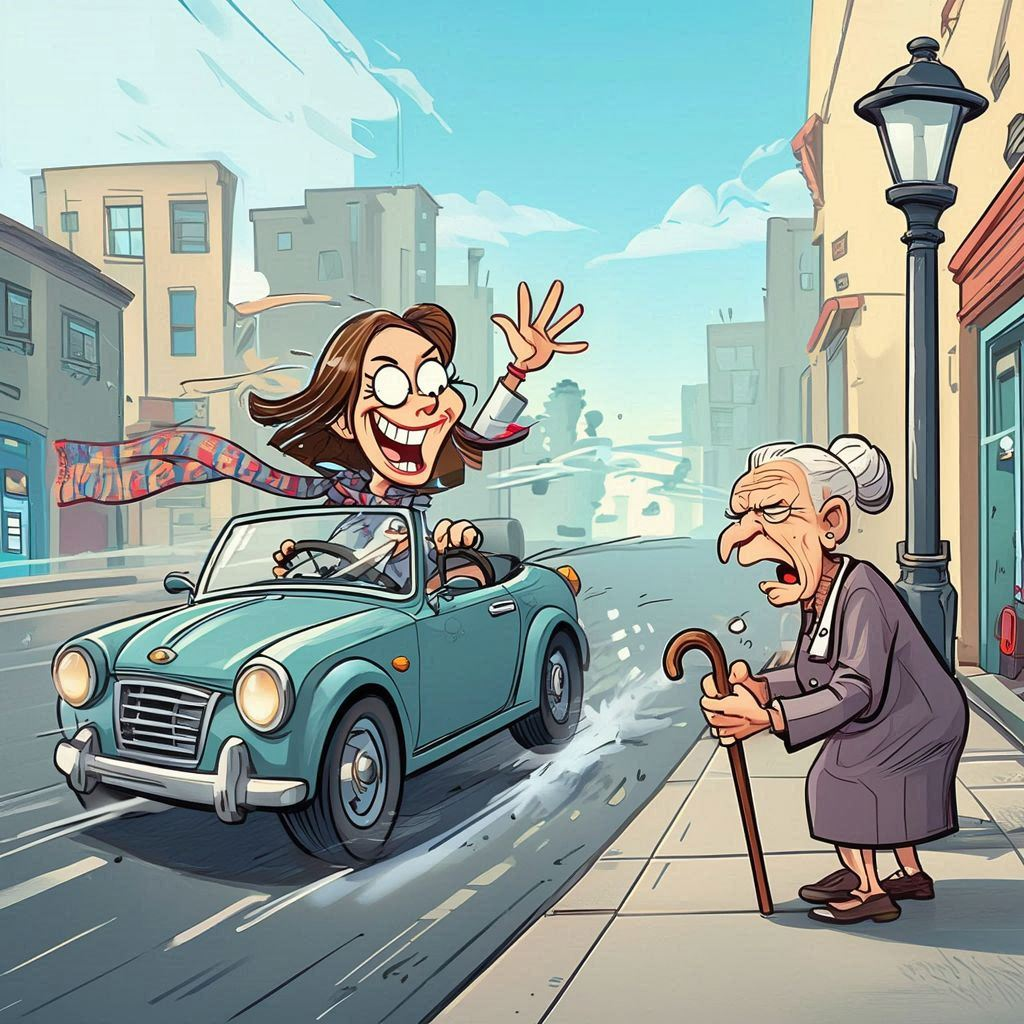
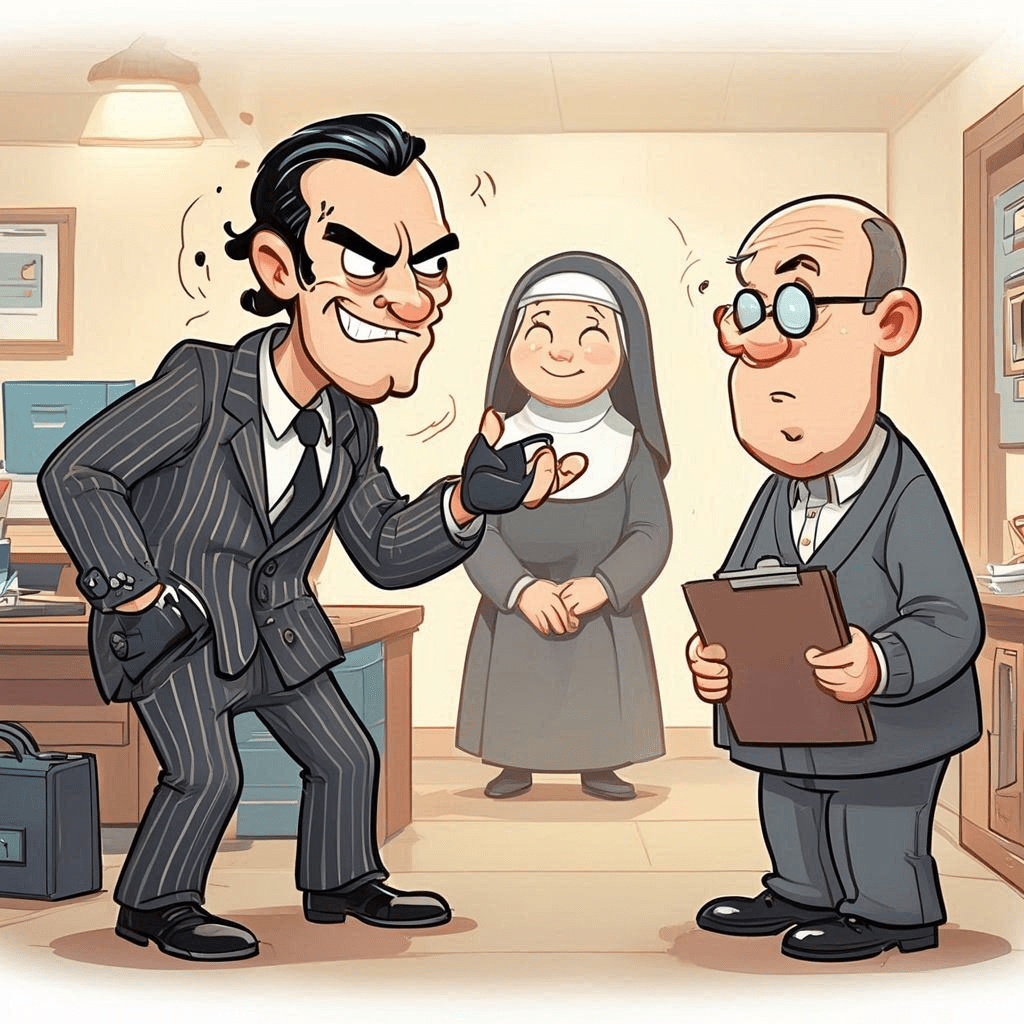
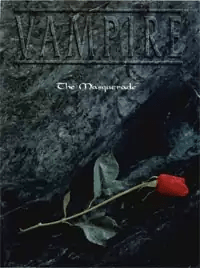
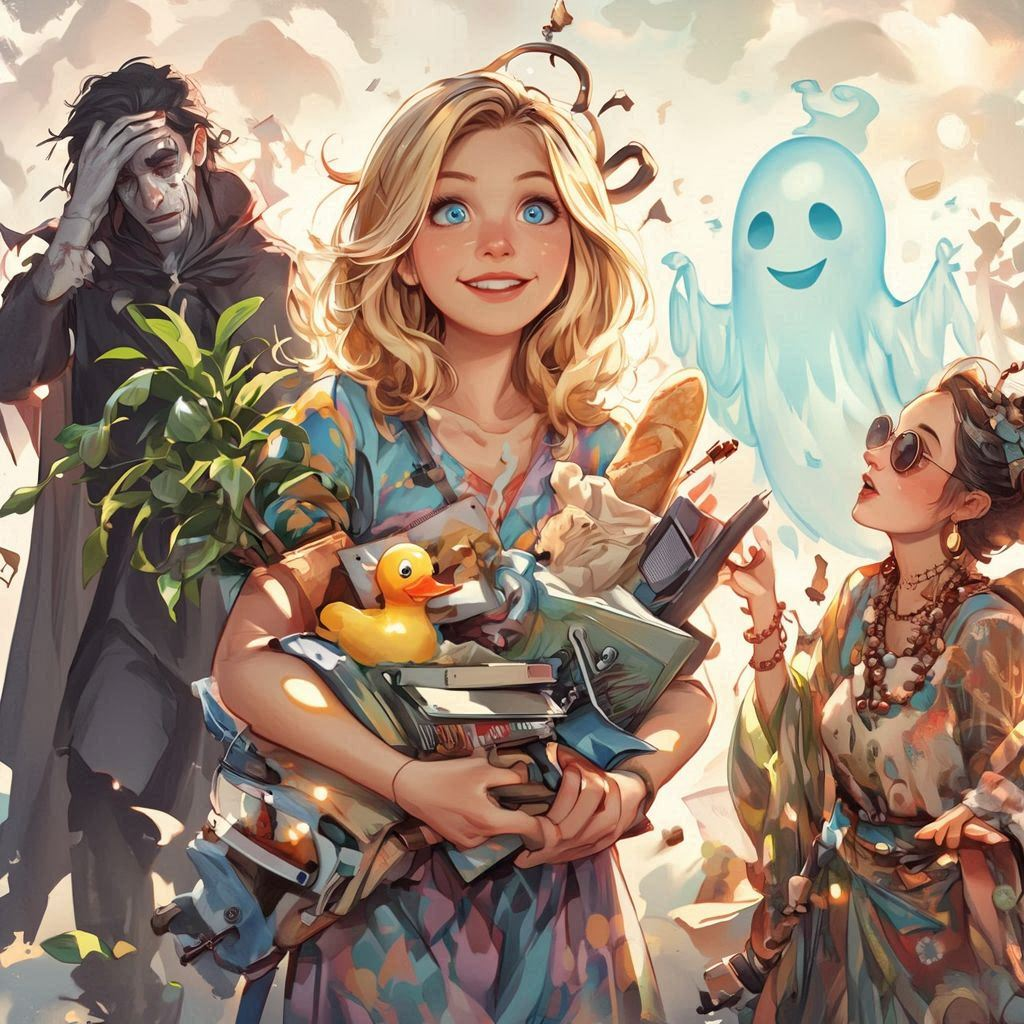
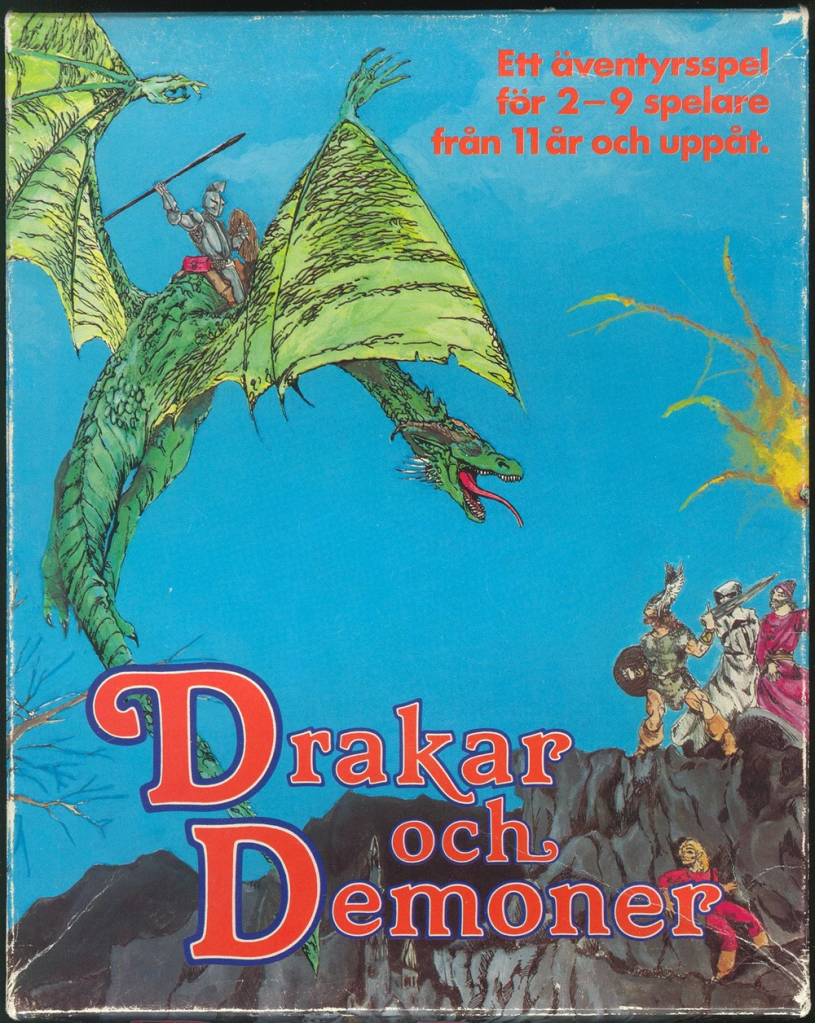
 Mister Monster's Workshop