Blog

  • Aberrant readthrough: Player’s Guide and Underworld

    Aha! Ahahahaha! I did it! I read the whole stupid thing! Half of it I didn’t particularly like and the other half I outright loathed, but I got through it all and now I can despise it while fully informed!

    … sometimes I think the Internet has just broken me.

    Anyway, here’s the last stretch. First off we have the Player’s Guide, which is usually the title in any game line where they cram in anything and everything they couldn’t find a place for anywhere else. Let’s see if there are some nuggets in there.
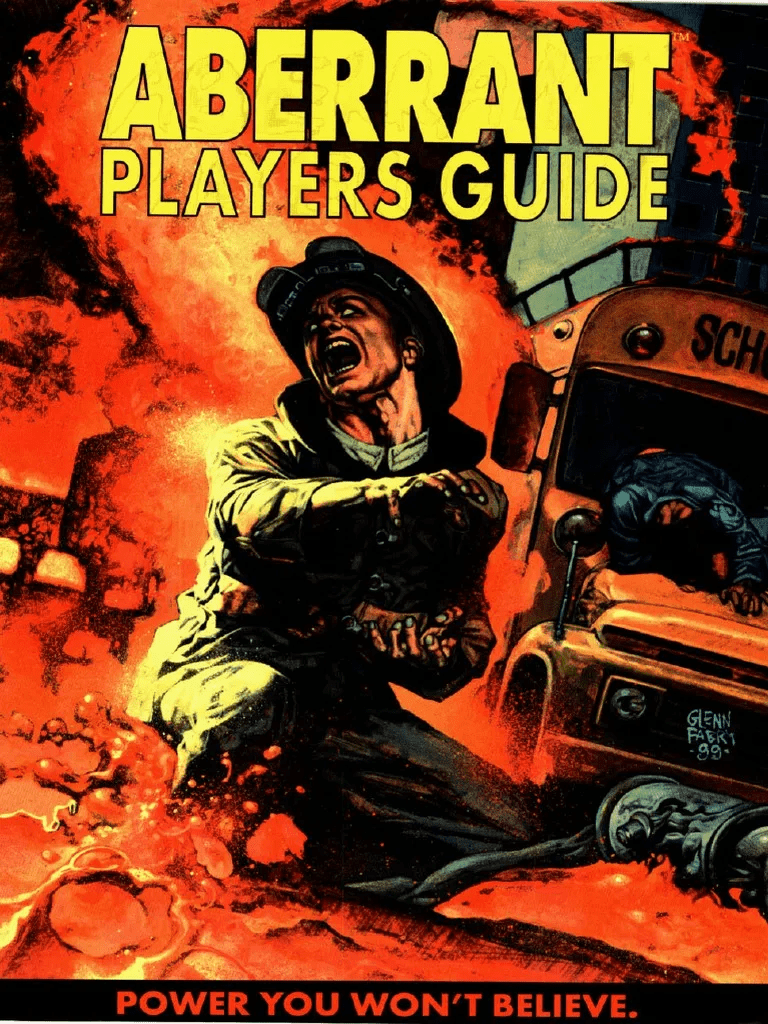
    We start off badly with the infamous This Is Not The Superfriends essay, where we are berated for being so unimaginative as to play superheroes. Why, if we would only open our minds a little, we could play far more interesting things like… er… hmm… a teleporting courier of some sort! Or a mentally disabled pro wrestler! Don’t you see, the possibilities are endless! But suuuure, you can play a game where you wear tights and have code names and punch villains, if that’s really the level you want to stay on. Like, if you’re a complete philistine you could do that, yes.

    Uh-huh. Here’s the problem with that. Well, there are many problems with that, but here’s the main problem with that. The game doesn’t offer any sort of support at all for playing one of those “more creative, more realistic” character types. And I know this for a fact, because I have read through the whole stupid thing so I can have an informed opinion! In the game that is delivered over sixteen books, of which this one is the fifteenth, most character you encounter wear tights. And have code names. And punch, if not villains, then at least people they don’t like. The situations you’re set up to encounter tend to involve international intrigue and looming large-scale disaster, not navel-gazing reveries of how it would really feel to have superpowers, you know, really, I mean really.

    And there is a very good reason for that, which is that it’s hard to even imagine what a game about navel-gazing reveries would even look like or how you’d play it. Immersion is all very well, and there should certainly be more to most games than just rolling to hit, but you also need some kind of tangible conflict to interact with. And that was something White Wolf always seemed to acknowledge only reluctantly and with the greatest distaste, because ew, dice-rolling, how uncultured.

    Okay, I’m five pages in and already I’m ranting, I’d better move along…

    Immediately after the section about how shallow and boring you are for wanting to play a character with a code name… we get a long worldbuilding section about how novas choose their code names. Because this game is immune to irony. Okay, so I understand it’s really because the different chapters were written by different people who didn’t communicate very well, but still, you couldn’t have created a better example of tonal mismatch if you’d tried to…

    And following that is a long worldbuilding section about novas acting as vigilantes. Are we sure they weren’t intentionally parodying themselves at this point?

    There’s a semi-useful part about how you rise in the ranks as part of different factions, and what Backgrounds you might gain to symbolise your new assets. There’s also a rundown of each Background, later on, that provides a bit more guidance for how it might actually be used. That’s cool. Also, someone realised that the Eufibre Background (which gives you… a spandex suit that won’t get shredded by your powers) was underwhelming, so now there’s also the option to use it to make your suit change shape, have it send out tentacles or form wings and just generally do the whole Venom-symbiote thing. That’s even cooler.

    There’s a section of rules for going into space. Which is nice, I guess, very superhero-y… but it’d be even nicer if there was actually anything out there to get excited over. I mean, I’m pretty sure sentient alien life exists in the Aberrant universe, but apparently we’re not going to be using that until Trinity?

    The OpNet gets a bit more description and it’s even more hilariously obvious that it’s basically the Internet of today. Like, credit where it’s due, they anticipated a lot of upcoming possibilities and annoyances at a time when dial-up modems were still state of the art. We also get stats for a pair of nova documentary-makers. Okay, I guess that might be useful at some point…

    Novas used to exist before N-Day! They were weaker, but they were around, and people only don’t know that because Project Proteus has shushed it up (for… some reason?). So you can play a historical Aberrant game if you want to use these piece-of-crap rules without the piece-of-crap setting. Whatever.

    We finally get a look behind the curtain of the Aeon Society (I may not have mentioned them. They’re the vaguely benevolent secret conspiracy of rich people who founded and run Project Utopia), and some general setting information about just what quantum powers actually are. In addition to novas, there is also something called psiads who don’t control quantum energies but “noetic energies,” which are basically magic, as if quantum powers weren’t… Anyway, psiads are weaker than novas and have subtler powers, but they don’t suffer Taint, so that’s nice. The Aeon Society knows about psiads and are discreetly researching them.

    There’s also a third kind of super called paramorphs, but you can’t play one of those. There’s only one in existence and he’s super-cool and wonderful and godlike and DEAR LORD, I’m so glad that the game ended before we got to see more of that guy because I’d have ended up hating him more than Divis Mal. He also effectively runs the Aeon Society and thus in extension Project Utopia, but he’s totally not responsible for anything bad Project Utopia does because he’s just too noble to use brute, authoritarian force to get them to stop vivisecting people. Arrrgggghhhhh.

    There are new nova powers. They are boring. You know, that bears repeating. The powers in this White Wolf game… are boring. That would be White Wolf, famous for being terrible at power mechanics but great at power flavour. You read a game like Exalted and go over the Charm lists, and you keep going, “oooooh, that’s cool. It’s absolutely, completely useless and I’d be screwing myself over by taking it instead of something that just gave me a flat dice bonus, but it sure is cool.” This game fails at the thing that the writers built their brand on being good at. Let that sink in.

    There are overpowered powers that the players are never, ever, in a million years going to be able to buy and that are just there to justify the abilities of uber-NPCs. They are boring too.

    There are rules for creating artificial superpower-gizmos like freeze rays and jet packs and stuff. They are delivered with a lot of sniffing and sneering and “well, if you must have them, here they are.” Yeah, you really hate the idea that power might come from something other than inherent speshulness, don’t you?

    The book wraps with some “nova affiliations” (superteams. They’re superteams). That’s a thing I have actually asked for, so that’s nice. Nippontai finally gets outlined, and so does a Scandinavian team (except the writers seem to think that the Netherlands are part of Scandinavia…), an Australian team, a doomsday prepper team living in Antarctica (first mentioned back in The Directive, finally described here), a psychic team (that includes some psiads who don’t realise they’re psiads and not novas), an ecoterrorist team (who kill and torture people, and which the writers clearly meant for the players to be able to join. Yeah…), a team that explores space, and a gay team (I haven’t said anything about the game’s strident LGBT activism and I’m not going to start now, but… yeah, that was a cause the writers were clearly very passionate about). Well, that helps, actually I’d kind of have liked to see a similar writeup of the four Team Tomorrow groups, since they’re supposed to be the most high-profile group in existence, but, well…

    What we do get is a membership roster of… Teen Tomorrow (ugh. Too cute), the teen superhero team. Which is such a terrible idea in a “realistic” setting that even Caestus Pax, authoritarian strawman that he is, is against it, but here they are anyway. And they have a Teragen counterpoint called the Kabal. Ugh.

    Well, that wraps it up. Then all that remains is:
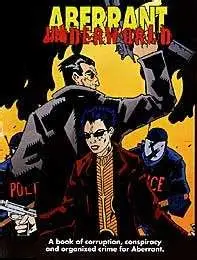
    You know those crime syndicates that have hung around in the background for the entire game line? The ones that seem custom-made to provide antagonists but that are so vaguely defined as to give you nothing to work with? Well, here we finally get a closer look at them, and it turns out that they… do criminal-syndicate stuff.

    Well, that was sure worth waiting fifteen books for!

    Sigh. To be a little more specific, when Project Utopia ended crime as one of its opening moves (which it apparently did by loopholing the use of super-senses and mindreading as not counting as illegal surveillance and therefore being admissible in court, in a move that should definitely have gotten every halfway-sincere human rights activist up in arms but was apparently accepted by any but a few malcontents because “everyone was tired of seeing the mobsters get away with stuff”… I hate this game so much), the crooks who were smart and ruthless enough to not get caught banded together into four super-syndicates that now rule the underworld. Which is… convenient for ease of use, if nothing else; you don’t have to read up on the particulars of Mexican drug cartels when there’s just one big organisation that does all the drug-smuggling from Latin America.

    There’s the Camparelli-Zhokov Mega-Syndicate. They’re the Sicilian mafia that’s teamed up with the Russian mafia so that we can have everything called “the mafia” under one umbrella, and never mind that they don’t actually have much to do with each other… There’s the Heaven Thunder Triads, who are Chinese and mystical and insidious and filthy and did I mention that this book has a sidebar berating you for indulging in ethnic stereotypes? There’s the Nakato Gumi, who are the yakuza and hyper-modern and also effectively allied with the Directorate (because the Nakato Gumi owns Kuro-Tek, which is a Japanese company that produces all sorts of interesting weapons that Utopia doesn’t want people to have). And there’s the Medellín Cartel, who are South American drug smugglers and also Nazis for some reason.

    Naturally, the book does a lot of humming and hawing and trying to nudge you away from actually using its content. See, Project Utopia doesn’t actually want to fight crime (they want to attack the “root causes,” apparently), and the syndicates don’t actually have a lot of nova operatives for them to fight, so, you know, are you sure you wouldn’t rather play a mentally disabled pro wrestler? But fine, if you absolutely must, you can fight gangsters, or play gangsters, just as long as you keep in mind that it doesn’t actually matter to the setting in any way.

    The book closes with a sample character. Who is… Spider-Man. Except a crook. So now we have that.

    And that’s it, I’m done. I hope you enjoyed my increasingly deranged ranting, though I can’t really say the same. Next week, I might try to put together some kind of closing thoughts, and then I’ll see about writing about something I don’t actually hate. Now that’ll be a nice change of pace…

  • The Imperial weisenheimer

    The Imperial weisenheimer

    I still haven’t finished any of the remaining Aberrant books. I started on Underworld just to see if it was any easier than Player’s Guide, and it was, a little, but not enough to let me get through more than a third of it. I am so done with this game, I kid you not…

    I have, on the other hand, started sketching out my next Dark Heresy port in a little more detail. I give you, The Adept! I think here I have come up with a reasonably workable way of presenting someone whose superpower is to know a lot of stuff without having to turn each one into a separate move, Corruption has also been personalised so that each Career moves towards a different tragic end, but in a way that hopefully feels cool and flavourful instead of being a chore.

    We’ll see how the rest turn out – I’m sketching on The Arbitrator now.

    THE ADEPT

    Origins:

    [ ] Forge World
    The hyper-competitive environment fostered by the Tech-Priests taught you that academia is just another form of war. You can spend 1 Righteous Fury to get +1 forward to any Analytical roll.

    [ ] Imperial World
    As a scribe for the Administratum, you have a thorough understanding of the logistical underpinnings of the eternal war effort. You gain the Subject: War for your Common Lore move.

    [ ] Schola Progenium
    At the Schola, you were submitted to the rigours of a classical education. You gain the Subject: Philosophy for your Common Lore move.

    Starting moves:

    [X] Common Lore
    Choose 1 Subject from the list below, and also gain Imperium as a Subject. When you encounter one of your Subjects (your decide), tell the GM which weighty tome you once read something related to the situation in, and in what way the author of said volume was biased, sloppy, or otherwise not entirely reliable. Then ask the GM a question pertaining to the Subject and situation. The GM tells you the answer insofar as you would reasonably know it, keeping in mind the flaws of your source.

    • Adeptus Arbites
    • Administratum
    • Astromancy
    • Bureaucracy
    • Chymistry
    • Ecclesiarchy
    • Imperial Creed
    • Heraldry
    • Legend
    • Machine Cult
    • Occult
    • Tech

    [X] Researcher
    When you can use a library to research a topic, you are considered to have access to every Subject the library covers for purposes of using the Common Lore move. However, searching a library takes a while – the GM decides exactly how much, but certainly more than the mere seconds to recall something you already know.

    Basic moves:

    [ ] Attentive
    No detail, however insignificant, is beneath the notice of a true bureaucrat. Increase Intuitive by 1.

    [ ] Brilliant
    Your rational mind is honed to perfection. Increase Analytical with 1.

    [ ] Common Lore: Well-Read
    Requires Common Lore. Choose 2 additional Subjects for your Common Lore move.

    [ ] Common Lore: Scholar
    Requires Common Lore: Well-Read. Choose 2 additional Subjects for your Common Lore move.

    [ ] Contempt for the Flesh
    When you endure the effects of heat, cold or fatigue, roll +Disciplined instead of +Unyielding.

    [ ] Delver Into Forbidden Lore
    Requires Forbidden Lore. When you can use a library to research a topic, you are considered to have access to every Subject the library covers for purposes of using the Forbidden Lore move.

    [ ] Forbidden Lore
    Choose 1 Subject from the list below. When you ask a question about one of your Subjects, you gain 1 Corruption Point and the GM tells you what you might reasonably know. She then asks you what tale of horror you encountered this blasphemous fact in.

    • Cults
    • Heresy
    • Inquisition
    • Mutants

    [ ] Gopher
    When you fearlessly advance on the direct orders of a theoretical superior, roll +Disciplined instead of +Fierce.

    [ ] Logical Extrapolation
    When you assess the available facts, roll +Analytical. 10-14, you make an educated deduction about something interesting that has previously happened in this place,. 15+, the same, and the GM also tells you where and how you might try to learn more about it.

    [ ] Medicae
    When you provide medical care, roll +Analytical. 9-, you clean the injuries, but that’s all you can do without more expert help or more advanced facilities. 10-14, the patient immediately heals 1d5 Wounds. No further uses of this move is possible on the patient until they have either taken or healed at least 1 Wound. 15+, the same, but the patient heals 1d10 Wounds.

    [ ] Mind Like a Fortress
    Increase your Corruption Limit by 3.

    [ ] The Men of the Mind
    When you command their respect towards scribes, bureaucrats or scholars, roll +Analytical instead of +Charismatic.

    [ ] Speak Language
    When you hear a strange tongue for the first time, roll +Analytical. 9-, the language or dialect is unknown to you. 10-14, thanks to your studies, you can communicate a bit awkwardly in the language or dialect. 15+, you speak the language or dialect like you were born to it.

    [ ] Stickler
    You are a slave to proper procedure. Increase Disciplined by 1.

    [ ] Unremarkable
    When you stay beneath notice by mindlessly carrying out dreary, time-consuming tasks, roll +Disciplined. 7-9, clear an Exposure box, but without something to occupy your mind with, it strays to dangerous topics. Gain 1 Corruption Point. 10+, the same, but you fill your mind with nothing but servile piety and escape Corruption.

    Advanced moves:

    [ ] Armour of Contempt
    When you roll to gain Corruption Points (NOT when you gain a fixed number of them), reduce the result by 2.

    [ ] The Art of War
    You line up a shot with the same care that you apply proper punctuation. Increase Precise by 1.

    [ ] Common Lore: Walking Encyclopedia
    Requires Common Lore: Scholar. Choose 2 additional Subjects for your Common Lore move.

    [ ] Common Lore: Savantus Supremus
    Requires Common Lore: Walking Encyclopedia. Choose 2 additional Subjects for your Common Lore move.

    [ ] Cross-Disciplinary
    Select an Advance from another Career.

    [ ] Forbidden Lore: Dangerous Obsession
    Requires Forbidden Lore: Unhealthy Interest. Choose 1 additional Subject for your Forbidden Lore move.

    [ ] Forbidden Lore: Unhealthy Interest
    Requires Forbidden Lore. Choose 1 additional Subject for your Forbidden Lore move.

    [ ] Its Gates Locked and Barred
    Requires Mind Like a Fortress. Increase your Corruption Limit by 3.

    [ ] Lecturer
    You have learned that people are more likely to listen to your rants if you make them interesting. Increase Charismatic by 1.

    [ ] Master Chirurgeon
    Requires Medicae. When you provide medical care, the patient heals 2 Wounds more than indicated.

    [ ] Practical Application
    Select an Advance from another Career.

    [ ] Pragmatic
    A rational person takes whatever path promises the greatest probability of success. Increase Treacherous by 1.

    [ ] Scurrying Rat
    Requires Gopher. When you circumvent a threat by staying out of sight and relying on little-used paths, roll +Analytical instead of +Treacherous.

    [ ] Sound Constitution
    Increase your Wound Limit by 3.

    [ ] Total Recall
    Requires Brilliant. You can perfectly memorise large swaths of information. You can always ask the GM for any detail of your past life experience, no matter how seemingly trivial or irrelevant at the time. If given a few moments, you can completely memorise maps, lists, documents, etc, and later examine them at your leisure from memory.

    Corruption moves:

    [ ] Blasphemous Insight. Your thoughts have escaped the safe confines of Imperial thought, proving you with flexibility of thought at the cost of growing corruption. When you apply your intellect, you may choose to take +1 forward to the roll at the cost of gaining 1 Corruption Point.

    [ ] Powerful Secrets. Your study into esoteric knowledge has allowed you to kindle the natural psychic ability of all humans. Choose 2 Minor Psychic Powers from the Imperial Psyker’s list. You can activate them at the cost of gaining 1 Corruption Point per activation. When doing so, you must chant and gesture in a way that anyone even slightly knowledgeable will recognise as sorcerous.

    [ ] Thirst for the Unholy. Every taste of the terrible truths of the world renews your will to go on even as it damns your soul. When you roll to gain Corruption Points (not when you gain a fixed amount of them), hold Righteous Fury.

    [ ] You can no longer resist the temptation to use the secrets you have learned. You immediately attempt an ill-fated sorcerous invokation that gets out of control and rips open a hole into the Warp, into which you disappear screaming never to be seen again. Make a new character.

  • I have done actual stuff!

    I have done actual stuff!

    I didn’t manage to complete the Aberrant Player’s Guide this week – it’s long and it’s boring, and I’ve been distracted by more interesting things. See, it occurred to me that instead of reading PDFs of an outdated 90s game that I hate… I could read PDFs of outdated 90s games that I might actually like. I know, it’s a crazy idea, but what if I did something to not be miserable?

    Still, my Aberrant readthrough will eventually be finished, if it so kills me – I have one and a half book left, surely I can do it. And while I’m at it, I also intend to finish that loathsome piece of smirking, YouTube-spawned zoomer dreck Daggerheartat some point. I refuse to be beaten by self-righteous hacks, be they 90s hipster edgelords or 20s woke snowflakes!

    But, just for this week, I figured I’d actually post some work on my own projects for a bit. My attention span hasn’t been the greatest, but I’ve managed to put in some actual work on three different ones.

    THE DARK HERESY PORT

    My Dark Heresy port… works. That’s about the best you can say for it. It works, it’s not actively painful to use, it’s better (subjective statement, I know!) than the original rules. But it’s still not good. It’s over-complicated. It’s dense. It’s got lots of things that will never get used. It lacks the sort of punch that PbtA games should have, the sense of providing the flavour explicitly instead of trying to make it an emergent property of a hundred fiddly modifiers.

    So this week, I started scribbling on a new version. I’m keeping a lot of things from the old, but I’m stripping the basic moves down to one per Characteristic. I’m also renaming the Characteristics to make them represent personal qualities more so than raw talent – for example, I’m renaming Strength to Fierce, and you roll +Fierce to push forward, to advance, to remove obstacles. Like so:

    Weapon Skill – Lethal
    Ballistic Skill – Precise
    Strength – Fierce
    Toughness – Unyielding
    Agility – Treacherous
    Perception – Intuitive
    Willpower – Disciplined
    Fellowship – Charismatic
    Intelligence – Analytical

    I’m also merging Insanity and Corruption together into a single pool of “mental hit points.” Keeping track of them both just seems pointless, because honestly, I can’t remember many places in the fiction where anyone went crazy without being implied to be in some way corrupted or under demonic influence. Also, each Career gets three pre-defined conditions that they hit the first, second and third time they exceed their maximum number of Corruption Points. So for instance, the Adept becomes increasingly obsessed with blasphemous lore and ends up summoning daemons, the Arbitrator becomes less and less able to compromise and ends up getting himself killed in a pointless last stand, the Tech-Priest’s bionics take over more and more until he’s a prisoner in a body now wholly run by cogitors… and so on.

    Finally, I’m introducing two collective tracks: Exposure and Intel. Whenever the players make a mess, they mark Exposure, and once all the boxes are marked the enemy knows who they are and start seriously gunning for them. Whenever the players discover an important clue or valuable piece of intelligence, they mark Intel, and once all the boxes are marked they become able to call the Inquisition and request backup, or commandeer local Imperial forces in the Inquisition’s name.

    It’s still sketchy, and I don’t know how long it will take me to finish, especially with everything else I want to do… but I have a good feeling about this. Of course, I seem to recall saying that about the last two versions, too…

    THE MAGE: THE ASCENSION PORT

    One of the old PDFs I’m reading is actually the first edition of Mage: the Ascension and… do you realise that Mage used to be fun? Like, there used to be things to do, instead of just being dropped in a dreary world and being told to come up with your own motivation. You could use magick to do actual cool things, instead of the cool things being gated off behind unrealistic numbers of successes. And the Paradox rules actually offered some guidance for what sort of problems might occur at what levels of Paradox, instead of just shrugging and telling you to figure it out. I mean, Mage always fascinated me, but I started writing a port for it largely because I could think of absolutely no way to run it as it was and wanted to invent some workable structure for it. I guess I was reinventing the wheel.

    Anyway, that’s a lot of new ideas that I might look at implementing, but this week, what I actually did was sit down and iron out some better guidelines for Avatar Essence. I fear I’ve been frightfully inconsistent with what does and does not qualify a spell for that +1 bonus from a mage’s Essence, and since Arete rolls are locked at +0 for a long time, that bonus is kind of important.

    So here’s what I’ve come up with for now, and that I think might work:

    • If your Essence is Dynamic, take +1 to any Arete roll meant to radically alter a situation or infuse it with more energy. If it makes a mess, it can be justified as a Dynamic Effect. Creation and destruction are both highly possible, and so is transformation – the frequent problem is going to be making the changes drastic enough to qualify as Dynamic without resorting to vulgar magick. You can’t just shift around a few pieces, the very rules of the game must change in some way. Knowledge spells are almost entirely impossible to claim as Dynamic Effects – understanding the current situation implies a state of mind that assumes it will remain relatively unchanged, and that is against all the Dynamic Avatar stands for.
    • If your Essence is Pattern, take +1 to Arete rolls to make use of what already exists, without adding or removing from it. If you are playing off something that is already in the scene, you can probably justify it as a Pattern Effect. It is difficult to use Pattern to create anything whole cloth or to completely destroy, but you can “improve” on what is already there or put their pre-existing flaws into play. Likewise, transformation is possible, but only to make things either sturdier or more complicated, never to both weaken and simplify them (for example, you might sprinkle perfectly symmetrical holes throughout the surface of a door, thus making it more complicated but also more brittle and easier to break. You could not claim Pattern for just making the door rotten, since that would make it more fragile without adding to its complexity). Spells of pure knowledge are the hardest to justify; the Pattern Avatar is jealous of information and considers everything to be on a need-to-know basis, though you can sometimes sneak something through by baking into the spell the idea that you need to better understand something in order to strengthen it or obey its rules.
    • If your Essence is Primordial, take +1 to Arete rolls to remove things, especially barriers and restore the original, unconstrained state of things. The Primordial Avatar dislikes forcing anything to be, but you can get a lot of mileage out of removing the reasons for it not to be and then letting nature take its course. Pure knowledge spells are relatively easy to manage as long as you can argue that you are removing something that is “blocking your sight”; for example, you could see through a wall by removing its ability to hide what was behind it. Pattern Effects can also be used quite easily to either heal (by “removing weakness and damage”) or destroy (by “removing strength and wholeness”).
    • If your Essence is Questing, take +1 to Arete rolls to experience the world, either by expanding your senses or by introducing yourself into interesting situations. Pure knowledge spells are always allowed as Questing Effects, but spells that actually do something are harder – they generally need to be justified as serving to move yourself into a position where you can learn things. Questing can never be used to keep something at arm’s length or to remain stationary and let the world move around you, only in either affecting or facilitating your own movement through the world.

    It is possible to make an Effect draw on an Essence by defining it more tightly than the Spheres actually demand. For instance, a Disciple of Entropy Effect can disable any inanimate system, but this would not be a Questing Effect since most inanimate systems don’t block the mage’s movement (it would work fine as a Primordial Effect, since it would be dissolving artificial structures). However, defining the Effect to only target locks, bolts, and fetters in the mage’s path would let it be cast as a Questing Effect, since it would then be clearly in the service of the Questing Avatar’s goals. Assume that the Avatar is sentient and intent on enforcing its idea of the mage’s destiny; it will “bless” certain spells and not others, depending on whether those spells are in line with how it sees its purpose.

    Likewise, it is possible to align an Effect with an Essence by making mundane actions part of its casting. For example, an Apprentice of Entropy Effect to detect a flaw in an enemy’s fighting style can’t be a Primordial Effect, since it can’t be justified as removing a boundary (the flaw, if it exists, is right there – your problem isn’t seeing it, it’s recognising it). However, an Akashic might create an Effect in the form of a “conflict-ending blow” that instantly and non-lethally incapacitated an enemy by unbalancing her at a split instance of weakness. Since the casting of the Effect could only be used to end a fight at least for the time being and could not be used to acquire knowledge without immediately acting on it, it could be justified as a Primordial Effect. The Effects blessed by the Essences can overlap – something could be both a Dynamic Effect and a Questing Effect (such as a personal teleportation spell; both a drastic change and a way for the mage to move into a more advantageous position), or both a Pattern Effect and a Primordial Effect (such as a spell to render poisoned water drinkable; it would at once improve the water for the purposes of being drunk and remove its harmful qualities). However, when codified into a Rote, an Effect always has the Essence chosen by the mage who created the Rote.

    Again, it needs more work, but I think this will actually provide the sort of flavour I want.

    MONSTROUS MISHAPS (FOR ONCE!)

    Finally, I managed to do some actual work on one of my actual original games. Will wonders never cease? I’m trying to get the quickstart for my perpetually-almost-finished game Monstrous Mishaps together. I have gotten to the chapter on GMing, and that’s hard, because… er… I suck at writing GMing advice, as it turns out. It’s funny, I have no problem writing player advice, but for GMs I keep trying to think of something more helpful than, “just do it properly! You know, properly. Like, not in the way that causes me actual pain to watch. Do it in the way that isn’t like that. Jerks.”

    I don’t know. GMing is more an art than a science for me, I guess…

    Anyway, I did manage to put together ten suggested plot hooks, to give the reader a better idea of what sort of thing you get up to in Monster World.

    • A rival Monster managed to dump a barrel full of Jell-Oh over one of the PCs in full view of the Court. Now the PC has to find some way to PWN the prankster right back, or they’ll be a laughingstock for months.
    • Against his better judgment, a PC posted bail for his no-good brother-in-law, and then the jerk failed to show up for his court date. Time to go turn over every rock he might have crawled under, while an inept police detective is certain that the PC is hiding the fugitive and keeps interfering.
    • A PC’s boss is coming over for dinner. Nothing must go wrong! The problem is, the PCs live in a Maze, which is to say, a perverse haunted house with no regard for their career prospects…
    • A PC’s best mate has lost his job and his apartment, and a PC has graciously let him crash at her place until he can get back on his feet. However, after several months of him doing nothing but hanging around pitying himself, the cohabitation is starting to become a drag. The PC is going to have to somehow both find him a new job and get him to shape up enough to keep it.
    • A PC has somehow attracted an annoying Haunting that inflicts a taboo on him – whenever he hears a bell ring, he has to immediately do a silly song and dance routine or else suffer an unlikely and painful accident. There’s a counterspell to get rid of the curse, but it requires a bunch of bizarre ingredients that must be gathered from all over town. Too bad that the annual Bell-Ringing Festival is just around the corner.
    • A PC’s rich aunt wants him to babysit her bratty son for the afternoon. He’d better come back in one piece, or she’ll make some alterations to her will. The kid resents being babysat and has absolutely zero self-preservation.
    • A sneaky Slayer has spread the vicious rumour that a PC has been seen kicking a puppy. The good news is, the animal shelter needs volunteers, giving the PC an excellent opportunity to prove what an animal lover she really is. How hard can it possibly be to take care of a few dozen maladjusted critters with simmering grudges against all of humanity?
    • A PC has inherited an old house that needs to be cleaned out so they can sell it. This will require not only dealing with a bunch of squatters who aren’t happy about being ousted, but a grumpy Haunting that’s just woken up as well.
    • A PC’s ex-husband is refusing to share custody of their pet parakeet. Dragging him to court would probably not help, so there is nothing to it but a bout of parakeet-napping. Problem is, the ex is a Monster too, so it will require traversing his Maze.
    • The lady who accidentally ran into a PC’s mailbox last week is not only refusing to pay for damages. No, she’s also countersuing for emotional damages of the PC having irresponsibly placed a mailbox where innocent people might need to drive. The PC’s enemies are all too happy to offer damning character testimony, so the PC needs to find just as many people to assure the judge of what a nice fellow he is.

    So there you go. Three actual samples of what I’m working on right now. Yes, Aberrant is so bad that it’s driving me to try to do better myself. Which is, admittedly, a positive effect common to many bad games, so perhaps it fills some sort of function in the cosmic order after all…

  • Aberrant readthrough: Worldwide Phase Two

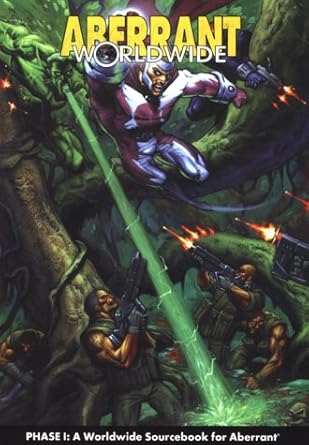
    We’re in the last quarter of our readthrough of first edition Aberrant, White Wolf’s not-very-successful attempt at a superhero game. So far, the my reaction has been mainly annoyed boredom, with the occasional bout of psychotic rage. ANTI-LIFE JUSTIFIES MY HATE! ANTI-LIFE JUSTIFIES MY HATE! ANTI-LIFE JUSTIFIES MY HATE! ANTI-LIFE JUSTIFIES MY… ahem.

    This week’s collection of playable scenarios contain a bit of both.

    Like Worldwide Phase One, it contains four scenarios, all of which are meant to be playable for a group of any faction and which revolve around major global situations. In fact, in a lot of ways, I think that this collection is the best example of what you were meant to actually do in Aberrant – the previous one was more about pushing the metaplot (and repeatedly made the players little more than the audience for the same), but here the incidents are contained enough that the setting is pretty much the same at the end as it was at the beginning. So, what does your character do in Aberrant? Have four examples.

    SCENARIO ONE: THE POPE OF BABYLON

    Ungh. This is the “psychotic rage” portion of the book, right at the start. I mean, it’s not as bad as the Divis Mal ass-kissing in One, but… well, let’s take it from the start.

    The scenario is based on a plot hook from The Storyteller Companion, so again with the self-cannibalising… Anyway, it concerns a scheme by the eeeeeeevil Catholic organisation Opus Dei to eeeeeeevilly frame the cool, liberal Pope for crimes he did not commit, so as to politically neuter him. Did we mention that Opus Dei is eeeeeeeevil? Don’t worry if you missed it, the book will remind you. And remind you. And remind you.

    And, like… did the writers get that Opus Dei isn’t some fictional supervillain organisation? It’s an actual thing, with actual people in it! I’m sure a lot of those people are ones I wouldn’t particularly get along with, but they are flesh-and-blood human beings trying to live their best lives, and the writers are just straight up calling them brain-washed monsters. This is even worse than what they did last week, because at least the Church Astaroth and the Church of Michael Archangel are fictional organisations even if they are pretty clearly meant to stand in for all Satanists and all evangelicals respectively. Like, there was the fig leaf of them at least theoretically being works of fantasy. But here, it’s not some invented Catholic order that is totally-not-Opus-Dei-wink-wink-nudge-nudge. It’s just Opus Dei.

    White Wolf always had this… thing in all their games where they kept being frustrated that their audience kept engaging with the fantastic elements they actually put in their game instead of using it as a starting point for dealing with Real Important Issues. A lot of sidebars of variable bitchiness was spent chewing the reader out for ignoring the regular, non-magical parts of the modern world in favour of having vampires fight werewolves.

    With Aberrant, I guess, they were trying the novel approach of actually putting those Real Important Issues into the actual game instead of expecting their customers to do it for them. A lot of page count is genuinely dedicated to explaining how the real world works (or how the White Wolf writers thought it worked, at any rate – they had a tendency to be know-nothing know-it-alls) and how the players can affect it. It is, as far as it goes, a commendable step in the right direction.

    It also shows very clearly why it was and always would have been a really bad idea. Because, see, a roleplaying game requires villains, people that it’s okay to beat up. When you create your villains out of thin air, that is perfectly fine, and you should definitely ignore the wet blankets who whine about racism against orcs. But when you insist on your game being about interacting with the actual, as-is, no-names-changed real world… you are effectively taking some real people and saying, “these are villains. These are okay to hurt.”

    And that is not cool with me. No matter how little I would get along with those people, I will never agree with dehumanising a person who actually exists.

    And just in case you thought I was overreacting, the very last page of the scenario lets you know that that cool, liberal Pope that you’ve spent the scenario fighting to defend? He’s owned by the mafia. What, you thought there was such a thing as a good Catholic? Don’t be silly!

    I hate you, Aberrant. I really freaking hate you.

    SCENARIO TWO: A GREEN AND PLEASANT LAND

    This one is about an evil British aristocrat who’s erupted as a super-genius nova and who’s putting together a sinister scheme to return England to the top of the international food chain. He does so partly by means of a brain-washing cult disguised as a gentleman’s club. It’s… passable. I mean, it’s basically a slightly-more-realistic version of a supervillain plot, and that’s where Aberrant is the most comfortable, for better or worse.

    On the other hand, the multiple pages at the start that describe how England has turned into festering pile of decay from refusing to cooperate with Project Utopia… feels excessively mean-spirited. I mean, did we miss the part where Project Utopia is run by a bunch of yahoos whose laughable schemes always fail? You’d think that the writers would have some sympathy with the Brits wanting to keep those yahoos at arm’s length, but of course that’s not how it works. It’s only the glorious novas who shouldn’t let Project Utopia tell them what to do – those filthy baselines should know what’s best for them and bend the knee.

    I hate you, Aberrant. Though not, I admit, as much as I did after the first scenario. I mean, let’s face it, the British have a long and proud tradition of putting themselves down in very much the ways this book puts them down. I feel like Terry Pratchett would have been like, “well, they could have said it better, but they have a point…”

    SCENARIO THREE: DOMINION

    This one is about a megalomaniac trying to conquer the Ukraine. Ehehehehehe, yyyyyyyyeah, that’s a little more uncomfortable in the Year of Our Lord 2026 than it was when it was written, it must be said…

    Having that said, this one I don’t have any major problems with. I mean, it’s not great, and there are a couple of things I could pick on – a particular sidebar whining about how players always have to ruin Teh Story by having their characters, like, do stuff, for example – but I’ve already ranted my fill this week. Plus, it’s got novas actually fighting across a major city for military objectives, and that’s sort of hardcore in a good way.

    SCENARIO FOUR: WHERE HEAVEN ENDS

    This one is actually really good. I mean, the premise is that Project Proteus is trying to do something evil, again, and completely messing it up, again, in a way that causes a ton of trouble for everyone, again. And I’m honestly getting a little tired of Proteus being portrayed as this hyper-secretive group of super-geniuses who walk between the rain drops but are somehow still not capable of tying their own shoes. But the actual content? It’s solid.

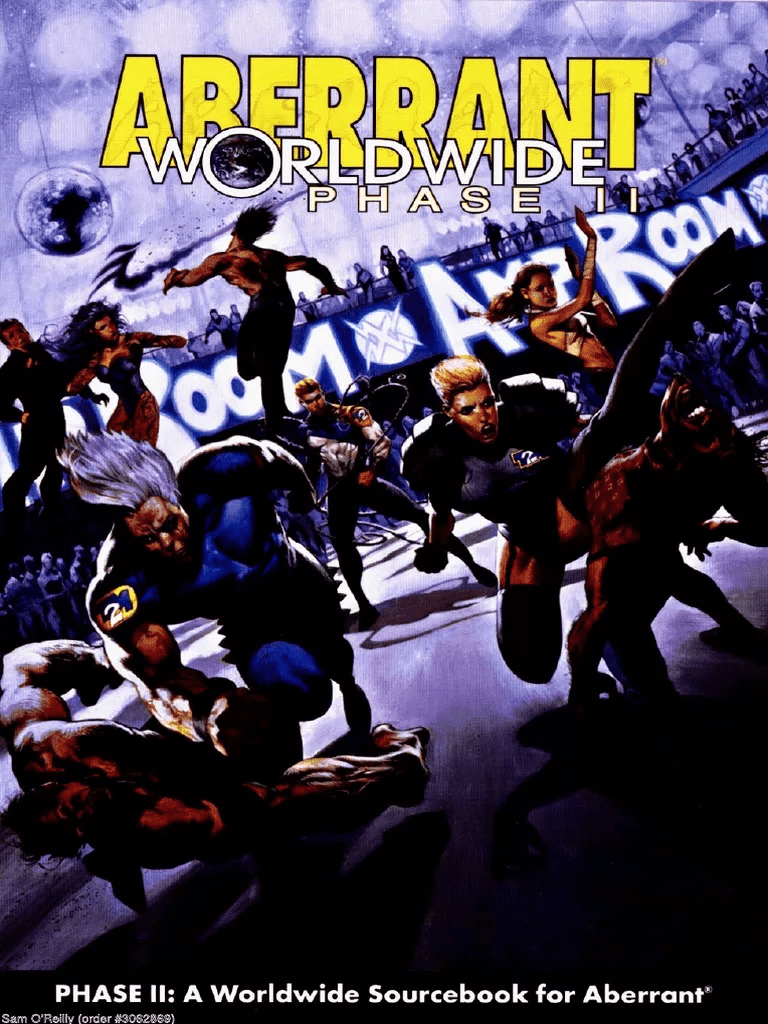
    Specifically, Proteus is setting up a sting operation in the all-nova club The Amp Room in Ibiza to nab a whole bunch of Teragen and Aberrant members. But amazingly enough, storming into a place with several hundred superhuman beings who are most of them drunk off their asses and bellowing that everyone’s arrested… does not work out too well. In fact, it results in an all-out brawl that spreads across Ibiza and practically lays it in ruins.

    Meanwhile, the players are tasked with finding a couple of novas who have (it turns out) been kidnapped by an aspiring elite calling himself the Angel of Bones and who plans to execute them in front of a bunch of journalists to show off what a badass he is. They get a front-row seat to all the human misery of a natural disaster, while also having to dodge flying debris and quantum bolts from the fights that keep going on, and avoid attack helicopters from the militaries that are trying to restore order. It’s pretty intense, and it makes actual good use of the setting.

    Oh, and I mentioned last time that Aberrant might hate bulimics? Yeah, apparently the Angel of Bones used to be obese, and he erupted from trying to starve himself thin, so now he’s a walking skeleton who can kill people by causing them to gain several hundred pounds of fat in seconds. I’m… genuinely uncertain whether that is tasteless and offensive or if it’s so tasteless and offensive that it’s actually kind of awesome.

    Though the fact that it’s implied that Count “stop maliciously misquoting me, I only said you were like monkeys to me!” Orzaiz spends his captivity as a giant tub of lard to keep him from easily escaping? That I find genuinely hilarious. Welcome to life in the plus sizes, you smarmy bastard!

  • Aberrant readthrough: ReignofEvil.com and Church of Michael Archangel

    So, having decided that I hate this game and want it to perish in quantum fires, I am nonetheless soldiering on. This week we’ll take a look at the last two mini-supplements for the first edition, who most conveniently have a common theme.

    The theme is, People Who The Writers Of Aberrant Had Snooty Contempt For. These two booklets are of course not enough to fully explore that theme, which could probably have provided material for a dozen more if anyone had actually been interested enough in Aberrant to be buying these books, which is perhaps why it further spilled over into Worldwide Phase Two (which we’ll discuss next week). For now, though, let’s start with:

    So it’s about Satanists. Specifically, it’s about something called the Church of Astaroth who worships a nova by the same name. And he’s a loser! And they’re losers! But losers can be dangerous, possibly, in some way, so it’s okay to hate them and it doesn’t make you a bully! But they’re definitely losers! A bunch of man-babies who fail at life and can’t spell! Feh! Feh! We spit at them! Did we mention that they’re losers? Because they’re losers!!!!!

    … yeah, you kind of get the idea after the first page and then it goes on for twenty-five more. The writers of Aberrant really hated Satanists, and gosh-darn it, they were prepared to say so no matter how controversial it was!

    Now, being at the time a maladjusted all-black-wearing young man, I actually sniffed around some Satanist websites and publications at around the time this was written, so I at least understand what it’s attacking and that, while humourlessly mean-spirited in the extreme, it’s not entirely off the mark. And yes, I can vouch for the fact that a lot of self-proclaimed Dark Lords of This World really couldn’t spell particularly well.

    But you know something? Some of it had a sort of morbid beauty to it, too. Hey, Anton LaVey was a maladjusted jerk, but he was a maladjusted jerk with a serious poetic streak – he could make being a maladjusted jerk sound absolutely gorgeous. Honestly, Satanists deserve better than this hatchet job. I say this even though they worship selfishness and depravity and even though (more objectionable by far, to my mind) they are usually libertarians. Seriously. Some people may deserve to be mocked, but no one deserves to be mocked this lazily.

    And what makes it really obnoxious is that the Teragen, who the writers constantly fawn over… are philosophical Satanists. I mean, they just are. They believe in transcending conventional morality! They believe in wielding power unchecked by the sheep-like masses! They revel in monstrosity and deviance! They form a cult of personality around a guy who goes by a pretentious Latin name that means “the wicked god”! They’re Satanists.

    And unless one of the writers was bitten by a metal-head as a child, I can only theorise that that’s precisely why this book was written – as a pre-emptive counter to any accusation that they might be Leading The Youth Astray. Which, I will admit, was probably not baseless concern back at the turn of the millenium, with the Satanic Panic not yet cool in its grave, but still… they got away with glorifying serial killers and terrorists, I think they could have gotten away with having Satanist-coded characters in their silly superhero game without hiding behind this ridiculous fig leaf.

    It’s an especial shame because, again… Satanic imagery is cool. Hey, ask any Warhammer 40,000 nerd and he’ll tell you that the only thing more awesome than a ten-foot-tall space marine with a machine gun is a ten-foot-tall devil-worshipping space marine with a machine gun! This could have been a fun villain faction that explored what thoroughly disenfranchised people might become if they suddenly got the power to make their every maladjusted fantasy come true. But no, instead we got 26 pages of the writers going, “guh guh guh! That’s YOU! That’s how DUMB you sound!”

    In addition to really hating Satanists, the writers of Aberrant really hated fundies. Because, again, it was the aughts, and hating fundies was the style of the times (unless you were a fundy, in which case hating the godless secularists was the style of the times). So of course Aberrant has a whole bunch of them who hate novas and go around killing them, and…

    Wait. Stop. Hold the phone.

    They go around killing novas. Novas. You know, the ones with the superpowers. The godlike creatures who can smash cities to rubble. The ones who can do anything baselines can, only better. A bunch of rednecks with shotguns are going around trying to kill them.

    … howwwwwwwww? I mean, this is a villain faction, right? They’re meant to serve as antagonists in the game. How are they meant to do that? How are they supposed to be relevant? They show up, they get creamed. It’s about that simple.

    And the game doesn’t even bother to hide that. The Michaelites are few in number, low in funding, untrained, clueless, outmatched. They’re irrelevant, an annoyance. But they’re still going to be shoehorned into the game and treated like their very existence is an important part of the setting. Because, I guess, they have the unmitigated nerve to not like novas, and that proves that novas are oppressed woobies who are totally justified in joining the Teragen – who, let’s remember, refer to baselines as “monkeys” and consider them to have no moral significance. Because the absence of universal approval is exactly the same as relentless persecution.

    I hate this game. I hate this game. I hate it, I hate it, why did I start reading it, why do I do this to myself…

    Sorry, sorry, I had to hyperventilate for a moment there… Anyway, the book wraps up with a fiction piece about a Michaelite discovering that one of the leaders of the movement is actually a nova with a split personality, which is a thing that was mentioned aaaaaaall the way back in Year One. They fight and the Michaelite ultimately kills the nova. Well, good riddance to bad rubbish, I guess, but all this did was to remove a plot hook that a previous book had established. Like, by reading this book, you end up with less game than you started with.

    Okay, I’m done here. Stay tuned for next week, when we find out that the writers of Aberrant also hated Catholics. And British people. And possibly bulimics, because why not.

  • Aberrant readthrough: Worldwide Phase One (part two)

    Okay. Let’s freaking do this. The second half of Worldwide Phase One. This is where it stopped being funny for me.

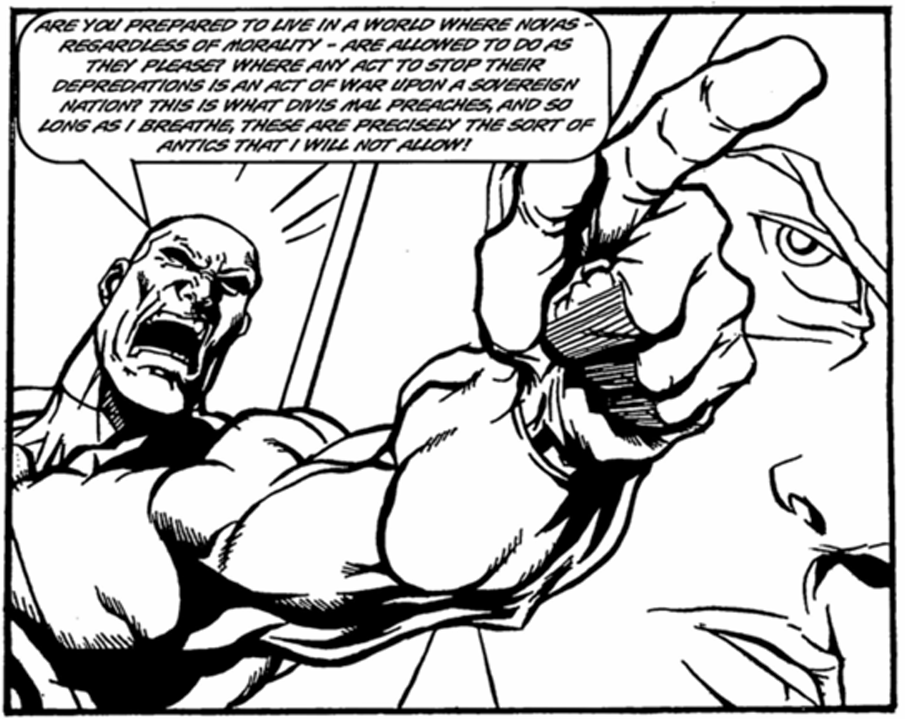
    No, I didn’t switch out the speech bubble. We’re genuinely supposed to think that he’s being an evil fascist for saying that novas should be treated as human beings instead of as sovereign powers.

    But first things first. There are two more scenarios in this one, and only one of them is actually bad. The other one, in fact, is quite good.

    SCENARIO THREE: GABRIEL

    The first scenario concerns a nova named Gabriel “the Miracle” Melchior who runs one of those nova cults we keep hearing about, called the Church of the Immanent Escheaton. It’s another one of those things that was mentioned in the core book with a lot of “ooooh, there’s something going oooooon heeeeere” foreshadowing, and here we actually get to find out what we’re meant to use it for, which is this specific scenario and nothing else. Oh well.

    Gabriel Melchior (which is apparently his given name, and that is something that would feel perfectly natural in a cheesy comic book but really looks out of place in Aberrant‘s thinking-man’s-superhero-story ) is incredibly powerful, can generate super-plagues at will, and is also suffers from Taint that has made him go loopy in the head. That being a bad combination, Project Proteus kidnapped him and stuffed him in their main secret prison slash Nazi research lab in Bahrain, where they first tried to cure him and then, when that proved impossible, proceeded to just slice him up and try to figure out what made him tick. Because Proteus.

    And then, when the terraforming of the Sahara got rolling (as mentioned in the previous post), someone had the bright idea to bring him out and make him use his powers to speed things up there. Because Proteus. He obviously escaped, about ten times as loopy as he was before, and now he’s holed up in the CotIE’s compound in Nevada and yelling over the OpNet about how the end of days is at hand and he’s going to unleash plagues upon the world that will kill one third of all baselines.

    The players, of course, are tasked by whatever faction they work for to get him to… you know… not do that, probably by killing him. The Teragen don’t want him dead, necessarily, but they’d also rather not get to a situation where the remaining two thirds of all baselines have every reason to hate novas, so they want to talk him down and get him to go into hiding with them. Meanwhile, the Directive is setting up a backup plan of erupting a neutron bomb by the compound, which they hope will fry everything in it so completely that even Gabriel’s quantum germs won’t survive.

    This, by and large, is actually a scenario I like. Again, it shows Utopia having done something bad, and since this time it’s specifically Proteus it’s extra bad. But just like in the second scenario, you can see why they did it – they want to cure Taint, so they need to examine a heavily Tainted nova, and they had exactly one of those available and no idea when they might get hold of another. And then it all went pear-shaped because someone got it into his head to be ambitious and pull one of those “underhanded means of achieving positive ends” things that Proteus is supposed to be all about. That actually works pretty well.

    The other factions, too, get a nuanced portrayal. The Directive’s plan is the antithesis of Proteus’ – Proteus is amoral in that it takes heedless risks for the promise of great rewards, the Directive is amoral that it will make any sacrifice necessary to avoid taking any risks at all. Utopia are well-intentioned but are also clueless about the fact that it was their own leaders who caused this mess. The Teragen are the most “humanitarian” of the bunch, but they are blinded by ideology in their own way – they want to save Gabriel, and never mind that he really is a walking-talking extinction event who is not in command of his faculties. Everyone gets to be themselves, and no one gets to be the hero.

    Could this be it? Could Aberrant finally be starting to live up to its promise? Will it be smooth sailing from here?

    AHAHAHAHAHAHAHA I crack me up.

    SCENARIO FOUR: INTO THE ARMS OF THE ANGEL OF WRATH

    First off, dumb title. I know I’m prone to overcomplicated names and sentences, and because of that, I’m always on the lookout for them. And this is one title that tries to pack in far more melodramatic imagery than it can comfortably hold.

    Secondly, this scenario finally wraps up the stupid Aberrant (as in the faction) plot, presumably because the writers realised that it wasn’t anywhere near sturdy enough to hold the weight of the game line. Corbin (Slider’s soccer-playing ne’er-do-well bestie, who founded the Aberrants) has decided to turn himself in, only he’s going to do it right outside of the Project Proteus facility in Bahrain and to maximum press coverage. The players are given the chance to investigate Slider’s death (weren’t they supposed to be doing that the whole time? Wasn’t that the premise of the metaplot? Yeah, this is what I mean when I say that that it was a damp noodle of a plot hook…) and either cover it up good and proper or reveal it to the world.

    But of course that’s not where the meat of this scenario is. No, this is the point where the Aberrant writers finally show their hand – and entirely too much of their personal issues at the same time. This is where An Incredibly Important Event In The Game’s Story happens. This is… where their self-insert Gary Stu totally PWNs Superman.

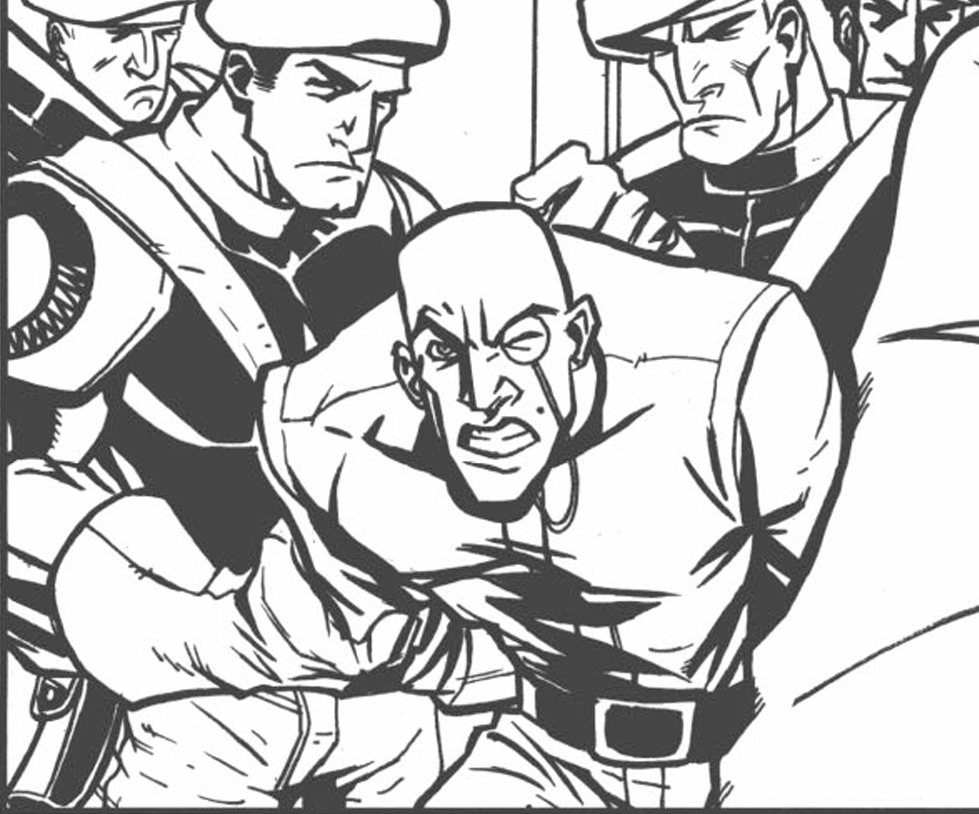
    By which I of course mean that Divis Mal shows up outside of Bahrain, Caestus Pax (that guy in the picture, the foremost Team Tomorrow dude) tries to fight him, and he gets trounced. Like, absolutely demolished. The narration is very carefully to stress that it’s not even close, Mal is just toying with him, because he’s a ten million gazillion bajillion times cooler than Pax and TAKE THAT, all the macho jocks who bullied me in high school!!!!

    Sorry, do you think I’m exaggerating? No, no, trust me, you cannot even imagine just how smug and snide and mean-spirited the whole thing is. Here, have some choice quotes:

    Keep in mind that layers of deception cover everything : Caestus Pax appears to be a paragon of nova-dom but is, in truth, little more than a very powerful bully with a huge playground . Divis Mal appears to be a sinister villain but is truly an idealist (though not necessarily a nice idealist).

    First off, this game seems to love the idea that being an “idealist” excuses a lot of things. The head of Project Utopia, who signs off on the sterility plagues and vivisections, is described as an “idealist” in the Project Utopia book, too. I guess he’s also “not necessarily a nice idealist.” I feel like the writers just divided the world into unfeeling brutes and deep people like themselves, and while the deep people weren’t perfect they were at least all worthy of sympathy, unlike the brutes.

    But most of all… yeah, such a bully, that Caestus Pax. You know what would have made it easier to accept that? If he had done, at any point of the last ten books, any bullying. In fact, it would have helped if he had done anything other than occasionally be mentioned in passing albeit unflattering terms. The core book, for instance, calls him “the authoritative Caestus Pax” at one point but never goes into how or why he’s authoritative. It just seems like he’s the ersatz-Superman, and the writers see Superman as a big, dumb, smug bully, so therefore they consider it too obvious to need pointing out that Caestus Pax is a bad guy who is unfairly seen as a good guy.

    I mean, Jesus, even Garth Ennis put more effort into it than this

    Divis Mal makes his appearance at this point , conclusively demonstrating to Caestus Pax just how pointless (and painful) standing against him really is.

    Dear Aberrant: please die.

    Once it’s over, the glow fades. The fiery aura dies away, Mal’s preternaturally perfect features apparent to all. Divis Mal floats to the ground, gently lays Pax on his back and kisses him on the forehead. If anyone nearby has some form of enhanced hearing or Mega-Perception 2 or higher(and isn’t deafened from the battle), she can hear Mal whisper, “It is a thing most sad to see a god stooping to serve monkeys. As you grow wiser, 1 hope you’ll see the error of your ways. Perhaps next time, you’ll listen.”

    Dear Aberrant: please die in a fire.

    Characters who attack him or choose to simply offer insult or meaningless argument will be ignored or swatted away as appropriate. Divis Mal is civilized; he is not a bully, but he need not tolerate fools.

    Dear Aberrant: please die in a fire surrounded by the smoking ashes of all your hopes and dreams.

    Oh, and over the course of the next few weeks, we are helpfully told, people all over the world are squeeing over how cool Mal is and how he, like, totally demolished Pax, who everyone now sees is lame. And never mind that the people of the world (not being privy to all those OOC assurances that Mal is the good guy, really, don’t be so close-minded, he ONLY thinks that novas shouldn’t obey baselines and that’s completely reasonable and don’t you dare say otherwise!!!) just saw the guy they trusted to protect them get bitch-slapped by the guy who refers to them as “monkeys.” No, part of the nerd-boy fantasy is that when you beat up the mean quarterback, the whole school yard cheers, so the world is going to cheer no matter how little sense it makes!

    AAAAARRGGGGHHHH.

    And what makes it worse is that this whole section is plastered with pious sidenotes about how this is totally the players’ story, they should in no way feel deprotagonised by the fact that they absolutely can’t measure up to Pax and he in turn absolutely can’t measure up to Mal. Because, see, while Mal beats Pax up, they can do some stuff that will totally matter! Except it won’t, because Mal can just undo anything they did with a snap of his fingers and anything that happens in this setting happens by his benign permission.

    Again, not exaggerating! He doesn’t even get a stat block. Here’s what he gets instead:

    Where Pax can affect cities, Mal can affect continents, where Pax has orbital range, Mal can actually direct his fire around any obstacle (including the planet) to hit anything he desires. Finally, where Pax has vastly reduced quantum costs for his powers, Mal often pays nothing to use his. Additionally, Mal has access to a few powers unlike any ever seen before: He can sense novas (latent and active) over an area the size of Texas with little effort – conversely, he can also conceal his own quantum sig nature with near-total efficacy. With some difficulty, he can distinguish “quantum signatures” to identify individuals. Mal can sense energy production/ usage over a wide area (a city, perhaps larger) and manipulate it if necessary, causing blackouts or surges or interfering with quantum powers over a wide area (several novas at once). This can be applied selectively. Finally, he can focus his power on one nova and effectively shut that nova’s M-R node down for a time – several weeks on the outside. The effect is somewhat similar to Dormancy, only the target can’t voluntarily reactivate his powers. Mal can, conversely, use this power to help one or more latent novas erupt and perhaps guide the form that eruption takes.

    So basically, he’s all-powerful, he can do anything you can think of, and he has no meaningful limitations whatsoever. And if you asked the developers – a pox upon their names! – why he doesn’t just magic everything into being precisely the way he wants it, I’m sure they’d say, “oh, because he has such a high regard for individual freedom and he wants everyone to find their own truth!” Barf.

    Yeah. I’ve been giving this game a chance, I really have. Most of it hasn’t been great, but most of it hasn’t been terrible either. I knew it had a bad reputation, but I figured it was just the Internet overreacting like usual, because while I could see the things that people were upset about, they weren’t that pronounced.

    I stand corrected. I was blind, but now I see. This game is an abomination. I am so, so glad that it failed dismally.

    But I’m still going to finish it, damn it, so stay tuned! This readthrough is likely to get a lot saltier from here on out!

  • Aberrant readthrough: Worldwide Phase One (part one)

    I have good news and bad news. The good news is, this one is at least not boring. Well, not all the time, at least. Bad news is, where the boredom ends… the SEARING LOATHING BEGINS!!!

    But let’s take it from the start.

    This book is technically a collection of ready-made adventures to run for your group, but it’s actually something a bit more interesting than that. See, like I’ve said before, the core Aberrant book is really more like a big book of foreshadowing than something that can be used on its own, each chapter teasing some part of the game or setting that only gets spelled out to a useful degree in a later supplement. The core tells you that Project Utopia exists and is super-important, and if you actually want to do anything with it, you have to get the book for it. The core tells you the Directive exists and… exists, and if you want to find out what it actually does and how you might make any sort of use of it, you have to get the book for it. You get the idea.

    In the case of Worldwide Phase One, the promise it fulfils is actually that of the world being about to change (probably for the worse). The core book swore up and down that shit was about to hit the fan, and then spent the next ten supplements outlining a setting where people mostly sat around talking about maybe possibly doing something at some point, if only they could figure out what, but honestly they weren’t too excited about it. Well, here’s where that changes. This book shakes things up, and in doing so gives you a sense of how and why things might go from the saccharine sweetness of the core book to the complete mess that will lead to the Trinity timeline.

    We start out with a pompous introduction explaining that unlike other, inferior games, the setting of Aberrant is going to move. Yeah, you and everyone else’s, dude, metaplot bloat was the style of the time. Anyway, there is a bitchy little aside in there somewhere about how “novas are getting tired of fixing world problems they didn’t cause.” Remember that odd little suggestion that novas have been washed clean of the ancestral sins of humanity, because it’s going to come up later.

    SCENARIO ONE: STRANGE BEDFELLOWS

    The first scenario details the 2008 US election, where for the first time a nova is on the Democratic ticket. The players are there to either help him win, help one of his opponents win, or replace him and run for the presidency themselves. It’s pretty decent stuff; it’s open-ended, without a rigid storyline but with each candidate being given a bunch of tactics and schemes that they may resort to to win the race, and a few sneaky manipulators trying to interfere from the sidelines. It does suggest crudely jury-rigging the combat system to function as “social combat” in order to represent the political mudslinging, and that’s the worst idea ever, but still, it’s easy enough to ignore.

    The problem is that we’re dealing with politics now, and that means that we’re going to be dealing with White Wolf’s politics, and White Wolf’s politics were always the most obnoxious one possible, as delusional as they were blithely convinced of their own self-evidence. For all the books up to this point, they have been easy to ignore, because the books have been so uninspired and by-the-numbers that none of the writers felt like getting on their soap box, but here… Well, let’s take a look at the candidates, shall we?

    • For the Democrats, we have Randel “the Fireman” Portman, who’s the world’s first recorded nova. The Democratic Party has put him on the ticket in a desperate bid to win, because everyone is so disappointed in them after Bill Clinton that they are otherwise screwed. Yes, really, that’s the state of things in this setting. Anyway, Randel is a nice, boring guy who wants nice, boring things and is really nice, but boring. Oh, and he’s pro-Utopia, because they seem nicely boring to him.
    • For the Libertarians, we have the incumbent President, Lauren Pendleton. Yes, really. Because see, after Bill Clinton’s sex scandal destroyed all credibility for the Democrats, the next Republican President also had a sex scandal that destroyed all credibility for the Republicans, so clearly it was time for a Libertarian girlboss. The wish-fulfilment was strong here, I feel… Anyway, her thing is that while her official platform of Make the Government Small Enough to Drown in the Sink is objectively correct and perfect, she has disappointed everyone by not being sufficiently true to it – she’s even signed some acts of (gasp!) big government! So her position is a bit shaky because of that.
    • For the Republicans, we have Bernard Morrison, who is a twinkly grandpa type who’s a born-again Christian and genuinely a pretty cool guy. See, it’s ironic, because Pendleton has all the objectively correct politics but is personally flawed, while Morrison has all the objectively incorrect politics but is personally decent!
    • For the newly formed American Eagle Party (think MAGA. No, really, they’re… they’re just MAGA, imagined twenty years before MAGA were a thing. Like, America first, throw out all the scary immigrants, get rid of all those nasty civil liberties, all that stuff. Yeah, I’ll give the game credit for being prescient here, as depressing as that is…), we have Mark Anthony Green, who is a horrible sociopath and the worst person ever. Like… that’s his whole deal. He sucks.

    So even getting past the improbability of the Democrats having messed up so badly that they need to resort to gimmicks like a nova candidate when the conservatives have obligingly split their vote three ways… This was really written by a bunch of DINOs, isn’t it? You get the distinct feeling that this was how the White Wolf writers felt every election season: they wanted so badly to vote for a cool libertarian or a folksy compassionate conservative, but ewwwww, those were too close to the icky, beer-bellied, pickup-driving, baseball-watching rednecks, so there was no choice but to hold your nose and vote for one of those spineless stand-for-nothing liberals because at least they were a little urbane about it.

    Which, I feel, is about the most obnoxiously self-flattering political philosophy you could possibly take. Like, no matter where you stand, the writers manage to be looking down their noses at you. So of course they’ve written it into the game as if it was the most obvious, common-sensical perspective you could imagine.

    But let’s move on, because it gets worse, oh God, it gets so much worse

    SCENARIO TWO: THE APOSTASY

    The second scenario concerns one of Team Tomorrow’s most powerful novas, Antaeus, getting fed up and leaving. See, Project Utopia is catching some flak over the whole “sterility plague” thing (which still is and always will be stupid) so they want to repeat their crowning achievement of terraforming Ethiopia’s deserts, this time with the Sahara, hoping that that will buy them back some goodwill. But they’re in such a hurry to do it that they overrule Antaeus when he brings up environmental concerns, and Antaeus has at this point evolved so far away from the baseline that he’s less of a person and more of a living embodiment of science-driven environmentalism. Accordingly, he doesn’t take it well, and realising that he doesn’t actually need Utopia for anything, he just walks straight out of Team Tomorrow Central’s headquarters and disappears to parts unknown.

    This gets all the various factions in a tizzy, either because they just lost a major asset or because they’re hoping to gain one by talking Antaeus into joining their side. In the meantime, though, Utopia goes on with the terraforming process, pushing their novas so hard that at least one gets overcome with Taint, goes crazy and has to be put down like a rabid animal. Antaeus eventually turns out to be hanging around the area being terraformed and invites a bunch of representatives of different factions to talk to him, including the players (standing in for whatever faction they are part of). Once he has a chat with all of them, he decides… not to decide anything, but just sort of continues hanging around while Utopia claims that he’s on a leave of absence.

    Now, the setup for this is actually really good. Firstly, we have Project Utopia showing flaws in precisely the way they should be showing flaws – not by indulging in melodramatically evil conspiracies, but in cutting corners, being slaves to PR, and making moral compromises to clean up their messes that just end up causing more messes and even larger compromises. Secondly, it shows a powerful nova going… strange. Not bad, just strange. Taint hasn’t turned Antaeus evil, but it’s turned him inhuman – into something that’s more like a pagan god than a man, obsessed with his personal areas of interest to the exclusion of all else. Those are the two things that I feel should be the ones that push the setting further and further towards an apocalyptic conflict.

    But I have a problem with the ending, because it’s such a letdown. The players get to argue the righteousness of their cause to Antaeus, in competition with the most silver-tongued members of their rival factions, and Antaeus… just shrugs and chooses none of the above? This should be the point where, just like in the first scenario, the players got to actually decide a major part of how the story would evolve going forward. And yet, that doesn’t happen. The big payoff for the players seems to be that they get the honour of interacting with a lot of super-cool, super-powerful NPCs! Remember that too, because that’ll come back with a vengeance.

    But here, I think I’ll wrap up for the week. The worst is yet to come and I’ve run out of ranting energy. Stay tuned for next week, when we get the best scenario and the worst one.

  • Aberrant readthrough: Elites

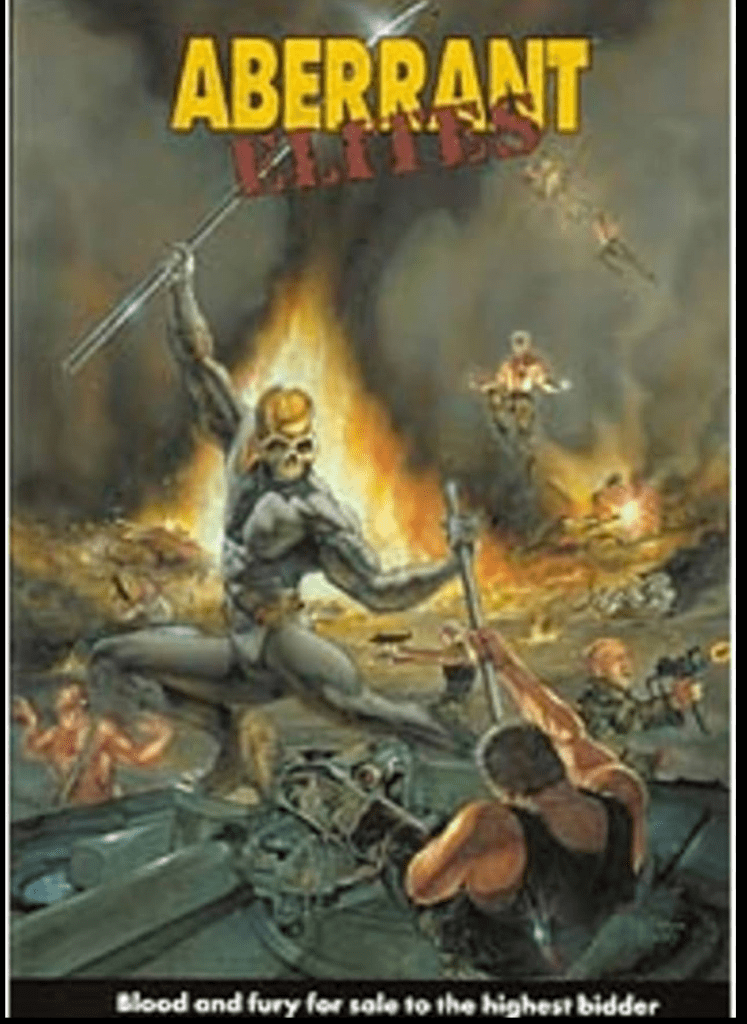
    Continuing our readthrough of Aberrant, this week we arrive at the elites. Less a faction than a fact of life, elites are mercenary novas who hire themselves out to use their quantum powers for anyone who can pay, whether that is the military dictator of a banana republic or a UN agency that is looking to get something done off the books. Will they turn out to be more interesting than most of the others? We shall see.

    The book starts out with what I think is actually the best piece of fiction the line has had so far. It’s about a group of elites fighting in a miserable Third World conflict and dealing with the lousy conditions and the human misery that comes with it. While it’s very 90s in its way of taking real human suffering and using it to make its silly dice-rolling game feel serious and relevant, it also manages to show novas under physical, mental and moral strain, and there has been entirely too little of that so far.

    The rest of the book is passable, if not great. It presents the DeVries Agency, which is the leading broker of elites worldwide, and a number of its smaller competitors. It suffers from the same problem that books like Project Utopia does, in that it seems to think that describing bureaucracies and paperwork is the way to make things feel realistic, and never mind that anyone who tried to actually roleplay out a dry legalistic contract negotiation would probably expire from sheer boredom. Still, it does present the world of the elites in a way that makes it feel vivid and like something that you could model at the table. You could absolutely use this to build a campaign where the players were working for a rent-a-nova outfit – in fact, in many ways elites are probably the closest thing you can find in this setting to regular RPG adventurers. They take on quests, they get into trouble trying to carry them out, and then they waste their reward partying so they have to do it again next week. Hey, it’s a classic for a reason.

    One thing that constantly bugs me, though, is the way the writers always seemed to be hazy about how they meant the game to actually be played. There are all these endless descriptions of how realistic everything is, and how it’s all very serious, and then from time to time the books just go, “but hey, feel free to play the game like goofy four-colour action if you want!” For example, here you get told that if you want to, you could run a game where the characters were Noir detectives with eufiber trenchcoats and fedoras (yes, really, it says that) working out a ratty office. Never mind that the whole game endlessly stresses how novas can easily make the big bucks, you do you, man!

    And, like… White Wolf, my dudes. If someone were to ignore your setting, then they’d be buying the books purely for the rules. And let me guarantee you, no one ever bought your books for the rules! Because they were terrible and everyone hated them. It was the feel and ambience that we liked, and the way you kept nervously hinting here that maybe we should just skip that and go punch some bank robbers makes it really painfully clear that you had no confidence in the setting you’d created.

    And I could be mean here and add, “and rightfully so!” but you know what? No. That’s not true. There is something here that I haven’t seen before, even thirty years later, and which could have shone if it had been properly polished. If you’d just thought a little harder on what your themes were supposed to be. If you had just set up the conflicts better. If you had just… cared like obviously cared about your more successful games.

    But oh well.

    The book presents two specific war zones that players might get into, Kashmir and Congo. The former is a seemingly eternal hot spot where three different world powers (India, Pakistan and China) are glaring at each other over a bombed-out wasteland that neither of them really has any use for in its present state, but after all the misery they’ve gone through for it they absolutely refuse to let anyone else have it. Depressing but believable. Congo has a nova dictator who’s too overcome with Taint to dictate especially well, so a hundred tiny warlords are carving up de facto domains all over it. Both of them feel like decent settings for gritty military superheroics, a cross between an MCU movie and a Vietnam War story.

    Much like in The Directive, the best part is really the equipment section, and I say that as someone who usually hate equipment sections. The DeVries Agency have come up with all sorts of cool shit like monomolecular whips and robotic wasp swarms that they’ll let you use if you show that you’re a closer. Works for me.

    As with all these books – and yes, I will complain about this to the very end – is the lack of interesting NPCs. A superhero setting runs on its larger-than-life characters, and other than the Teragen, Aberrant suffers from being full of small, dull people with no discernable drives or passions. And this is in spite of the fact that novas in general and elites in particular are meant to be celebrities, people with very distinct images. It’d be one thing if those images were mostly publicity stunts covering rather ordinary, neurotic people, but here, even the images themselves are dull.

    The best of the lot is this guy who goes by Totentanz, and apparently his thing is that… he kills people a lot. And then you read his backstory, and it turns out that he kills people a lot because he got so sad when his fuckbuddy made it clear that she had no feelings for him that his quantum powers switched off all his emotions other than psychotic rage. So… his thing is that he’s actually even more boring and one-dimensional than he seems? I mean, at least he’s got a cool name and costume, and that’s more than what most of them have, but there’s just no substance there.

    So all in all, this is one of the better books, but that’s not saying much. Next time, we’re going over Worldwide Phase One, and that might need to be a two-parter, because oh yeah, I have things to say about that one! Which does admittedly mean that it’s not boring.

  • Aberrant readthrough: The Directive

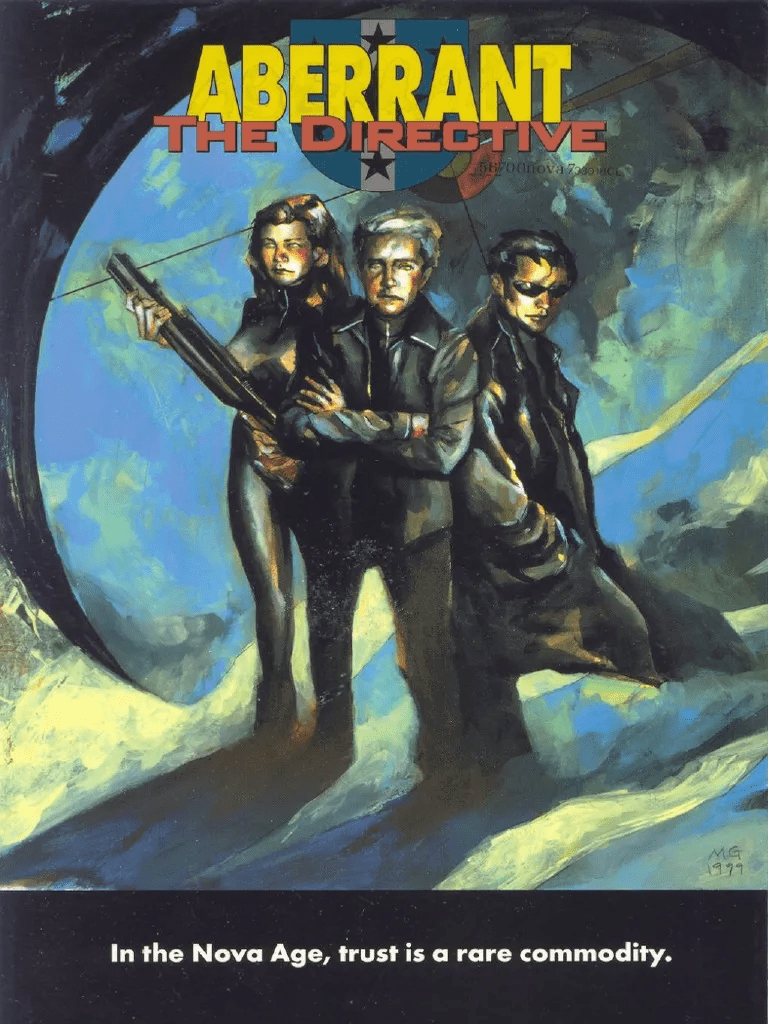
    Our stalwart progress through the Aberrant canon has now passed the halfway point, and it’s time for the Directive to finally get their time in the sun. So far, what we’ve been told about the Directive has mostly consisted of, “eh, they exist, I guess.” Can their own book elevate them?

    Spoiler: No… no, not really.

    We start out with a piece of fiction that is at least halfway decent. Apparently one of the characters introduced in the Teragen book has taken hostages on the subway. This person is a pretty weird character who goes by “Sloppy Joe,” because he’s got no skin and all his organs are kept in place by an invisible forcefield. See what I mean about the Teragen getting all the memorable NPCs? Anyway, the Directive is on the case, but their operation is complicated because it’s not enough for them to take Joe down, they have to do it in a way that looks good, so they’re doing a very intricate tap-dancing routine with the media, Project Utopia, and local law enforcement, all of which sort of leaves their actual hostage negotiator with his ass hanging out and being forced to improvise wildly.

    We then get a long and boring description of the Directive’s history, which amounts to the governments of Russia, Japan, America, Britain and Germany all having a problem with the way that people keep flying around and punching mountains these days (funnily enough), so they founded the Directive as a semi-secret international agency to keep an eye on novas. There is one notable event in the Directive’s history where some German media mogul was using his nova powers to enact subtle mind control of his viewers so the Directive exposed him and got him arrested. And… ye gods… This is what he apparently looked like:

    Yes. He was a bald German guy with a monocle. I’m only surprised that he wasn’t noted as being a cat person and having a name like Baron von Evilstein or something. I mean, look, I have no problem with cheesiness and cliches in roleplaying games, in fact I kind of prefer them, but Aberrant is so insistent on its po-faced seriousness that these things feel jarring. Like, this book seems to think that it’s doing John Le Carré, all dark and brooding and full of demoralising realism, but it’s taking all its inspirations from Bond movies.

    Anyway, bla bla bla, the Directive is super-secret and different parts of it have no idea what other parts are doing, and each cell operates on its own judgment as much as possible, which at least makes it easier to justify some player agency in a hypothetic Directive campaign. And also create some entertaining clusterfucks where it turns out that the suspicious people the players spent the last three sessions spying on was another Directive cell that was spying on them. Anyway, they are super-skeevy and trying to blackmail, extort, strongarm and generally bully people into serving their ends, preferably without ever revealing that it’s the Directive that’s pulling the strings. They also actively try to portray themselves as a bunch of hapless bumblers so that no one feels threatened by them, which I’m not sure how well it plays with the intro fiction where they were all about polishing their brand until it glowed…

    There is a mention of a new group of novas called the Protectors who have apparently buggered off to Antarctica and may be up to no good there. Okay, I approve of that in theory, this game desperately need more distinct nova “teams,” partly to function as antagonists and partly to provide examples of what a group of players could conceivably get up to and accomplish. Not sure what to do with the Protectors in their current form, though.

    There is a section on spy gear that’s actually pretty good, including things like “quantum-inert” fast-solidifying foam that can’t be affected by nova powers, so if a nova gets stuck in it she’ll probably stay stuck There is a drug that can be injected through a dart and causes a nova’s powers to go completely haywire – not just shut down, but start erupting all over the place. There is gas that causes eufiber (which is the wonder-material that a lot of novas use for their costumes because it adjusts to their powers – it’s basically the Fantastic Four’s “unstable molecules” uniforms) to freeze solid, so a nova can get stuck in his spandex. All of which feels pretty nicely balanced between being useful enough that the Directive can plausibly incapacitate and imprison novas and not being so overpowered that said imprisoned novas can’t conceivably bust free again.

    All in all, though, this book was a chore to get through. It’s got the same problem most of these books have, which is that no one seems to have been enthusiastic about the subject matter. Just like the Project Utopia book made me feel like the writers were apathetic at best about superheroes, this book makes me feel like the writers had no particular interest in secret agents. The Teragen book, as mentioned, is the one that actually got some love, because the writers were absolutely interested in cool, edgy posthuman monsters. And this book gets hit harder than most, because even those superpowers who do make it in have to be kept low-key and unflashy, so you don’t even have the occasional relief of seeing people shoot laserbeams at each other.

    Next up is the book on elites, which I can reveal is a bit better but still suffers from many of the same flaws.

  • Aberrant readthrough: XWF and Fear and Loathing

    This week in our Aberrant readthrough, two short booklets that… I mean… I can’t even… WHUT?! I think that this point, they had realised that they couldn’t think of anything interesting to do with the setting so they just sort of started throwing everything at the wall to see what stuck…

    The XWF (which in the world of Aberrant stands for Xtreme Warfare Federation) is a professional wrestling circuit for novas, or at least for what it claims are novas. Quite often, the wrestlers are in fact “mitoids,” people who have taken super-steroids to get a single dot of the kind of Mega-Strength that novas can take up to five dots in. They usually end up dying from an overdose and it’s all terribly tawdry and depressing.

    I’m honestly not sure if the writers here really loved professional wrestling and wanted to include it in their game, warts and all, or if they really hated professional wrestling and wanted to spend some some page count on telling everyone how terrible it is. Either way, it’s a bit underwhelming if you are entirely apathetic to professional wrestling and don’t think it gets better by adding superpowers to it.

    I mean, the XWF is mentioned in the core book, and I guess it works as a nice bit of setting flavour, both as a snarky commentary on how superhero fiction (with its oversized, strutting personalities and grudge matches breaking out at the drop of a hat) greatly resembles professional wrestling, and as a way of highlighting the sleaziest aspects of celebrity culture. As in, getting rich and famous from having superpowers is kind of like getting rich and famous from having stunning good looks, as in both cases you are in some sense selling your body even if you’re getting a really great price for it. There is something a bit interesting in exploring how you can be pampered and elevated in some ways and simultaneously exploited and debased in others.

    But there isn’t really any kind of plot hooks here. Again, unless you really think that he whole issue of pro wrestling is fascinating in itself, but even then I’m not sure there is anything in here that’s meaty enough that you couldn’t just come up with it on your own, just working from first principle.

    And then there’s… this thing…

    Like the XWF (like all the books published for the first edition, really), this supplement builds on something from the core book. Also like the XWF, it’s not entirely clear to me that it deserved further elaboration. See, in the core, there was a section briefly detailing how the major cities of the world had changed in the Nova Age, in a summarised version of what eventually got published as Year One. And it was all presented as an in-universe document, like most of this stuff, in this case as an article by a Hunter S Thompson clone named Dr. Duke Rollo. Here, he gets a full booklet to rant even more about stuff.

    Thing is, though, Rollo is written as one of those obnoxious people who consider themselves so clearly, incandescently right, and everyone else so obviously, self-evidently stupid and corrupt, that they don’t feel the need to actually make arguments or explain positions but just sort of keep shouting incoherent insults. And that can make them interestingly to listen to – for a while, at least – but it makes them really unsuitable to describe a setting that you’re supposed to use.

    Duke Rollo’s opinions, as near as I can make them out, are:

    • Project Utopia is bad and people are over-impressed with novas.
    • Everyone but himself is either a soulless capitalist or a braindead capitalist patsy.
    • DRUGS DRUGS DRUGS DRUGS DRUGS DRUGS DRUGS!!!!!!

    I will say two things for the character. Firstly, he’s actually anti-Utopia without being a either Teragen fanboy or negatively portrayed. It’d be nice if he could articulate why he’s anti-Utopia beyond just “most people like them, most people are idiots, therefore they must suck for some reason that I can’t be bothered of to think of at the moment,” but fine, I’ll take it.

    And secondly, he’s a colourful character in a setting that desperately needs them and has far too few of them. I’ve complained about that before. There’s a ton of characters, but other than the Teragen, they are all fairly uninspired and lacking in drive. Rollo, at least, is passionate, even if he can’t quite articulate what it is he’s so passionate about.

    All the same, this isn’t great. Next up is the Directive, in which Aberrant will manage to make James Bond boring. Stay tuned.