Blog

  • Where I Read: Daggerheart (part three)

    Where I Read: Daggerheart (part three)

    Okay, so classes. First there’s a page repeating a lot of what we’ve already learned, but it also mentions a few new things. For instance, every class has a Class Hope Feature which lets them spend Hope to do something. Each subclass also has a Foundation Feature, Specialisation Feature, and Mastery Feature, though you don’t get those for free, you have to take them as a card when you level up. Okay then.

    First up is the Bard. They’re charismatic and slightly bitchy arteeeests, and their domains are Grace and Codex – so they know mysterious lore and can express it really prettily, basically. Their Hope Feature is that they can spend Hope to distract an enemy, and their Class Feature is that once per session they can give the party a rah-rah pep talk that grants each other PC a d6 that they can roll, once, to add to another roll or to reduce Stress.

    They can also choose to start the game with either an unsent letter (ooooh) or a… romance novel. Okay, so again I’m noticing that the cutesy postmodern humour kind of clashes with the stated intention of making the game feel epic and evocative… though that is, I will admit, a problem I have with a lot of modern fantasy. The Dragon Prince, I’m looking at you!

    Bards can be Troubadours or Wordsmiths. Troubadours have some abilities related to healing and bestowing Hope, while Wordsmiths have some advantages in terms of boosting actions and reducing Stress. So basically the one is about getting people to chill, and the other is about getting them to excel.

    Next up are Druids, who are your basic nature nuts. Their domains are Arcana and Sage, so they practice natural magic of the forest. They can turn into animals by taking Stress, or by using their Hope Feature that lets them spend Hope to do it instead. They can also pull off minor cosmetic acts of nature-magic, like making flowers bloom.

    They can be Wardens of the Elements, in which case they can channel one of the elements in combat for some perks, like doing damage to anyone who strikes them for fire or raising their resistance to injury with earth. Any Warden of the Elements can channel any element, but only one at the time. Alternatively, they can be Wardens of Renewal, who can restore Hit Points and clear Stress in people.

    There are a couple of pages of animals you can turn into, along with special rules for them. It all looks kind of fiddly, but it certainly makes Druids pretty adaptive – even sticking to just the ones you have access to at level one, that’s a pretty big bag of tricks.

    The Guardian! As mentioned before, this dude’s into Valour and Blade. He protects people, and his Hope Feature is that he can spend Hope to clear out Armour Slots. I guess that means they can take more of a beating. Their Class Feature is that they can turn themselves Unstoppable, during which time they take less damage and do more damage. Each time they do damage, they increase the amount of extra damage they do, but once that reaches a maximum, they drop out of Unstoppable again. Okay, so that’s kind of cool.

    Guardians can be Stalwarts or Vengeances. Stalwarts can tank even better, while Vengeances have higher Stress tolerance and can also spend Stress to cause people who attack them take some damage in return. On higher levels, Vengeances can also select a target to prioritise, and on attacks on them they can swap the results of their Hope and Fear Dice (so they gain Hope no matter what the roll is, I suppose).

    Rangers are cunning hunters and outdoorsmen who use the wilderness to their advantage and fight pragmatically, as showed by their domains of Bone and Sage. Their Hope Feature is that they can spend Hope to make a successful attack hit three different enemies at once. Their Class Feature is that they can mark an enemy for takedown, which means that that enemy suffers Stress when struck and also that the Ranger can turn a failed attack into a successful one, though at the cost of unmarking them.

    Rangers can be Beastbounds and get an animal companion, who levels up as they do, our they can be Wayfinders, giving them more bonuses on hitting things and some extra skill in, well, finding their way to places. There’s a page of rules just for the animal companions, who need to be fleshed-out characters in their own rights…

    … I’m trying to keep an open mind here, but I’m increasingly feeling like this game was written by people who felt like D&D 5E wasn’t fiddly enough. Which, okay, if that’s what floats your boat then more power to you, but… how does that fit in with the whole “focus on the story more so than the mechanics”?

    Rogues… well, they’re what you’d expect. They sneak around and stab people in the back. Their domains are Midnight and Grace, for hiding and lying. Their Hope Feature lets them spend Hope for a bonus to Evasion, and their Class Feature lets them remain hidden even from enemies who should be rights be able to spot them, right up until they attack.

    Rogues can be Nightwalkers or Syndicates. Nightwalkers can teleport from one shadow to another and hit harder when they’re Vulnerable (which we don’t know what it means yet, but I guess it’s meant to give them a “cornered rat fights twice as hard” style), while Syndicates automatically know someone in every new town they come to who they can ask for a favour.

    Next up is Seraphs, our holy warriors. They have Splendour for the healy-healy and Valour for protecting the innocents. Their Hope Feature is a limited healing, and their Class Feature is that they get a bunch of bonuses per session that they can use to boost allies’ rolls, reduce incoming damage, or give them Hope. They can be Divine Wielders, in which case they can fling their melee weapons at enemies and then cause them to return to their hands, or Winged Sentinels, in which case they can, well, fly.

    Sorcerers we have already dealt with in the form of that sample character. They are people with inherent magic that runs in their family. Their domains are Arcane (for inherent magic) and Midnight (for illusion). Their Hope Feature lets them reroll damage dice for damage-dealing spells, and their Class Features lets them sense magic, create minor illusions, and discard a domain card to gain Hope or enhance a damage-dealing spell. They can have an Elemental Origin, in which case they can do some tricks with the elements, or a Primal Origin, in which case they can enhance magic (mostly magic that deals damage – yeah, I’m sensing that Sorcerers are very much meant to be a DPS class).

    Warriors are more big fighty types, though they have a bit more of a “swordsmaster” or “warrior philosopher” vibe than just “I hit people onna head.” Their domains are Blade, for the swording, and Bone, for the intelligent swording. Their Hope Feature is a bonus to attack, and their Class Feature is that they get an attack of opportunity when their enemies try to retreat from them.

    Warriors can have the Call of the Brave or the Call of the Slayer. The Call of the Brave gets Hope and Stress-relief when failing a roll with Fear or when performing a ritual before engaging a superior opponent. So basically, you’re at your best when you’re doing something that’s clearly a bad idea but you’re going to do it anyway because it’s HONOURABLE!!! Heh. I kind of like that, to be honest. The Call of the Slayer can build up bonuses every time they roll with Hope that they can then spend for a powerful strike. Hiyah! Okay, I’ll grant you that I like this class a good bit better than the standard D&D Fighters…

    Wizards, finally! They are nerds who can do magic because they’ve done their homework. Their domains are Codex (for magic books) and Splendour (for healing, since in this game they’re the ones who do that, too). Which makes sense, honestly – like I’ve said before, I don’t really get the whole D&D convention whereby wizards can’t heal. Curing diseases is, like, the first thing that people expect from a wizard! After that it’s love potions, fertility, and putting curses on people you don’t like, in no particular order.

    Anyway, the Wizards’ Hope Feature is, somewhat interestingly, the ability to make an enemy reroll an attack or damage roll. Their Class Feature is that they can do minor magic tricks and that whenever they roll a particular number on their Hope and Fear Dice, they gain Hope or lose Stress, since they’ve spotted an auspicious sign. That’s sort of neat.

    Wizards can be of the School of Knowledge, in which case they can draw additional domain cards and can use their Experiences by gaining Stress instead of by spending Hope. Or they can be of the School of War, in which case they get extra HP and when they succeed at an attack while rolling with Fear they do extra damage.

    Next up is ancestry. There’s a lot of frankly tiresome hand-waving about how everyone is a unique individual first and foremost and yay the brotherhood of sentient beings and look, we’re totally not racist, honest! Yes, yes… Anyway, each ancestry gets two features, so let’s dive right in.

    Clanks are robots or golems – some sort of manufactured creature, either way. They can look pretty much like anything. Their Ancestry Features are that they were built for a purpose that aligns with one of their Experiences, so they get an additional bonus when using that Experience. Also, they rest up faster than feeble organic creatures.

    Drakona are humanoid dragons. They can look more draconic or more humanoid – from just being people with scales and sharp teeth to having tails, snouts, back ridges, and vestigial wings. They have protective scales and can breathe some element, like fire, lightning, or ice.

    Dwarves are… well… Dwarves. They can embed gemstones in their skin, though, for extra sparkliness. Also, their nails are tough and stonelike, and dwarves like to polish them and carve them into facets. Their features are about taking damage really well.

    Elves, likewise, nothing much to see here. They do develop a “mystic form” when they devote themselves to the protection of the natural world, though, which can manifest as them having freckles that twinkle like stars or ivy growing in their hair. I’ll give the game this much, there has been a considerable effort spent on impressive visuals… Anyway, Elves can get an advantage on initiative and can perform an extra “downtime move” while resting.

    Fairies, on the other hand, are a little different from their usual depiction. Here, they are actually insectoid to varying extents – much like the Drakona, how much varies between “pretty girl with chitin instead of skin” to “big humanoid beetle.” They all have some variety of insect wings, though. They also range in size from two feet to seven feet. They can spend Hope to reroll their own or an ally’s action.

    Fauns are goat-men with powerful legs and stately horns. In much the same way as the Fairies and Drakona, they range from “human with horns and hooves” to “goat that inexplicably walks around on two legs.” They can jump and kick really well.

    Firbolgs are honestly pretty similar to Fauns, in that they’re half human and half horned animal, only the animal part is usually something a bit more dignified than a goat.  Firbolgs who look like half-bulls are also known as minotaurs. By any name, they have a 1 in 6 chance of shrugging off Stress gain and also get a bonus to charging enemies.

    Fungril are… okay, I think I’m spotting the theme here. They’re mushroom-people. They grow elaborate caps on their heads that they can decorate in various ways. Their Features are that they can speak telepathically (through their “mycelial array”) to speak with other Fungril, and by touching a corpse they can extract one memory from it.

    Galapa are turtles. Okay, I think this is getting a little old now, and I’m not even halfway through the list… They have shells that offer them protection from injury, and they can retract into them to be even safer (though then they can’t move). Galapa shells can be carved into decorative shapes or reinforced with metal, though it’s a slow and painful process.

    Giants are big dudes, though maybe not as big as you’d expect – they’re somewhere between six and nine feet tall. They are born without any eyes, and new ones may appear or disappear on their faces throughout their childhood, with them finally ending up with between one and three of them. They get extra HP and reach.

    Goblins are little dudes with great big eyes and ears. They also come in every colour of the rainbow. They are good at keeping their balance and spotting danger. Gotta admit that the picture of the little Goblin witch on this page is kind of adorable…

    Halflings are small people with prominent ears, noses, and feet. The fluff text mentions them possessing acute hearing and smell, but that’s not part of their Ancestry Features – instead, they may reroll a 1 on their Hope Die. Also, at the start of extra session, everyone in a party who has a Halfling in it gains 1 Hope, because halflings are good luck. Heh. That’s kind of nice.

    Humans are maybe not quite Humans as you know them – they apparently regularly live to be a hundred, so I guess Daggerheart Humans are supposed to be one of those older and nobler races that modern man is but a fallen remnant of, sort of thing. Otherwise they are what you’d expect – they can take more Stress, because of the good ol’ human spirit, and they can reroll failed Experience rolls, because they adapt well to new situations.

    Infernis are humanoids with horns… Seriously? Another kind? That’s three now. Okay, I am definitely starting to feel like this game has a clutter problem. Save some for the supplements, guys, that’s where the money is! Oh well. Infernis are descendants of demons from the Circles Below. Aside from horns, they also have fangs, and occasionally forked or arrow-shaped tails. They look demonic, and when they get angry they start looking extra demonic, enough to get a bonus to intimidate. They can also take Stress to turn a roll with Fear into a roll with Hope, because they fear nothing.

    Katari are cat people. You know the drill by now, they can look more like cats or less like cats, they can look like different sorts of cats, bla bla bla. I mean, I do approve of this approach from an ease-of-play standpoint, because it means you don’t have to internalise a ton of specific lore – you can just say that Katari are cat people, and whatever people picture when they hear “cat people,” that’s perfectly correct. I’m just kind of losing interest in all these ancestries that are all “human mixed with something else” and carefully avoiding specifics. Oh well… Katari are very agile and have retractable claws.

    Orcs have tusks and green, grey, blue or pink skin. Some have no body hair at all, while others are giant fur balls. They get extra resistant to attacks when they’re down to their last HP, and they can gore people with their tusks.

    Ribbets are the frogs. See, I was all set to be excited about them, but the game sort of ran the formula into the ground before we could get here… Variations include webbed fingers, warty or smooth skin, and any number of vibrant skin colours and patterns. They have a long prehensile tongue and can breathe underwater.

    Finally, Simiah! They’re monkeys or apes. They’re good at dodging blows and climbing. I refuse to spend more words on them than that.

    There are also rules about being a mix of two ancestries, because Lord knows we don’t have enough choices as it is… It’s pretty basic, though, you just pick one Ancestry Feature from each of your two ancestries. So if you really want to be a walking fungus with a turtle shell, that’s a character you can play here.

    Next part is communities. Which I seem to recall there are at least not that damn many of.
  • Where I Read: Daggerheart (part two)

    Character creation! You start out by first choosing a class and a subclass (of which each class seems to have two to choose from). Bards can be Troubadours or Wordsmiths, depending on whether they sing healing songs or engage in “clever wordplay.” Hmm. Weaponised punning, huh? I am cautiously intrigued… Druids can be Wardens of the Elements and throw elemental magic around, or Wardens of Renewal and heal people.

    Guardians seem to be your basic big guys with swords, except they’re different from Warriors, who are further down. They can be either Stalwarts or Vengeances, I guess depending on whether they’re pure tanks or leaning towards damage-dealers. Rangers can be Beastbounds (you get a pet) or Wayfinders (you get to hunt and kill things). Rogues can be Nightwalkers (who can sneak) or Syndicates (who know a guy).

    Seraphs are another class that’s not quite standard D&D, though the closest analogue seems to be paladins. They can be Winged Sentinels, in which case they fly, or Divine Wielders, in which case they get a legendary weapon. Also, the Winged Sentinel seems to be the flying knight chick from the cover.

    Sorcerers can have an Elemental Origin and “channel the raw power” of an element, or a Primal Origin and focus on “versatility.” So brute force versus finesse, I guess? Also, the picture for the Elemental Origin Sorcerer is the frog dude from the cover. Aw yeah. Still calling dibs on playing a frog!

    Warriors can have the Call of the Brave or the Call of the Slayer. The former “[uses] the might of [their] enemies to fuel [their] own power,” while the latter strike with “immense force.” So I guess maybe the Call of the Brave gives you some kind of bennies for being hit, maybe? Not sure. Finally, Wizards can have the School of Knowledge to be super-nerds, or the School of War if they basically just want to throw fireballs.

    I don’t know about this, to be honest. I feel sort of like I’m drowning in options here, and some of them are really kind of samey-sounding. I mean, that’s a problem I have with D&D to start with, and they’ve made it even worse here. But we’ll see, perhaps the classes are more distinctive in their actual writeups.

    Having chosen a class, you get a Class Feature, which is on your sheet. You may need to choose one of several available Features. Hmm, okay.

    Next you choose your Heritage, which is made up of ancestry (what species you are) and community (what your folks did for a living, basically). Your ancestry gets you two features, and your community gets you one. There are eighteen different ancestries (including the regular spread of Human, Elf, Dwarf and Halfling, some more unorthodox ones like Giant, Orc and Faerie, and some that I have no idea what they are, like Clank, Fungril and Katari) and nine different communities, but they’re not described here. One of the ancestries is the Ribbet, which I assume are the frog guys. Ribbet, huh? I take it that for all the talk of epicness, this isn’t a game we’re supposed to take entirely seriously? I mean, don’t get me wrong, I’m all for that, but I’ m sensing some tonal mismatch.

    Next is your Traits, which are Agility, Strength, Finesse, Instinct, Presence, and Knowledge. It’s basically the regular D&D ones, except they’ve broken Dexterity into two and mashed Strength and Constitution into one – both of which are, to be honest, excellent ideas. You assign an array of +2, +1, +1, +0, +0 and −1 among your Traits, in best Powered by the Apocalypse spirit.

    You also get some fixed values. Your Evasion and Hit Points are both based on your class, and everyone starts with 6 Stress and 2 Hope. Stress is Hit Points for your brain, basically – you lose them when you start cracking under the pressure. You gain 1 Hope every time your Hope Die shows a higher number than your Fear Die, while the GM gains 1 Fear every time the opposite happens. In both cases they can be used to power some not-yet-described effects. Evasion is what it sounds like – it’s your defense stat. It’s noted that it’s up to you how you describe your defenses, so for instance a wizard might describe as a magical force field that attacks shatter against. That’s a nice touch.

    You get to choose either one two-handed weapon or two one-handed weapons to start the game with, from the Tier 1 list. The weapon you’re wielding determines the type of dice you roll for damage, while the number of dice is determined by your Proficiency (which starts at 1).

    Likewise, you can choose one set of a Tier 1 armour. Armour is mentioned as having a “damage threshold” which determines how much damage you can take before you lose HP. That’s phrased a little ambiguously, and it’s kind of implied that it’s not as simple as “roll damage, subtract armour, lose that many HP,” so that’s another thing we’ll see how it turns out. Armour also has something called “Armor Score” which I think gives you a limited number of times when your armour can reduce how badly a hit hurts you – essentially, the armour takes some of the impact, but it breaks a little from it at the same time. Okay, cool, cool…

    You also get a basic set of adventurin’ supplies, a bit of gold, a Health or Stamina Potion (restores HP and Stress respectively) and one special item from your class. That’s another detail I approve of, buying gear is my least favourite part of chargen in any game.

    Next you get to choose two Experiences, which are kind of like FATE-style Aspects – they’re ideas that describe your character’s background, talents or approach, and if you can argue that one is relevant to a roll, you can spend a Hope point to get +2 on that roll. I’m not sure I see why it’s necessary to spend something to make use of a trait that’s always supposed to be true, but then, I have pretty much the same gripe about FATE… Either way, there are some guidelines about making Experiences both specific and flavourful, all decent stuff but nothing out of the ordinary.

    Your class, it turns out, is composed of two different “domains” that it shares with some other classes – for instance, the Bard class has Grace (being quick on your feet) and Codex (magical study), while the Rogue class has Grace and Midnight (shadows and secrecy). You start out with two “domain cards” taken from your available domains, with each card giving you certain skills and abilities. Interesting approach, and it does somewhat justify why there are so many classes – they really are meant to overlap a little.

    Finally, you are supposed to describe your connections to the other PCs, which you can do with questions provided by your class. Another bit of PbtA-ing there, I guess, though not a bad one.

    Next follows an example character, the Elven Sorcerer Marlowe Fairwind. Her Experiences are “Royal Mage” and “Not On My Watch.” As a Sorcerer, her Class Features apparently include sensing magic, creating illusions, and doing something very crunchy called “Channel Raw Power” that apparently lets her surrender one card to gain Hope or empower a damage-dealing spell. Her backstory is that she’s in the King’s service and she’s apparently the only one who can save him from some mysterious danger, but he refuses to tell her what that danger is. Okay, that’s kind of cool.

    There’s a list of the domains, some of which are more intuitively named than others. They are: Arcana (inherent magic), Grace (charisma), Blade (weapons), Midnight (shadows and secrecy), Bone (bodies and combat… yeah, I don’t know, I think this is going to turn out to be a “monk” thing, but I’m not sure), Sage (knowledge of nature), Codex (scholarly magic), Splendour (healing and necromancy) and Valour (protection).

    There’s a flashy image that shows how the classes overlap in terms of domain, though it’d be easier to follow if the names of the domains were written out instead of represented by images… but okay, I see here that the Guardian is poised between Valour and Blade, while Warrior is between Blade and Bone. So I guess Guardians protect people with weapons, while Warriors are more about just kicking ass. Well, that’s a distinction… I guess… A Seraph lies between Valour and Splendour, so yeah, they’re paladins, basically. Wizards, perhaps a little more unusually, are between Splendour and Codex, so it looks like they’re healers in this game and there’s no such things as Clerics. Fair enough, I never did get the whole “arcane casters can’t heal” thing that D&D insists on. Also somewhat interestingly, Sorcerers share Midnight with Rogues, so apparently they’re supposed to be a bit sneaky in this game.

    There’s also an example of a domain card and some explanations of how to read it. Every domain card has a level and a domain, and you can only choose cards you have the right domain for and are of an equal or higher level than. There are also some rules for “recalling” domain cards, since apparently after level five you will have more cards than you can hold at any one time, so you need to choose a loadout whenever you rest. There are three types of cards, abilities (which are non-magical), spells (which are magical) and grimoires (which are bundles of small spells). Other than that, it seems you just follow the rules written down on the individual card. Okay then. Next up is the list of classes.

  • Where I Read: Daggerheart (part one)

    Where I Read: Daggerheart (part one)

    Hello and welcome to my readthrough of Daggerheart, one of those new-fangled roleplaying games who turned up while I wasn’t looking. I figure giving it a thorough look might be a good way to find out where things are at the moment, so here we go.

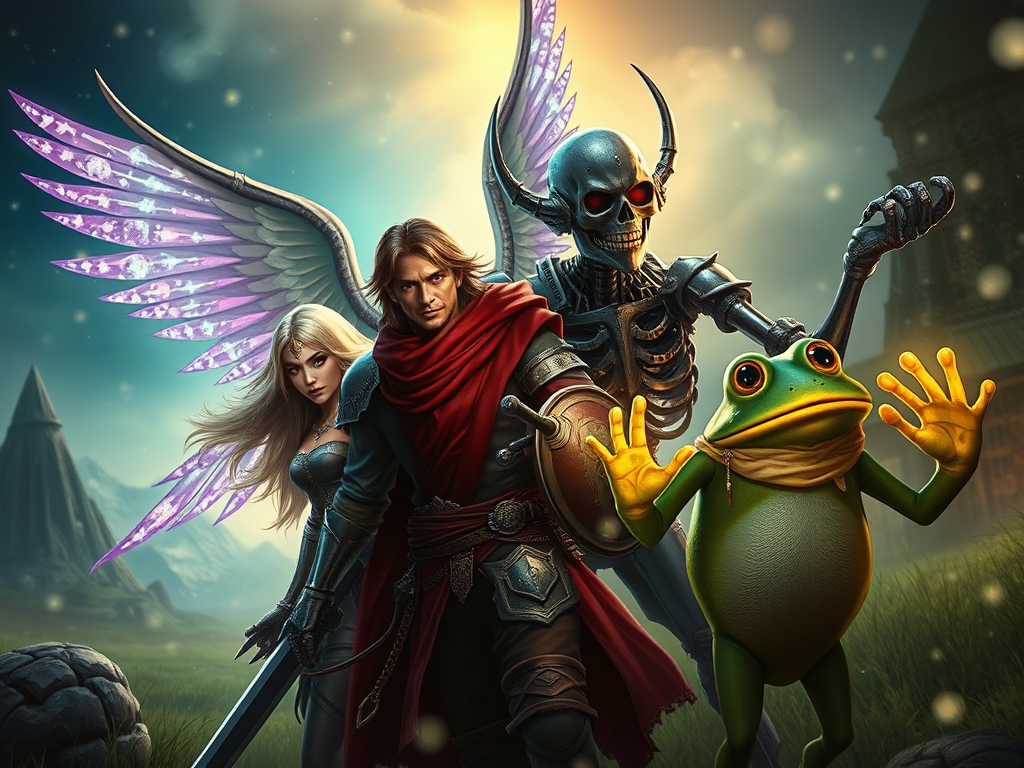
    First off, the cover. It’s very shiny. It portrays a whole bunch of fabulous-looking characters – there’s a knight chick with wings, a dude who seems to be all mouth and no face, a mechanical Necron-looking skeleton with a staff, and what seems to be a humanoid frog with a glowing hand. Huh. Okay, if I can play a magic frog, I’m totally gonna, just for the record.

    We’re on to the introduction. Daggerheart is a game of fantasy adventure where you explore exotic locations and save the day. It “provides the tools to tell a story that is both heartfelt and epic.” All right, so we’re definitely aiming for the flash and sizzle more so than the grime and gore, then. Fair enough. It also “takes a fiction-first approach” and “focus on the story [it’s] telling rather than the complexity of the mechanics.” Oh dear, that gives me a sense of foreboding, but it might just be my emotional scars from spending my formative years with Storyteller games that tended to combine over-complicated mechanics with a snotty contempt for anyone who wanted to actually use them… We’ll see, maybe this one will be better with 30 years of extra wisdom to draw on.

    More emphasis on “epic battles and emotional narratives.” Okay, I’ll grant you that I like both those things. Well, to be exact, I like kicking ass and looking really pretty doing it, and so far the game seems like it supports that.

    There’s a long list of inspirations (or “touchstones,” as it calls them). The roleplaying games include a couple of Powered by the Apocalypse ones, along with Lady Blackbird and Shadowrun. Under literature, we have A Song of Ice and Fire, Sabriel, A Wizard of Earthsea, Lord of the Rings and The Wheel of Time. Okay, that does suggest fantasy worlds where magic is a little more mystical and semi-spiritual, rather than just being a matter of flinging energy around.

    The video games session includes Elder Scrolls, Dragon Age, and… Borderlands. Okay, the last one is an interesting choice. Let’s see if I can spot the connection as we go on.

    The core mechanic is that you roll 2d12+modifier against a Difficulty. There is a special wrinkle, however, in that one of your d12s is your Hope Die and the other one is your Fear Die, and things can happen depending on which one rolled higher, irrespectively of whether the roll succeeded or not. Interesting. You also roll damage dice when you hit someone, to see how much you ruined his day.

    There’s a note on the Golden Rule (that is, you can change any rule you don’t like), and Rulings Over Rules (which here means that rules only apply when it makes sense for them to apply). Sure, sure…

    There is a rundown of what’s in the book. The first three chapters are called, respectively, “Preparing for Adventure,” “Playing an Adventure” and “Running an Adventure.” Heh. I do like the symmetry of that. The fourth chapter is the antagonist section, though it also seems to include environments (which can, to be sure, be plenty adversarial in their own right). The fifth is about “campaign frames.” Not sure I understand what that’s supposed to be, I guess we’ll see when we get there.

    What do you need to play? Well, 2-5 players and a Game Master for a start, and also the usual pile of dice. It notes that you need a d100, which I sincerely hope is just a mistake and d100s will be simulated by two d10s as usual, because I dread to think what one of those would actually look like…

    You also need tokens, which are “small objects that represent the look and feel of your character.” Hmm? Like some sort of miniatures? No, apparently not, because it’s mentioned that you’re going to need to place tokens on cards or character sheets to use certain abilities. Starting characters need about seven tokens, more powerful ones may need as many as 15.

    Okay, hang on, here it explains that tokens can really just be any kind of small objects used to keep track of stuff – paper clips are fine, for instance. But you’re supposed to pick something that expresses your character’s unique aesthetic. Ooooookay, that’s a little too precious for my taste, but oh well.

    You also need game cards, which represent your character’s “ancestry, community, subclass, and domain.” So… it’s basically just a cheat note for keeping track of your special abilities and so on? Finally, you need character sheets, and the game recommends getting the class-specific ones from the game’s website. Hrmpf. In myyyyyyy day we got a single one-size-fits-all character sheet, and we had to photocopy it ourselves so it was always smudged, and by Jove, that was how we liked it!

    (okay, no, we hated it, but still…)

    Maps and miniatures can be used but aren’t mandatory. Too bad, these days, what with Roll20 and the likes, I actually have an easier time playing with maps than I have playing with all those other kinds of handouts.

    There are a set of principles for play, which seem to be strongly inspired by Powered by the Apocalypse. Well, I’m all for those. They are:

    • Be a fan of your character and their journey.
    • Spotlight your friends.
    • Address the characters and address the players.
    • Build the world together.
    • Play to find out what happens.
    • Hold on gently.

    I do like “spotlight your friends,” which means to find ways that the other players can show off and get their moment to shine. It’s something I try to do when I play, and I don’t think I’ve ever seen it put into words like this before, so that’s nice. I also like “hold on gently,” meaning to think in terms of what would be interesting and evocative if it happened, but not be so married to it that you try to brute-force it. Again, that’s more or less my own philosophy too.

    The full-page picture before chapter one appears to be a anthropomorphic tiger with a monocle, which I admit does bring a smile to my face. So, Chapter one: Preparing for Adventure! We start with a brief description of the setting, or at least the underlying metaphysics (I am going to go out on a limb and guess that this is one of those games that has an implied setting in the form of classes and races and stuff, but the actual geography and history are up to you).

    Apparently the world consists of the Mortal Realm, the Hallows Above, the Circles Below, and the Realms Beyond. The universe used to be ruled by the Forgotten Gods, but they were overthrown by the New Gods and cast into the Circles Below. The New Gods now rule from the Hallows Above, and they have made it so that it’s hard to cross between planes, mostly to keep the Forgotten Gods from coming back for a rematch. There are also the Faint Divinities, who are a sort of demigod servitors of the greater gods. Some hang out in the Mortal Realm, others were banished with their makers into the Circles Below to become demons.

    The New Gods can see what’s happening in the Mortal Realm from the Hallows Above, but to actually go there they need to sacrifice something of great importance. Hmm, that’s interesting – usually it’s mortals who sacrifice something to get a god’s attention. It does say that it goes two ways, though, so mortals or demons can theoretically enter the Hallows Above through some great personal sacrifice. Also, arcane magic used in great acts of evil can open a portal to the Circles Below.

    The Realms Beyond are a catch-all term for every other dimension that’s not one of the three main ones – examples are “the Elemental Lands,” “the Astral Realm,” and “the Valley of Death.”

    There is a section on magic, and here’s where it gets complicated – apparently magic takes the form of cards, and every time you level up, if you’re a magic-user of whatever sort, you get more cards. Does this mean that I’m going to have to read through the cards too? Honestly, you’d think with 400 pages in this thing it would cover it all, but I guess not. Oh well. Guess I’ll just have to consider when to go over them.

    Anyway, there is another section that explicitly allows you to “re-flavour” your spells and abilities, as long as it makes no mechanical difference. Well, that’s nice, I know there was at least once when I was playing a 4E Druid in Dark Sun, and I felt that it was kind of off that my spells included damage-dealing “cold winds.” “Tearing sandstorms” felt more setting-appropriate… Anyway, there is also a reference to armour having “Armor Slots you can spend to reduce damage,” which sounds interesting, so let’s see what that’s all about when we get there.

  • Magey moves

    Magey moves

    This week, I managed to move on with my Mage: the Ascension port and write up a list of GM moves. This is something like my fourth or fifth version of this list – as usual, Mage resist easy summary. But I think this set works with my conception of Mage as a game about mystery, conflicting viewpoints, and the contrast between the magical and the mundane.

    • Introduce a tantalising mystery or an opportunity to learn. Every mage desires, in one form or another, to learn – to better understand a world that is strange, complicated and often contradictory. The fundamental GM move, then, is to offer the players something to learn about. Perhaps they stumble on the outer Ripples of a Mystery (see the section of Mysteries for details), or maybe they catch wind of a rare book of lore, a wise spirit, or a master who might share his knowledge with the worthy. It can even be something entirely mundane, such as the location of an elusive enemy. Whatever it is, it should not come cheap; the players will have to do the legwork if they want to unravel the enigma.
    • Add another ingredient to the witch’s brew. The world is a battlefield between billions of competing wills, and even a straightforward conflict between two parties can grow complicated in a hurry. With this move, introduce another factor to the scene that comes from a different Paradigm or with another agenda than any of the extant ones. The factor can be an NPC or an inanimate force, seemingly mundane or overtly supernatural – what matters is that it’s different, making the scene feel more disjointed and chaotic. For example, the players might spot a Dreamspeaker rival of theirs while infiltrating a Syndicate-owned night club, or have their Verbena grove invaded by a little grey-skinned alien. Less dramatically, if the players are arguing with their chantry leadership about some course of action, an impasse might be taken as an invitation by a previously neutral cabal to suggest their own preferred plan.
    • Remind them that they walk a world of dust. The world is a harsh place, full of petty injustice and bleak misery. With this move, introduce some purely mundane problem – a mugger, a flat tire, a failing business, a bad cold. The problem can even be the simple fact that things take time, and that the world won’t sit still while the players spend a week digging through the library for information on their enemy. Magic can solve a great many of these issues, but of course that tends to lead to problems of its own; force the players to choose between dealing with things like a Sleeper, reminding them of their fundamental humanity, or invoking greater debt in the form of Paradox or unwanted attention from using their supernatural powers to escape everyday concerns.
    • Have a carefully laid plan go awry. Mages know better than anyone how easily clever plans can go spectacularly wrong. With this move, what someone tried to do – whether the player, one of their allies, or the enemy they were opposing – has a drastic unintended effect, causing a huge mess that doesn’t do anyone any favours.
    • Offer their heart’s desire, at a cost. A mage knows that the world is his for the taking, but everything has a price. With this move, present the players with an opportunity, whether to get the upper hand in a fight, to discover a clue to a mystery, to win a convert to their cause, or otherwise get something they want. However, either make the opportunity fleeting and necessary to act on immediately, without any chance for the players to hedge their bets, or hint that there will be considerable downsides to seizing it.
    • Let them be touched by the flames. Mages try to avoid physical danger, and most of the dangers they face are of a subtler kind. All the same, it’s a dangerous world out there, especially if you take an aggressive approach. With this move, deal Damage to a player, with a level determined by precisely what the source is.
    • Inflict a slow poison or a lingering curse. Any mage knows that the subtlest cut is the one that will barely be noticed at first. Wounds can fester, poisons can take time to kick in, and curses can ruin your life over a period of days or months. With this move, have a player be poisoned, infected, or otherwise compromised, but only hint at it for now; keep the full effects in store for later.
    • Punish them for breaking the laws of the world. Mages attract the wrath of the Consensus by their very nature, and especially so when they use magic carelessly. This move either causes a player to mark Paradox, or creates a Paradox Effect with a level proportionate to how much Paradox the player currently has marked, or – as is usually the case when a player fails an Arete roll – both. It is also appropriate when a player draws attention to some ongoing Effect, when interacting with something supernatural and volatile, or when in the presence of a Maurader.
    • Challenge or threaten their values. Every Tradition value something, if only because it’s something they rely on for power. Hermetics revere the written word, Verbena places of unspoiled nature, Choristers hallowed ground. With this move, place something a player’s Tradition considers special and powerful in the cross hairs, perhaps as part of a plot by a rival Paradigm, perhaps just as a natural consequence of events. This can be a player’s own foci, a location where their Paradigm is strong, or just an abstract value or ideal that’s being contradicted or suppressed. Either way, this gives them a chance to practice what they preach, and stand up for something greater than themselves.
    • Confront them with folly. The ignorant and deluded can be more dangerous than the outrightly malicious, if only because they are so much more numerous. With this move, have an NPC’s failure to see the world for what it really is either cause trouble for the players or provide them with an opportunity. People who are obviously wrong are people who need tutelage, which can strengthen a player’s Paradigm, but they can also dig in their heels and insist on a disastrous course of action unless the players can stop them.
    • Let them define their own reality. A mage practices his craft as much in his way of life as in his spells. With this move, simply ask the player to describe something, whether a character, a location, or a piece of history. Then take that description and add something to it, preferably something that makes the players’ lives more difficult.
    • Teach them that nothing ever truly ends. The consequences of a mage’s actions echo down the ages, and lessons learned frequently have to be rediscovered. With this move, bring an element – a character, an event, a location, an arcane principle – that had seemed over and done with back into play.
    • Make a Paradigm Move. When the players are dealing with some particular Paradigm, you can make a move unique to it that expresses its flavour and feel. This move can be overtly supernatural or merely philosophical, depending on the situation, but either way it represents a particular idea of how the world is meant to work.

  • Principles of magehood

    This week, I’ve been hacking away at my Mage: the Ascension port. I think, at this point, that I have run enough of the game to actually get a feel for it, so now it’s just a matter of getting it out on paper in a way that’ll make me remember it (and possibly explain my way of doing it to others who want to try, but let’s be honest, it’s mostly for my own benefit).

    I’ve written up a new set of Principles that are meant to inform everything the Storyteller does. It was tricky to formulate them in ways that weren’t specific to any particular paradigm, but which still felt flavourful and non-generic. Not sure if I succeeded. Have a look:

    • Be a fan of the player characters. The characters are the larger-than-life, troubled antiheroes of this story of magic and horror. Give them every chance to make choices, and to suffer for them; to stand tall, or fall short; to find wisdom, or be brought low by hubris. Let them show who they are, not as a favour to them, but because you want to see it too.
    • Start and end with the fiction. A move is only ever triggered by the fiction, and its outcome must always ripple through the fiction. Never say something happens because the rules say so. Instead, show what event or condition in the world led to it. Likewise, don’t just state mechanical outcomes (e.g., “mark a wound box” or “take +1 forward”)—explain what they mean (e.g., “your arm’s sliced fending off the dagger,” or “a blessing guides your aim”).
    • Offer no escape from magic. To be Awakened is to live an interesting life, whether you want to or not. Mystery and intrigue will find you. Wherever the players go, let their magical destinies ensnare them ever deeper. Never let them rest for long without introducing a new problem or worsening an old one. The path to Ascension waits for no one — if you don’t seek it out, it will come knocking.
    • Showcase eccentric oddballs, alternative subcultures, and fringe beliefs. Mages aren’t normal people — and neither are the Sleepers they deal with. Neo-pagans and techbros, political extremists and cultists, fringe scientists and secret societies: every NPC should believe in something, and that something should be out of step with the mainstream. Some chase utopia. Others just want to feel something. But none of them believe in half-measures.
    • Contrast the sordid with the sublime. Mages deal in higher truths — glorious destinies, lofty ideals, and sacred dreams. But each is also a creature of fragile, hungry flesh. They reach for the stars while standing ankle-deep in mud. A path to godhood may lead through alleys so filthy and grimy that the very idea of magic seems like a cruel joke.
    • Fill the world with mismatched fragments of possible realities. Behind the curtain, countless paradigms clash — each one shaping reality, each wildly incompatible with the others. Mages make belief into truth, at least part of the time, leaving contradictions and broken stories in their wake. And the world is littered with the detritus of past workings — wonders abandoned, horrors forgotten. Mix mythologies and genres freely: let the world itself seem unsure whether it’s a wuxia epic, a spy thriller, a Norse saga, or a psychedelic fever dream.
    • Give everything arcane significance. Everything is magic, sooner or later. Every office drone on their 35-minute lunch break is unknowingly enacting a grand occult working of efficiency and monetary worship. Every addict shooting up in a condemned building is fumbling toward ecstatic revelation. No action is without philosophical weight — whether the actors know it or not. When imagining a scene, always ask: what higher vision — successful or failed — shaped this place?
    • Place a mystery behind every corner but keep it half-hidden. For a mage, the world is one vast riddle. Nothing is ever straightforward — there’s always a hidden force at work, a scheme unfolding, an impossibility pushing against Consensus. But mysteries rarely announce themselves. What players see first is a minor oddity: a strange coincidence, a subtle wrongness. Whether they pursue it is up to them.
    • Wrap the fantastic in the prosaic. This complements contrast the sordid with the sublime. Every act of magic brings consequences — and depends on logistics. A face-melting curse ends with a trip to the ER and a surgeon muttering “acid attack.” The God of Storms must be summoned with ingredients that arrive in shipping boxes. Spells punch holes in reality — but the rest of the time, mages live in the same world we do, and must navigate its systems.
    • Portray social and environmental ruin. The World of Darkness is a monument to failed utopias. Cities meant to be marvels now rot with smog, slums, and broken infrastructure. Streets reek of exhaust. Everyone’s at once overmedicated and sicker than ever. The system is crumbling — but for now, it clings to life with a rictus grip, too stubborn or afraid to admit it’s already dying.
    • Show spots of beauty and meaning, always in danger of being erased. The world isn’t dead — just almost. In the middle of polluted hellscapes, some still fight for dignity. Amid mass-produced junk, real art and brilliance survive. These things are always at risk — of being destroyed by bitterness, or forgotten in apathy — but they are hope. Let them shine.
    • Make everything someone’s creation, but only sometimes under anyone’s control. Nothing just happens. Every event, horror, or miracle began with someone’s will — or their failure to act. Every demon was summoned. Every curse began as fear. But control is an illusion. Most magical acts spiral far beyond what anyone intended. Chaos is more common than success.

  • Naming moves

    Naming moves

    This week, I’ve been taking another crack at my Mage: the Ascension port. In particular, I’ve tried to get something done with the move names.

    See, I use the same basic moves for all my WoD ports, or near enough – I figure that what a person can accomplish without superpowers in the World of Darkness is pretty consistent. But since each game has a very different tone and focus, I try to make the names of the moves imply it. Asking a player to roll to show your teeth feels very different than telling them to roll to swear holy retribution, even when the mechanics are exactly the same.

    Here is the same list of moves for Werewolf:

    1. Melee attack (Strength): Rend and tear
    2. Feats of strength (Strength): Perform a mighty feat
    3. Ranged attack (Dexterity): Take aim
    4. Feats of speed (Dexterity): Seize an opportunity
    5. Overcome injuries (Stamina): Relentlessly push on
    6. Diplomacy (Charisma): Deal honourably
    7. Manipulation (Manipulation): Cunningly manipulate
    8. Intimidation (Manipulation): Show your teeth
    9. Seduction (Appearance): Rely on animal magnetism
    10. Style (Appearance): Prowl fearlessly
    11. Knowledge (Intelligence): Display your wisdom
    12. Technology/Craft (Intelligence): Use the tools of man
    13. Perception (Perception): Sniff the air
    14. Self-control (Wits): Stay in control
    15. Pathfinding (Wits): Follow a trail

    And for Mummy:

    1. Melee attack (Strength): Smite the wicked
    2. Feats of strength (Strength): Strain your mighty thews
    3. Ranged attack (Dexterity): Let fly your vengeance
    4. Feats of speed (Dexterity): Seize the moment
    5. Overcome injuries (Stamina): Relentlessly push on
    6. Diplomacy (Charisma): Preach the truth
    7. Manipulation (Manipulation): Engage in intrigue
    8. Intimidation (Manipulation): Swear holy retribution
    9. Seduction (Appearance): Beguile with your beauty
    10. Style (Appearance): Appear haughty and regal
    11. Knowledge (Intelligence): Display wisdom and learning
    12. Technology/Craft (Intelligence): Practice artifice and craft
    13. Perception (Perception): See beneath the surface
    14. Self-control (Wits): Master your soul
    15. Pathfinding (Wits): Make the journey

    You get the idea. Werewolf is about pre-medieval tribal warriors who live half their lives as animals. So their move names are meant to invoke a primal, savage feel. Mummy, meanwhile, is a little more civilised, but still ancient – it’s faintly Biblical, about proud warrior kings and wise prophets trying to walk the righteous path.

    And then we have Mage, which I keep trying and failing to come up with something similarly flavourful for. I think a large part of the problem is that it’s harder to come up with a distinct theme for mages. Each Tradition effectively inhabits a genre all of its own, and there’s just not much overlap between a serene Akashic warrior-philosopher and an angry Virtual Adept anarchistic hacker.

    This is my attempt for this week:

    1. Melee attack (Strength): Fight for your beliefs
    2. Feats of strength (Strength): Push your limits
    3. Ranged attack (Dexterity): Strike from afar
    4. Feats of speed (Dexterity): Act with swift purpose
    5. Overcome injuries (Stamina): Endure the cost
    6. Diplomacy (Charisma): Speak for those with ears to hear
    7. Manipulation (Manipulation): Shape the narrative
    8. Intimidation (Manipulation): Make them fear your power
    9. Seduction (Appearance): Weave a sensual enchantment
    10. Style (Appearance): Come and go as you will
    11. Knowledge (Intelligence): Recall esoteric truths
    12. Technology/Craft (Intelligence): Place things in their proper alignment
    13. Perception (Perception): Spot the subtle signs
    14. Self-control (Wits): Master your inner turmoil
    15. Pathfinding (Wits): Blaze a trail

    I dunno. It’s a little better than my last effort, I think. Still not sure about some of them, especially the technology one and the diplomacy one.

  • The seductive nature of Exalted

    The seductive nature of Exalted

    An unusually useless week, this one. I ended up spending a lot of it trying to figure out Exalted 3E. Which, to be sure, is something I kind of feel like I ought to do, because Exalted is another one of those games that I spent a lot of years absolutely obsessed with – buying every supplement, trying to internalise the intended style of play, lecturing people on the lore. Like most things, I ultimately had to realise that it had some serious flaws, but still… it’s definitely the shiniest game I’ve ever seen.

    To summarise something very complicated, Exalted is a game set in a world that combines wuxia, anime, sword & sorcery and ancient myth, full of larger-than-life heroes, bizarre spirits, exotic cultures, and characters with names like “the Lover Clad in the Raiment of Tears.” It’s at once over the top and oddly gritty and rooted in practical realities – which is a contradiction that a lot of people have tried to figure out how to deal with.

    The system for Exalted has, over the course of its three editions, been seen as very frustrating to play. I think the best way I’ve ever heard someone describe it was, “a game of cinematic action, played in slow motion.” There are always a thousand nitpicky rules to apply, most of them for things that probably aren’t even going to have any practical difference – when you’re rolling 20 dice to attack, having a -1 penalty is unlikely to matter, but that doesn’t stop the rules from demanding that you apply it.

    With of course the high-minded declaration that “well, if you think any rule is too bothersome, just ignore it!” Yeah, great, thanks. The problem is, the rules in a system all fit together, and there are consequences in unexpected places when you just throw one out. To change one part of a system, you have to go over the whole system and modify it to work without that part… and once you’re doing that, you start to feel like you might as well write your own rule system from scratch.

    (and yes, I have tried writing a port of Exalted. It’s… still very much a work in progress, let’s say)

    So what about the third edition, in my esteemed opinion? Well… it fixes a few things that needed fixing, but those things add even more complexity. The two major systems that I’ve read up on are combat and social influence, and I actually really like the idea behind them, but I still have no idea how they play in practice.

    For combat, attacks are divided into withering and decisive. Successful withering attacks let you build up a pool of damage dice while reducing the dice in your opponent’s pool, which you can then deliver with a successful decisive attack – effectively, you fence-fence-fence, going back and forth, until one of you manage to gain the advantage and deliver an actual bleeding wound. That, given how punishing injury is in this system, might well mean the end of the fight. Which does make more sense than how it worked back in second edition, where combat just tended to last until the first time someone landed a successful blow, at which point the other person usually turned into a fine red mist.

    Social influence, meanwhile, is… genuinely kind of impressive in theory. The fundamental premise is that in order to talk someone into doing something, you must either offer a tempting bribe, deliver a credible threat, or play on one of the mark’s existing beliefs or hang-ups (called intimacies in this system). Intimacies come in different strength, and how large a favour you can get the target to do for you depends on how strong an intimacy you can piggy-back it on. So basically, you can only make someone do something that is, to some extent, in character for them to do. “So, I understand that Lord Smiling Crane is no particular friend of yours? I just so happen to have a plan that would humiliate him…”

    To tailor your argument correctly, you of course have to know what a mark’s intimacies are, which can be found out with a special roll. However, this roll, too, has to be supported by what is actually going on in the game – for instance, you can see two people talking, and roll to find out if they have any strong feelings regarding each other, but you can’t discover their sentiments about something entirely unrelated without seeing how they interact with it at least as a concept.

    You can create intimacies in people, again with a roll, but those are limited – an intimacy that is not supported by a previously existing intimacy is always going to be of the weakest order, so you can’t just custom-make a strong conviction that will be convenient to you. It’s more like, you can chat someone up for a while, share a few laughs, buy them a drink, and then roll to create a weak intimacy of friendship for you in them. Then you can use that one to get them to do you a small favour, since you’re getting along so well… but again, a minor intimacy is only good for a minor favour.

    Now, I actually think this all sounds pretty good. It seems to simulate a way of talking people around that I can see happening. It makes smooth talkers potentially very dangerous, but it requires them to be clever and figure out the right strings to pull. And that’s actually very exciting for me, because if it actually works in practice, then this might just be the first functional social system I’ve ever run across.

    I’ll believe it when I see it at my table, though.

  • Fiddling with Talents

    Fiddling with Talents

    This week, I have been working on my Dark Heresy port. I’ve decided that I’m mostly satisfied with how the rules work, but they need to be easier to look up. Since the system is so based on slight upgrades to existing abilities, it leads to a lot of flipping back and forth through files to figure out what a character is even capable of. That won’t do.

    The approach I decided on is to make each player’s character sheet less of a copy-paste from the rules and more something you build up according to the rules. That way, you can ignore all the rules that don’t affect that particular player, and concentrate on what applies to them, personally.

    So I’ve been writing the basic moves up like this:

    When you show healthy paranoia, roll +Perception. 10-14, you achieve a Minor Success. 15-19, you achieve a Basic Success. 20+, you achieve a Major Success.
    • Minor Success: if you are in some sense in danger at the moment, you sense an eerie feeling of menace, but no details of the nature of the threat.
    • Basic Success: the same, but if you are in fact in danger, the GM also gives you a hint as to how and why.
    • Major Success: you learn precisely what the danger is.
    • Absolute Success: you not only learn what danger is threatening you, but also the most promising way of avoiding it.
    Examples: Stopping to smell the air, glancing behind you, thinking back on what danger signs you might have missed.

    Then a player will start out with a move that looks like this:

    When you show healthy paranoia, roll +Perception. 10-14, if you are in some sense in danger at the moment, you sense an eerie feeling of menace, but no details of the nature of the threat. 15-19, the same, but if you are in fact in danger, the GM also gives you a hint as to how and why. 20+, you learn precisely what the danger is.

    Examples: Stopping to smell the air, glancing behind you, thinking back on what danger signs you might have missed.

    Then, if that player takes the Awareness (Known) Talent (which bumps up the results of a successful move to show healthy paranoia), the move gets altered to this:

    When you show healthy paranoia, roll +Perception. 10-14, if you are in some sense in danger at the moment, you sense an eerie feeling of menace, and the GM also gives you a hint as to how and why. 15+, the same, but you learn precisely what the danger is.

    Examples: Stopping to smell the air, glancing behind you, thinking back on what danger signs you might have missed.

    And if the player further takes the Awareness (Trained) Talent, which adds an additional result on a roll of 20+, the move again gets rewritten to this:

    When you show healthy paranoia, roll +Perception. 10-14, if you are in some sense in danger at the moment, you sense an eerie feeling of menace, and the GM also gives you a hint as to how and why. 15-19, the same, but you learn precisely what the danger is. 20+, you not only learn what danger is threatening you, but also the most promising way of avoiding it.

    Examples: Stopping to smell the air, glancing behind you, thinking back on what danger signs you might have missed.

    You see what I mean. At every turn, the player’s sheet only contains the information that will apply to that player themself. This would absolutely not work if we were still using pen and paper like some sort of savages, but of course these are modern times and everything is stored in easily edited .txt files.

    I do worry that this will make it more troublesome for the players to choose new Talents, since now the information on what a move actually does and the information on how it is altered by a Talent will exist in two different places. But I’ll see what happens when I have a chance to run a session with the new PDF.

  • Honour to the Administratum

    Honour to the Administratum

    This week, my players ended up exploring the byzantine bureaucracy of the Imperium of Man. Maybe it’s fitting, then, that most of my thinking this week has been about bookkeeping.

    Character bookkeeping, I mean. It’s not an especially sexy topic, but it’s something that really makes a difference for how easy it is to run a roleplaying session. You want to be able to tell, at a glance, just what rules apply to a character – what their abilities are, what modifiers are affecting them, what they can and can’t do. Because having to stop all the time and flip through the rulebook is freaking annoying.

    One of the charms of Powered by the Apocalypse style games is that they seek to make bookkeeping easy. Rules are kept as modular as possible, so that you usually just deal with one paragraph of text at the time, not three or four different ones that are spread throughout the book. When that isn’t possible, information is often repeated so that it appears everywhere it needs to be, even if that means adding to the page count. It’s part of what makes these games so smooth to run.

    As I’ve mentioned before, when porting Dark Heresy I eventually had to admit that I couldn’t make it quite that nice. I’ve tried my hardest to not make rules depend on other rules that depend on still other rules, but it’s still a big, sprawling, messy game set in a big, sprawling, messy world.

    For example, one thing that I struggled with in today’s session was constantly having to adjust the options available for fighting for the particular weapon the players were using. You see, my rules for ranged combat go like this:

    When you unleash the fire and fury, roll +Ballistic Skill. 10-14, choose 1 option below. You may spend Righteous Fury to choose additional options, 1 for each Righteous Fury spent. Each option can only be chosen once. 15-19, choose 2 options. 20+, choose 2 option, and hold Righteous Fury.

    • You manage to disengage from melee and get onto at least a range of reach to the nearest enemy.
    • You hit a single enemy within range of your weapon and inflict weapon damage on them.
    • You inflict 1 damage on an enemy Horde within range of your weapon.
    • A single enemy who has you within range of their weapon does not hit you and inflict weapon damage on you.
    • An enemy Horde who has you within range of their weapons does not hit you and inflict weapon damage on you.
    • You are not forced to retreat or to take or stay in cover.
    • You cause a single enemy within range of your weapon to find or stay in cover.
    • You establish overwatch; the first single enemy within range of your weapon to leave cover (including to fire a shot of their own) takes 1d10 damage, reduced by Armour.
    • You do not need to reduce your Ammo by 1. This can not be chosen for an Ammo-S weapon.

    Examples: Firing a lasgun, throwing a knife, sniping from ambush.

    But when you’re wielding a weapon with the Blast tag (such as the frag grenades my players were flinging around), the following extra rules apply:

    When you unleash the fire and fury with a weapon with the blast tag, you may also choose the following options:

    • You inflict 1d10 damage on an enemy Horde within range of your weapon.
    • You hit every character in a group standing closely together (such as enemies engaged in melee, allies covering each other’s sides, etc) within range of your weapon and inflict weapon damage on them.

    However, when you unleash the fire and fury with a weapon with the blast tag, you may not choose the following options:

    • You hit a single enemy within range of your weapon and inflict weapon damage on them.
    • You cause a single enemy within range of your weapon to find or stay in cover.
    • You establish overwatch; the first single enemy within range of your weapon to leave cover (including to fire a shot of their own) takes 1d10 damage, reduced by Armour.

    So while I can normally just copy-paste in the list of a player’s options as they succeed at something, neat as you please… here I have to edit the whole thing on the fly every time (okay, so after the first time I guess I should have saved the edited list, but I didn’t think of that at the time). And there seems to be no easy solution to it, beyond writing up the full list of options for every single weapon in the book… and that seems a little much even for PbtA.

    And then there are all the things that players can do, which are adjusted when they take certain Advances, and the things they implicitly can’t do because there are other Advances that allow you to do those things… It’s a lot.

    I think maybe I should restructure the port into a more traditional format. Man, Warhammer 40,000 fights back hard against being PbtA-ified! Possibly it thinks that it’s heretical or something…

  • The people who live anywhere

    The people who live anywhere

    I turned out to devote most of this week to session prep for a session that never happened – too many players had to cancel. Still, it let me get into doing some actual research for creating Nunnehi NPCs, which was kind of interesting.

    Nunnehi, for those not nerdy enough to know, are the World of Darkness faerie-folk native to the Americas. I’ve never really gotten into them, despite being a big Changeling: the Dreaming fan – the Kithain always felt plentiful enough to fill any number of campaigns. But given that I’m now running a sometime Werewolf campaign where one of the characters is an Uktena and the other character is a Fianna of American-Indian descent, it felt like they ought to show up.

    Which means first scouring Wikipedia for articles on Apache culture and history, since I figured my particular Nunnehi NPCs were residents of an Apache reservation, and then trying to broaden it to some other tribes who are connected to individual Nunnehi Families (like Inuits for the Inuas, Cherokee for the Nanehi, etc). This may take me a while, but I think I’m starting to get at least some kind of foggy grasp of what sort of folklore the Nunnehi come from.

    Things to pay especial attention to next might include traditional foodstuffs – those always tend to set the tone, and might give me more of a sense for the natural habitat my game takes place in, besides (I really do need to get a better feel for junipers and cacti). And apparently there is a series of thrillers by some dude named Tony Hillerman who features a lot of Navajo characters, and that might give me a better sense of their modern, everyday lives than a lot of theory.