Tag: writing

  • It’s a Miracle!

    It’s a Miracle!

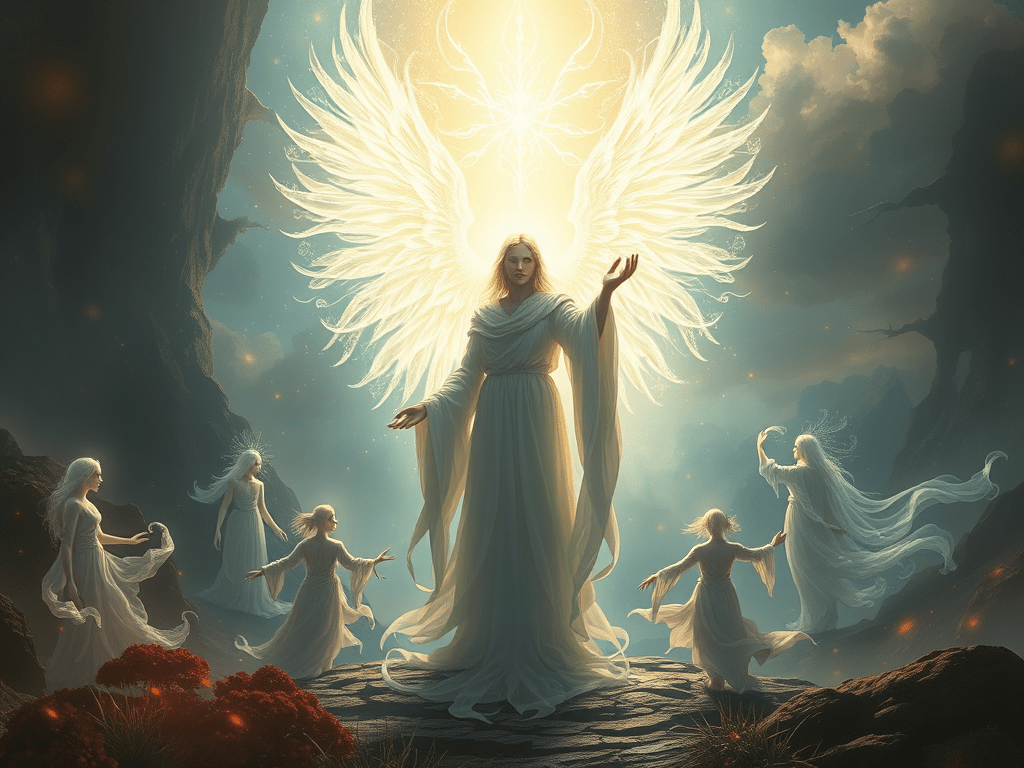
    I actually managed to work a little on Starlight Dreams (or whatever it’ll turn out to be called) this week. I’ve gotten some distance through sketching out the rules for Miracles. So far, I’ve only gotten two out of the five “Harmonies” that auturges can wield written out, but I think I’m starting to get a feel for it. Here’s what’s up so far:

    MIRACLES

    Players can perform Miracles by spending Esteem. A Miracle is a way to immediately create a Fancy, without the need for any kind of roll or even for a description of how it’s done – the Fancy just comes into being through an exercise in divine will. The kind of Esteem spent depends on what the Miracle is intended to do. The Guide is the ultimate authority on what the Esteem cost of a particular Miracle should be, and complex Miracles may require a combination of different parts of Esteem. The following is a guideline:

    • Righteousness Esteem is spent to harm, move, or enhance something.
    • Charity Esteem is spent to heal, protect, or control something.
    • Beauty Esteem is spent to create, hide, or beguile something.
    • Serenity Esteem is used to heal, enhance or protect yourself.

    The amount of Esteem needed to perform a Miracle depends on how impressive the Miracle is intended to be. The following is a guideline:

    • 2 Esteem: a tiny flicker of divine power, enough to create a Passing Fancy.
    • 4 Esteem: a sturdy magical work, enough to heal or inflict a point of Stress, or create a localised Enduring Fancy.
    • 6 Esteem: a display of true godhood, like the creation of a single Whim of distinct personality and agency or a specific location within an existing Sphere.
    • 8 Esteem: a breathtaking act of greatness, enough to awe an entire population or create a temporary Sphere-spanning effect.
    • 10 Esteem: the permanent creation or fundamental alteration of an entire Sphere.

    A player can only perform Miracles that fit the theme of yts Harmonies. Thus, a player needs the Harmony of the Body to heal wounds, the Harmony of Growth to make a forest sprout from the ground, the Harmony of the Abstract to make two feuding parties immediately make peace, and so on.

    Harmony of the Abstract:

    • Righteousness: terror and fury. The auturge ignites negative feelings, then blows on the sparks until they become an inferno. Enemies can be struck with fear, and allies can be infused with zealous hatred that grants strength to their arm. Whims created through Righteousness and the Abstract tend to be dark, spectral creatures, more living nightmares than solid beings, who exist solely to whisper horrors in people’s souls.
    • Charity: hopeful gospel. The auturge spreads feelings of hope and love, of sanctity and purity. Yt can cause hatred to fade away and bitter feuds to be dismissed as a passing madness, forge bonds of heartfelt friendship and weave tapestries of deep reverence for what has been blessed. Whims created through Charity and the Abstract tend to be pristine angelic figures that embody the gentlest of virtues.
    • Beauty: just law. The auturge lays down edicts that will shape nations, dictating the actions of Whims. Populations can be divided into tribes without any other alterations of their inherent natures, and different behaviours can become either unthinkable or mandatory for any Whim who regards ytself as virtuous. If Whims are created through Beauty and the Abstract, they tend to be stern judges or lawkeepers, existing to guide the just and punish the guilty.
    • Serenity: esoteric lore. The auturge creates layers of knowledge that, if studied, grants ability – whether to control the world, or to master the self. While wise magi and master warriors cannot be conjured out of thin air, a pathway for regular Whims to become such eminent beings can be laid through Serenity and the Abstract. While this can provide an auturge with powerful servants and populations that grow and improve on their own, it also holds risk; Whims who stray from the true path can easily become dangerous Glooms.

    Harmony of the Body:

    • Righteousness: tooth and claw. The auturge causes ytself or another creature to grow fearsome natural weapons; slashing claws, rending fangs, horns and stingers and talons. Alternatively, yt can grant brute animal strength to ytself or yts chosen, making them capable of greater physical feats. Whims created through Righteousness and the Body are, naturally, likely to be ferocious predators of whatever sort.
    • Charity: creature comforts. The auturge heals open wounds in ytself or others, or grants biological nourishment and protection like warm fur, thick scales, nutritious milk, or even the taste of yts own living flesh. Whims created through Charity and the Body vary greatly in their appearance, but they are almost always in some way cuddly and lovable.
    • Beauty: feral grace. The auturge grants ytself or another creature the ability to move unhindered in the environment, whether that means racing, climbing, digging, flying, swimming, or any other means of getting from one point to another. Alternatively, yt can provide other means of adapting perfectly to the environment; camouflage or the ability to thrive in great heat or cold are some examples. Whims created through Beauty and the Body tend to be vibrant and graceful creatures with colourful plumes, glistening scales, magnificently patterned fur or other splendid adornments.
    • Serenity: animal instinct. The auturge sharpens yts own or another’s senses to impossible levels, or bestows quick instincts in areas where careful thought is more a hindrance than an asset. Whims created with Serenity and the Body tend to be skittish and observant, often with great arrays of eyes and feelers that let them perceive all that is going on around them and to react with lightning quickness to it.
  • R.E.S.P.E.C.T., find out what it means to me

    R.E.S.P.E.C.T., find out what it means to me

    This week’s roleplaying session was cancelled, I’m sorry to say – one player not being able to make it I can roll with, but when we’re down to half strength I have to admit that the stars are just not right. At least prepping Werewolf got me going on some alterations I’ve been meaning to make for a while now.

    For one thing, I’ve scrapped the Bonds system, which is meant to help the players start out with some pre-defined relationships to each other. Sounds good in theory, but in practice all the players I’ve ever subjected it to have hated it. As a result, I’ve been drifting away from it in my later ports. It’s only in the Werewolf port because it was my first and I was still cribbing a lot of stuff from Dungeon World and Apocalypse World.

    Still, I really do want some kind of mechanic that encourages players to act out the meeting-between-cultures aspect of the game. I feel like a major part of any World of Darkness game is people with very different viewpoints coming together and realising that they all have something to offer, and that’s really cool. And it feels especially vital to Werewolf, where the backstory has a ton of disasters and tragedies caused by one faction deciding that it was just plain right about everything.

    So here’s my new attempt: whenever a player in some way pays tribute to their Tribe’s distinctive nature (whether by words or deeds), and the other players are down with it, that player holds Respect. Respect can be spent to give bonuses to other players’ actions. Essentially, proudly representing your heritage and being open to learning from each other allows you to function better as a team.

    I’m not sure if it needs some more support. What I mean with “pay tribute to their Tribe’s nature,” I mean things like being a scheming bastard for a Shadow Lord or a street-smart survivor for a Bone Gnawer – acting out the archetype, basically. I guess that might be pretty easy for a long-time World of Darkness freak like me but a bit harder for someone I’m trying to introduce to the setting? Dunno. I’ve made the mistake of over-explaining things before, though, so I’ll leave it like this for now.

  • A matter of time

    A matter of time

    I’ve gotten a bit more work in on my Monstrous Mishaps quickstart. I’ve been thinking, too, that perhaps I’ve been looking at it wrong. Instead of feeling like I’m just writing the same game again but with less stuff in it, I should take it as an opportunity to identify the parts that are important and the parts that aren’t? God knows, I threw in everything but the kitchen sink when I wrote this thing. It might not be the worst thing in the world to consider whether I actually need all of it.

    For example, the Interval rules. Now, in theory I think those are pretty solid. They are essentially a way to manage time-keeping in game, and let different things take different amounts of time without too much nitty-gritty counting of seconds and minutes. And taking significant extra time with a task – as in, spending hours instead of minutes of it, for instance – gives you a big boost to your action, because it should.

    But when I think back to my playtesting… I’m not sure I’ve actually used the system terribly much? Maybe it’s the players I have, but no one ever did say, “okay, I just spend as long on this as it takes.” They usually wanted to be done in a reasonable time or not at all. Likewise, I like the idea of putting events on a timer and counting down to when things happened, but the game actually ran better those times I didn’t do that but let things happen more or less as I felt like.

    Maybe I should be on the lookout for things that should quite frankly be simpler. I’m not going to edit the whole game all over again, because I don’t think I’d ever finish if I did, but still… it might be handy to have a simpler version available. And if nothing else, there’s always the second edition.

  • First free download is up!

    First free download is up!

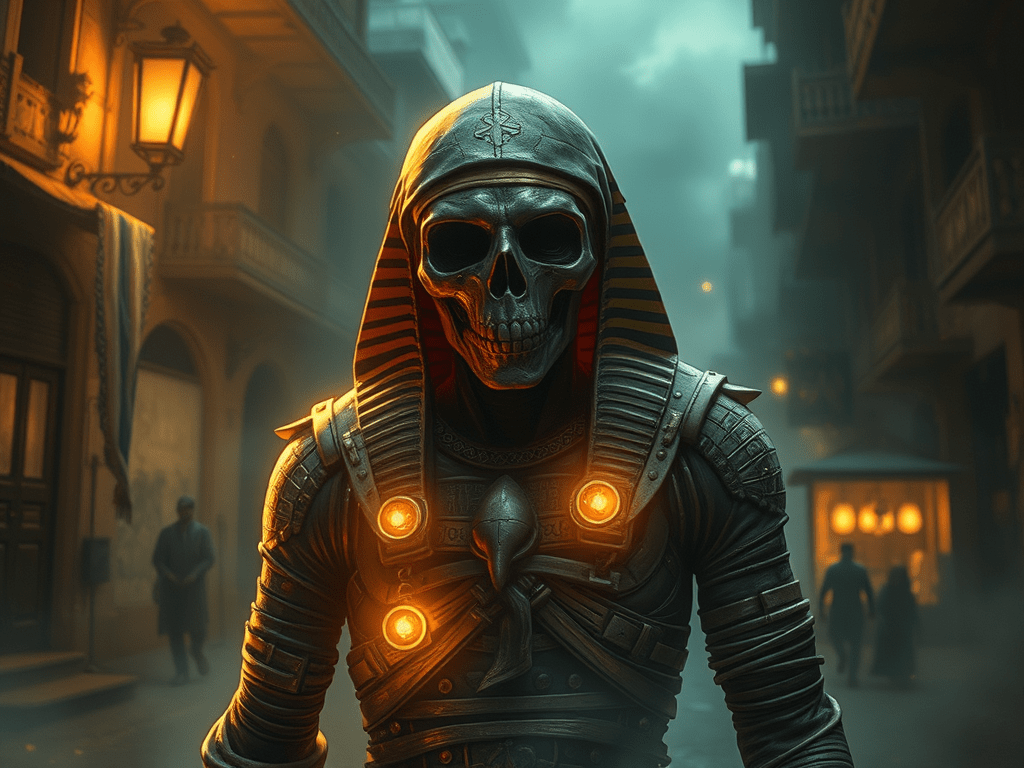
    This week, I can report a milestone in this site’s existence: I have put my first PDF up for download. It’s my Powered by the Apocalypse port of Mummy: the Resurrection. I added the fourth level of every Hekau and wrote up some obambo wraiths, so now I’m declaring it to be finished. I might add more later – there are always the need for more NPCs, and there are of course fifth, sixth, seventh and eighth levels of Hekau that I haven’t converted – but for now, anyone who wants it can go over to the download page (link to the upper right) and help themselves.

    I’m quite proud of this port, since Mummy is a game that always needed a lot more love than it got. I didn’t just need to create a bunch of rule systems, I needed to come up with an intended playstyle and setting from the rather anemic hints that exist in the official books. In the end, I tried to make it a game about sinister plots foiled and strongholds of evil infiltrated, since that seemed to be what the spells and rituals in the source material encouraged: the impression I get was of mummies as a sort of secret agents, James Bond with mystical amulets and alchemical potions instead of high-tech gadgets. And I spent a lot of time researching Cairo, Egypt, and Islam, not to get the details right (because let’s face it, I probably got most of them wrong) but to get some sort of feel for it all, some idea of how the Middle Eastern parts of the World of Darkness look and sound like.

    It’s not perfect, of course. Like I’ve talked about before, there were areas where I just had to give up, where the problems I saw with the game were inherent in the setting and I couldn’t fix them without rewriting the whole thing from scratch. For one thing, if I created my own game inspired by Mummy – and I might some day – I would dial down the way that things in the Shadowlands are impossible to manipulate because they are reflections of material things, and instead make it more like a zombie apocalypse setting or a survival horror game: everything is broken down and unhelpful, but most of it can be salvaged, repurposed or repaired, if you just work long and hard enough at it. “Maybe, if you’re persistent and lucky” is a lot more interesting to tell the players than, “no, that’s impossible.”

    Still, it’s the first officially finished project of the game-design kick I’ve been on for the last couple of years. Hopefully there’ll be many more to come.