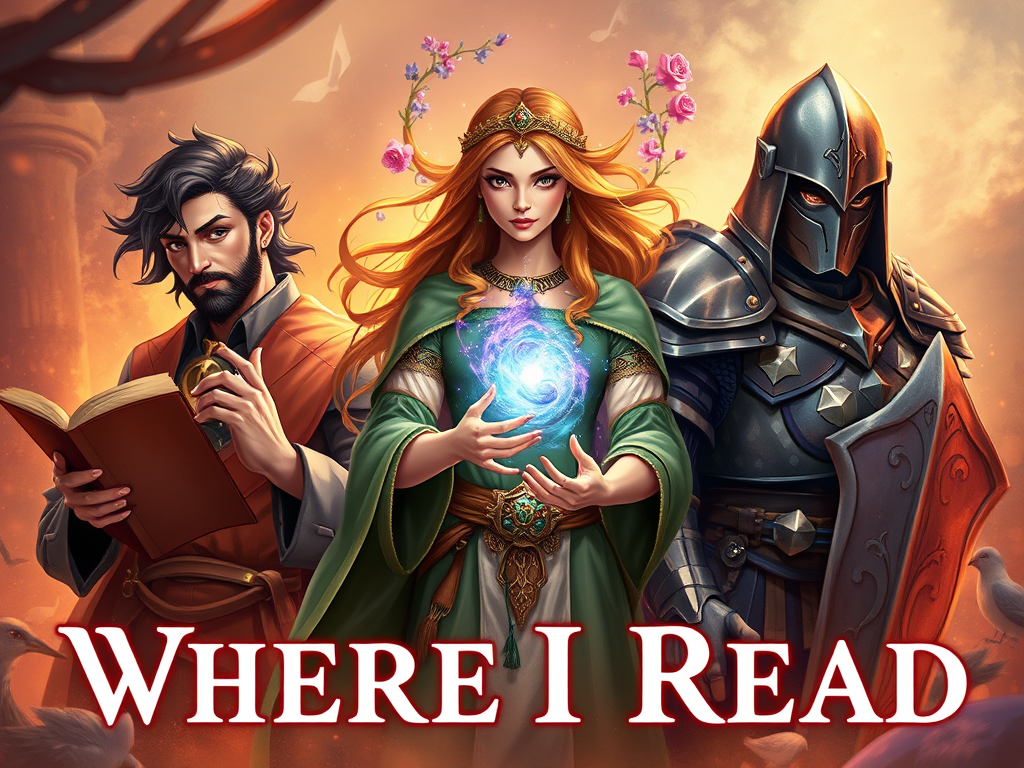
Okay, so classes. First there’s a page repeating a lot of what we’ve already learned, but it also mentions a few new things. For instance, every class has a Class Hope Feature which lets them spend Hope to do something. Each subclass also has a Foundation Feature, Specialisation Feature, and Mastery Feature, though you don’t get those for free, you have to take them as a card when you level up. Okay then.
First up is the Bard. They’re charismatic and slightly bitchy arteeeests, and their domains are Grace and Codex – so they know mysterious lore and can express it really prettily, basically. Their Hope Feature is that they can spend Hope to distract an enemy, and their Class Feature is that once per session they can give the party a rah-rah pep talk that grants each other PC a d6 that they can roll, once, to add to another roll or to reduce Stress.
They can also choose to start the game with either an unsent letter (ooooh) or a… romance novel. Okay, so again I’m noticing that the cutesy postmodern humour kind of clashes with the stated intention of making the game feel epic and evocative… though that is, I will admit, a problem I have with a lot of modern fantasy. The Dragon Prince, I’m looking at you!
Bards can be Troubadours or Wordsmiths. Troubadours have some abilities related to healing and bestowing Hope, while Wordsmiths have some advantages in terms of boosting actions and reducing Stress. So basically the one is about getting people to chill, and the other is about getting them to excel.
Next up are Druids, who are your basic nature nuts. Their domains are Arcana and Sage, so they practice natural magic of the forest. They can turn into animals by taking Stress, or by using their Hope Feature that lets them spend Hope to do it instead. They can also pull off minor cosmetic acts of nature-magic, like making flowers bloom.
They can be Wardens of the Elements, in which case they can channel one of the elements in combat for some perks, like doing damage to anyone who strikes them for fire or raising their resistance to injury with earth. Any Warden of the Elements can channel any element, but only one at the time. Alternatively, they can be Wardens of Renewal, who can restore Hit Points and clear Stress in people.
There are a couple of pages of animals you can turn into, along with special rules for them. It all looks kind of fiddly, but it certainly makes Druids pretty adaptive – even sticking to just the ones you have access to at level one, that’s a pretty big bag of tricks.
The Guardian! As mentioned before, this dude’s into Valour and Blade. He protects people, and his Hope Feature is that he can spend Hope to clear out Armour Slots. I guess that means they can take more of a beating. Their Class Feature is that they can turn themselves Unstoppable, during which time they take less damage and do more damage. Each time they do damage, they increase the amount of extra damage they do, but once that reaches a maximum, they drop out of Unstoppable again. Okay, so that’s kind of cool.
Guardians can be Stalwarts or Vengeances. Stalwarts can tank even better, while Vengeances have higher Stress tolerance and can also spend Stress to cause people who attack them take some damage in return. On higher levels, Vengeances can also select a target to prioritise, and on attacks on them they can swap the results of their Hope and Fear Dice (so they gain Hope no matter what the roll is, I suppose).
Rangers are cunning hunters and outdoorsmen who use the wilderness to their advantage and fight pragmatically, as showed by their domains of Bone and Sage. Their Hope Feature is that they can spend Hope to make a successful attack hit three different enemies at once. Their Class Feature is that they can mark an enemy for takedown, which means that that enemy suffers Stress when struck and also that the Ranger can turn a failed attack into a successful one, though at the cost of unmarking them.
Rangers can be Beastbounds and get an animal companion, who levels up as they do, our they can be Wayfinders, giving them more bonuses on hitting things and some extra skill in, well, finding their way to places. There’s a page of rules just for the animal companions, who need to be fleshed-out characters in their own rights…
… I’m trying to keep an open mind here, but I’m increasingly feeling like this game was written by people who felt like D&D 5E wasn’t fiddly enough. Which, okay, if that’s what floats your boat then more power to you, but… how does that fit in with the whole “focus on the story more so than the mechanics”?
Rogues… well, they’re what you’d expect. They sneak around and stab people in the back. Their domains are Midnight and Grace, for hiding and lying. Their Hope Feature lets them spend Hope for a bonus to Evasion, and their Class Feature lets them remain hidden even from enemies who should be rights be able to spot them, right up until they attack.
Rogues can be Nightwalkers or Syndicates. Nightwalkers can teleport from one shadow to another and hit harder when they’re Vulnerable (which we don’t know what it means yet, but I guess it’s meant to give them a “cornered rat fights twice as hard” style), while Syndicates automatically know someone in every new town they come to who they can ask for a favour.
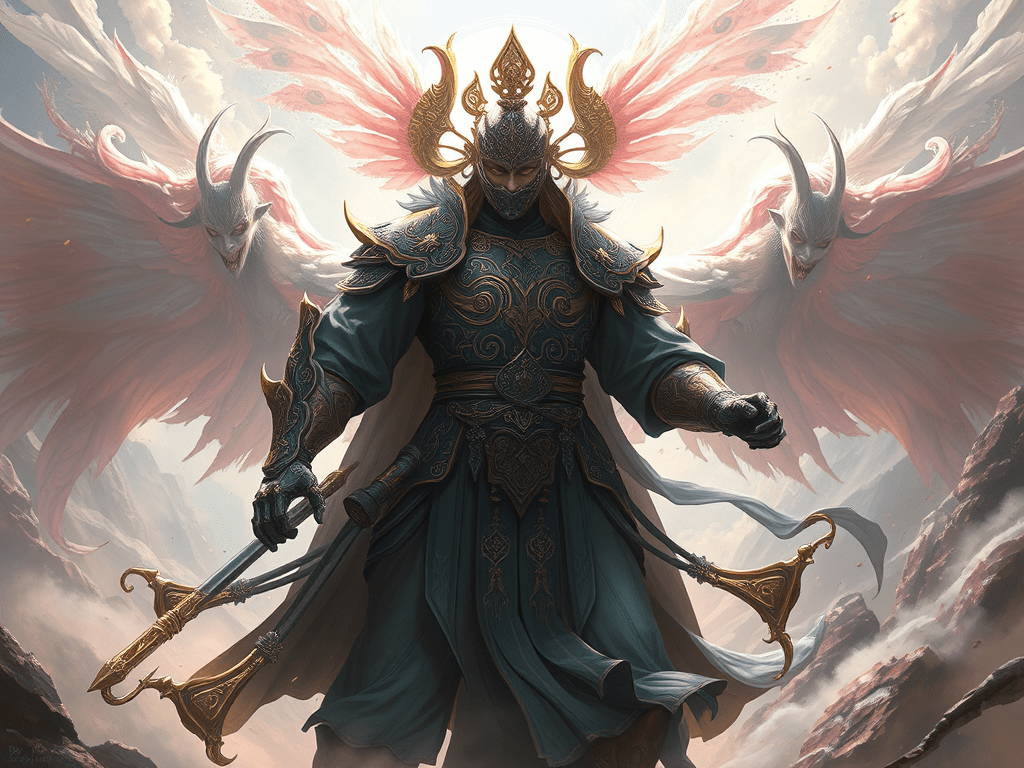
Next up is Seraphs, our holy warriors. They have Splendour for the healy-healy and Valour for protecting the innocents. Their Hope Feature is a limited healing, and their Class Feature is that they get a bunch of bonuses per session that they can use to boost allies’ rolls, reduce incoming damage, or give them Hope. They can be Divine Wielders, in which case they can fling their melee weapons at enemies and then cause them to return to their hands, or Winged Sentinels, in which case they can, well, fly.
Sorcerers we have already dealt with in the form of that sample character. They are people with inherent magic that runs in their family. Their domains are Arcane (for inherent magic) and Midnight (for illusion). Their Hope Feature lets them reroll damage dice for damage-dealing spells, and their Class Features lets them sense magic, create minor illusions, and discard a domain card to gain Hope or enhance a damage-dealing spell. They can have an Elemental Origin, in which case they can do some tricks with the elements, or a Primal Origin, in which case they can enhance magic (mostly magic that deals damage – yeah, I’m sensing that Sorcerers are very much meant to be a DPS class).
Warriors are more big fighty types, though they have a bit more of a “swordsmaster” or “warrior philosopher” vibe than just “I hit people onna head.” Their domains are Blade, for the swording, and Bone, for the intelligent swording. Their Hope Feature is a bonus to attack, and their Class Feature is that they get an attack of opportunity when their enemies try to retreat from them.
Warriors can have the Call of the Brave or the Call of the Slayer. The Call of the Brave gets Hope and Stress-relief when failing a roll with Fear or when performing a ritual before engaging a superior opponent. So basically, you’re at your best when you’re doing something that’s clearly a bad idea but you’re going to do it anyway because it’s HONOURABLE!!! Heh. I kind of like that, to be honest. The Call of the Slayer can build up bonuses every time they roll with Hope that they can then spend for a powerful strike. Hiyah! Okay, I’ll grant you that I like this class a good bit better than the standard D&D Fighters…
Wizards, finally! They are nerds who can do magic because they’ve done their homework. Their domains are Codex (for magic books) and Splendour (for healing, since in this game they’re the ones who do that, too). Which makes sense, honestly – like I’ve said before, I don’t really get the whole D&D convention whereby wizards can’t heal. Curing diseases is, like, the first thing that people expect from a wizard! After that it’s love potions, fertility, and putting curses on people you don’t like, in no particular order.
Anyway, the Wizards’ Hope Feature is, somewhat interestingly, the ability to make an enemy reroll an attack or damage roll. Their Class Feature is that they can do minor magic tricks and that whenever they roll a particular number on their Hope and Fear Dice, they gain Hope or lose Stress, since they’ve spotted an auspicious sign. That’s sort of neat.
Wizards can be of the School of Knowledge, in which case they can draw additional domain cards and can use their Experiences by gaining Stress instead of by spending Hope. Or they can be of the School of War, in which case they get extra HP and when they succeed at an attack while rolling with Fear they do extra damage.
Next up is ancestry. There’s a lot of frankly tiresome hand-waving about how everyone is a unique individual first and foremost and yay the brotherhood of sentient beings and look, we’re totally not racist, honest! Yes, yes… Anyway, each ancestry gets two features, so let’s dive right in.
Clanks are robots or golems – some sort of manufactured creature, either way. They can look pretty much like anything. Their Ancestry Features are that they were built for a purpose that aligns with one of their Experiences, so they get an additional bonus when using that Experience. Also, they rest up faster than feeble organic creatures.
Drakona are humanoid dragons. They can look more draconic or more humanoid – from just being people with scales and sharp teeth to having tails, snouts, back ridges, and vestigial wings. They have protective scales and can breathe some element, like fire, lightning, or ice.
Dwarves are… well… Dwarves. They can embed gemstones in their skin, though, for extra sparkliness. Also, their nails are tough and stonelike, and dwarves like to polish them and carve them into facets. Their features are about taking damage really well.
Elves, likewise, nothing much to see here. They do develop a “mystic form” when they devote themselves to the protection of the natural world, though, which can manifest as them having freckles that twinkle like stars or ivy growing in their hair. I’ll give the game this much, there has been a considerable effort spent on impressive visuals… Anyway, Elves can get an advantage on initiative and can perform an extra “downtime move” while resting.
Fairies, on the other hand, are a little different from their usual depiction. Here, they are actually insectoid to varying extents – much like the Drakona, how much varies between “pretty girl with chitin instead of skin” to “big humanoid beetle.” They all have some variety of insect wings, though. They also range in size from two feet to seven feet. They can spend Hope to reroll their own or an ally’s action.
Fauns are goat-men with powerful legs and stately horns. In much the same way as the Fairies and Drakona, they range from “human with horns and hooves” to “goat that inexplicably walks around on two legs.” They can jump and kick really well.
Firbolgs are honestly pretty similar to Fauns, in that they’re half human and half horned animal, only the animal part is usually something a bit more dignified than a goat. Firbolgs who look like half-bulls are also known as minotaurs. By any name, they have a 1 in 6 chance of shrugging off Stress gain and also get a bonus to charging enemies.
Fungril are… okay, I think I’m spotting the theme here. They’re mushroom-people. They grow elaborate caps on their heads that they can decorate in various ways. Their Features are that they can speak telepathically (through their “mycelial array”) to speak with other Fungril, and by touching a corpse they can extract one memory from it.
Galapa are turtles. Okay, I think this is getting a little old now, and I’m not even halfway through the list… They have shells that offer them protection from injury, and they can retract into them to be even safer (though then they can’t move). Galapa shells can be carved into decorative shapes or reinforced with metal, though it’s a slow and painful process.
Giants are big dudes, though maybe not as big as you’d expect – they’re somewhere between six and nine feet tall. They are born without any eyes, and new ones may appear or disappear on their faces throughout their childhood, with them finally ending up with between one and three of them. They get extra HP and reach.
Goblins are little dudes with great big eyes and ears. They also come in every colour of the rainbow. They are good at keeping their balance and spotting danger. Gotta admit that the picture of the little Goblin witch on this page is kind of adorable…
Halflings are small people with prominent ears, noses, and feet. The fluff text mentions them possessing acute hearing and smell, but that’s not part of their Ancestry Features – instead, they may reroll a 1 on their Hope Die. Also, at the start of extra session, everyone in a party who has a Halfling in it gains 1 Hope, because halflings are good luck. Heh. That’s kind of nice.
Humans are maybe not quite Humans as you know them – they apparently regularly live to be a hundred, so I guess Daggerheart Humans are supposed to be one of those older and nobler races that modern man is but a fallen remnant of, sort of thing. Otherwise they are what you’d expect – they can take more Stress, because of the good ol’ human spirit, and they can reroll failed Experience rolls, because they adapt well to new situations.
Infernis are humanoids with horns… Seriously? Another kind? That’s three now. Okay, I am definitely starting to feel like this game has a clutter problem. Save some for the supplements, guys, that’s where the money is! Oh well. Infernis are descendants of demons from the Circles Below. Aside from horns, they also have fangs, and occasionally forked or arrow-shaped tails. They look demonic, and when they get angry they start looking extra demonic, enough to get a bonus to intimidate. They can also take Stress to turn a roll with Fear into a roll with Hope, because they fear nothing.
Katari are cat people. You know the drill by now, they can look more like cats or less like cats, they can look like different sorts of cats, bla bla bla. I mean, I do approve of this approach from an ease-of-play standpoint, because it means you don’t have to internalise a ton of specific lore – you can just say that Katari are cat people, and whatever people picture when they hear “cat people,” that’s perfectly correct. I’m just kind of losing interest in all these ancestries that are all “human mixed with something else” and carefully avoiding specifics. Oh well… Katari are very agile and have retractable claws.
Orcs have tusks and green, grey, blue or pink skin. Some have no body hair at all, while others are giant fur balls. They get extra resistant to attacks when they’re down to their last HP, and they can gore people with their tusks.
Ribbets are the frogs. See, I was all set to be excited about them, but the game sort of ran the formula into the ground before we could get here… Variations include webbed fingers, warty or smooth skin, and any number of vibrant skin colours and patterns. They have a long prehensile tongue and can breathe underwater.
Finally, Simiah! They’re monkeys or apes. They’re good at dodging blows and climbing. I refuse to spend more words on them than that.
There are also rules about being a mix of two ancestries, because Lord knows we don’t have enough choices as it is… It’s pretty basic, though, you just pick one Ancestry Feature from each of your two ancestries. So if you really want to be a walking fungus with a turtle shell, that’s a character you can play here.
Next part is communities. Which I seem to recall there are at least not that damn many of.
 Mister Monster's Workshop