Tag: roleplaying

  • It’s a Miracle!

    It’s a Miracle!

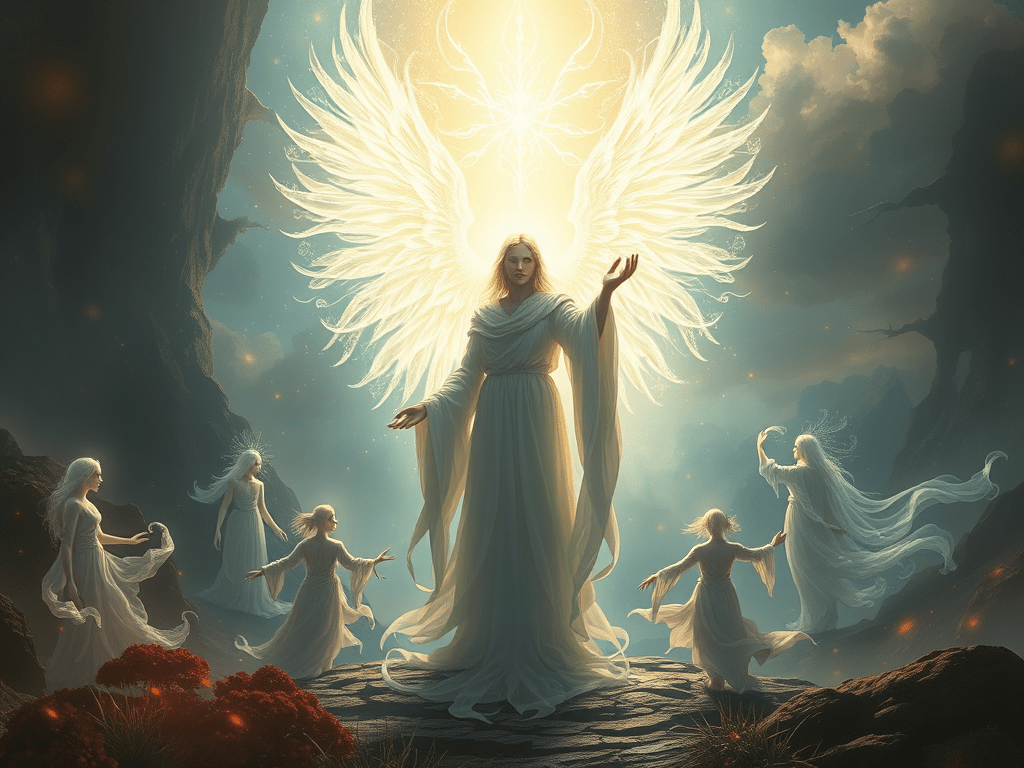
    I actually managed to work a little on Starlight Dreams (or whatever it’ll turn out to be called) this week. I’ve gotten some distance through sketching out the rules for Miracles. So far, I’ve only gotten two out of the five “Harmonies” that auturges can wield written out, but I think I’m starting to get a feel for it. Here’s what’s up so far:

    MIRACLES

    Players can perform Miracles by spending Esteem. A Miracle is a way to immediately create a Fancy, without the need for any kind of roll or even for a description of how it’s done – the Fancy just comes into being through an exercise in divine will. The kind of Esteem spent depends on what the Miracle is intended to do. The Guide is the ultimate authority on what the Esteem cost of a particular Miracle should be, and complex Miracles may require a combination of different parts of Esteem. The following is a guideline:

    • Righteousness Esteem is spent to harm, move, or enhance something.
    • Charity Esteem is spent to heal, protect, or control something.
    • Beauty Esteem is spent to create, hide, or beguile something.
    • Serenity Esteem is used to heal, enhance or protect yourself.

    The amount of Esteem needed to perform a Miracle depends on how impressive the Miracle is intended to be. The following is a guideline:

    • 2 Esteem: a tiny flicker of divine power, enough to create a Passing Fancy.
    • 4 Esteem: a sturdy magical work, enough to heal or inflict a point of Stress, or create a localised Enduring Fancy.
    • 6 Esteem: a display of true godhood, like the creation of a single Whim of distinct personality and agency or a specific location within an existing Sphere.
    • 8 Esteem: a breathtaking act of greatness, enough to awe an entire population or create a temporary Sphere-spanning effect.
    • 10 Esteem: the permanent creation or fundamental alteration of an entire Sphere.

    A player can only perform Miracles that fit the theme of yts Harmonies. Thus, a player needs the Harmony of the Body to heal wounds, the Harmony of Growth to make a forest sprout from the ground, the Harmony of the Abstract to make two feuding parties immediately make peace, and so on.

    Harmony of the Abstract:

    • Righteousness: terror and fury. The auturge ignites negative feelings, then blows on the sparks until they become an inferno. Enemies can be struck with fear, and allies can be infused with zealous hatred that grants strength to their arm. Whims created through Righteousness and the Abstract tend to be dark, spectral creatures, more living nightmares than solid beings, who exist solely to whisper horrors in people’s souls.
    • Charity: hopeful gospel. The auturge spreads feelings of hope and love, of sanctity and purity. Yt can cause hatred to fade away and bitter feuds to be dismissed as a passing madness, forge bonds of heartfelt friendship and weave tapestries of deep reverence for what has been blessed. Whims created through Charity and the Abstract tend to be pristine angelic figures that embody the gentlest of virtues.
    • Beauty: just law. The auturge lays down edicts that will shape nations, dictating the actions of Whims. Populations can be divided into tribes without any other alterations of their inherent natures, and different behaviours can become either unthinkable or mandatory for any Whim who regards ytself as virtuous. If Whims are created through Beauty and the Abstract, they tend to be stern judges or lawkeepers, existing to guide the just and punish the guilty.
    • Serenity: esoteric lore. The auturge creates layers of knowledge that, if studied, grants ability – whether to control the world, or to master the self. While wise magi and master warriors cannot be conjured out of thin air, a pathway for regular Whims to become such eminent beings can be laid through Serenity and the Abstract. While this can provide an auturge with powerful servants and populations that grow and improve on their own, it also holds risk; Whims who stray from the true path can easily become dangerous Glooms.

    Harmony of the Body:

    • Righteousness: tooth and claw. The auturge causes ytself or another creature to grow fearsome natural weapons; slashing claws, rending fangs, horns and stingers and talons. Alternatively, yt can grant brute animal strength to ytself or yts chosen, making them capable of greater physical feats. Whims created through Righteousness and the Body are, naturally, likely to be ferocious predators of whatever sort.
    • Charity: creature comforts. The auturge heals open wounds in ytself or others, or grants biological nourishment and protection like warm fur, thick scales, nutritious milk, or even the taste of yts own living flesh. Whims created through Charity and the Body vary greatly in their appearance, but they are almost always in some way cuddly and lovable.
    • Beauty: feral grace. The auturge grants ytself or another creature the ability to move unhindered in the environment, whether that means racing, climbing, digging, flying, swimming, or any other means of getting from one point to another. Alternatively, yt can provide other means of adapting perfectly to the environment; camouflage or the ability to thrive in great heat or cold are some examples. Whims created through Beauty and the Body tend to be vibrant and graceful creatures with colourful plumes, glistening scales, magnificently patterned fur or other splendid adornments.
    • Serenity: animal instinct. The auturge sharpens yts own or another’s senses to impossible levels, or bestows quick instincts in areas where careful thought is more a hindrance than an asset. Whims created with Serenity and the Body tend to be skittish and observant, often with great arrays of eyes and feelers that let them perceive all that is going on around them and to react with lightning quickness to it.
  • Nothing new to add, so here, have some mages

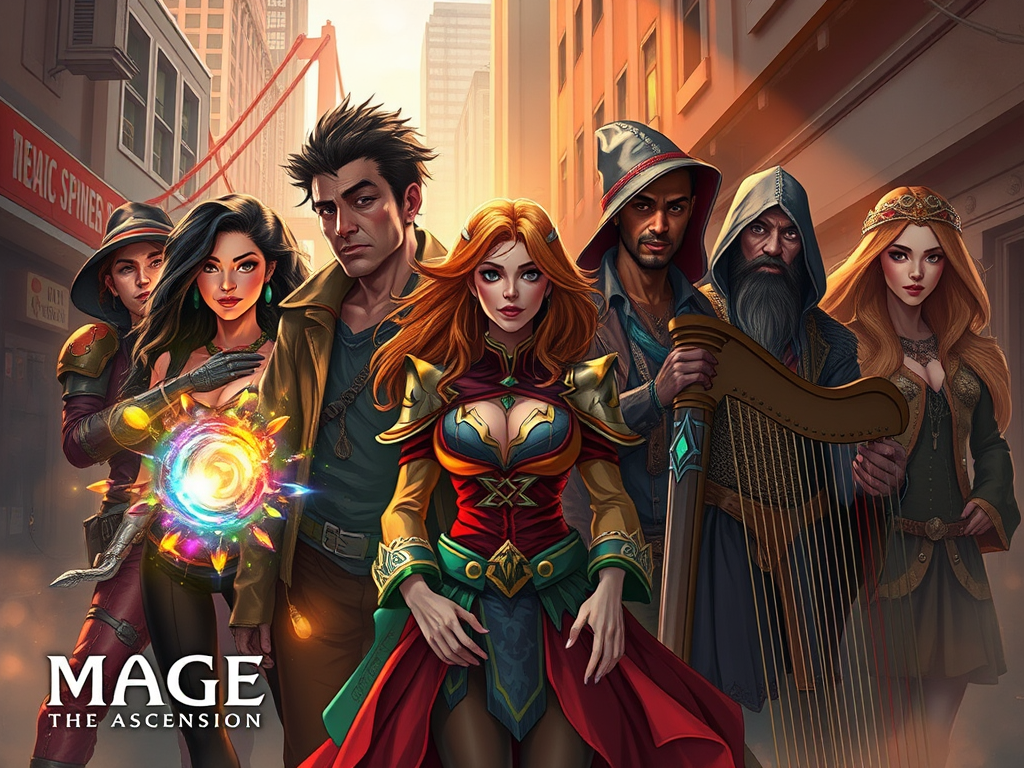
    Nothing new to add, so here, have some mages

    This hasn’t been a very productive week by any means. I didn’t manage to do any actual work on any actual project – instead, I seem to have spent most of it inventing NPCs for my Mage: the Ascension game. Which I guess needed doing at some point, but still, my inspiration remains fickle and unreliable.

    All that said, here’s what I’ve come up with for the Traditions in the San Francisco area:

    • Cassie Moran – aging rock goddess and Cultist of Ecstasy. She uses her precognition and clairvoyance to play the entire underground music scene like an instrument, trying to build it up to a force for enlightenment, rebellion, and all-around grooviness. Anything she does is probably motivated by its sixth-level consequences.
    • Jonathan White Eagle – life coach to the wealthy and Dreamspeaker. Is gruff and set in his ways, all the more so since he worries that his attempts to make rich people connect to their spiritual side is diluting his own ancestral ways. He’s the last Dreamspeaker in the area, and looking to take on an apprentice.
    • Jeremy Linton – geeky pencil-neck and Virtual Adept. He messes around with nano-machine clouds and is enthusiastic about the idea of turning the Earth into “computronium” that will rearrange itself to the will of any human. Well, any human who’s good with computers, at least, but who cares about those other meat-headed jocks?
    • Rosa “Rush” Martinez – tough biker chick and Virtual Adept. A “neo-nomad” who thinks that permanent residence is just something The Man has invented to keep track of you better. Part of a cabal with Jeremy and Ranjit, and tends to handle the rough stuff for them.
    • Ranjit Morrow – a self-proclaimed “Doctor of Mesmerism” and Son of Ether. Practices hypnotic suggestion to manipulate “archetypes of the collective unconscious” and draw forth “unresolved defense mechanisms from failed stages of development.” Likes to stroke his beard wisely at people and puff his pipe. Tends to hang out with Jeremy and Rosa and handle all that nasty “people skills” stuff for them.
    • Rowan Flynn – a “warrior bard,” a Cultist of Ecstasy who would probably have been happier as a Verbena. An erstwhile apprentice of Cassie’s, but seems to be having some conflict with her now. She can heal people through harp music, incense, and touches, or work herself into a berserker frenzy where she can feel no pain. Has some anger management issues.
    • Aloysius Crane – a masochist and piercing enthusiast and Cultist of Ecastasy. Looks absolutely terrifying but is extremely soft-spoken and mild-mannered if you get to talking with him. He considers submission to pain to be the path to true enlightenment. He mostly backs up Cassie in whatever she does.

    And for the worthy opposition in the Technocracy, without names as of yet but called by the names the Traditions give them:

    • “The Nice Doctor”, NWO: A middle-aged man with long, wild-grown grey hair, usually wearing shabby clothes, cracked glasses, and untied sneakers. Despite looking like a crazy hobo, he’s a frequent visitor of city hall where he “consults” on details of policy being written, and a popular guest lecturer at USF within a surprising number of social sciences. His go-to apparatus is an innocent-looking device about the size and shape of a pen, which can emit high-frequency sonic waves that renders people instantly pliable to hypnotic suggestion. People who threaten to rock the boat in a serious way might be meet him, and the person who walks away from such meetings frequently has very different views than the person who came to it.
    • “The Woman in Grey”, NWO: a prim, plain woman in her forties, always dressed in a grey business suit and with her hair in a bun. She is most commonly seen taking part in investigations of major crimes and threats to national security, with the other detectives and agents involved being under the impression that she’s from one of any number of alphabet-soup agencies, or possibly one that’s too secret to even have a name. Either way, her cases tend to get solved promptly and without her taking credit, but almost always in some way that demonstrates the reliability of public investigators and the absolute need to keep giving them any and all powers they ask for. If you have done something illegal in your life – anything – then she most likely doesn’t care, but she absolutely knows about it, and has a meticulously prepared dossier to present you with should she ever need to apply some pressure.
    • “The Blank”, NWO: the Traditionalists are only mostly sure that this is a single person, and only because a number of people who seemed to have very different physical appearances have been noted as having suspiciously similar magical Resonances. Either way, the Blank kills people who the Technocracy regards as irredeemably disruptive to the Consensus; Marauders, Nephandi, terrorists, serial killers, the occasional non-human supernatural. When no one needs to be bumped off, the Blank is believed to be managing security at the San Francisco construct, but hell knows.
    • “Ol’ Henry”, Void Engineer: not technically part of the NWO amalgam made up of the Nice Doctor, the Woman in Grey, and the Blank, but sort of loosely attached to it, Henry is a Void Engineer who’s been grounded for extreme uncooperativeness and set to track down and dispose of the hobgoblins, rogue spirits, or sundry creepy-crawlies that San Francisco has more than its share of. He looks like a scruffy man in a faded jumpsuit, with a pair of high-tech bracelets with a tremendous array of built-in weapons. The Paradox building up from his use of vulgar Effects (the Umbra is so much more forgiving of such things, and he’s too stubborn to change his ways) has caused him to develop some peculiarities, like nictitating membranes and odd subdermal tumours that sometimes seems to move across his body. He has been known to grudgingly team up with Traditionalists to take down his prey; he has no particular love for Reality Deviants, but then, he seems to have no particular love for anyone or anything.
    • “Mr. Slick”, Syndicate: young, trendy, confident, and oilier than a can of anchovies. He firmly believes that what people want, really want, is the coolest and most expensive toys, and he’s got the personal collection of overdesigned bleeding-edge gadgets to prove it. He is also heavily into youth outreach, trying to mold the next generation into proper go-getters by showing them the benefits of a completely materialistic lifestyle; this has led him to both sponsor the Trinity Burning gang and to take promising young students from underprivileged backgrounds under his wing.
    • “Numbercrunch”, Syndicate: a strange, autistic teenage girl who rarely ventures out of her den of a thousand monitors beneath the construct. When she does go out for a field investigation, she wears a hood and headphones to prevent sensory overload. Her Empowering came when she read “The Seven Habits of Highly Effective People” and then spent the next forty-eight hours writing a new edition with another forty-two habits. She goes through media output and statistical data and predicting the future over the entire area, making the Syndicate amalgam very hard to take by surprise.
    • “The Slav”, supposedly Syndicate but actually Nephandus: a surly, hirsute Russian who looks more like a janitor than the master of middle management that he is. He does consulting work for a number of R&D divisions, where he snarls at engineers until their output skyrockets. He also heads up the a reclusive team that produces experimental weapons for field testing. Unknown to his colleagues, the Slav is actually in league with Pentex, who supplies him with Bane-powered fetishes that slowly corrupt the mages who use them. In his youth, he was a fervent believer in the American Dream and the promises of capitalism, having been raised on horror stories of his grandparents’ time in the Soviet Union. However, he Fell upon realising just how amoral the Syndicate truly was and now works to make capitalism every bit as bad as its worst critics claim it is; a human race that can turn any and every economic system into a nightmare, he believes, deserves to suffer.
  • Fiddling with Underworld rules

    Fiddling with Underworld rules

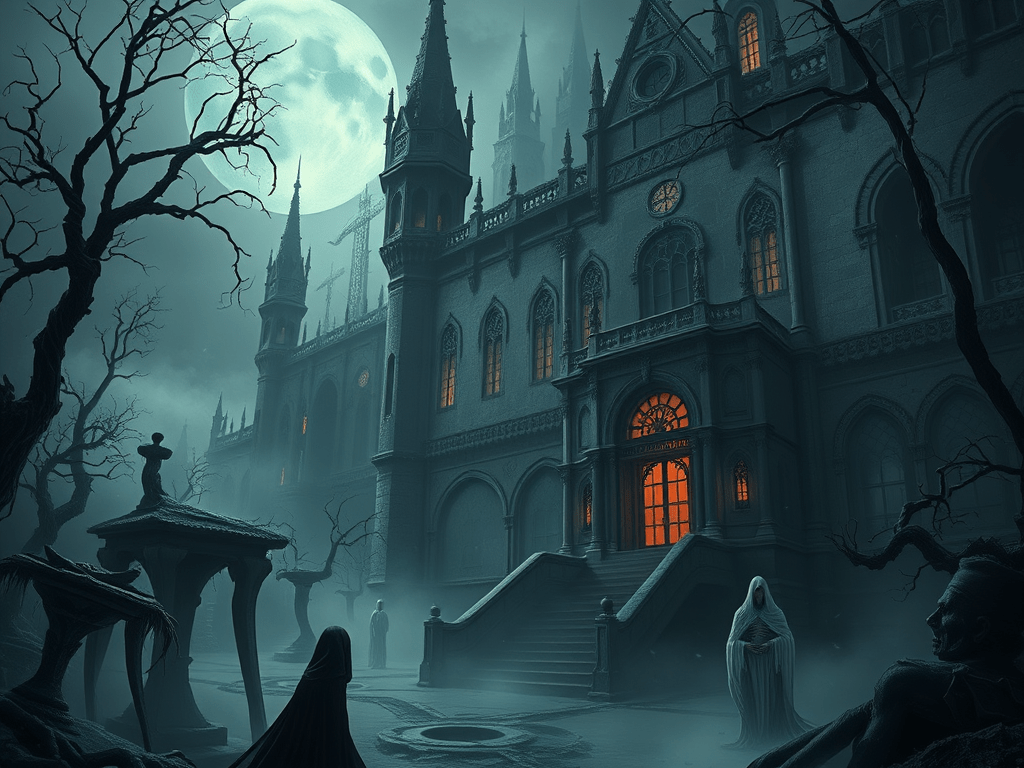
    In the World of Darkness, the Underworld is where ghosts hang out. It’s the main setting for Wraith: the Oblivion and a secondary setting for Mummy: the Resurrection (as in, wraiths spend all their time there because they’re dead, and mummies spend part of their time there preparing to come back from death). It’s a pretty cool and Gothic place, where everyone walks around wearing their fatal wounds on full display and your trusty sword was probably some unfortunate slave who got melted down for his plasm.

    The problem is, it’s also a pain in the ass to run games in, because a lot of things are more flavourful than practical – not to mention, not particularly well defined as to how they work in practice (see Changeling: the Dreaming and its “chimerical reality” for a similar problem). For one thing, it’s never quite clear if the Shadowlands (the part of the Underworld that lies closest to the Land of the Living, and from which you can affect it with magic) is a place in and of itself that just happens to be close to the Land of the Living, or if it is the Land of the Living as experienced by the disembodied ghosts that are haunting it. When writing my Mummy port, I’ve had to flesh out a number of things, and I’m still not sure about some of my decisions.

    Case in point, the fact that there is very little actual matter in the Shadowlands beyond the plasm of the wraiths themselves (which is why they practice soulforging to get their gear). That’s very bleak and evocative – it’s a world where production and commerce literally uses the working class as gristle for the wheels, it’s all very punk and rage-against-the-machine. But what it means in practice is that you have to constantly veto the things your players try to do, because they have once again forgotten that they have no tools, not even so much as a strip of cloth to bind a wound with (in the Underworld, your clothes are part of your body and can’t be removed).

    I mean, I love in theory, because it feeds the nightmarish feel of the Underworld – in a bad dream, you are always facing doors that won’t open and find yourself having forgotten something important at home (including, indeed, your clothes!). But in a game where the players are supposed to be able to do stuff, that feeling of helplessness is… not helping. I’ve been grappling with that for several sessions now.

    Here’s my latest adjustment: from now on, players can spend Balance hold to cast a spell that would normally require some sort of tool or ingredient. That seems fair – wraiths, after all, don’t need tools to use their arcanoi, and mummies should surely be at least as powerful as wraiths. And it also means that Balance is still useful for something even after you’ve hoarded enough to resurrect but decided to postpone resurrection while you deal with some issue in the Underworld.

    We’ll see how it goes.

  • Eldritch Skies… sort of

    Eldritch Skies… sort of

    I started sketching on a game in the vein of Eldritch Skies, the game of Lovecraftian horror minus the horror, and also minus all the Probluhmatick stuff… and unfortunately also minus all the dark poetry and evocative ideas, because no one seems to have pointed out to the writer that when you take out all the Probluhmatick stuff, it helps if you replace it with something instead of just slicing off huge chunks of the genre and then presenting the mutilating carcass as an improvement.

    All that said, the idea of Lovecraft without quite so much swooning and pearl-clutching and, yes, without quite so much hysterical xenophobia, isn’t without its appeal. I mean, let’s face it, sometimes the endless wailing about how horrible it is that this thing is mixing with that thing even though those things aren’t supposed to mix!!! gets a little tiresome even for a cosmic horror fan. So why not a game where you get to shoot Cthulhu with a raygun?

    Still, Eldritch Skies needs some serious massaging, not just in the rules but in the setting, before it can be a decent game, so I’m not looking to make a straight port of it so much as a reimagining. Hey, Cthulhu is public domain anyway, might as well.

    So what’s first?

    Well… first off, let’s involve the Dreamlands in a more serious way. In fact, let’s make them half the game, in the same way as the Umbra in Werewolf: the Apocalypse or the Underworld in Mummy: the Resurrection. Let’s make sure that there are always things going on both in the waking world and in the Dreamlands, and that they are frequently connected – that information about waking problems often needs to be found in the Dreamlands, and that disturbances in the Dreamlands are often caused by dysfunctions in the waking world. Whenever a character falls asleep, they go to the Dreamland; whenever a character wakes up, they return to the waking world.

    Speaking of which, let’s give each character 3 “strain boxes” that measures how close they are to freaking out. We’ll forego physical health entirely – that’s not normally what’s at stake in Lovecraft’s stories, and as for Eldritch Skies, the weapon of choice there are Yithian stunguns that knock people out non-lethally. Being physically hurt causes strain, but only because being physically hurt is upsetting; in the main, it’s your state of mind we keep track of. So, when you mark too much strain in the waking world, you pass out and end up in the Dreamlands, and when you mark too much strain in the Dreamlands, you wake up in a cold sweat. Also, whenever you wake or fall asleep for any reason, you clear all strain.

    To give “death” some teeth, though, let’s also give each character 10 “alienation boxes” that measure how close they are to losing themselves to the Mythos. Every time you wake or pass out as a result of strain, you mark alienation. When you mark too much alienation, you leave the game in some way decided by your playbook.

    Speaking of:

    THE AGENT
    High Practicality, low Imagination (worldly but dull)
    Someone must put a lid on the chaos, and it’s your bad luck that it had to be you. Empowered by the authorities and trained to withstand the sanity-shredding effects of the Mythos (for a while, at least), you’ve been sent out alongside the lunatics that the agency employs as troubleshooters in the hopes that you’ll keep them under some kind of control. To help you keep up with the inhuman abilities of your colleagues, you’ve also been outfitted with some gadgets that you’ve been assured are cutting-edge technology… but it’s odd how often their effects seem to mimic what the freaks get up to…

    When you exceed your alienation tract, you get forcibly retired by your superiors, possibly to a padded cell.

    THE DREAMER
    High Imagination, low Practicality (open-minded but distracted)
    On this pale, prosaic Earth, you are little enough – a poet, an dreamer, an impractical person in a practical world. But every night, you enter a truer reality, and there, you are little less than a god, wandering an endless land of wonders in search of ever-greater glories. It is with reluctance that you return each morning, but elder dreamers have warned you of the dangers of completely abandoning the flesh.

    When you exceed your alienation track, you overdose to enter the Dreamlands permanently.

    THE GHOUL
    High Rigor, low Intellect (fierce but simple-minded)
    You were placed in a cradle as a child, and grew up watching the world through cold scavenger eyes, not knowing until recently why you always felt different – why you felt called to claw and fight and steal. You know now that you are of an older and more virile breed than the lazy monkeys around you… and yet, some semblance of fondness for your adoptive world remains and makes you want to prove your worth to it.

    When you exceed your alienation track, you find your way to the deep tunnels and leave the sunlit world forever.

    THE HYBRID
    High Practicality, low Rigor (insidious but fragile)
    It was the will of Father Dagon that the briny blood of the ocean be mingled with the sweet one of the land. The experiment – or crusade – or migration – seemingly failed, but you remain, a scion of both worlds. The ocean whispers in your dreams, but you are not ready to go to it yet. Perhaps your presence here is still part of Father Dagon’s true plan to bind the oceans and continents together?

    When you exceed your alienation track, you throw yourself in the ocean in search of beckoning Y’ha-nthlei.

    THE PSYCHIC
    High Imagination, low Rigor (intuitive but erratic)
    For whatever reason, you were born different, with wild supernatural abilities that are only barely under your control. Some theorise that the appearance of people like you signify humanity’s gradual evolution into… something else. All you know is that the visions and headaches get a little easier to bear when you put your gifts to good use.

    When you exceed your alienation track, you transcend your body to become one of the daemon spirits beyond the veil of sleep.

    THE SORCERER
    High Intellect, low Imagination (educated but hidebound)
    The folly of ancient man was to misunderstand and misname his stranger arts as “magic.” The folly of modern man was to think that those arts were not real. You know better than both – you have studied the eldritch sciences, teased out the potent formulas and alchemies that were hidden among the superstition and the lies. You know that many who have walked your path came to a bad end, but they surely lacked your discipline and drive.

    When you exceed your alienation track, you perform an ill-advised ritual and trap yourself beyond time and space.

    And finally, the basic moves of the game:

    When you shape the dream, describe what should happen next and roll +Dream. 7-9, your embellishment comes true, but in a twisted or ironic way, causing as much trouble as it solves. 10+, you rewrite the reality of the Dreamworld exactly to your liking.
    Note: This move is only possible in the Dreamlands, for obvious reasons.

    When you make an intuitive leap, roll +Dream. 7-9, you get a hint as to what you should do next or what is really going on, but you get a fatalistic sense of impending doom; take -1 forward. 10+, you get a glimpse of the true state of the world without being disturbed by it… which should maybe worry you.

    When you perform an eldritch spell, roll +Intellect. 7-9, the spell succeeds, but it echoes within your soul and threatens the bounds of your sanity. Mark alienation. 10+, the spell succeeds, and you withstand its effects.
    Note: The Sorcerer can take advances that allows him to learn specific spells so well that casting them with a partial success only causes him to mark strain, not alienation.

    When you put the pieces together, roll +Intellect. 7-9, ask 1 question below. 10+, ask 1 question, and you may choose to ask 1 more in return for marking strain.

    • What have I read or studied that reminds me of this?
    • How do I make this stop?
    • Who is lying about something?
    • What should I avoid doing here at all cost?
    • What led up to this?

    When you get to where you’re going, roll +Practicality. 7-9, you make progress on your journey, but choose 1 complication below. 10+, the same, but you also run across an unexpected opportunity or resource along the way.

    • It takes a long time.
    • You wear yourself out; mark strain.
    • You attract unwelcome attention.
    • You have to pay a price, whether in goods or in blood.

    When you acquire what you need, roll +Practicality. 7-9, you find some goods, services or connections that are useful for your purposes, but you become entangled in a situation or have to pay a steep price. 10+, you got hold of what you needed easily, or recalled that you already had it with you.

    When you push for what you want, roll +Rigor. 7-9, choose 1 option below. 10+, choose 2 options.

    • You hurt someone worse than they hurt you.
    • You don’t mark strain.
    • You seize control of something.
    • You advance your tactical position.
    • You make a clean getaway.

    When you endure great hardship, roll +Rigor. 6-, mark strain. 7-9, you go on, but take -1 ongoing to this move until next time you wake up or fall asleep. 10+, you soldier on undeterred.

    That’s off to a good start, I think. Next up would be the special abilities and advances of the different playbook. We’ll see if I end up continuing.