Tag: powered by the apocalypse

  • Grrrrr! Aaaarrggghhh!

    I got to break out my Werewolf port for the first time in ages (I have one campaign I run for the whole group and one campaign for each player who might be missing… yes, even I think it’s a little OCD, okay? But anyway, the player who needs to be missing for us to run Werewolf is the second-most reliable player in the group, so the Werewolf campaign doesn’t see much use). It was fun, especially since I think the mechanics really clicked for the first time.

    The big thing with Werewolf is supposed to be Rage. You’re a werewolf, you’re going to go berserk, it’s kind of your thing. You’re the Hulk, only furrier. Rage strengthens you but also takes away your control. And a large part of my reason for starting on this port in the first place (which led to my all-around porter madness) was trying to find a way to model that mechanically in a way that wasn’t too fiddly.

    I may have actually worked it out now, at least in a rough fashion. The way it works is, each player has a number of Rage boxes that start out unmarked. Every time a player fails a roll, they mark a Rage box. They can then clear a Rage box to heal wounds, pull off different stunts in combat, fight whole groups at once, and badassery of that nature.

    However! Whenever a player gets taunted too harshly, or fails in a way that feels too humiliating, or gets injured too badly, they have to roll +Rage (that is, 2d6 plus the number of marked boxes). If they roll 10+, they frenzy. If they fail the roll with 6-, conversely, nothing happens, but they mark Rage as usual when failing a roll. So the more Rage you have stored up, the more of an unstoppable killing machine you are in combat, but the greater the risk is of you completely losing your cool and smashing something you didn’t plan on smashing.

    The Rage economy worked out really well in the fight scene we ran tonight – the player used Rage to hit far above his normal weight class, got hurt and had to fight for control, gained Rage from avoiding frenzy, and then used that Rage for more fighting. This player is a relatively feeble little Ragabash (think scout/trickster), and his opponents were two fomori with military-grade rifles and body armour, so it was a tough fight, and I think the Rage mechanic made a lot of difference.

    We never did have to play out a frenzy, which is probably good, because those rules still need some work. Mechanics that take control away from the player are always tricky to formulate – you need players to still have choices, or else you’re just sitting there talking to themselves, but the whole point of Rage is supposed to be that you sometimes lose control. I am sort of considering an approach where I view it kind of like driving a speeding car that you can’t break, only steer – instead of asking, “what do you do?”, I might ask, “do you fight or flee? If the former, who do you attack? If the latter, which direction do you blindly charge off in?” With rolls required whenever they try to do anything that requires hesitation or forethought. I don’t know, though, there are a lot of pitfalls here. I’ll need to think on it.

    But it was definitely fun to try out this part of the rules!

  • Battle in the void

    Battle in the void

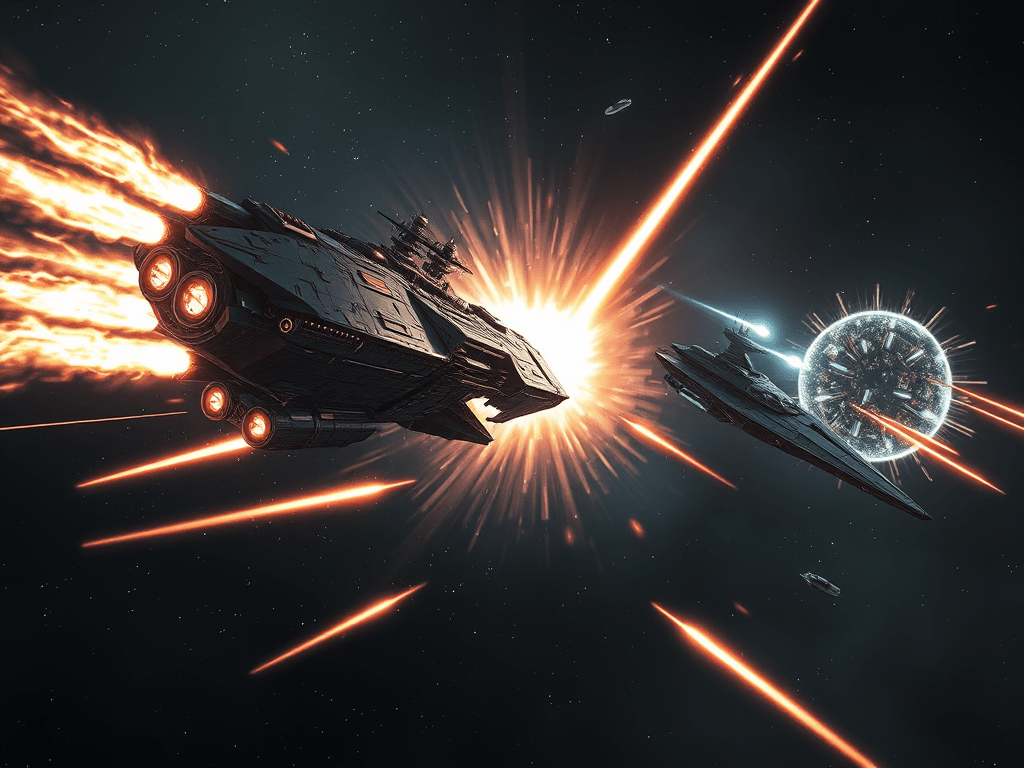
    Having continued my obsession with Warhammer 40,000, this week I sat down and wrote up some basic rules for void ship combat, drawing on the Battlefleet Gothic table top game and the Battlefleet Gothic: Armada video game. I ran a test session with those of my players who could make it this week, and it actually worked out pretty well.

    SHIP TYPES

    First off, I cavalierly ignored all the finicky rules about different hull types, at least as far as NPC ships go. Instead, I’ve divided ships into these categories:

    • Battleship: Hull 15, Shields 10, Armour 4, Turrets 4, Damage 2d10
    • Battlecruiser: Hull 12, Shields 8, Armour 4, Turrets 3, Damage 1d10h
    • Cruiser: Hull 10, Shields 6, Armour 2, Turrets 3, Damage 1d10 damage
    • Light Cruiser: Hull 8, Shields 4, Armour 2, Turrets 2, Damage 1d10l
    • Frigate/Destroyer: Hull 5, Shields 2, Armour 1, Turrets 2, Damage 1d5
    • Transport/Raider: Hull 3, Shields 2, Armour 0, Turrets 1, Damage 1d5l

    WEAPONS

    Secondly, there’s weapons. There are three kinds that I’ve outlined so far:

    • Lances: ignore Armour, but shields absorb them well. When a lance weapon hits a vessel, reduce the damage by the current Shield value, then reduce Shield by 1, to a minimum of 0. The remaining damage, if any, is subtracted from the ship’s Hull.
    • Macrobatteries: struggle against Armour, but can batter down Shields. When a macrobattery hits a vessel, roll the ship’s Damage, reduce the result by the current shield value, then reduce the Shield value by the same amount, to a minimum of 0. The remaining damage, if any, is further decreased by the ship’s Armour before being applied to the ship’s Hull. The Damage roll is also adjusted by the following considerations:
      • Targeted ship is at boarding range: +1 damage.
      • Targeted ship is at augury range: -1 damage.
      • Targeted ship is moving towards you: +1 damage.
      • Targeted ship is moving on a parallel trajectory: -1 damage.
      • Target vessel is a transport or raider: -1 damage.
      • Target vessel is a cruiser or battleship: +1 damage.
    • Torpedoes ignore Shields but can be shot down by Turrets. When a torpedo swarm hits a vessel, roll the weapon’s Damage and inflict it on the ship’s Hull, reduced by Armour+Turrets. If there is anything behind or right next to the target, roll the weapon’s damage again, minus the damage rolled the first time, subtracted by Turrets but not by Armour. If the result is positive, the object behind the target takes that much Hull damage, reduced by its own Armour+Turrets. Torpedoes can be fired at any range, even beyond augury range as long as the location of a target is known. Torpedoes must be reloaded in between each shot. The damage from torpedoes is adjusted in the following ways:
      • Targeted ship is moving towards you: +1 damage.
      • Targeted ship is moving on a parallel trajectory: -1 damage.
      • Target vessel is a transport or raider: -1 damage.
      • Target vessel is a cruiser or battleship: +1 damage.

    Ranged are boarding (up close and personal), artillery (at the maximum range of most guns), and augury (at the edge of what a ship can perceive).

    Weapons must be fitted somewhere, either as broadside weapons, prow weapons, or dorsal weapons (which can be used either as broadside or prow weapons). You can only fire a weapon at an enemy if it is correctly aligned according to the fiction.

    CRITICAL DAMAGE

    A ship that takes damage in excess of its remaining Hull suffers Critical Damage. That means that one of the following conditions get marked (the GM decides which one):

    When the players’ ship suffers Critical Damage, the GM marks one of the conditions below:
    [ ] Weapon offline (choose one) – the weapon can’t be fired.
    [ ] Shield generator offline – Shields drop to 0 and can’t be reignited.
    [ ] Enginarium damaged – the ship can’t come to a new heading or indeed turn in any direction; it can still speed up or slow down, though.
    [ ] Thrusters disabled – the ship loses forward traction and can only maneuver, poorly, by navigational thrusters; it can’t fire thrusters.
    [ ] Bridge destroyed – the command staff is driven from the bridge; take -1 ongoing to all void moves.
    [ ] Fire – a fire is spreading through the compartments. Until it has been put out, the GM can inflict 1d5 Hull damage, bypassing armour and shields, as a GM move.
    [ ] Augury array disabled – the ship is blind to anything beyond boarding range; it can not make an augury sweep or lock on target.
    [ ] Crew in disarray – the crew are rioting or panicking; the ship cannot fight in a boarding action, brace for impact, or refit and reload until order has been restored.

    VOID MOVES

    The following moves can be performed by any player taking a command position on a void ship. Void moves are primarily executed through dashing leadership and taking decisive charge of a situation, so any player can make any void move, irrespectively of whether it falls within their theoretical authority or not.

    When you fight in a boarding action, roll +Weapon Skill. 10-14, you inflict a Critical Damage on the enemy ship before being pushed back, or push boarders off your own ship before they can do any harm. 15+, you have the option to push onward. If you choose to do so, you either harry the enemy back to their own ship, inflicting a Critical Damage on it before retreating, or you gain a beachhead on the enemy ship; the fight will continue as a regular field battle, with the ships themselves playing no further part. If you do not choose to push onward, see result of 10-14.

    When you bring fire into the void, roll +Ballistic Skill. 10-14, you inflict damage by one weapon you have facing the enemy, and that enemy inflicts damage on you by one weapon it has facing you. 15+, the same, and you may also inflict a Critical Damage on the enemy struck, even if you don’t cause any Hull damage.

    When you fire thrusters, roll +Strength. 10-14, choose 1 option below, but you deplete your fuel stores; take -1 ongoing to this move and the come to a new heading move until you’ve had a chance to feed the engine. 15+, choose 1 option below.

    • You come to a sudden stop or power past a danger coming at you from the side.
    • You escape a pursuer or catch up to a quarry.
    • You ram another ship. You both deal damage to each other, reduced by Armour, and the other ship is knocked off course; if you have any broadside weapon, you may use it to deal damage on the victim on your way past.

    When you brace for impact, roll +Toughness. 10-14, hold 1 that can be spent on negating the effects of a hit. However, while you have any hold at all from this move, take -1 ongoing to all other void moves. 15+, the same, but hold 2 instead.

    When you come to a new heading, roll +Agility. 10-14, you change your heading to another one of your choosing, possibly aiming you away from a danger or getting a particular weapon facing an enemy. If there is an enemy, then he, at least for now, is sufficiently surprised by your deft maneuvering that it will take him precious time to adjust. However, you deplete your fuel stores; take -1 ongoing to this move and the fire thrusters move until you’ve had a chance to feed the engine. 15+, the same, but your fuel gauge remains comfortably stocked.
    Note: This move represents a sharp turn that puts serious stress on the ship and crew. Coming around in a wide, leisurely circle does not require rolling to come to a new heading.

    When you lock on target, roll +Intelligence. 10-14, you identify a weakness in an enemy vessel. Hold 1 that can be spent at a successful roll to fill the void with fire. If that roll is a result of 10-14, you can spend the hold to inflict a Crippling Injury. If the roll is a result of 15+, you can spend the hold to get +2 on the damage roll. 15+, the same, but hold 2 instead.

    When you make an augury sweep, roll +Perception. 10-14, you get a detailed analysis of everything that is currently with augury range of your ship and isn’t trying to hide itself, as well as being told if there is anything hidden or obscured (such as a ship running on silent or within a gas cloud or meteor swarm) within it. 15+, the same, and your excellent data makes planning easier. Take +1 forward to any other void moves within the same scene.

    When you command the ratings to refit and reload, roll +Fellowship. 10-14, choose 1 option below. 15+, choose 2 options, or apply the same option twice.

    • You reload a torpedo tube.
    • You prepare a new squadron.
    • You remove 1 point of penalties to come to a new heading and fire thrusters.

    When you order emergency repairs, roll +Willpower. 10-14, choose 1 option below. 15+, choose 2 options, or apply the same option twice.

    • You restore 1d5l lost points of Shield.
    • You undo 1 Critical Damage.
    • You restore 1 lost point of Hull.

    NPC SHIPS

    NPCs, of course, can’t make moves, and a lot of Critical Damage conditions don’t apply to them. They can be assumed to have a broadside macrobattery and either another macrobattery, a lance, or a torpedo tube in the prow. NPC ships will normally only fire torpedoes once in a fight. They have Shields, but they won’t normally reignite shields once they’ve been depleted.

    They also only have the following Critical Damage conditions that are normally marked in order:

    [ ] Shields disabled – the Shields drop to 0. If the Shields are reduced to 0 by being depleted by damage, this is also automatically marked; it exists as a condition to make it possible to drop shields prematurely (in the test session today, the players manage to bring down the enemy shields with a 15+ result on a torpedo barrage, without ever having to chip away at them).
    [ ] Weapon systems offline – the ship can’t fire any weapon. It almost certainly starts trying to flee or, failing that, shut down all systems and run on silent while performing frantic repairs.
    [ ] Enginarium damaged – the ship can’t navigate but drifts helplessly. The crew likely readies itself for a desperate last stand against boarders, though it might also activate the warp engines (likely resulting in a giant explosion if it’s still within the gravity well of a star system).
    [ ] Core meltdown – the ship explodes in a giant fireball, leaving a cloud of debris.

  • More 40K (now with space battles)

    More 40K (now with space battles)

    I just had to open my big mouth and declare that I was done, didn’t I? Cue me working just as obsessively this week to add in more rules to cover Rank 4. I am almost done with that now, at least. I just have like 30 more Psychic Powers to translate. And a ton of stuff to proofread, of course. Then I’ll get down to something else. Honest.

    I’ve also started consuming as much Warhammer 40,000 media as I can find, which may not be a good sign. But, well, it does have one considerable benefit: there’s a lot of the stuff. Like, a never-ending sea of it. If for whatever deranged reason I suddenly want to immerse myself in grimdark, Games Workshop certainly has me covered.

    One thing I am particularly studying is the main game’s lesser-known cousin, Battlefleet Gothic, since that’s where Rogue Trader cribbed its space combat system from, and I do want to port Rogue Trader at some point (it was actually the one I started out trying to port; it just turned out to be too demoralisingly impossible, partly because of those same space combat rules). Rogue Trader‘s space combat is famously horrible, but the original seems like fun. So it seems like the roleplaying line again took a good thing and destroyed it completely.

    The problem for porting it, though, is that Battlefleet Gothic combat is all about positioning – where your ships are in relation to other ships, where they will both be a turn from now. Which makes sense on a table top, but doesn’t translate well into a fiction-first design. I’ll need to redesign a lot of stuff.

    I guess the thing to do is to break down the whole thing into fiction. Isolate what different stuff happens during a fight – torpedoes launched, systems going offline, sharp turns, shields being knocked out – and trying to internalise it. Never mind a set of distinct moves for now, what I need is to be able to freeform a whole scenario for some players, putting them through a space battle while tutoring them as we go about what their options are and what the risks and rewards for each might be.

    Yeah. That’s what I’ll need to do.

  • Aaaand it’s done!

    Aaaand it’s done!

    I am pleased to report that my recent bout of mania has produced a semi-finalised version of my Dark Heresy port to Powered by the Apocalypse. It can be found on the downloads page, or if you’re too lazy to go there, you can just click here.

    Well, that was a lot of work for something that no one but me is likely to ever find much use for… but, well, at least it’s keeping my brain active. Better than doing crossword puzzles, I’m sure.

    And it’s certainly been a deep-dive in all things Warhammer 40,000. I think I’m starting to get the general gist of it, you know? The key thing is, you have to shut down any sense of tender-heartedness or even of basic self-preservation and really get in touch with your ghoulish side. You have to cultivate an attitude of, “incredibly awful things are happening all around – and that is SO COOL!”

    Possibly this is not so good for my always-shaky connection to normal humanity and I should go work on my Blue Rose port for a bit now to balance it out… Either way, I definitely do need to take a break from this one for a bit now. Work on some other project – possibly even one of my original ones, heaven forbid…

  • Grimdark Principles

    Grimdark Principles

    Woo! I have been hard at work with my Dark Heresy port – which I realise is all that I ever talk about lately, but when I get manic about something I need to ride it until it starts boring me again, at which point I can get manic about something else – and I’m actually pretty close to having it ready as a playable game. There is some fine-tuning, but most of it is in sorting the rules into a more easily accessible format. The actual function of them I think I can more or less stand by at this point.

    For this week, have a look at my Principles. Principles are one of my favourite parts of Powered by the Apocalypse – they’re specific assumptions and elements of playstyle that goes with the particular setting and genre of a particular game. I had to rewrite these about a million times, but now I think they actually work for the sort of game I’ve been running. Here they are:

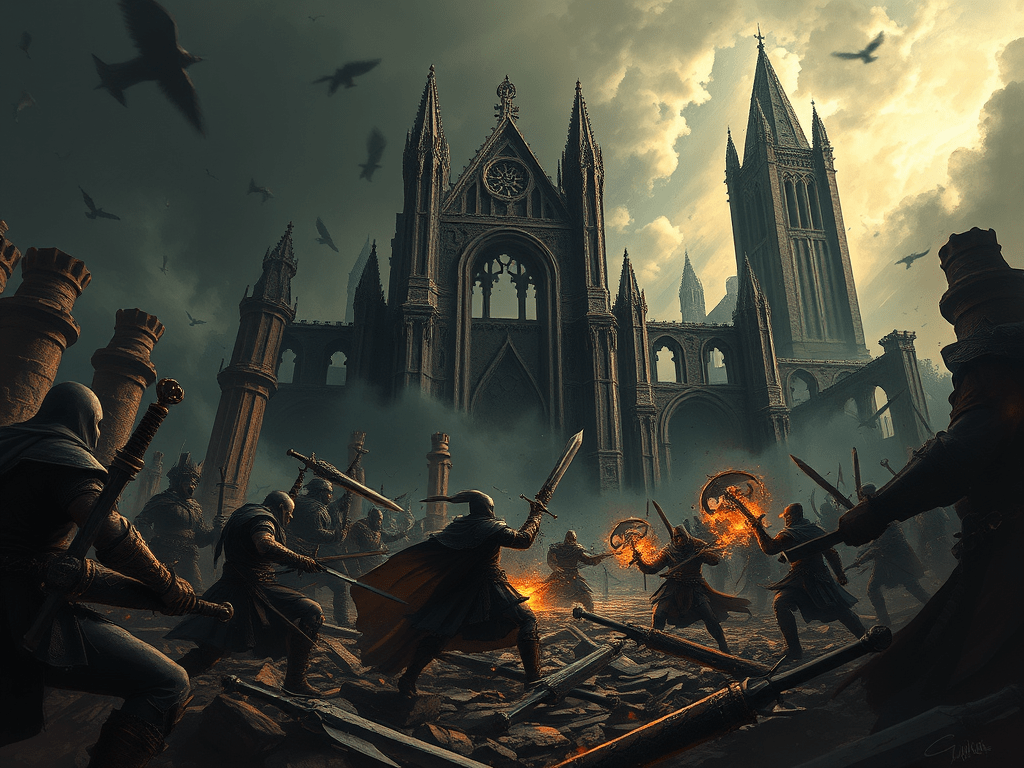
    • Never whisper when you can roar. The forty-first millennium has no room for subtlety. Everything about it is oversized, overwrought, overwhelming, and not least of all loud. There are no genteel duels on sunlit streets, only frantic no-holds-barred chainsaw-wielding brawls fought atop the broken stained glass of ruined cathedrals; no calm discussions between dispassionate parties, only furious demands shouted over the thunder of enemy gunfire. Whenever you frame a scene, ask yourself: how could this be more operatic and baroque?
    • Fill the world with brooding ruins; afflict everything with slow rot. The galaxy is old, its decadent empires stubbornly clinging to life even as they are dragged, inch by inch, towards oblivion. Nor is anything replacing them – those that manage to prosper in this time of fire and blood are those that have no interest in building anything of their own, only in tearing down or consuming what already exists. The decay isn’t fast, but it’s omnipresent, visible in the blasted skylines of bombed-out cities and the jagged scars of grizzled veterans. Everything is either old and worn out, or new and crudely inferior.
    • Spin webs of baffling complexity. Nothing is simple and elegant. Everything is covered with unnecessary details and slathered in adjustments, caveats, reworkings and contradictory purposes. Every culture has a convoluted history that has given rise to bizarre practices, and every piece of machinery has been jury-rigged from components originally meant for something else. Things that are meant to be covert are even more so; whatever part of a secret plan you manage to unravel is probably a diversion designed to cover a deeper agenda, or else it was meant to go down a whole different way but was sabotaged by unplanned events or a third faction. If something seems straightforward and common-sensical, it means that you haven’t added enough detail and contradiction to it yet.
    • Beneath every demoralising appearance, hide an even more awful truth. Things always seem pretty bad, and they’re invariably even worse than that. If you think that you have a predator on your trail, there is probably a second one lying in ambush ahead of you. If you’re tracking a skeevy underhive cult, it will turn out to be only the smallest part of a vast, powerful conspiracy reaches into the highest spires. Whomever you most rely on will either stab you in the back or die right before your eyes. Show plenty of problems and threats to the players, and for each one secretly ask yourself: how might this be worse than it seems?
    • Hoard knowledge and spread deceit. Knowledge in the Imperium is at once tightly controlled and rapidly decaying. No one has a complete picture – the real facts are either strictly classified, distorted by propaganda, or simply forgotten or misfiled. As acolytes of the Inquisition, the players have a duty to separate the truth from the lies, but they should have their work cut out for them; even the most trifling pieces of accurate data are furiously protected and once acquired, turn out to have large holes in them.
    • Show that humanity is fleeting. The Imperium is fighting for mankind against all that would see it end, against the alien xenos and the mutating powers of the Warp. However, the way it fights invariably eats away at the humanity of its people in turn. Imperial Commanders accept, or initiate, horrific widespread atrocities because it’s the only way to keep the system going, turning the strong into sadistic monsters and the weak into whimpering animals. Psykers invite the Warp into their own minds for the power to meet it on the battlefield. Tech-priests replace their bodies with metal out of loathing for human weakness. Even Astartes, supposedly the ultimate champions of Man, have turned themselves into lumbering, brainwashed killing machines that have little resemblance to the men they once were. On every side, show human nature suppressed or corrupted, stolen away or abandoned.
    • Let there be no innocence, only degrees of guilt. No one is pure, no matter how impeccably they present themselves. The seemingly noblest of people are still driven to acts of petty spite and hubristic arrogance by the strain of their position. Lesser souls, realising that there is little justice in the galaxy and that their ultimate fate will likely be a grim one, sell out their integrity for a slightly more bearable life here and now. Some people are worse than others – there are depths of depravity in the galaxy that the common, everyday sinner could barely even imagine, much less partake in – but no one is both completely sane and completely righteous, and most are some combination of crazy and corrupt.
    • Explore the brutal power of faith. Faith in the Imperium is not about gentle comfort and community; it is a thing of cleansing fire and blood-soaked martyrdom, of baying mobs and dungeons echoing with screams. Faith can turn a crowd of cowering peasants into a conquering army, can move planets on their axis, can spit in the face of Hell itself. Terrifying, psychotic certainty is a weapon as powerful as any bolter, and as volatile as a promethium refinery. Let the players try to use it to their advantage, but also put them to the risk of finding themselves on the wrong side of someone’s crusade.
    • Make every victory pyrrhic. Victory is always possible even in the grim darkness of the far future. After all, if there was no reason to fight, how could there be war? However, victory is rarely uplifting or hopeful. Rather, it never comes without losses, casualties, and the dismal knowledge that this can’t go on much longer. Never let a victory completely restore the status quo. Every triumph has a too-heavy cost, and entropy always increases, whether from the collateral damage of the fight or from the ever-accumulating injuries and mental scars of the fighters.
    • Treat technology as magic. The Imperium uses advanced technology while being almost wholly ignorant of science. The oldest and most powerful devices are relics that no one knows how to build anymore, and even machines and tools that come off the assembly line are constructed by rote, according to ancient instructions that are treated with religious awe. As far as Imperials are concerned, their weapons and vehicles work by the will of the machine-spirits, who are appeased through maintenance rituals; accordingly, any high-tech device will be decorated with fanciful engravings and colourful prayer rolls to keep it in a good mood. This also means that “high” and “low” technology exists side by side, with waxen candles burning atop cogitor banks and the instructions for operating a mechanic walker being scribbled on vellum. Whenever technology is mentioned, add some detail to hint at how completely its wielders misunderstand it.
    • Relish the players’ fight against impossible odds. The players may be tiny insects struggling against the vagaries of an uncaring cosmos, but the story is nevertheless about that struggle. They are the antiheroes of this tragedy, destined to ultimately fall but compelling for their desperate struggle against their dark fate. Push them to the brink, because that’s where they have the chance to shine; cheer their temporary victories and relish the Heavy Metal brutality of their inevitable defeats. Don’t go easy on them, but always give them a way to fight back, to prove their manful defiance of the odds stacked against them.
    • Portray visceral realities, not abstract rules. Never treat the numbers and the rules like they have an existence of their own. Mechanical effects – injuries, penalties, moves – come from the fiction and have consequences in the fiction. If you’re down a few Wounds, then you have a specific injury; if you’ve gained a few Insanity Points, then some past event still haunts your mind. Never apply a rule without noting what part of the grimdark reality it represents.
    • Demand immediate action. Things in Dark Heresy happens quickly, relentlessly, and often brutally. Threats are always escalating, the chrono is forever running out. Whenever you stop talking, demand to know what the players are doing about what you just said, and then build off of their actions to a new dilemma. Keep the situation ever-changing and the players engaged in it.

  • Psykers being psykic

    Psykers being psykic

    I have been hard at work this week adjusting the Dark Heresy Careers to my new idea of how to structure the port. Mostly it has given met yet another new idea for how to structure the port that I will eventually have to adjust the entire rule set to, but… let’s leave that for the future, I think.

    Anyway, the part I’m most proud of is the modified rules for psychic powers. As with most things DH, I keep struggling to keep it simple and elegant, but end up having to settle for making it simpler than the original rules (which is, let’s be honest, not a very high bar to clear). In this case, I had to give psychic powers a slightly different structure than most special moves, by incorporating the Fettered/Unfettered/Push scale from Deathwatch and onward. The goal being to make something that’s relatively straightforward to use but still captures the randomness of Warhammer 40,000 psychic shenanigans.

    Thus, I present to you, my new and improved rules! The progression in psychic strength depends on four Talents, like so:

    TALENT: PSY RATING 1

    When you draw on the power of the Warp and get a result of 10+, you achieve a Minor Success on if you used the power on Unfettered strength and a Basic Success if you used the power on Push strength.

    TALENT: PSY RATING 2

    When you draw on the power of the Warp and get a result of 10+, you achieve a Minor Success on if you used the power on Fettered Strength, a Basic Success if you use it on Unfettered strength, and a Major Success if you used the power on Push strength.

    TALENT: PSY RATING 3

    Choose one Psychic Discipline. You may now learn Psychic Powers from it.

    TALENT: PSY RATING 4

    When you draw on the power of the Warp and get a result of 10+, you achieve a Basic Success on if you used the power on Fettered Strength, a Major Success if you use it on Unfettered strength, and an Absolute Success if you used the power on Push strength.

    And all of those refer to the actual move draw on the power of the Warp, which looks like this. Brace yourself now, this gets long:

    SPECIAL MOVE: DRAW ON THE POWER OF THE WARP

    When you draw on the power of the Warp, decide which strength to use: Fettered, Unfettered, or Push. Then roll +Willpower. 10+, you succeed at a level depending on the strength you used and the Talent that gave you access to the move.

    • Minor Success: you activate a Minor Psychic Power that you possess, but you exhaust your will; take -1 ongoing to draw on the power of the Warp until you’ve had a chance to rest and meditate.
    • Basic Success: you activate a Minor Psychic Power that you possess.
    • Major Success: choose one of:
      • You activate a Psychic Power that you possess.
      • You activate a Minor Psychic Power that you possess, and also hold 1 that can be spent on activating a Minor Psychic Power that you possess at a later time without the need to roll.
    • Absolute Success: choose one of:
      • You activate a Psychic Power that you possess, and also hold 1 that can be spent on activating a Psychic Power that you possess at a later time without the need to roll.
      • You activate a Minor Psychic Power that you possess, and also hold 2 that can be spent on activating a Minor Psychic Power that you possess at a later time without the need to roll.

    In addition, if both your dice showed the same number, you manifest a Psychic Phenomenon depending on the strength you used and the number rolled.

    • Fettered: your disciplined caution keeps most of the energies you wield in check, only allowing them to hint at their undying malice.
    1. For a few seconds, voices echo oddly around you, as if you were standing in a vast cavern.
    2. A loathsome stench spreads around you.
    3. A fine coating of frost grows on every surface in your immediate surroundings.
    4. All animals in your immediate surroundings become spooked and restless.
    5. All food and drink in your immediate surroundings instantly spoil.
    6. All mirrors within your immediate surroundings crack.
    7. All plants within your immediate surroundings wither and die.
    8. Blood pours from stone and wood around you. Any carven idols or statues appear to be weeping blood.
    9. You and everyone within short range of you become short of breath for a few seconds, unable to run or exert themselves until the feeling passes.
    10. For a few seconds, utter darkness descends on an area within reach of you.
    • Unfettered: you trifled with forces beyond your understanding, and some of their destructive potential slipped your grasp. You still contain the worst of it, but all the same you’ve just demonstrated why psykers are not safe to be around.
    1. Everyone currently looking at you are forced to recoil in fear as they see you with a horrifying visage for a split instant. You also gain 1 Corruption Point.
    2. All mechanical devices around you temporarily seize to work. All ranged weapons drop to 0 Ammo.
    3. Ghostly apparitions appear around you for a few seconds. You and every player within short range of you gain 1 Insanity Point.
    4. Everyone within short range of you are knocked off their feet by a sudden earthquake.
    5. A piercing wail causes everyone within short range of you to be deafened for a few hours. Anything made of glass shatters.
    6. Uncontrollable Warp energies courses through your unprotected mind. You gain 1d5 Insanity Points.
    7. You and every player within short range of you gain 1d5l Insanity Points from glimpsing the heart of the Warp.
    8. A psychic shockwave emanates from you. Roll to refuse to fall, and everyone within reach of you becomes stunned for a long moment.
    9. Everyone within reach of you suffers a momentary rage and must attack whoever is closest to them. Players also each gain 1 Corruption Point.
    10. You and everyone within reach of you are flung about as high into the air as a second-story window. Anyone who can’t stop their fall somehow suffers injury as normal when hitting the ground again.
    • Push: foolishly, you opened the gates of the Immaterium wide, and what now comes pouring through them is beyond anyone’s control. The cost of your hubris may be steep.
    1. You wink out of existence and appear again, without knowledge of the intervening time, about half a minute later.
    2. Blood rains from the sky, and for the next short while you can only draw on the power of the Warp with Push strength.
    3. You switch bodies with another person near you for a few seconds. You gain 1d10 Insanity Points from the experience, and if the other person is a player, they do as well.
    4. Dark energies course through your body. You gain 1d10 Corruption Points and cannot attempt to draw on the power of the Warp again for an hour.
    5. The Warp touches everyone around you. You and every player within long range of you must roll to shield yourself with disgust.
    6. A Lesser Daemon materialises. It will eventually be forced to return to the Warp, but before then it’s free to work its malice.
    7. You become the epicentre for an explosion of psychic energy. You and everyone within reach of you take a hit for 1d10h damage, and all your carried equipment is instantly destroyed, including your clothes.
    8. Gravity reverses itself within long range of you, causing everything to fall upward for about half a minute.
    9. A daemon possesses you. It offers you your body back in return for you performing a heinous act that will irrevocably doom your soul. If you accept, the daemon remains in the back of your mind for as long as you work towards your sinister goal, ready to take back control permanently if it thinks you show insufficient enthusiasm, only leaving once you have held up your end. If you refuse, or if the daemon declares you in breach of the agreement at a later date, you permanently become a Daemonhost; make a new character.
    10. A rift in reality is torn opens and you’re sucked through, never to be seen again. Make a new character.

  • Moves, moves, moves!

    I have been hard at work with my Dark Heresy port this week, and I think I’m actually getting somewhere. I’ve edited the basic moves so that they amount to something comprehensive (which forced me to add even more of the damn things, but screw it, at this point I am making a complete mockery of the whole “rules-light” nature of PbtA anyway, so I might as well go crazy), moved more of the combat rules out to the weapons section, and begun editing the Careers and their lists of Advances again. This time I’ll turn it into something that’s easy to play! Yeah, I know I’ve said that before…

    Anyway, here are the basic moves as they stand now. Aside from editing them a bit, I also arranged them by type so they’re easier to keep track of.

    COMBAT MOVES

    MELEE

    When you bring down the hammer, roll +Weapon Skill. 10-14, you achieve a Basic Success. 15-19, you achieve a Major Success. 20+, you achieve an Absolute Success.

    • Basic Success: choose 1 option below. You may spend Righteous Fury to choose additional options, 1 for each Righteous Fury spent. Each option can only be chosen once. If you have training in the weapon you are wielding, you also hold Righteous Fury, which can be spent now on additional options or saved for later.
      • You inflict a hit on an enemy within range of your weapon and do damage according to your weapon and the enemy’s type.
      • An enemy who has you within range of their weapon does not inflict a hit on you.
      • You occupy the enemies within range of your weapon and keep them from engaging your friends. Hold 1 that can be spent on nullifying a hit from one of those enemies on another player or NPC. You may not deflect hits against yourself this way.
      • You push an enemy back to the range of your weapon or keep them from getting closer than that.
      • You knock down an enemy within range of your weapon or keep them from getting back on their feet.
      • You gain or maintain a grappling hold on an enemy within hand range.
    • Major Success: the same, but also hold Righteous Fury, which you can spend on an additional option now or save for other purposes.
    • Absolute Success: 20+, the same, but select 2 options.

    Examples: Exchanging blows, tackling an enemy, giving ground while looking for an opening.

    RANGED

    When you unleash the fire and fury, roll +Ballistic Skill. 10-14, you achieve a Basic Success. 15-19, you achieve a Major Success. 20+, you achieve an Absolute Success.

    • Basic Success: choose 1 option below. You may spend Righteous Fury to choose additional options, 1 for each Righteous Fury spent. Each option can only be chosen once. If you have training in the weapon you are wielding, you also hold Righteous Fury, which can be spent now on additional options or saved for later.
      • You inflict a hit on an enemy within range of your weapon and do damage according to your weapon and the enemy’s type.
      • You cause all enemies within range of your weapon to fall back, get in cover, or stay in cover.
      • You establish a kill-zone within the range of your weapon. Hold 1 that can be used to inflict an automatic hit on an enemy moving into or through that zone while you continue to cover it. The hit does damage according to your weapon and the enemy’s type. You immediately lose the hold if you take your eyes off of the kill zone.
      • An enemy who has you within range of their weapon does not inflict a hit on you.
      • You are not driven back, pinned down, locked into melee, or otherwise have your freedom of movement confined. You may also, if you so choose, alter your distance to the enemy closest to you by one category, e.g. from reach to close or from short ranged to long ranged.
      • You do not need to reduce your Ammo by 1. This cannot be chosen for an Ammo-S weapon.
    • Major Success: the same, but also hold Righteous Fury, which you can spend on an additional option now or save for other purposes.
    • Absolute Success: the same, but select 2 options.

    Examples: Charging in guns blazing, laying down fire to cover your escape, taking aim from a sniper nest.

    TRAVERSAL MOVES

    DODGE

    When you make a tactical withdrawal, roll +Agility. 10-14, you achieve a Minor Success. 15-19, you achieve a Basic Success. 20+, you achieve a Major Success.

    • Minor Success: you escape whatever you were fleeing, but terror leaves its mark on you. Gain 1 Insanity Point.
    • Basic Success: you escape whatever you were fleeing with enough margin that you feel merely a passing fear.
    • Major Success: you either escape with a comfortable margin, or you manage to snatch something useful or valuable up along the way at the cost of gaining 1 Insanity Point from the heedless risk.
    • Absolute Success: you escape with a comfortable margin and also manage to snatch something useful or valuable up along the way.

    Note: This move is triggered when you attempt to escape a location and its accompanying dangers completely. If you are just manoeuvring for a safer position within your current location, e.g. leaping into cover to avoid enemy fire or ducking under a sweeping blade, use escape a tight spot instead.

    Examples: Racing to catch the last life pod, fleeing from a fight, getting out of the blast radius.

    CLIMB

    When you overcome an obstacle, roll +Strength. 10-14, you achieve a Minor Success. 15-19, you achieve a Basic Success. 20+, you achieve a Major Success.

    • Minor Success: you make it through, but it leaves you exposed or vulnerable for a moment.
    • Basic Success: you make it through quickly and cleanly.
    • Major Success: you either make it through quickly and cleanly, or you allow yourself to be exposed or vulnerable for a moment in order to clear a path or show a way for the next person to follow you; if you choose the latter, you may allow one other player to share your progress without making a roll of their own.
    • Absolute Success: you make it through quickly and cleanly while also managing to clear a path or show a way for the next person to follow you; you may allow one other player to share your progress without making a roll of their own.

    Examples: Pushing your way through a crowd, wading through a treacherous swamp, scaling an enemy fortification.

    CONTORTIONIST

    When you escape a tight spot, roll +Agility. 10-14, you achieve a Minor Success. 15-19, you achieve a Basic Success. 20+, you achieve a Major Success.

    • Minor Success: you make your escape, but it’s a near thing; you lose 1 Wound and suffer the loss of one piece of gear of the GM’s choice.
    • Basic Success: you make your escape, but not unscathed; choose whether to lose 1 Wound or abandon one piece of gear.
    • Major Success: you make your escape in one piece.
    • Absolute Success: you make your escape in one piece, and you feel confident in your ability to slip free of any trouble; lose 1 Insanity Point.

    Examples: Slipping out of someone’s grip, scurrying into cover, squeezing through a narrow gap.

    SWIM

    When you charge boldly onward, roll +Strength. 10-14, you achieve a Minor Success. 15-19, you achieve a Basic Success. 20+, you achieve a Major Success.

    • Minor Success: you close the distance, but in heedlessly barrelling forward you exhaust yourself; take -1 ongoing to Strength and Agility rolls until you’ve had a chance to rest.
    • Basic Success: you close the distance with plenty of vigour to spare.
    • Major Success: you either close the distance with vigour to spare, or you exhaust yourself (take -1 ongoing to Strength and Agility rolls until you’ve rested) to arrive quickly enough to gain some sort of unexpected advantage or opportunity.
    • Absolute Success: you close the distance with vigour to spare and also arrive quickly enough to gain some sort of unexpected advantage or opportunity.

    Examples: Swimming through an underground passage, chasing down a fleeing enemy, leaping a gaping chasm.

    STEALTH MOVES

    CONCEALMENT

    When you find a hiding place, roll +Agility. 10-14, you achieve a Minor Success. 15-19, you achieve a Basic Success. 20+, you achieve a Major Success.

    • Minor Success: you manage to find a hiding place that will obscure the subject for a while, but that will soon be searched in the ordinary course of things.
    • Basic Success: you find a hiding place that won’t be uncovered by anything but a thorough search.
    • Major Success: you either find a hiding place that won’t be uncovered by anything but a thorough search or a hiding place that will remain secure for the foreseeable future; however, the second hiding place also holds the risk of what is hidden there being in some way damaged or endangered before it can be retrieved.
    • Absolute Success: you find a hiding place that will remain secure for the foreseeable future, no matter how many people look for it.

    Examples: Hiding behind some crates, burying evidence, smuggling contraband past customs.

    SILENT MOVE

    When you move unseen, roll +Agility. 10-14, you achieve a Minor Success. 15-19, you achieve a Basic Success. 20+, you achieve a Major Success.

    • Minor Success: you make it across a stretch of territory unseen, but you have to take the long way around or remain in hiding for some time, costing you valuable time.
    • Basic Success: you make it to where you are going deftly and quietly.
    • Major Success: you can make it to where you are going deftly and quietly, but along the way you stumble on a chance to examine or overhear something along the way that others would have preferred to keep secret from you, at the expense of risking detection.
    • Absolute Success: you make it to where you are going deftly and quietly, and along the way you manage to examine or overhear something that others would have preferred to keep secret from you, without risking detection.

    Examples: Sneaking up on an enemy, circumventing a sentry, making it through a secure area unchallenged.

    RESISTANCE MOVES

    CONTEMPT

    When you armour yourself in contempt, roll +Willpower+your current number of Disorders. 9-, you suffer a Failure. 10-14, you achieve a Basic Success. 15-19, you achieve a Major Success. 20+, you achieve an Absolute Success.

    • Failure: the shock is too much for you, and part of your mind irrevocably shatters. Choose a Disorder.
    • Basic Success: while you hold on to your reason, you are deeply shaken. Choose a Trauma.
    • Major Success: you maintain a white-knuckle grip on your rational faculties.
    • Absolute Success: in a flash of clarity, you realise that death in the service of the Emperor is an honour, not something to fear. Hold Righteous Fury.

    Examples: Encountering a grisly murder scene, facing a monstrous xenos, experiencing something unnatural.

    CAROUSE

    When you fight the effects of poison, drugs, fatigue, or extreme conditions, roll +Toughness. 9-, you suffer a Failure. 10-14, you achieve a Basic Success. 15-19, you achieve a Major Success. 20+, you achieve an Absolute Success.

    • Failure: you take -1 ongoing to rolls with one particular Characteristic until you’ve had a chance to rest and recover. The GM decides which Characteristics, depending on what the exact causes are.
    • Basic Success: your hardy constitution makes it possible for you to push on, but perhaps at a price. Choose one alternative below.
      • You take -1 ongoing to rolls with one particular Characteristic, as from a failure.
      • You suffer serious medical harm. Take 1d5l damage that is not affected by Armour. Toughness modifies normally.
      • Your refusal to slow down runs the risk of making you pass out. Roll to refuse to fall.
    • Major Success: you shrug off the effects.
    • Absolute Success: you not only resist, you start to build up a tolerance. Reduce the current penalties gained through failures to fight the effects by 1. If more than one Characteristic is affected, you choose which one gets a reduced penalty.
    • Absolute Success: in a surge of willpower you banish all mortal weakness. Lose all current penalties gained through failures to fight the effects.

    Examples: Resting the effects of drugs or poisons, pushing on without water or rest, enduring extremes of temperature.

    DISGUST

    When you shield yourself with disgust, roll +Willpower. 9-, you suffer a Failure. 10-14, you achieve a Basic Success. 15-19, you achieve a Major Success. 20+, you achieve an Absolute Success.

    • Failure: Chaos infuses your very bones. Advance your Damnation Track by two boxes.
    • Basic Success: you manage to hold back the worst of the dark transformation, but some of it still takes hold. Advance your Damnation Track by one box.
    • Major Success: your flesh refuses to bend to Chaos, but instead breaks out in stigmatic bleeds. Take 1d5 damage, not reduced by Toughness or Armour.
    • Absolute Success: by near psychotic determination, you deny the Ruinous Powers a grip on you… this time.

    Examples: Reading a forbidden text, facing a daemon, witnessing a dark rite.

    ENDURANCE

    When you refuse to fall, roll +Toughness. 9-, you suffer a Failure. 10-14, you achieve a Basic Success. 15-19, you achieve a Major Success. 20+, you achieve an Absolute Success.

    • Failure: the tribulation is too great for you, and you pass out.
    • Basic Success: you stagger on, but your inner reserves are dwindling. Take -1 ongoing to further rolls to refuse to fall until you’ve had a chance to rest.
    • Major Success: whether through unyielding faith or simply a burst of adrenaline, you bring your treacherous body back under your control.
    • Absolute Success: your suffering brings you a vision of the Emperor. Lose 1 Corruption Point.

    Examples: Suffering a Crippling Injury, being put through torturous pain, being sedated by powerful drugs.

    INVESTIGATION MOVES

    AWARENESS

    When you keep an eye out, roll +Perception. 10-14, you achieve a Minor Success. 15-19, you achieve a Basic Success. 20+, you achieve a Major Success.

    • Minor Success: the GM tells you one detail of your current surroundings that is odd, notable, or out of place. She doesn’t tell you why, only that the detail for some reason sticks out to you.
    • Basic Success: the same, and the GM also tells you why the detail is noteworthy.
    • Major Success: the same, and the GM also tells you what the wider implications of the detail is and what it might portend.
    • Absolute Success: the same, and take +1 forward to any roll that makes use of or makes reference to your observation.

    Examples: Stopping to smell the air, taking a look around, listening to your instincts.

    EVALUATE

    When you evaluate your surroundings, roll +Intelligence. 10-14, you achieve a Minor Success. 15-19, you achieve a Basic Success. 20+, you achieve a Major Success.

    • Minor Success: the GM tells you of one nearby inanimate object or feature of terrain around you that could be valuable or otherwise useful to you.
    • Basic Success: the same, and the GM also tells you which such object or feature (which can be the same one or a different one) that some relevant NPC or group would most desire to own or control.
    • Major Success: the same, and you may declare which particular NPC’s or group’s needs you’re able to anticipate. Alternatively, you may describe a particular sort of person to cater to.
    • Absolute Success: the same, and the object or feature you found for your own use was especially well-chosen; take +1 forward to make use of it.

    Examples: Surveying the contents of an armoury or market, looking around for an improvised weapon, finding the best spot to land a ship.

    GAMBLE

    When you count the odds of some potentially risky course of action, roll +Intelligence. 10-14, you achieve a Minor Success. 15-19, you achieve a Basic Success. 20+, you achieve a Major Success.

    • Minor Success: you get a hunch. You may ask the GM whether doing something would, in her opinion, be a good idea. She tells you either “yes” or “no.”
    • Basic Success: the same, but you’re able to pinpoint what the hunch is based on. The GM tells you “yes” or “no,” and also tells you what she’s basing her assessment on.
    • Major Success: the same, and you develop a lucky streak; if you follow your hunch, hold 1 that can be spent on making a roll of exactly 9 be treated as a roll of 10-14.
    • Absolute Success: the same, but your luck is truly unbeatable; by spending the hold, you can turn any result of 9- into a result of 10-14.

    Examples: Sizing up an enemy, checking the security, estimating someone’s reaction.

    INQUIRY

    When you conduct a thorough investigation, roll +Fellowship. 10-14, you achieve a Minor Success. 15-19, you achieve a Basic Success. 20+, you achieve a Major Success.

    • Minor Success: you learn some broad rumours that have been flying around, but either any other interested parties learn that you have been asking questions, or the people who tipped you off had their own sinister reasons for doing so.
    • Basic Success: you either learn an actually juicy tidbit at the cost of attracting attention or being lured into a trap, or you learn the broad rumours without any adverse consequences.
    • Major Success: you learn the broad rumours, and you also have a lead to learning something highly useful, but it will likely involve going somewhere dangerous or drawing attention to yourself.
    • Absolute Success: you learn both the general rumours and something highly useful without any adverse consequences.

    Examples: Eavesdropping in a bar, casually asking questions, offering a reward for information.

    LOGIC

    When you apply logic to a complex problem or vexing mystery, roll +Intelligence. 10-14, you achieve a Minor Success. 15-19, you achieve a Basic Success. 20+, you achieve a Major Success.

    • Minor Success: the GM gives you a hint towards the mystery’s solution or lets you unravel part of the problem, but your unfettered thoughts flirt with sedition; you gain 1 Corruption Point.
    • Basic Success: you get a hint or make progress without ill effects.
    • Major Success: you either get a hint or make progress, or you completely unravel the mystery or solve the problem at the cost of gaining 1 Corruption Point.
    • Absolute Success: you completely unravel the mystery or solve the problem in a way that is safely in line with the Imperial Creed.

    Examples: Finding your way through a maze, solving a riddle or puzzle, piecing together bits of evidence.

    SCRUTINY

    When you see corruption everywhere, roll +Perception. 10-14, you achieve a Minor Success. 15-19, you achieve a Basic Success. 20+, you achieve a Major Success.

    • Minor Success: the GM tells you if someone around you is lying to you.
    • Basic Success: the same, and the GM also tells you what part of what they said was a lie.
    • Major Success: the same, and the GM also provides you with the most likely thing that they are hoping to achieve with their lie.
    • Absolute Success: the same, and you may ask one question of your choice. If the liar knows the answer, you manage to deduce what it is.

    Examples: Study body language, ask leading questions, analyse past behaviour.

    SEARCH

    When you search an area, roll +Perception. 10-14, you achieve a Minor Success. 15-19, you achieve a Basic Success. 20+, you achieve a Major Success.

    • Minor Success: you find or notice something that hints at what has previously happened in this place.
    • Basic Success: the same, and the GM also tells you what the most likely backstory is for your find.
    • Major Success: the same, and the GM also tells you where you should go next if you want to find out more.
    • Absolute Success: the same, and the GM also tells you what probable dangers will face you if you proceed with your investigation.

    Examples: Examining a murder scene, ransacking an office, excavating a xenos ruin.

    INTERACTION MOVES

    BARTER

    When you strike a hard bargain for something that is at least potentially for sale, roll +Fellowship. 10-14, you achieve a Minor Success. 15-19, you achieve a Basic Success. 20+, you achieve a Major Success.

    • Minor Success: you manage to strike a deal, but it’s a bad one; you will need to pay much to get little, or there is some additional hidden cost like attracting legal trouble.
    • Basic Success: you manage to acquire what you need at a fair price.
    • Major Success: you get what you need at a significant discount.
    • Absolute Success: you get what you need in return for nothing but a promise of repayment at some hazy future date.

    Examples: Negotiating a fraught alliance, buying illegal goods, bribing an official.

    CHARM

    When you turn on the charm, roll +Fellowship. 10-14, you achieve a Minor Success. 15-19, you achieve a Basic Success. 20+, you achieve a Major Success.

    • Minor Success: you manage to appease suspicions or calm an argument, making the other party willing to at least talk things over.
    • Basic Success: the same, and you also talk the other party into doing you a small favour that won’t cause them more than a momentary inconvenience, like letting you have the next dance or pointing out a useful person to talk to.
    • Major Success: the same, and the other party also relaxes around you, potentially letting down their guard.
    • Absolute Success: the same, and the other party considers you a cherished friend from this point forward… which of course doesn’t mean he definitely won’t stab you in the back, only that he’d be sorry to do it.

    Examples: Offering a respectful greeting, buying a round of drinks, declaring your honest intentions.

    COMMAND

    When you bark an order, roll +Fellowship. 10-14, you achieve a Minor Success. 15-19, you achieve a Basic Success. 20+, you achieve a Major Success.

    • Minor Success: your orders are carried out in a haphazard sort of way, but some people never manage to get anywhere with their appointed tasks and others end up doing things only vaguely related to what you said.
    • Basic Success: your orders are carried out with what passes for competence in the Imperium, but without much enthusiasm and with everyone doing the least amount of work they can get away with without actual dereliction of duty.
    • Major Success: your orders are carried out to the largest reasonable extent to which the ordered people are capable of them.
    • Absolute Success: your faithful minions are so determined to make you proud that they exceed themselves, performing far beyond their regular capacity.

    Note: Like all moves, bark an order must be plausibly triggered. In its case, this means that the people being ordered around must in some way be susceptive to command; either because they are officially on the player’s payroll or because they are uncertain and eager for someone to tell them what to do. Conversely, disciplined underlings being told to perform routine duties will follow such orders without the need to trigger this move.

    Examples: Rallying frightened and confused people, getting mutinous underlings to snap into action, making poorly trained troops execute a complex strategy.

    DECEIVE

    When you tell a cold-blooded lie, roll +Fellowship. 10-14, you achieve a Minor Success. 15-19, you achieve a Basic Success. 20+, you achieve a Major Success.

    • Minor Success: your lie is believed for now, but the truth will soon come out.
    • Basic Success: the lie will be believed until some pressing evidence against it is revealed.
    • Major Success: the lie will either be believed until some pressing evidence against it is revealed, or the mark will believe your lie indefinitely, even in the face of evidence to the contrary. However, the second option requires you to truly commit to the lie to the point where you’re not even sure yourself what is real and what is not; you gain 1 Insanity Point.
    • Absolute Success: the mark will believe your lie indefinitely, even in the face of evidence to the contrary.

    Examples: Professing your innocence, impersonating an Imperial officer, feigning compliance.

    INTIMIDATE

    When you become a figure of terror, roll +Strength. 10-14, you achieve a Minor Success. 15-19, you achieve a Basic Success. 20+, you achieve a Major Success.

    • Minor Success: you manage to bully the victim into submission for now, but they will drag their feet in anything you make them do and betray you at the earliest opportunity.
    • Basic Success: the victim will do your bidding as long as you remain in their presence, but as soon as you are out of sight they’ll start plotting revenge.
    • Major Success: the victim will continue obeying you even after you have left their presence, too terrified to even think of going against you.
    • Absolute Success: the victim not only continue obeying your orders after you have left their presence, but will be so desperate to please you that they will act in whatever they perceive as your best interest whenever they get the chance.

    Examples: Cocking a gun, name-dropping powerful friends, slapping someone around.

    SPEAK (LOW GOTHIC)

    When you make yourself understood, roll +Intelligence. 10-14, you achieve a Basic Success. 15+, you achieve a Major Success.

    • Basic Success: you find a way to convey basic concepts and broad ideas (e.g., “I am a friend,” “there is danger in that direction”).
    • Major Success: you find a way to communicate effectively albeit stumblingly, but the precision is still lacking; take -1 ongoing to all moves that require you to be understood.
    • Absolute Success: you device a way to communicate freely and perfectly.

    Examples: Signalling through gestures or other crude codes, overcoming a language barrier, getting through to someone in the grip of terror or berserker rage.

  • More warhammering

    Today’s session turned out to be Dark Heresy, which reminded me that that port may have come a long way, but it’s still in an unfinished state. The basic moves work well enough, but they just don’t feel comprehensive in the way I want – I can usually find one that fits, but not always. I don’t have that problem with the WoD ports, despite them having half the number of basic moves. I don’t know. Maybe I need to think a little more broadly. For instance, today I ended up jury-rigging a move that’s really meant for communicating across language barriers and use it for getting across to someone in an agitated state – making it more generally a move to make someone listen and understand who would otherwise be unlikely to do either. That might be a way to approach it.

    Combat could use some fine-tuning, too. For one thing, I need to do something to make grenades less tempting to break out for everything. They do a ton of damage, but that’s supposed to be offset by them being awkward to use at close range and expensive to stock up on – I think I may need to try a little harder to enforce both those things.

    Also, copy-pasting together the actual options faced by a player whenever they succeed at throwing a grenade (as a Blast weapon) is still getting old. I don’t know, should I just write up separate combat options for each major type of ranged attack (Blast, single-shot, semi-auto and full auto)? That sounds awkward, but it might be a step in the right direction.

    Need some more flavourful GM moves, too. I’ve been using the regular, game-agnostic set (deal damage to them, take away their stuff, give them a tough choice, etc), but they’re not terribly inspiring. I’m thinking some more like:

    • Confront them with brutality and oppression, with them on the receiving end or not. The Imperium isn’t a nice place to live. Terrible things happen to perfectly ordinary people on a regular basis, ranging from merely being worked to death in a fabricarum to being hunted for sport by degenerate nobles. With this move, play up some routine horror, either as a background event (which they might try to stop, if they’re feeling foolhardy) or something that affects them directly.
    • Show them that they’re small. It’s a vast universe, and even the most accomplished human is only qualified to deal with a small part of it. With this move, reveal that the players are completely out of their depth, dealing with a situation far more complicated (and perhaps deadly) than they can even begin to address. Something as simple as finding your way through a labyrinthine hive city can be daunting, and once poorly understood technology and convoluted organisations get involved, things may simply be beyond your ability. For obvious reasons, this move must be used with care, to not cause the players to just stop trying. However, it’s integral to the setting that some problems just aren’t solvable.
    • Have something go terribly wrong on a large scale. Industrial accidents. Natural disasters. Entire swaths of space stations losing life support. When things go wrong in the Imperium, they tend to go wrong in a downright operatic way. With this move, smash something up that changes the entire environment the players are in. They should still have a reasonable chance to survive, of course, but they will likely need to start running.

    Something like that. I’ll need more of them, but that’s a little more fitting for the setting.

  • Magey moves

    Magey moves

    This week, I managed to move on with my Mage: the Ascension port and write up a list of GM moves. This is something like my fourth or fifth version of this list – as usual, Mage resist easy summary. But I think this set works with my conception of Mage as a game about mystery, conflicting viewpoints, and the contrast between the magical and the mundane.

    • Introduce a tantalising mystery or an opportunity to learn. Every mage desires, in one form or another, to learn – to better understand a world that is strange, complicated and often contradictory. The fundamental GM move, then, is to offer the players something to learn about. Perhaps they stumble on the outer Ripples of a Mystery (see the section of Mysteries for details), or maybe they catch wind of a rare book of lore, a wise spirit, or a master who might share his knowledge with the worthy. It can even be something entirely mundane, such as the location of an elusive enemy. Whatever it is, it should not come cheap; the players will have to do the legwork if they want to unravel the enigma.
    • Add another ingredient to the witch’s brew. The world is a battlefield between billions of competing wills, and even a straightforward conflict between two parties can grow complicated in a hurry. With this move, introduce another factor to the scene that comes from a different Paradigm or with another agenda than any of the extant ones. The factor can be an NPC or an inanimate force, seemingly mundane or overtly supernatural – what matters is that it’s different, making the scene feel more disjointed and chaotic. For example, the players might spot a Dreamspeaker rival of theirs while infiltrating a Syndicate-owned night club, or have their Verbena grove invaded by a little grey-skinned alien. Less dramatically, if the players are arguing with their chantry leadership about some course of action, an impasse might be taken as an invitation by a previously neutral cabal to suggest their own preferred plan.
    • Remind them that they walk a world of dust. The world is a harsh place, full of petty injustice and bleak misery. With this move, introduce some purely mundane problem – a mugger, a flat tire, a failing business, a bad cold. The problem can even be the simple fact that things take time, and that the world won’t sit still while the players spend a week digging through the library for information on their enemy. Magic can solve a great many of these issues, but of course that tends to lead to problems of its own; force the players to choose between dealing with things like a Sleeper, reminding them of their fundamental humanity, or invoking greater debt in the form of Paradox or unwanted attention from using their supernatural powers to escape everyday concerns.
    • Have a carefully laid plan go awry. Mages know better than anyone how easily clever plans can go spectacularly wrong. With this move, what someone tried to do – whether the player, one of their allies, or the enemy they were opposing – has a drastic unintended effect, causing a huge mess that doesn’t do anyone any favours.
    • Offer their heart’s desire, at a cost. A mage knows that the world is his for the taking, but everything has a price. With this move, present the players with an opportunity, whether to get the upper hand in a fight, to discover a clue to a mystery, to win a convert to their cause, or otherwise get something they want. However, either make the opportunity fleeting and necessary to act on immediately, without any chance for the players to hedge their bets, or hint that there will be considerable downsides to seizing it.
    • Let them be touched by the flames. Mages try to avoid physical danger, and most of the dangers they face are of a subtler kind. All the same, it’s a dangerous world out there, especially if you take an aggressive approach. With this move, deal Damage to a player, with a level determined by precisely what the source is.
    • Inflict a slow poison or a lingering curse. Any mage knows that the subtlest cut is the one that will barely be noticed at first. Wounds can fester, poisons can take time to kick in, and curses can ruin your life over a period of days or months. With this move, have a player be poisoned, infected, or otherwise compromised, but only hint at it for now; keep the full effects in store for later.
    • Punish them for breaking the laws of the world. Mages attract the wrath of the Consensus by their very nature, and especially so when they use magic carelessly. This move either causes a player to mark Paradox, or creates a Paradox Effect with a level proportionate to how much Paradox the player currently has marked, or – as is usually the case when a player fails an Arete roll – both. It is also appropriate when a player draws attention to some ongoing Effect, when interacting with something supernatural and volatile, or when in the presence of a Maurader.
    • Challenge or threaten their values. Every Tradition value something, if only because it’s something they rely on for power. Hermetics revere the written word, Verbena places of unspoiled nature, Choristers hallowed ground. With this move, place something a player’s Tradition considers special and powerful in the cross hairs, perhaps as part of a plot by a rival Paradigm, perhaps just as a natural consequence of events. This can be a player’s own foci, a location where their Paradigm is strong, or just an abstract value or ideal that’s being contradicted or suppressed. Either way, this gives them a chance to practice what they preach, and stand up for something greater than themselves.
    • Confront them with folly. The ignorant and deluded can be more dangerous than the outrightly malicious, if only because they are so much more numerous. With this move, have an NPC’s failure to see the world for what it really is either cause trouble for the players or provide them with an opportunity. People who are obviously wrong are people who need tutelage, which can strengthen a player’s Paradigm, but they can also dig in their heels and insist on a disastrous course of action unless the players can stop them.
    • Let them define their own reality. A mage practices his craft as much in his way of life as in his spells. With this move, simply ask the player to describe something, whether a character, a location, or a piece of history. Then take that description and add something to it, preferably something that makes the players’ lives more difficult.
    • Teach them that nothing ever truly ends. The consequences of a mage’s actions echo down the ages, and lessons learned frequently have to be rediscovered. With this move, bring an element – a character, an event, a location, an arcane principle – that had seemed over and done with back into play.
    • Make a Paradigm Move. When the players are dealing with some particular Paradigm, you can make a move unique to it that expresses its flavour and feel. This move can be overtly supernatural or merely philosophical, depending on the situation, but either way it represents a particular idea of how the world is meant to work.

  • Principles of magehood

    This week, I’ve been hacking away at my Mage: the Ascension port. I think, at this point, that I have run enough of the game to actually get a feel for it, so now it’s just a matter of getting it out on paper in a way that’ll make me remember it (and possibly explain my way of doing it to others who want to try, but let’s be honest, it’s mostly for my own benefit).

    I’ve written up a new set of Principles that are meant to inform everything the Storyteller does. It was tricky to formulate them in ways that weren’t specific to any particular paradigm, but which still felt flavourful and non-generic. Not sure if I succeeded. Have a look:

    • Be a fan of the player characters. The characters are the larger-than-life, troubled antiheroes of this story of magic and horror. Give them every chance to make choices, and to suffer for them; to stand tall, or fall short; to find wisdom, or be brought low by hubris. Let them show who they are, not as a favour to them, but because you want to see it too.
    • Start and end with the fiction. A move is only ever triggered by the fiction, and its outcome must always ripple through the fiction. Never say something happens because the rules say so. Instead, show what event or condition in the world led to it. Likewise, don’t just state mechanical outcomes (e.g., “mark a wound box” or “take +1 forward”)—explain what they mean (e.g., “your arm’s sliced fending off the dagger,” or “a blessing guides your aim”).
    • Offer no escape from magic. To be Awakened is to live an interesting life, whether you want to or not. Mystery and intrigue will find you. Wherever the players go, let their magical destinies ensnare them ever deeper. Never let them rest for long without introducing a new problem or worsening an old one. The path to Ascension waits for no one — if you don’t seek it out, it will come knocking.
    • Showcase eccentric oddballs, alternative subcultures, and fringe beliefs. Mages aren’t normal people — and neither are the Sleepers they deal with. Neo-pagans and techbros, political extremists and cultists, fringe scientists and secret societies: every NPC should believe in something, and that something should be out of step with the mainstream. Some chase utopia. Others just want to feel something. But none of them believe in half-measures.
    • Contrast the sordid with the sublime. Mages deal in higher truths — glorious destinies, lofty ideals, and sacred dreams. But each is also a creature of fragile, hungry flesh. They reach for the stars while standing ankle-deep in mud. A path to godhood may lead through alleys so filthy and grimy that the very idea of magic seems like a cruel joke.
    • Fill the world with mismatched fragments of possible realities. Behind the curtain, countless paradigms clash — each one shaping reality, each wildly incompatible with the others. Mages make belief into truth, at least part of the time, leaving contradictions and broken stories in their wake. And the world is littered with the detritus of past workings — wonders abandoned, horrors forgotten. Mix mythologies and genres freely: let the world itself seem unsure whether it’s a wuxia epic, a spy thriller, a Norse saga, or a psychedelic fever dream.
    • Give everything arcane significance. Everything is magic, sooner or later. Every office drone on their 35-minute lunch break is unknowingly enacting a grand occult working of efficiency and monetary worship. Every addict shooting up in a condemned building is fumbling toward ecstatic revelation. No action is without philosophical weight — whether the actors know it or not. When imagining a scene, always ask: what higher vision — successful or failed — shaped this place?
    • Place a mystery behind every corner but keep it half-hidden. For a mage, the world is one vast riddle. Nothing is ever straightforward — there’s always a hidden force at work, a scheme unfolding, an impossibility pushing against Consensus. But mysteries rarely announce themselves. What players see first is a minor oddity: a strange coincidence, a subtle wrongness. Whether they pursue it is up to them.
    • Wrap the fantastic in the prosaic. This complements contrast the sordid with the sublime. Every act of magic brings consequences — and depends on logistics. A face-melting curse ends with a trip to the ER and a surgeon muttering “acid attack.” The God of Storms must be summoned with ingredients that arrive in shipping boxes. Spells punch holes in reality — but the rest of the time, mages live in the same world we do, and must navigate its systems.
    • Portray social and environmental ruin. The World of Darkness is a monument to failed utopias. Cities meant to be marvels now rot with smog, slums, and broken infrastructure. Streets reek of exhaust. Everyone’s at once overmedicated and sicker than ever. The system is crumbling — but for now, it clings to life with a rictus grip, too stubborn or afraid to admit it’s already dying.
    • Show spots of beauty and meaning, always in danger of being erased. The world isn’t dead — just almost. In the middle of polluted hellscapes, some still fight for dignity. Amid mass-produced junk, real art and brilliance survive. These things are always at risk — of being destroyed by bitterness, or forgotten in apathy — but they are hope. Let them shine.
    • Make everything someone’s creation, but only sometimes under anyone’s control. Nothing just happens. Every event, horror, or miracle began with someone’s will — or their failure to act. Every demon was summoned. Every curse began as fear. But control is an illusion. Most magical acts spiral far beyond what anyone intended. Chaos is more common than success.