Tag: Aberrant

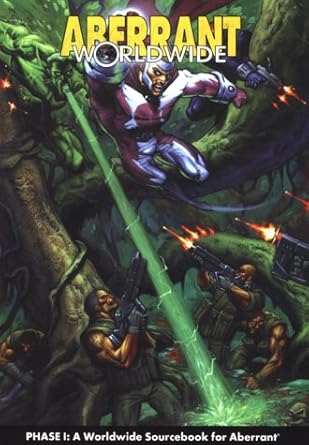
  • Aberrant readthrough: Worldwide Phase Two

    We’re in the last quarter of our readthrough of first edition Aberrant, White Wolf’s not-very-successful attempt at a superhero game. So far, the my reaction has been mainly annoyed boredom, with the occasional bout of psychotic rage. ANTI-LIFE JUSTIFIES MY HATE! ANTI-LIFE JUSTIFIES MY HATE! ANTI-LIFE JUSTIFIES MY HATE! ANTI-LIFE JUSTIFIES MY… ahem.

    This week’s collection of playable scenarios contain a bit of both.
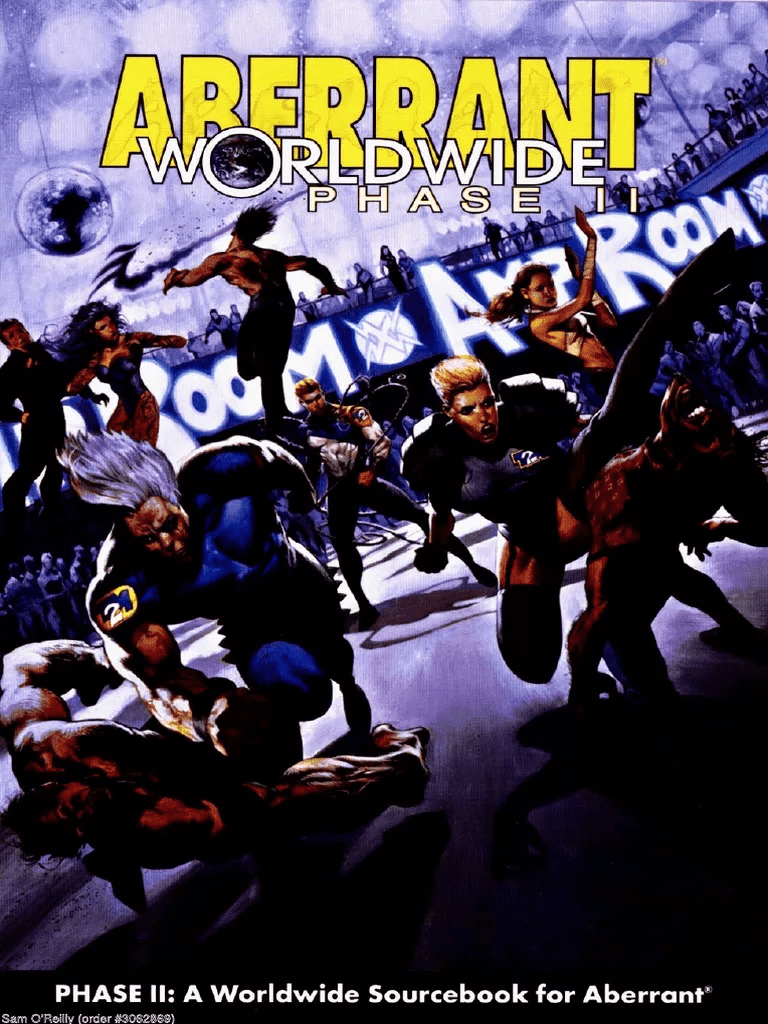
    Like Worldwide Phase One, it contains four scenarios, all of which are meant to be playable for a group of any faction and which revolve around major global situations. In fact, in a lot of ways, I think that this collection is the best example of what you were meant to actually do in Aberrant – the previous one was more about pushing the metaplot (and repeatedly made the players little more than the audience for the same), but here the incidents are contained enough that the setting is pretty much the same at the end as it was at the beginning. So, what does your character do in Aberrant? Have four examples.

    SCENARIO ONE: THE POPE OF BABYLON

    Ungh. This is the “psychotic rage” portion of the book, right at the start. I mean, it’s not as bad as the Divis Mal ass-kissing in One, but… well, let’s take it from the start.

    The scenario is based on a plot hook from The Storyteller Companion, so again with the self-cannibalising… Anyway, it concerns a scheme by the eeeeeeevil Catholic organisation Opus Dei to eeeeeeevilly frame the cool, liberal Pope for crimes he did not commit, so as to politically neuter him. Did we mention that Opus Dei is eeeeeeeevil? Don’t worry if you missed it, the book will remind you. And remind you. And remind you.

    And, like… did the writers get that Opus Dei isn’t some fictional supervillain organisation? It’s an actual thing, with actual people in it! I’m sure a lot of those people are ones I wouldn’t particularly get along with, but they are flesh-and-blood human beings trying to live their best lives, and the writers are just straight up calling them brain-washed monsters. This is even worse than what they did last week, because at least the Church Astaroth and the Church of Michael Archangel are fictional organisations even if they are pretty clearly meant to stand in for all Satanists and all evangelicals respectively. Like, there was the fig leaf of them at least theoretically being works of fantasy. But here, it’s not some invented Catholic order that is totally-not-Opus-Dei-wink-wink-nudge-nudge. It’s just Opus Dei.

    White Wolf always had this… thing in all their games where they kept being frustrated that their audience kept engaging with the fantastic elements they actually put in their game instead of using it as a starting point for dealing with Real Important Issues. A lot of sidebars of variable bitchiness was spent chewing the reader out for ignoring the regular, non-magical parts of the modern world in favour of having vampires fight werewolves.

    With Aberrant, I guess, they were trying the novel approach of actually putting those Real Important Issues into the actual game instead of expecting their customers to do it for them. A lot of page count is genuinely dedicated to explaining how the real world works (or how the White Wolf writers thought it worked, at any rate – they had a tendency to be know-nothing know-it-alls) and how the players can affect it. It is, as far as it goes, a commendable step in the right direction.

    It also shows very clearly why it was and always would have been a really bad idea. Because, see, a roleplaying game requires villains, people that it’s okay to beat up. When you create your villains out of thin air, that is perfectly fine, and you should definitely ignore the wet blankets who whine about racism against orcs. But when you insist on your game being about interacting with the actual, as-is, no-names-changed real world… you are effectively taking some real people and saying, “these are villains. These are okay to hurt.”

    And that is not cool with me. No matter how little I would get along with those people, I will never agree with dehumanising a person who actually exists.

    And just in case you thought I was overreacting, the very last page of the scenario lets you know that that cool, liberal Pope that you’ve spent the scenario fighting to defend? He’s owned by the mafia. What, you thought there was such a thing as a good Catholic? Don’t be silly!

    I hate you, Aberrant. I really freaking hate you.

    SCENARIO TWO: A GREEN AND PLEASANT LAND

    This one is about an evil British aristocrat who’s erupted as a super-genius nova and who’s putting together a sinister scheme to return England to the top of the international food chain. He does so partly by means of a brain-washing cult disguised as a gentleman’s club. It’s… passable. I mean, it’s basically a slightly-more-realistic version of a supervillain plot, and that’s where Aberrant is the most comfortable, for better or worse.

    On the other hand, the multiple pages at the start that describe how England has turned into festering pile of decay from refusing to cooperate with Project Utopia… feels excessively mean-spirited. I mean, did we miss the part where Project Utopia is run by a bunch of yahoos whose laughable schemes always fail? You’d think that the writers would have some sympathy with the Brits wanting to keep those yahoos at arm’s length, but of course that’s not how it works. It’s only the glorious novas who shouldn’t let Project Utopia tell them what to do – those filthy baselines should know what’s best for them and bend the knee.

    I hate you, Aberrant. Though not, I admit, as much as I did after the first scenario. I mean, let’s face it, the British have a long and proud tradition of putting themselves down in very much the ways this book puts them down. I feel like Terry Pratchett would have been like, “well, they could have said it better, but they have a point…”

    SCENARIO THREE: DOMINION

    This one is about a megalomaniac trying to conquer the Ukraine. Ehehehehehe, yyyyyyyyeah, that’s a little more uncomfortable in the Year of Our Lord 2026 than it was when it was written, it must be said…

    Having that said, this one I don’t have any major problems with. I mean, it’s not great, and there are a couple of things I could pick on – a particular sidebar whining about how players always have to ruin Teh Story by having their characters, like, do stuff, for example – but I’ve already ranted my fill this week. Plus, it’s got novas actually fighting across a major city for military objectives, and that’s sort of hardcore in a good way.

    SCENARIO FOUR: WHERE HEAVEN ENDS

    This one is actually really good. I mean, the premise is that Project Proteus is trying to do something evil, again, and completely messing it up, again, in a way that causes a ton of trouble for everyone, again. And I’m honestly getting a little tired of Proteus being portrayed as this hyper-secretive group of super-geniuses who walk between the rain drops but are somehow still not capable of tying their own shoes. But the actual content? It’s solid.

    Specifically, Proteus is setting up a sting operation in the all-nova club The Amp Room in Ibiza to nab a whole bunch of Teragen and Aberrant members. But amazingly enough, storming into a place with several hundred superhuman beings who are most of them drunk off their asses and bellowing that everyone’s arrested… does not work out too well. In fact, it results in an all-out brawl that spreads across Ibiza and practically lays it in ruins.

    Meanwhile, the players are tasked with finding a couple of novas who have (it turns out) been kidnapped by an aspiring elite calling himself the Angel of Bones and who plans to execute them in front of a bunch of journalists to show off what a badass he is. They get a front-row seat to all the human misery of a natural disaster, while also having to dodge flying debris and quantum bolts from the fights that keep going on, and avoid attack helicopters from the militaries that are trying to restore order. It’s pretty intense, and it makes actual good use of the setting.

    Oh, and I mentioned last time that Aberrant might hate bulimics? Yeah, apparently the Angel of Bones used to be obese, and he erupted from trying to starve himself thin, so now he’s a walking skeleton who can kill people by causing them to gain several hundred pounds of fat in seconds. I’m… genuinely uncertain whether that is tasteless and offensive or if it’s so tasteless and offensive that it’s actually kind of awesome.

    Though the fact that it’s implied that Count “stop maliciously misquoting me, I only said you were like monkeys to me!” Orzaiz spends his captivity as a giant tub of lard to keep him from easily escaping? That I find genuinely hilarious. Welcome to life in the plus sizes, you smarmy bastard!

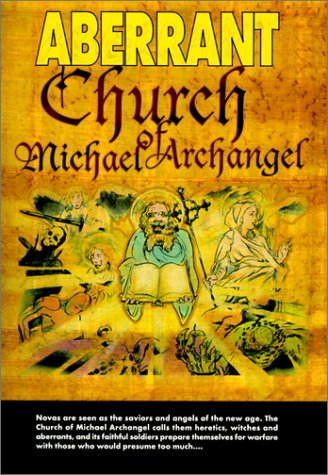
  • Aberrant readthrough: ReignofEvil.com and Church of Michael Archangel

    So, having decided that I hate this game and want it to perish in quantum fires, I am nonetheless soldiering on. This week we’ll take a look at the last two mini-supplements for the first edition, who most conveniently have a common theme.

    The theme is, People Who The Writers Of Aberrant Had Snooty Contempt For. These two booklets are of course not enough to fully explore that theme, which could probably have provided material for a dozen more if anyone had actually been interested enough in Aberrant to be buying these books, which is perhaps why it further spilled over into Worldwide Phase Two (which we’ll discuss next week). For now, though, let’s start with:

    So it’s about Satanists. Specifically, it’s about something called the Church of Astaroth who worships a nova by the same name. And he’s a loser! And they’re losers! But losers can be dangerous, possibly, in some way, so it’s okay to hate them and it doesn’t make you a bully! But they’re definitely losers! A bunch of man-babies who fail at life and can’t spell! Feh! Feh! We spit at them! Did we mention that they’re losers? Because they’re losers!!!!!

    … yeah, you kind of get the idea after the first page and then it goes on for twenty-five more. The writers of Aberrant really hated Satanists, and gosh-darn it, they were prepared to say so no matter how controversial it was!

    Now, being at the time a maladjusted all-black-wearing young man, I actually sniffed around some Satanist websites and publications at around the time this was written, so I at least understand what it’s attacking and that, while humourlessly mean-spirited in the extreme, it’s not entirely off the mark. And yes, I can vouch for the fact that a lot of self-proclaimed Dark Lords of This World really couldn’t spell particularly well.

    But you know something? Some of it had a sort of morbid beauty to it, too. Hey, Anton LaVey was a maladjusted jerk, but he was a maladjusted jerk with a serious poetic streak – he could make being a maladjusted jerk sound absolutely gorgeous. Honestly, Satanists deserve better than this hatchet job. I say this even though they worship selfishness and depravity and even though (more objectionable by far, to my mind) they are usually libertarians. Seriously. Some people may deserve to be mocked, but no one deserves to be mocked this lazily.

    And what makes it really obnoxious is that the Teragen, who the writers constantly fawn over… are philosophical Satanists. I mean, they just are. They believe in transcending conventional morality! They believe in wielding power unchecked by the sheep-like masses! They revel in monstrosity and deviance! They form a cult of personality around a guy who goes by a pretentious Latin name that means “the wicked god”! They’re Satanists.

    And unless one of the writers was bitten by a metal-head as a child, I can only theorise that that’s precisely why this book was written – as a pre-emptive counter to any accusation that they might be Leading The Youth Astray. Which, I will admit, was probably not baseless concern back at the turn of the millenium, with the Satanic Panic not yet cool in its grave, but still… they got away with glorifying serial killers and terrorists, I think they could have gotten away with having Satanist-coded characters in their silly superhero game without hiding behind this ridiculous fig leaf.

    It’s an especial shame because, again… Satanic imagery is cool. Hey, ask any Warhammer 40,000 nerd and he’ll tell you that the only thing more awesome than a ten-foot-tall space marine with a machine gun is a ten-foot-tall devil-worshipping space marine with a machine gun! This could have been a fun villain faction that explored what thoroughly disenfranchised people might become if they suddenly got the power to make their every maladjusted fantasy come true. But no, instead we got 26 pages of the writers going, “guh guh guh! That’s YOU! That’s how DUMB you sound!”

    In addition to really hating Satanists, the writers of Aberrant really hated fundies. Because, again, it was the aughts, and hating fundies was the style of the times (unless you were a fundy, in which case hating the godless secularists was the style of the times). So of course Aberrant has a whole bunch of them who hate novas and go around killing them, and…

    Wait. Stop. Hold the phone.

    They go around killing novas. Novas. You know, the ones with the superpowers. The godlike creatures who can smash cities to rubble. The ones who can do anything baselines can, only better. A bunch of rednecks with shotguns are going around trying to kill them.

    … howwwwwwwww? I mean, this is a villain faction, right? They’re meant to serve as antagonists in the game. How are they meant to do that? How are they supposed to be relevant? They show up, they get creamed. It’s about that simple.

    And the game doesn’t even bother to hide that. The Michaelites are few in number, low in funding, untrained, clueless, outmatched. They’re irrelevant, an annoyance. But they’re still going to be shoehorned into the game and treated like their very existence is an important part of the setting. Because, I guess, they have the unmitigated nerve to not like novas, and that proves that novas are oppressed woobies who are totally justified in joining the Teragen – who, let’s remember, refer to baselines as “monkeys” and consider them to have no moral significance. Because the absence of universal approval is exactly the same as relentless persecution.

    I hate this game. I hate this game. I hate it, I hate it, why did I start reading it, why do I do this to myself…

    Sorry, sorry, I had to hyperventilate for a moment there… Anyway, the book wraps up with a fiction piece about a Michaelite discovering that one of the leaders of the movement is actually a nova with a split personality, which is a thing that was mentioned aaaaaaall the way back in Year One. They fight and the Michaelite ultimately kills the nova. Well, good riddance to bad rubbish, I guess, but all this did was to remove a plot hook that a previous book had established. Like, by reading this book, you end up with less game than you started with.

    Okay, I’m done here. Stay tuned for next week, when we find out that the writers of Aberrant also hated Catholics. And British people. And possibly bulimics, because why not.

  • Aberrant readthrough: Worldwide Phase One (part two)

    Okay. Let’s freaking do this. The second half of Worldwide Phase One. This is where it stopped being funny for me.

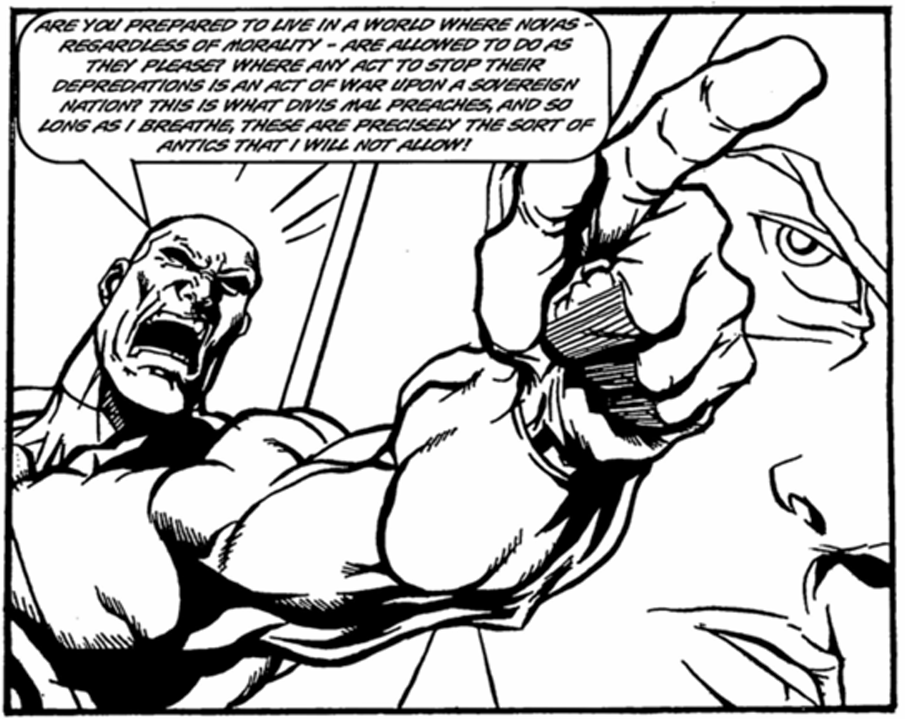
    No, I didn’t switch out the speech bubble. We’re genuinely supposed to think that he’s being an evil fascist for saying that novas should be treated as human beings instead of as sovereign powers.

    But first things first. There are two more scenarios in this one, and only one of them is actually bad. The other one, in fact, is quite good.

    SCENARIO THREE: GABRIEL

    The first scenario concerns a nova named Gabriel “the Miracle” Melchior who runs one of those nova cults we keep hearing about, called the Church of the Immanent Escheaton. It’s another one of those things that was mentioned in the core book with a lot of “ooooh, there’s something going oooooon heeeeere” foreshadowing, and here we actually get to find out what we’re meant to use it for, which is this specific scenario and nothing else. Oh well.

    Gabriel Melchior (which is apparently his given name, and that is something that would feel perfectly natural in a cheesy comic book but really looks out of place in Aberrant‘s thinking-man’s-superhero-story ) is incredibly powerful, can generate super-plagues at will, and is also suffers from Taint that has made him go loopy in the head. That being a bad combination, Project Proteus kidnapped him and stuffed him in their main secret prison slash Nazi research lab in Bahrain, where they first tried to cure him and then, when that proved impossible, proceeded to just slice him up and try to figure out what made him tick. Because Proteus.

    And then, when the terraforming of the Sahara got rolling (as mentioned in the previous post), someone had the bright idea to bring him out and make him use his powers to speed things up there. Because Proteus. He obviously escaped, about ten times as loopy as he was before, and now he’s holed up in the CotIE’s compound in Nevada and yelling over the OpNet about how the end of days is at hand and he’s going to unleash plagues upon the world that will kill one third of all baselines.

    The players, of course, are tasked by whatever faction they work for to get him to… you know… not do that, probably by killing him. The Teragen don’t want him dead, necessarily, but they’d also rather not get to a situation where the remaining two thirds of all baselines have every reason to hate novas, so they want to talk him down and get him to go into hiding with them. Meanwhile, the Directive is setting up a backup plan of erupting a neutron bomb by the compound, which they hope will fry everything in it so completely that even Gabriel’s quantum germs won’t survive.

    This, by and large, is actually a scenario I like. Again, it shows Utopia having done something bad, and since this time it’s specifically Proteus it’s extra bad. But just like in the second scenario, you can see why they did it – they want to cure Taint, so they need to examine a heavily Tainted nova, and they had exactly one of those available and no idea when they might get hold of another. And then it all went pear-shaped because someone got it into his head to be ambitious and pull one of those “underhanded means of achieving positive ends” things that Proteus is supposed to be all about. That actually works pretty well.

    The other factions, too, get a nuanced portrayal. The Directive’s plan is the antithesis of Proteus’ – Proteus is amoral in that it takes heedless risks for the promise of great rewards, the Directive is amoral that it will make any sacrifice necessary to avoid taking any risks at all. Utopia are well-intentioned but are also clueless about the fact that it was their own leaders who caused this mess. The Teragen are the most “humanitarian” of the bunch, but they are blinded by ideology in their own way – they want to save Gabriel, and never mind that he really is a walking-talking extinction event who is not in command of his faculties. Everyone gets to be themselves, and no one gets to be the hero.

    Could this be it? Could Aberrant finally be starting to live up to its promise? Will it be smooth sailing from here?

    AHAHAHAHAHAHAHA I crack me up.

    SCENARIO FOUR: INTO THE ARMS OF THE ANGEL OF WRATH

    First off, dumb title. I know I’m prone to overcomplicated names and sentences, and because of that, I’m always on the lookout for them. And this is one title that tries to pack in far more melodramatic imagery than it can comfortably hold.

    Secondly, this scenario finally wraps up the stupid Aberrant (as in the faction) plot, presumably because the writers realised that it wasn’t anywhere near sturdy enough to hold the weight of the game line. Corbin (Slider’s soccer-playing ne’er-do-well bestie, who founded the Aberrants) has decided to turn himself in, only he’s going to do it right outside of the Project Proteus facility in Bahrain and to maximum press coverage. The players are given the chance to investigate Slider’s death (weren’t they supposed to be doing that the whole time? Wasn’t that the premise of the metaplot? Yeah, this is what I mean when I say that that it was a damp noodle of a plot hook…) and either cover it up good and proper or reveal it to the world.

    But of course that’s not where the meat of this scenario is. No, this is the point where the Aberrant writers finally show their hand – and entirely too much of their personal issues at the same time. This is where An Incredibly Important Event In The Game’s Story happens. This is… where their self-insert Gary Stu totally PWNs Superman.

    By which I of course mean that Divis Mal shows up outside of Bahrain, Caestus Pax (that guy in the picture, the foremost Team Tomorrow dude) tries to fight him, and he gets trounced. Like, absolutely demolished. The narration is very carefully to stress that it’s not even close, Mal is just toying with him, because he’s a ten million gazillion bajillion times cooler than Pax and TAKE THAT, all the macho jocks who bullied me in high school!!!!

    Sorry, do you think I’m exaggerating? No, no, trust me, you cannot even imagine just how smug and snide and mean-spirited the whole thing is. Here, have some choice quotes:

    Keep in mind that layers of deception cover everything : Caestus Pax appears to be a paragon of nova-dom but is, in truth, little more than a very powerful bully with a huge playground . Divis Mal appears to be a sinister villain but is truly an idealist (though not necessarily a nice idealist).

    First off, this game seems to love the idea that being an “idealist” excuses a lot of things. The head of Project Utopia, who signs off on the sterility plagues and vivisections, is described as an “idealist” in the Project Utopia book, too. I guess he’s also “not necessarily a nice idealist.” I feel like the writers just divided the world into unfeeling brutes and deep people like themselves, and whole the deep people weren’t perfect they were at least all worthy of sympathy, unlike the brutes.

    But most of all… yeah, such a bully, that Caestus Pax. You know what would have made it easier to accept that? If he had done, at any point of the last ten books, any bullying. In fact, it would have helped if he had done anything other than occasionally be mentioned in passing albeit unflattering terms. The core book, for instance, calls him “the authoritative Caestus Pax” at one point but never goes into how or why he’s authoritative. It just seems like he’s the ersatz-Superman, and the writers see Superman as a big, dumb, smug bully, so therefore they consider it too obvious to need pointing out that Caestus Pax is a bad guy who is unfairly seen as a good guy.

    I mean, Jesus, even Garth Ennis put more effort into it than this

    Divis Mal makes his appearance at this point , conclusively demonstrating to Caestus Pax just how pointless (and painful) standing against him really is.

    Dear Aberrant: please die.

    Once it’s over, the glow fades. The fiery aura dies away, Mal’s preternaturally perfect features apparent to all. Divis Mal floats to the ground, gently lays Pax on his back and kisses him on the forehead. If anyone nearby has some form of enhanced hearing or Mega-Perception 2 or higher(and isn’t deafened from the battle), she can hear Mal whisper, “It is a thing most sad to see a god stooping to serve monkeys. As you grow wiser, 1 hope you’ll see the error of your ways. Perhaps next time, you’ll listen.”

    Dear Aberrant: please die in a fire.

    Characters who attack him or choose to simply offer insult or meaningless argument will be ignored or swatted away as appropriate. Divis Mal is civilized; he is not a bully, but he need not tolerate fools.

    Dear Aberrant: please die in a fire surrounded by the smoking ashes of all your hopes and dreams.

    Oh, and over the course of the next few weeks, we are helpfully told, people all over the world are squeeing over how cool Mal is and how he, like, totally demolished Pax, who everyone now sees is lame. And never mind that the people of the world (not being privy to all those OOC assurances that Mal is the good guy, really, don’t be so close-minded, he ONLY thinks that novas shouldn’t obey baselines and that’s completely reasonable and don’t you dare say otherwise!!!) just saw the guy they trusted to protect them get bitch-slapped by the guy who refers to them as “monkeys.” No, part of the nerd-boy fantasy is that when you beat up the mean quarterback, the whole school yard cheers, so the world is going to cheer no matter how little sense it makes!

    AAAAARRGGGGHHHH.

    And what makes it worse is that this whole section is plastered with pious sidenotes about how this is totally the players’ story, they should in no way feel deprotagonised by the fact that they absolutely can’t measure up to Pax and he in turn absolutely can’t measure up to Mal. Because, see, while Mal beats Pax up, they can do some stuff that will totally matter! Except it won’t, because Mal can just undo anything they did with a snap of his fingers and anything that happens in this setting happens by his benign permission.

    Again, not exaggerating! He doesn’t even get a stat block. Here’s what he gets instead:

    Where Pax can affect cities, Mal can affect continents, where Pax has orbital range, Mal can actually direct his fire around any obstacle (including the planet) to hit anything he desires. Finally, where Pax has vastly reduced quantum costs for his powers, Mal often pays nothing to use his. Additionally, Mal has access to a few powers unlike any ever seen before: He can sense novas (latent and active) over an area the size of Texas with little effort – conversely, he can also conceal his own quantum sig nature with near-total efficacy. With some difficulty, he can distinguish “quantum signatures” to identify individuals. Mal can sense energy production/ usage over a wide area (a city, perhaps larger) and manipulate it if necessary, causing blackouts or surges or interfering with quantum powers over a wide area (several novas at once). This can be applied selectively. Finally, he can focus his power on one nova and effectively shut that nova’s M-R node down for a time – several weeks on the outside. The effect is somewhat similar to Dormancy, only the target can’t voluntarily reactivate his powers. Mal can, conversely, use this power to help one or more latent novas erupt and perhaps guide the form that eruption takes.

    So basically, he’s all-powerful, he can do anything you can think of, and he has no meaningful limitations whatsoever. And if you asked the developers – a pox upon their names! – why he doesn’t just magic everything into being precisely the way he wants it, I’m sure they’d say, “oh, because he has such a high regard for individual freedom and he wants everyone to find their own truth!” Barf.

    Yeah. I’ve been giving this game a chance, I really have. Most of it hasn’t been great, but most of it hasn’t been terrible either. I knew it had a bad reputation, but I figured it was just the Internet overreacting like usual, because while I could see the things that people were upset about, they weren’t that pronounced.

    I stand corrected. I was blind, but now I see. This game is an abomination. I am so, so glad that it failed dismally.

    But I’m still going to finish it, damn it, so stay tuned! This readthrough is likely to get a lot saltier from here on out!

  • Aberrant readthrough: Worldwide Phase One (part one)

    I have good news and bad news. The good news is, this one is at least not boring. Well, not all the time, at least. Bad news is, where the boredom ends… the SEARING LOATHING BEGINS!!!

    But let’s take it from the start.

    This book is technically a collection of ready-made adventures to run for your group, but it’s actually something a bit more interesting than that. See, like I’ve said before, the core Aberrant book is really more like a big book of foreshadowing than something that can be used on its own, each chapter teasing some part of the game or setting that only gets spelled out to a useful degree in a later supplement. The core tells you that Project Utopia exists and is super-important, and if you actually want to do anything with it, you have to get the book for it. The core tells you the Directive exists and… exists, and if you want to find out what it actually does and how you might make any sort of use of it, you have to get the book for it. You get the idea.

    In the case of Worldwide Phase One, the promise it fulfils is actually that of the world being about to change (probably for the worse). The core book swore up and down that shit was about to hit the fan, and then spent the next ten supplements outlining a setting where people mostly sat around talking about maybe possibly doing something at some point, if only they could figure out what, but honestly they weren’t too excited about it. Well, here’s where that changes. This book shakes things up, and in doing so gives you a sense of how and why things might go from the saccharine sweetness of the core book to the complete mess that will lead to the Trinity timeline.

    We start out with a pompous introduction explaining that unlike other, inferior games, the setting of Aberrant is going to move. Yeah, you and everyone else’s, dude, metaplot bloat was the style of the time. Anyway, there is a bitchy little aside in there somewhere about how “novas are getting tired of fixing world problems they didn’t cause.” Remember that odd little suggestion that novas have been washed clean of the ancestral sins of humanity, because it’s going to come up later.

    SCENARIO ONE: STRANGE BEDFELLOWS

    The first scenario details the 2008 US election, where for the first time a nova is on the Democratic ticket. The players are there to either help him win, help one of his opponents win, or replace him and run for the presidency themselves. It’s pretty decent stuff; it’s open-ended, without a rigid storyline but with each candidate being given a bunch of tactics and schemes that they may resort to to win the race, and a few sneaky manipulators trying to interfere from the sidelines. It does suggest crudely jury-rigging the combat system to function as “social combat” in order to represent the political mudslinging, and that’s the worst idea ever, but still, it’s easy enough to ignore.

    The problem is that we’re dealing with politics now, and that means that we’re going to be dealing with White Wolf’s politics, and White Wolf’s politics were always the most obnoxious one possible, as delusional as they were blithely convinced of their own self-evidence. For all the books up to this point, they have been easy to ignore, because the books have been so uninspired and by-the-numbers that none of the writers felt like getting on their soap box, but here… Well, let’s take a look at the candidates, shall we?

    • For the Democrats, we have Randel “the Fireman” Portman, who’s the world’s first recorded nova. The Democratic Party has put him on the ticket in a desperate bid to win, because everyone is so disappointed in them after Bill Clinton that they are otherwise screwed. Yes, really, that’s the state of things in this setting. Anyway, Randel is a nice, boring guy who wants nice, boring things and is really nice, but boring. Oh, and he’s pro-Utopia, because they seem nicely boring to him.
    • For the Libertarians, we have the incumbent President, Lauren Pendleton. Yes, really. Because see, after Bill Clinton’s sex scandal destroyed all credibility for the Democrats, the next Republican President also had a sex scandal that destroyed all credibility for the Republicans, so clearly it was time for a Libertarian girlboss. The wish-fulfilment was strong here, I feel… Anyway, her thing is that while her official platform of Make the Government Small Enough to Drown in the Sink is objectively correct and perfect, she has disappointed everyone by not being sufficiently true to it – she’s even signed some acts of (gasp!) big government! So her position is a bit shaky because of that.
    • For the Republicans, we have Bernard Morrison, who is a twinkly grandpa type who’s a born-again Christian and genuinely a pretty cool guy. See, it’s ironic, because Pendleton has all the objectively correct politics but is personally flawed, while Morrison has all the objectively incorrect politics but is personally decent!
    • For the newly formed American Eagle Party (think MAGA. No, really, they’re… they’re just MAGA, imagined twenty years before MAGA were a thing. Like, America first, throw out all the scary immigrants, get rid of all those nasty civil liberties, all that stuff. Yeah, I’ll give the game credit for being prescient here, as depressing as that is…), we have Mark Anthony Green, who is a horrible sociopath and the worst person ever. Like… that’s his whole deal. He sucks.

    So even getting past the improbability of the Democrats having messed up so badly that they need to resort to gimmicks like a nova candidate when the conservatives have obligingly split their vote three ways… This was really written by a bunch of DINOs, isn’t it? You get the distinct feeling that this was how the White Wolf writers felt every election season: they wanted so badly to vote for a cool libertarian or a folksy compassionate conservative, but ewwwww, those were too close to the icky, beer-bellied, pickup-driving, baseball-watching rednecks, so there was no choice but to hold your nose and vote for one of those spineless stand-for-nothing liberals because at least they were a little urbane about it.

    Which, I feel, is about the most obnoxiously self-flattering political philosophy you could possibly take. Like, no matter where you stand, the writers manage to be looking down their noses at you. So of course they’ve written it into the game as if it was the most obvious, common-sensical perspective you could imagine.

    But let’s move on, because it gets worse, oh God, it gets so much worse

    SCENARIO TWO: THE APOSTASY

    The second scenario concerns one of Team Tomorrow’s most powerful novas, Antaeus, getting fed up and leaving. See, Project Utopia is catching some flak over the whole “sterility plague” thing (which still is and always will be stupid) so they want to repeat their crowning achievement of terraforming Ethiopia’s deserts, this time with the Sahara, hoping that that will buy them back some goodwill. But they’re in such a hurry to do it that they overrule Antaeus when he brings up environmental concerns, and Antaeus has at this point evolved so far away from the baseline that he’s less of a person and more of a living embodiment of science-driven environmentalism. Accordingly, he doesn’t take it well, and realising that he doesn’t actually need Utopia for anything, he just walks straight out of Team Tomorrow Central’s headquarters and disappears to parts unknown.

    This gets all the various factions in a tizzy, either because they just lost a major asset or because they’re hoping to gain one by talking Antaeus into joining their side. In the meantime, though, Utopia goes on with the terraforming process, pushing their novas so hard that at least one gets overcome with Taint, goes crazy and has to be put down like a rabid animal. Antaeus eventually turns out to be hanging around the area being terraformed and invites a bunch of representatives of different factions to talk to him, including the players (standing in for whatever faction they are part of). Once he has a chat with all of them, he decides… not to decide anything, but just sort of continues hanging around while Utopia claims that he’s on a leave of absence.

    Now, the setup for this is actually really good. Firstly, we have Project Utopia showing flaws in precisely the way they should be showing flaws – not by indulging in melodramatically evil conspiracies, but in cutting corners, being slaves to PR, and making moral compromises to clean up their messes that just end up causing more messes and even larger compromises. Secondly, it shows a powerful nova going… strange. Not bad, just strange. Taint hasn’t turned Antaeus evil, but it’s turned him inhuman – into something that’s more like a pagan god than a man, obsessed with his personal areas of interest to the exclusion of all else. Those are the two things that I feel should be the ones that push the setting further and further towards an apocalyptic conflict.

    But I have a problem with the ending, because it’s such a letdown. The players get to argue the righteousness of their cause to Antaeus, in competition with the most silver-tongued members of their rival factions, and Antaeus… just shrugs and chooses none of the above? This should be the point where, just like in the first scenario, the players got to actually decide a major part of how the story would evolve going forward. And yet, that doesn’t happen. The big payoff for the players seems to be that they get the honour of interacting with a lot of super-cool, super-powerful NPCs! Remember that too, because that’ll come back with a vengeance.

    But here, I think I’ll wrap up for the week. The worst is yet to come and I’ve run out of ranting energy. Stay tuned for next week, when we get the best scenario and the worst one.

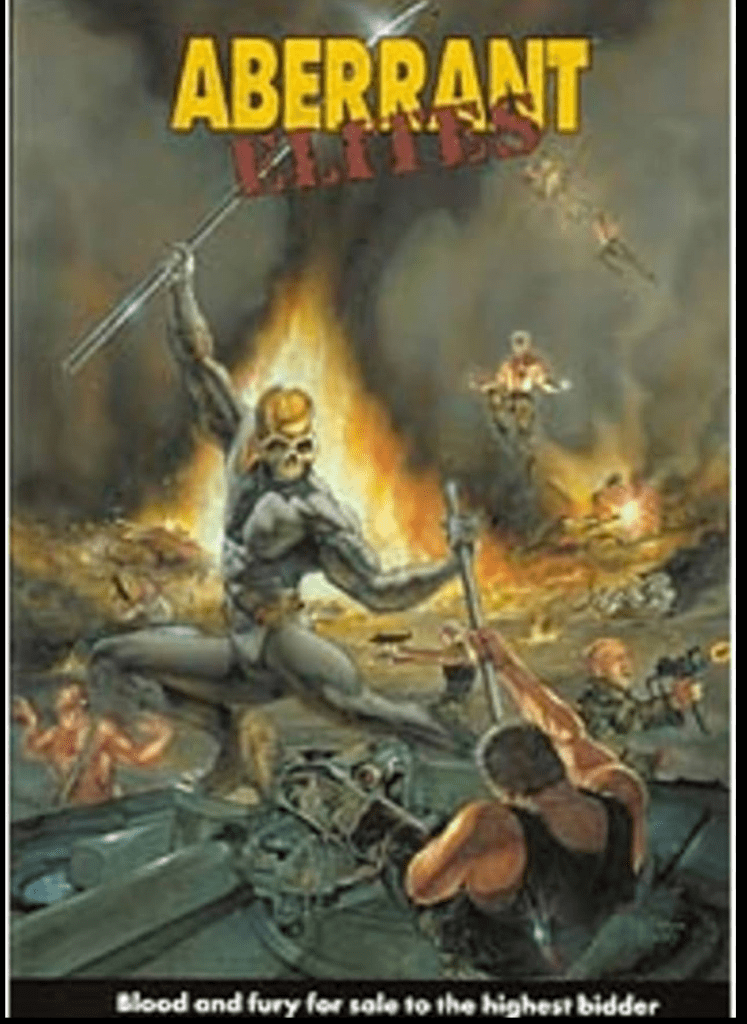
  • Aberrant readthrough: Elites

    Continuing our readthrough of Aberrant, this week we arrive at the elites. Less a faction than a fact of life, elites are mercenary novas who hire themselves out to use their quantum powers for anyone who can pay, whether that is the military dictator of a banana republic or a UN agency that is looking to get something done off the books. Will they turn out to be more interesting than most of the others? We shall see.

    The book starts out with what I think is actually the best piece of fiction the line has had so far. It’s about a group of elites fighting in a miserable Third World conflict and dealing with the lousy conditions and the human misery that comes with it. While it’s very 90s in its way of taking real human suffering and using it to make its silly dice-rolling game feel serious and relevant, it also manages to show novas under physical, mental and moral strain, and there has been entirely too little of that so far.

    The rest of the book is passable, if not great. It presents the DeVries Agency, which is the leading broker of elites worldwide, and a number of its smaller competitors. It suffers from the same problem that books like Project Utopia does, in that it seems to think that describing bureaucracies and paperwork is the way to make things feel realistic, and never mind that anyone who tried to actually roleplay out a dry legalistic contract negotiation would probably expire from sheer boredom. Still, it does present the world of the elites in a way that makes it feel vivid and like something that you could model at the table. You could absolutely use this to build a campaign where the players were working for a rent-a-nova outfit – in fact, in many ways elites are probably the closest thing you can find in this setting to regular RPG adventurers. They take on quests, they get into trouble trying to carry them out, and then they waste their reward partying so they have to do it again next week. Hey, it’s a classic for a reason.

    One thing that constantly bugs me, though, is the way the writers always seemed to be hazy about how they meant the game to actually be played. There are all these endless descriptions of how realistic everything is, and how it’s all very serious, and then from time to time the books just go, “but hey, feel free to play the game like goofy four-colour action if you want!” For example, here you get told that if you want to, you could run a game where the characters were Noir detectives with eufiber trenchcoats and fedoras (yes, really, it says that) working out a ratty office. Never mind that the whole game endlessly stresses how novas can easily make the big bucks, you do you, man!

    And, like… White Wolf, my dudes. If someone were to ignore your setting, then they’d be buying the books purely for the rules. And let me guarantee you, no one ever bought your books for the rules! Because they were terrible and everyone hated them. It was the feel and ambience that we liked, and the way you kept nervously hinting here that maybe we should just skip that and go punch some bank robbers makes it really painfully clear that you had no confidence in the setting you’d created.

    And I could be mean here and add, “and rightfully so!” but you know what? No. That’s not true. There is something here that I haven’t seen before, even thirty years later, and which could have shone if it had been properly polished. If you’d just thought a little harder on what your themes were supposed to be. If you had just set up the conflicts better. If you had just… cared like obviously cared about your more successful games.

    But oh well.

    The book presents two specific war zones that players might get into, Kashmir and Congo. The former is a seemingly eternal hot spot where three different world powers (India, Pakistan and China) are glaring at each other over a bombed-out wasteland that neither of them really has any use for in its present state, but after all the misery they’ve gone through for it they absolutely refuse to let anyone else have it. Depressing but believable. Congo has a nova dictator who’s too overcome with Taint to dictate especially well, so a hundred tiny warlords are carving up de facto domains all over it. Both of them feel like decent settings for gritty military superheroics, a cross between an MCU movie and a Vietnam War story.

    Much like in The Directive, the best part is really the equipment section, and I say that as someone who usually hate equipment sections. The DeVries Agency have come up with all sorts of cool shit like monomolecular whips and robotic wasp swarms that they’ll let you use if you show that you’re a closer. Works for me.

    As with all these books – and yes, I will complain about this to the very end – is the lack of interesting NPCs. A superhero setting runs on its larger-than-life characters, and other than the Teragen, Aberrant suffers from being full of small, dull people with no discernable drives or passions. And this is in spite of the fact that novas in general and elites in particular are meant to be celebrities, people with very distinct images. It’d be one thing if those images were mostly publicity stunts covering rather ordinary, neurotic people, but here, even the images themselves are dull.

    The best of the lot is this guy who goes by Totentanz, and apparently his thing is that… he kills people a lot. And then you read his backstory, and it turns out that he kills people a lot because he got so sad when his fuckbuddy made it clear that she had no feelings for him that his quantum powers switched off all his emotions other than psychotic rage. So… his thing is that he’s actually even more boring and one-dimensional than he seems? I mean, at least he’s got a cool name and costume, and that’s more than what most of them have, but there’s just no substance there.

    So all in all, this is one of the better books, but that’s not saying much. Next time, we’re going over Worldwide Phase One, and that might need to be a two-parter, because oh yeah, I have things to say about that one! Which does admittedly mean that it’s not boring.

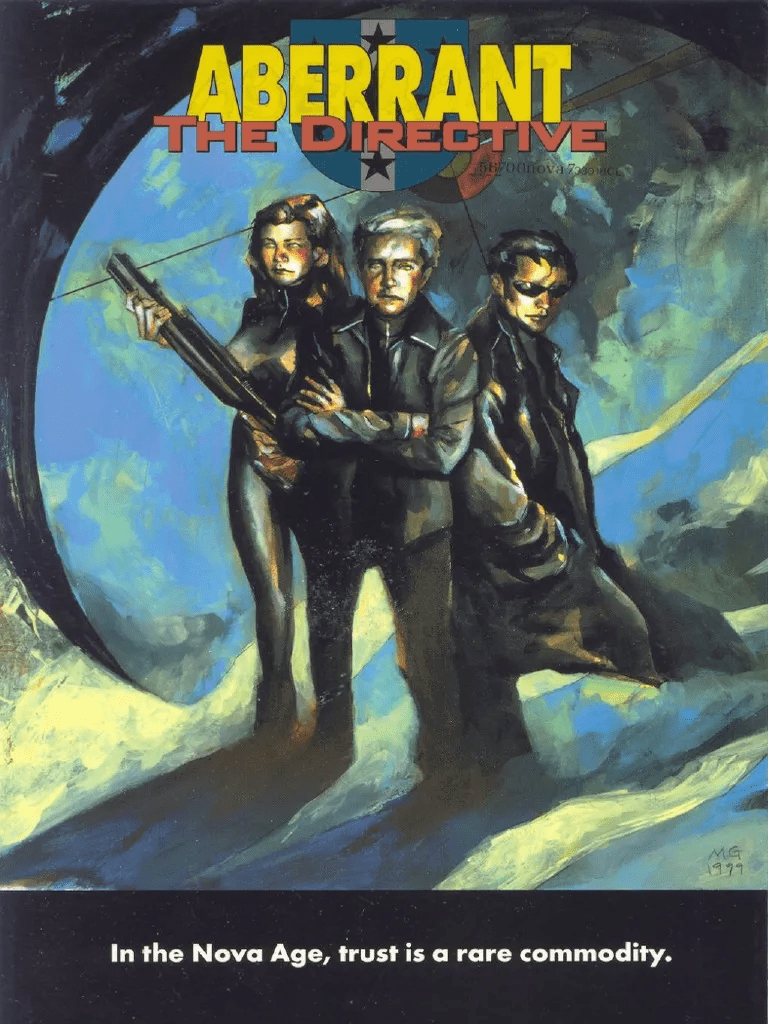
  • Aberrant readthrough: The Directive

    Our stalwart progress through the Aberrant canon has now passed the halfway point, and it’s time for the Directive to finally get their time in the sun. So far, what we’ve been told about the Directive has mostly consisted of, “eh, they exist, I guess.” Can their own book elevate them?

    Spoiler: No… no, not really.

    We start out with a piece of fiction that is at least halfway decent. Apparently one of the characters introduced in the Teragen book has taken hostages on the subway. This person is a pretty weird character who goes by “Sloppy Joe,” because he’s got no skin and all his organs are kept in place by an invisible forcefield. See what I mean about the Teragen getting all the memorable NPCs? Anyway, the Directive is on the case, but their operation is complicated because it’s not enough for them to take Joe down, they have to do it in a way that looks good, so they’re doing a very intricate tap-dancing routine with the media, Project Utopia, and local law enforcement, all of which sort of leaves their actual hostage negotiator with his ass hanging out and being forced to improvise wildly.

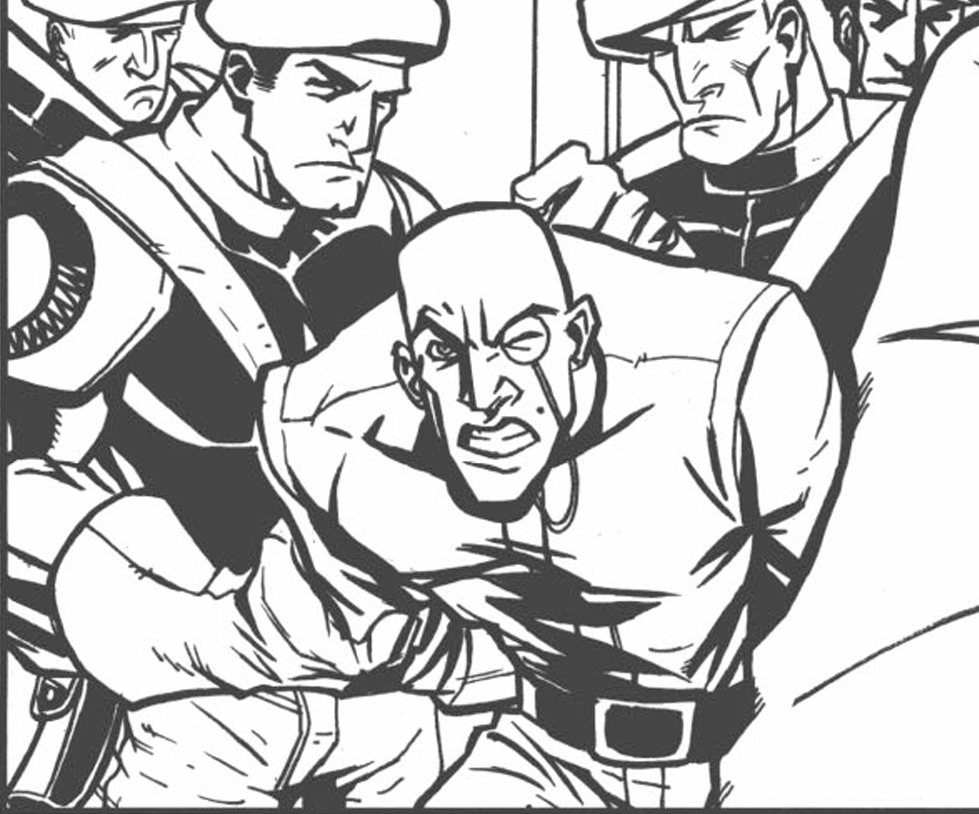
    We then get a long and boring description of the Directive’s history, which amounts to the governments of Russia, Japan, America, Britain and Germany all having a problem with the way that people keep flying around and punching mountains these days (funnily enough), so they founded the Directive as a semi-secret international agency to keep an eye on novas. There is one notable event in the Directive’s history where some German media mogul was using his nova powers to enact subtle mind control of his viewers so the Directive exposed him and got him arrested. And… ye gods… This is what he apparently looked like:

    Yes. He was a bald German guy with a monocle. I’m only surprised that he wasn’t noted as being a cat person and having a name like Baron von Evilstein or something. I mean, look, I have no problem with cheesiness and cliches in roleplaying games, in fact I kind of prefer them, but Aberrant is so insistent on its po-faced seriousness that these things feel jarring. Like, this book seems to think that it’s doing John Le Carré, all dark and brooding and full of demoralising realism, but it’s taking all its inspirations from Bond movies.

    Anyway, bla bla bla, the Directive is super-secret and different parts of it have no idea what other parts are doing, and each cell operates on its own judgment as much as possible, which at least makes it easier to justify some player agency in a hypothetic Directive campaign. And also create some entertaining clusterfucks where it turns out that the suspicious people the players spent the last three sessions spying on was another Directive cell that was spying on them. Anyway, they are super-skeevy and trying to blackmail, extort, strongarm and generally bully people into serving their ends, preferably without ever revealing that it’s the Directive that’s pulling the strings. They also actively try to portray themselves as a bunch of hapless bumblers so that no one feels threatened by them, which I’m not sure how well it plays with the intro fiction where they were all about polishing their brand until it glowed…

    There is a mention of a new group of novas called the Protectors who have apparently buggered off to Antarctica and may be up to no good there. Okay, I approve of that in theory, this game desperately need more distinct nova “teams,” partly to function as antagonists and partly to provide examples of what a group of players could conceivably get up to and accomplish. Not sure what to do with the Protectors in their current form, though.

    There is a section on spy gear that’s actually pretty good, including things like “quantum-inert” fast-solidifying foam that can’t be affected by nova powers, so if a nova gets stuck in it she’ll probably stay stuck There is a drug that can be injected through a dart and causes a nova’s powers to go completely haywire – not just shut down, but start erupting all over the place. There is gas that causes eufiber (which is the wonder-material that a lot of novas use for their costumes because it adjusts to their powers – it’s basically the Fantastic Four’s “unstable molecules” uniforms) to freeze solid, so a nova can get stuck in his spandex. All of which feels pretty nicely balanced between being useful enough that the Directive can plausibly incapacitate and imprison novas and not being so overpowered that said imprisoned novas can’t conceivably bust free again.

    All in all, though, this book was a chore to get through. It’s got the same problem most of these books have, which is that no one seems to have been enthusiastic about the subject matter. Just like the Project Utopia book made me feel like the writers were apathetic at best about superheroes, this book makes me feel like the writers had no particular interest in secret agents. The Teragen book, as mentioned, is the one that actually got some love, because the writers were absolutely interested in cool, edgy posthuman monsters. And this book gets hit harder than most, because even those superpowers who do make it in have to be kept low-key and unflashy, so you don’t even have the occasional relief of seeing people shoot laserbeams at each other.

    Next up is the book on elites, which I can reveal is a bit better but still suffers from many of the same flaws.

  • Aberrant readthrough: XWF and Fear and Loathing

    This week in our Aberrant readthrough, two short booklets that… I mean… I can’t even… WHUT?! I think that this point, they had realised that they couldn’t think of anything interesting to do with the setting so they just sort of started throwing everything at the wall to see what stuck…

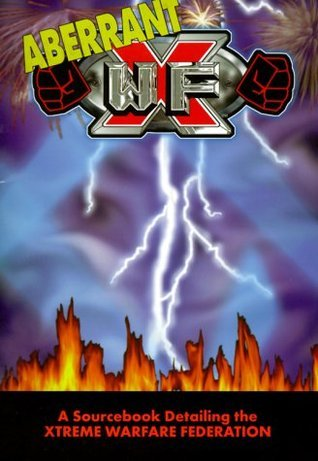
    The XWF (which in the world of Aberrant stands for Xtreme Warfare Federation) is a professional wrestling circuit for novas, or at least for what it claims are novas. Quite often, the wrestlers are in fact “mitoids,” people who have taken super-steroids to get a single dot of the kind of Mega-Strength that novas can take up to five dots in. They usually end up dying from an overdose and it’s all terribly tawdry and depressing.

    I’m honestly not sure if the writers here really loved professional wrestling and wanted to include it in their game, warts and all, or if they really hated professional wrestling and wanted to spend some some page count on telling everyone how terrible it is. Either way, it’s a bit underwhelming if you are entirely apathetic to professional wrestling and don’t think it gets better by adding superpowers to it.

    I mean, the XWF is mentioned in the core book, and I guess it works as a nice bit of setting flavour, both as a snarky commentary on how superhero fiction (with its oversized, strutting personalities and grudge matches breaking out at the drop of a hat) greatly resembles professional wrestling, and as a way of highlighting the sleaziest aspects of celebrity culture. As in, getting rich and famous from having superpowers is kind of like getting rich and famous from having stunning good looks, as in both cases you are in some sense selling your body even if you’re getting a really great price for it. There is something a bit interesting in exploring how you can be pampered and elevated in some ways and simultaneously exploited and debased in others.

    But there isn’t really any kind of plot hooks here. Again, unless you really think that he whole issue of pro wrestling is fascinating in itself, but even then I’m not sure there is anything in here that’s meaty enough that you couldn’t just come up with it on your own, just working from first principle.

    And then there’s… this thing…

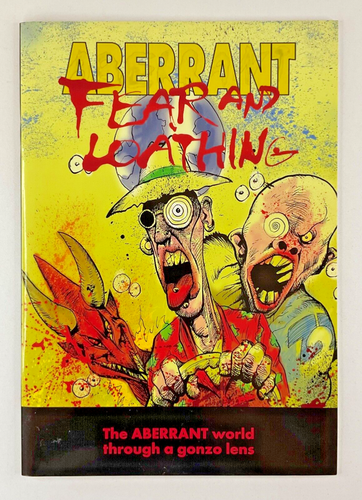
    Like the XWF (like all the books published for the first edition, really), this supplement builds on something from the core book. Also like the XWF, it’s not entirely clear to me that it deserved further elaboration. See, in the core, there was a section briefly detailing how the major cities of the world had changed in the Nova Age, in a summarised version of what eventually got published as Year One. And it was all presented as an in-universe document, like most of this stuff, in this case as an article by a Hunter S Thompson clone named Dr. Duke Rollo. Here, he gets a full booklet to rant even more about stuff.

    Thing is, though, Rollo is written as one of those obnoxious people who consider themselves so clearly, incandescently right, and everyone else so obviously, self-evidently stupid and corrupt, that they don’t feel the need to actually make arguments or explain positions but just sort of keep shouting incoherent insults. And that can make them interestingly to listen to – for a while, at least – but it makes them really unsuitable to describe a setting that you’re supposed to use.

    Duke Rollo’s opinions, as near as I can make them out, are:

    • Project Utopia is bad and people are over-impressed with novas.
    • Everyone but himself is either a soulless capitalist or a braindead capitalist patsy.
    • DRUGS DRUGS DRUGS DRUGS DRUGS DRUGS DRUGS!!!!!!

    I will say two things for the character. Firstly, he’s actually anti-Utopia without being a either Teragen fanboy or negatively portrayed. It’d be nice if he could articulate why he’s anti-Utopia beyond just “most people like them, most people are idiots, therefore they must suck for some reason that I can’t be bothered of to think of at the moment,” but fine, I’ll take it.

    And secondly, he’s a colourful character in a setting that desperately needs them and has far too few of them. I’ve complained about that before. There’s a ton of characters, but other than the Teragen, they are all fairly uninspired and lacking in drive. Rollo, at least, is passionate, even if he can’t quite articulate what it is he’s so passionate about.

    All the same, this isn’t great. Next up is the Directive, in which Aberrant will manage to make James Bond boring. Stay tuned.

  • Aberrant readthrough: Teragen

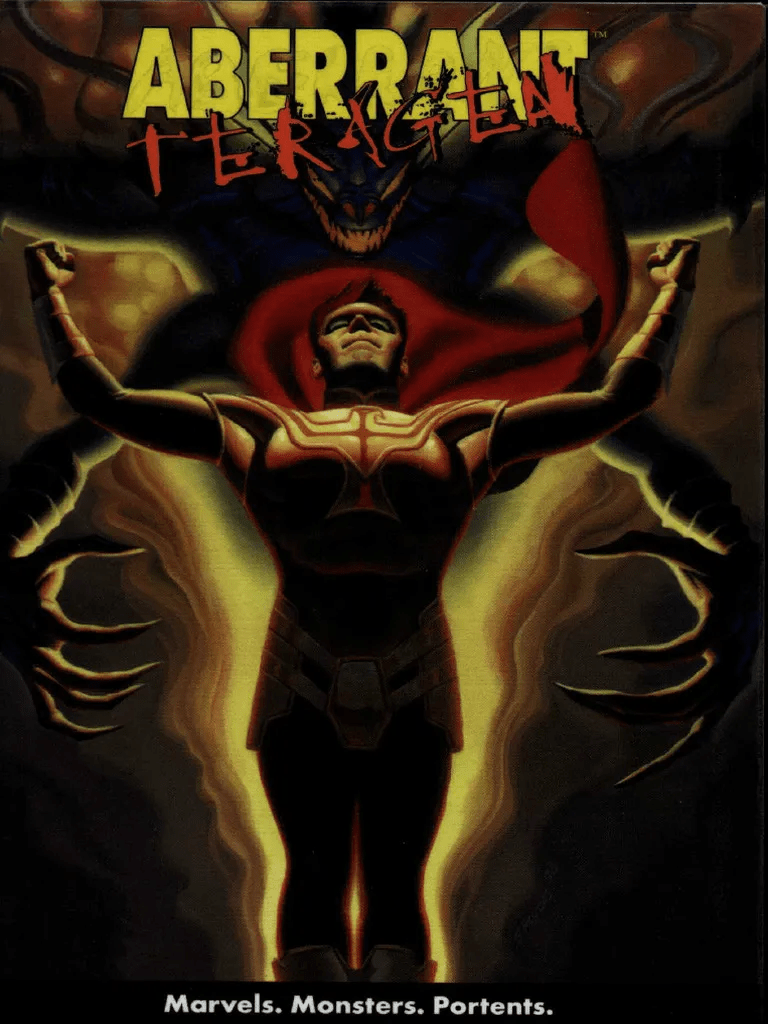
    Our Aberrant – the totally not superhero game that we can of course play as a superhero game if we’re philistines – readthrough have finally arrived at the Teragen, the totally not supervillains who we can of course use as supervillains if we’re philistines. And… oh man. This one stands out.

    In an earlier part of the readthrough, I identified the Teragen as one of the two ideological poles of the game, the other being Project Utopia/Team Tomorrow/The Aeon Society. Where the latter is your basic superhero do-gooders (albeit with shady NGO backers and a massive civilian support structure) who are working selflessly to make the world a better place because with great power comes great responsibility and so on and so forth… the Teragen are the ones who say, no, that’s a sucker’s game. Why should we lift a spandex-clad finger? Fuck you, I’ve got mine!

    Of course, like all spoiled brats, the Terats don’t play particularly nice together, so they have about half a dozen different factions who all think that they’re the ones who really get it, man. Each faction gets its own sympathetic writeup where it gets to explain in its own words why it rules and everyone else drools, and each faction is also not-so-secretly one possible kind of villain you can throw at your players.

    • Nova Vigilance go around killing any baseline who “threatens novas,” which is interpreted precisely as freely as you might assume. Oh, and any nova who supports baselines who threaten novas, including by trying to argue that you shouldn’t go around killing them. So basically, they kill a lot of people and act completely self-righteous about it. Handy if you want a villain who’s terminally straightforward in his evil but has maybe just the tiniest bit of a sympathetic motivation at the bottom.
    • The Harvesters are physical monsters and express their body-positivity by going around acting like moral monsters as well. Including by eating people who offend them by going around having the standard-issue number of arms, legs, eyes and tails. Handy if you want pure creature-feature villains with a hint of “tragic monster” about them.
    • Pandaimonium want sex, drugs and rock’n’roll, and they want no limits to it whatsoever, and they’ll happily make a buck running drug and prostitution rings. Handy if you want to cut down on the angst and have villains who are basically just superpowered gangstas who like living large and sticking it to the man.
    • The Casablancas are subtle schemers who trade in secrets. They don’t do terribly much on their own, but they share information with the other factions and help coordinate them. Handy if you want villains for a more intrigue-based, investigative story.
    • The Cult of Mal worship the Teragen’s Magneto-wannabe, Divis Mal. Like, they literally think he’s a god and everyone should do what he says. Handy if you want villains who are religious fanatics.
    • The Companions are middle-eastern. That’s… pretty much it. Handy if… I don’t know, you want to spite political correctness by reveling in islamophobia? Maybe? Honestly, they’re kind of boring.
    • The Primacy, finally, just basically hate Utopia and baselines and the entire current world order and want to quantum-bolt it to ashes so they can build a new one. Handy if you want some cackling megalomaniacs who are after – WORLD DOMINATION! MUAHAHAHAHA!!! With, again, just the tiniest bit of actual ideological underpinnings for it to make it feel slightly less cringy.

    The book also contains an overview of the “canonical” future of the setting (since it’s the backstory of another game called Trinity). Basically, novas get increasingly crazy with Taint, baselines get increasingly freaked out by novas being crazy, and just generally novas join the Teragen in increasing numbers, and finally there’s a massive war between baselines and novas and the novas lose and leave Earth for greener pastures. The Aberrants and Project Proteus are pretty much completely irrelevant to the whole thing, and Project Utopia as a whole fades into nothing as everyone gets up on the whole nova-baseline-co-existence thing. I guess technically that means that the Directive wins, but they’re still so boring that they don’t even get a mention here.

    Now, I mentioned this book standing out, and it does. Because this book… this book, you see…

    This book is actually kinda-sorta good.

    I mean, it’s not amazing or anything, but there’s some real passion and imagination in it. The Teragen’s inner circle are lavishly described and idiosyncratic – they are actually characters that seem like they’d be fun to portray, and whose schemes and vendettas seem worth getting invested in. Like, there’s one guy called Leviathan who looks like a giant shark on legs and lives in a ruined cathedral in the flooded catacombs beneath Venice but is secretly a screwed-up twenty-something kid who was abused by his mother, and DEAR LORD, you can just FEEL the writers’ relief at finally getting to be gothic-punk again, can’t you?

    And the factions, likewise… Well, this is what White Wolf was always so very, very good at: taking a messed up perspective and arguing persuasively for it, and then taking a different messed up perspective and making an equally compelling case for it. White Wolf, at its finest, was an exercise in extreme empathy, the playing of devil’s advocate turned into an art form. And here, at long last, we finally get a taste of it.

    Of course, this also means very vividly seeing how half-hearted the rest of the setting is in comparison. The writers just didn’t care, at all, about the members of Team Tomorrow. They did care about getting to show off how smart they were by showing how real-world problems could be actually addressed using comic book superpowers, but the actual personalities that would be involved in such things? Nah. Give them a shark-boy with mommy issues any day!

    And that’s fair, we all know that the villains are usually the more interesting characters… but it does raise the question of why they even made this game in the first place, then. Or at least why they didn’t just skip the pretensions and made it all about angsty Teragen revolutionaries from the start. I mean, a game where Killer Croc is the misunderstood antihero fighting against Superman the clueless patsy of a fascist authority would perhaps not be to everyone’s taste, but it would certainly be different, and they would have enjoyed writing it a lot more than I think they enjoyed writing most of this game.

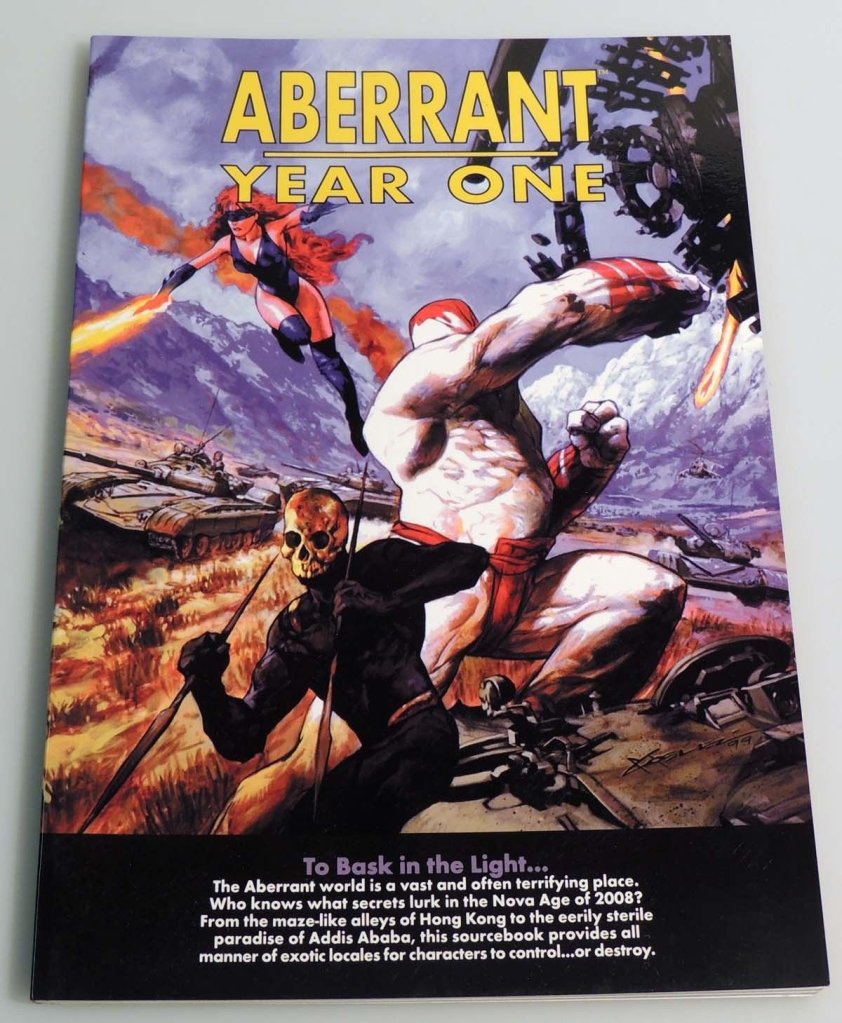
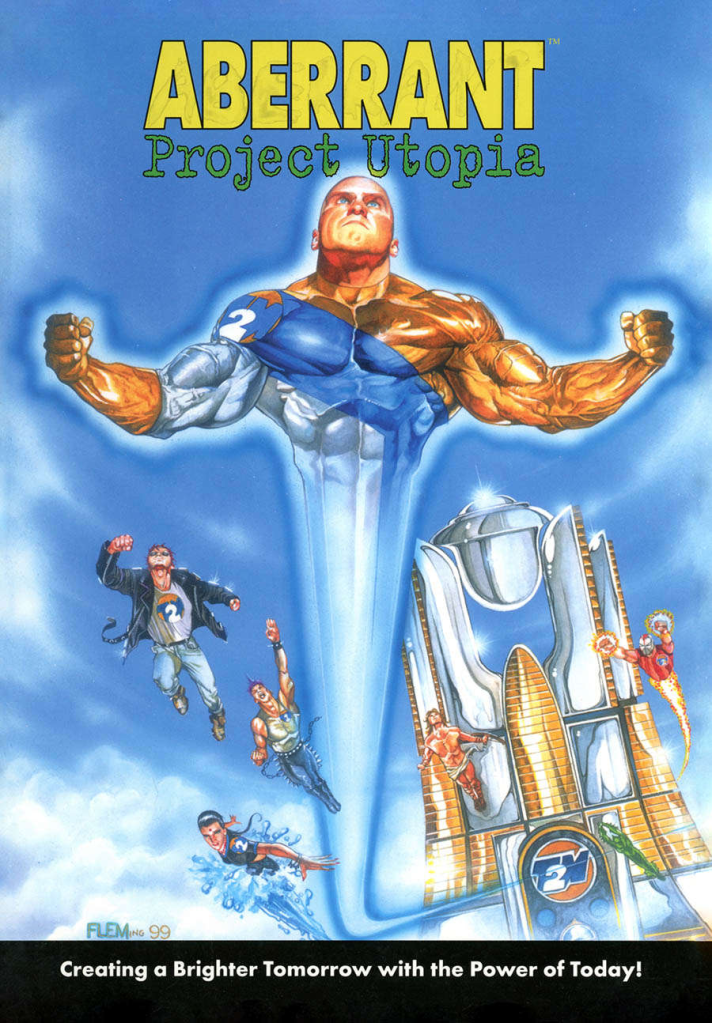
  • Aberrant readthrough: Year One and Project Utopia

    Ploughing on with our Aberrant readthrough, this week we are going to cover Year One (which is a general setting book) and Project Utopia (which is about, well, Project Utopia).

    Both of these books are, I think, absolutely vital to running the game, for the reason that Aberrant is not the sort of setting where you can just make shit up. This is clearly by design – the developers didn’t want an anything-goes kind of setting, but one that was well-defined, interconnected, and where things happening in one place had consequences in other places. Whether that was necessarily a good idea is up to debate, of course – I’ve complained earlier about how it makes it really hard to really make good on the game’s promise of letting you use your superpowers to change the world. Everything is so bolted down and slaved to a rigid metaplot that the things you can change just feel flimsy and unimportant… and on the flip side, if you do manage to change the setting, then it’s no longer the same setting and all those expensive setting books just became obsolete. But okay, for better or worse this is clearly what they were going for.

    The bulk of the book describes a dozen major world cities and explains what nova-related shenanigans are going on in them, with a signature nova or two statted up at the end.

    New York is boisterous and caught in a three-way tug-of-war between nova-hating religious nuts, nova-worshipping religious nuts, and nova-led rational inquiry (which also may contain nuts). Also, a nova has gone crazy from Taint and is actually leading both the pro-nova and anti-nova factions, under different identities, which is at least kind of funny.

    Los Angeles is full of degenerate has-been celebrities and is plagued by police brutality. And within the game, it also has a dozen different time zones within the same city! (yes, yes, cheap shot)

    Havana has gone from communist to an extreme laissez faire capitalism whereby anything is permitted as long as you can afford it. It’s a great place to buy and sell outlawed technology, corporate or state secrets, and the services of specialised novas. The fact that it sounds a lot like an old-timey pirate port mixed with a Cold War thriller is probably not coincidental.

    Mexico City is the headquarters for Team Tomorrow Americas (Team Tomorrow is basically the best of the best among Project Utopia’s novas) and has gotten a lot wealthier in a hurry. However, people are suffering collective whiplash from all the changes and are starting to grumble, especially since a lot of Mexicans are sensitive about Americans and Europeans not respecting their culture.

    Quebec is cold and bleak and boring, because this is a White Wolf publication, and I think the White Wolf writers considered Canada the polar opposite of all that was cool, edgy and gothic-punk, so any supplement that mentions it is going to portray it as absolutely miserable. They don’t like novas and they are killing each other over the stupid French/English thing. Feh.

    Venice has also gotten a makeover, including a ton of new islands to plonk down new buildings on. It’s the headquarters for Team Tomorrow Europe and, much like Mexico City, there is some friction between the frantic future-optimism of Project Utopia and the people who actually quite liked yesterday and aren’t at all sure they want to have it paved over without even getting a say-so.

    Lagos is under the competent but oppressive rule of a baseline dictator who is enlisting Nigerian novas to bolster his regime. I kind of like this guy just because he’s pretty much the only baseline I’ve seen so far that gets treated with some gravity. He’s clearly meant to be an example of the sort of realistic villain you can encounter in the setting, which is cool – he’s not out for WORLD DOMINATION!!!!, but he’s sure as hell out to expand his borders and cement his rule, and that will lead to him committing all sorts of interesting human rights violations that he’ll furiously deny to the media.

    Addis Ababa is the headquarters of Team Tomorrow Central, and is sitting pretty since Project Utopia terraformed Ethiopia’s deserts to perfection. It’s basically a scale model of what Project Utopia is hoping to turn the world into, hyper-modern and prosperous and with high-speed rails and cleaning robots everywhere.

    Moscow is the seat of the Directorate, which I’m still not going to go into too much because they’re still boring, but anyway, Moscow is basically a hotbed of Cold War style espionage and misdirection and general paranoia. It’s grim, it’s cold, and your hotel room is definitely bugged.

    Mumbai is the new movie capitol of the world, having beaten out Los Angeles. Novas flock here to make really flashy movies where you’ll believe a man can fly because he actually is flying.

    Jakarta is a mess. The whole nova boom just kind of didn’t happen here, and everyone is cranky about it. Also, organised crime.

    Hong Kong. More organised crime, and the meeting between the West and the East or some such cliche.

    Tokyo loves novas to a slightly unsettling extent. There are religions worshipping them, and even the secular fans are a bit scary. The Japanese government is part of the Directive but basically likes novas fine as long as they’re its novas, having formed a Japanese super team called Nippontai to compete with Team Tomorrow. We don’t find out much about them, which is a shame.

    After the cities, there is a section about cutting-edge technology in the alternate year of 2008. Again, this is absolutely essential, because the books keep mentioning how the novas have created cool new technology while also stressing that this is not the sort of anything-goes setting where a super-genius can whip up a time machine in a few hours, and balance can be tricky to strike if you’re not up to date on what the latest technological forecasts are.

    Specifically, new technology includes hypercombustion (cars still run on petrol, but they’re a lot more energy-efficient about it), a new super-fast Internet called the OpNet (which, impressively enough, really does resemble the Internet of 2025 to a prescient extent), genetically engineered microorganisms that can clean up pollution, limited cloning and limited cybernetics. People have abandoned floppy disks and CDs in favour of miniaturised “chips” that can be plugged into a carriable reader (yeah, it no doubt seemed terribly futuristic in 1998). Flying cars actually do exist, but most countries don’t let civilians drive them for obvious reasons. Reasonably lifelike remote-controlled robots likewise exist, but they are very limited (for one thing, they have a physical wire trailing after them) and so are mostly just used by politicains who want to make public appearances despite concerns about assassination. Cold fusion is being worked on, but no one managed to figure it out yet. Oh, and someone has invented a miniature remote-controlled tank, and the crime syndicates are absolutely going to get their hands on some and use them against the players.

    Project Utopia! Another thing you absolutely need, because this is supposed to be the massive organisation that has reshaped the entire world and who have their fingers in every pie, and the shady dealings of which form the spine of the entirely-too-inescapable metaplot. You need to read this book to play the game.

    So it’s a shame that it’s so damn boring. Most of it is just the same tiresome gushing about how Project Utopia is doing all those things that all reasonable people agree ought to be done, and nyeeh-nyeeh-nyeeh to all the nay-sayers who said it wouldn’t work because they tried it and it totally does. We get a slightly more detailed history of the Project, most of which we already knew from the core book, and we get a rundown of all the various divisions and who’s running and them and what they do to make the world a better place. Again, this is certainly necessary, a lot of those details are ones that you need in order to really imagine how the organisation works and therefore how it will affect the players, but it’s just so dry.

    We eventually get a description of Project Proteus and its secrets, which is a tiny bit more interesting. It turns out that Proteus isn’t a huge organisation or anything, it’s really just a small group of people who have cover identities within Utopia and keeps quietly co-opting its resources for their own shady business.

    For example? Well, Utopia supposedly negotiated a peace treaty between Israel and Palestine (oooof, that’s a little harsher in hindsight) through nothing but skillful diplomacy and appeals to everyone’s better nature, but that’s a complete fib and Proteus actually covertly threatened both sides with complete destruction if they didn’t play ball.

    There was this thing called the Equatorial Wars where a lot of Third World countries started hiring nova elites to fight each other, and Team Tomorrow supposedly went in and busted heads and got them to stop. Except that’s a lie and Team Tomorrow actually got their asses handed to them and just sort of declared victory and went home, with the press helpfully over-emphasising their few victories and downplaying the fact that there is, somehow, still a thriving market for elites after Team Tomorrow supposedly put a damper on them.

    Utopia also fixed the Y2K bug, and what no one knows is that while it did so Proteus used the access to every computer on Earth to hide any and all evidence that novas existed (in limited numbers) long before the Galatea incident. And that’s good as far as it goes, but it’s still a somewhat thin gruel.

    Also, have I mentioned before that the sterilisation plot and vivisection labs cause a MASSIVE tonal mismatch with the frantic happy-happy-joy presentation of Utopia as a whole? It’s like the writers genuinely didn’t see what the big deal was – they explicitly say things like how Project Utopia is the closest thing to a pure “good” faction that a “realistic” game allows, and uhm… STERILISATION PLOT! VIVISECTIONS! Come on, guys, I’m all for moral nuance, but if you mix squeaky-clean public service on the outside with double-plus-mega-Nazi crap on the inside, what you get isn’t a morally nuanced organisation, it’s a ridiculously evil organisation that is passing itself up as a ridiculously good one!

    Anyway, know how I said that with these two books, I’d finally figured out Aberrant? Well, here it comes. Do not brace yourself, the truth is not particularly shocking. It’s like this:

    Aberrant presents itself as a deconstruction of superhero tropes, but it’s actually not. It’s better thought of as reconstruction of them. A deconstruction takes the tropes and shows how absolutely terrible they would be in practice, or how they would absolutely not work that way in reality. A reconstruction, on the other hand, takes the tropes and attempts to justify them, attempts to present ways that they could still work very much as they do while still being realistic.

    And that, pretty much, is Aberrant. It’s not a deconstructed superhero world. It’s a superhero world with additional narrative scaffolding and semi-realistic consequences.

    • Project Utopia is the Justice League if they dealt mostly with peacekeeping, disaster relief, and other real-world issues rather than battling supervillains. Team Tomorrow is the high-publicity frontal figures that form the actual “superhero team,” but Project Utopia is much bigger because saving the whole world takes a lot of boring non-sparkly people in addition to the “superheroes.”
    • The Teragen are Magneto’s Brotherhood of Mutants with some actual philosophical examination of the whole “we are the future, not them” sentiment, and with the caveat that while some of them are superpowered terrorists, others are more subtle and thoughtful in how they apply their posthuman ideals.
    • The Directive are a version of SHIELD that acts more like a real intelligence agency crewed by cynical Cold War veterans rather than a bunch of action heroes in skintight uniforms.
    • The elites are the sort of supercrooks-for-hire that tend to show up on the payroll of unpowered crooks like Lex Luthor and Wilson Fisk, except their profession is semi-legal (if only because they only admit to the jobs that are roughly above-board) and they charge a lot more than a local crime boss could afford, so they mostly work for dictators and international syndicates.

    So, if we ignore Proteus and the Aberrants and the stupid sterilisation plot, how do you run Aberrant? Drum roll here, please:

    You run it… like a superhero game.

    Seriously. It’s a superhero game. It’s just a superhero game where you stop a little more often and consider the logistics and infrastructure behind the plots. You will probably play as a bunch of superpowered do-gooders (probably on Utopia’s payroll) with flashy costumes and nicknames (for publicity purposes) who run around righting wrongs (but the wrongs are real-world wrongs like terrorism, pollution, and poverty) and constantly have run-ins with superpowered goons (who are either elites hired by whomever you’re annoying with your do-gooding, or Terats who oppose novas doing good for baselines on general principle). There will be shiny technology that gets stolen, sabotaged or malfunctions, but it’ll be things like genetically engineered supercrops or alternate energy sources, not time machines. And so on. There’ll be shady government secrets, but the secrets will be things like, “bombed somewhere they weren’t supposed to bomb,” not attempts to build all-destroying superweapons. You take a regular superhero scenario, and then you turn it down a notch. That’s Aberrant.

    Which at least makes it playable… but it’d have been nice if the game could just have admitted that without prevaricating quite so much…

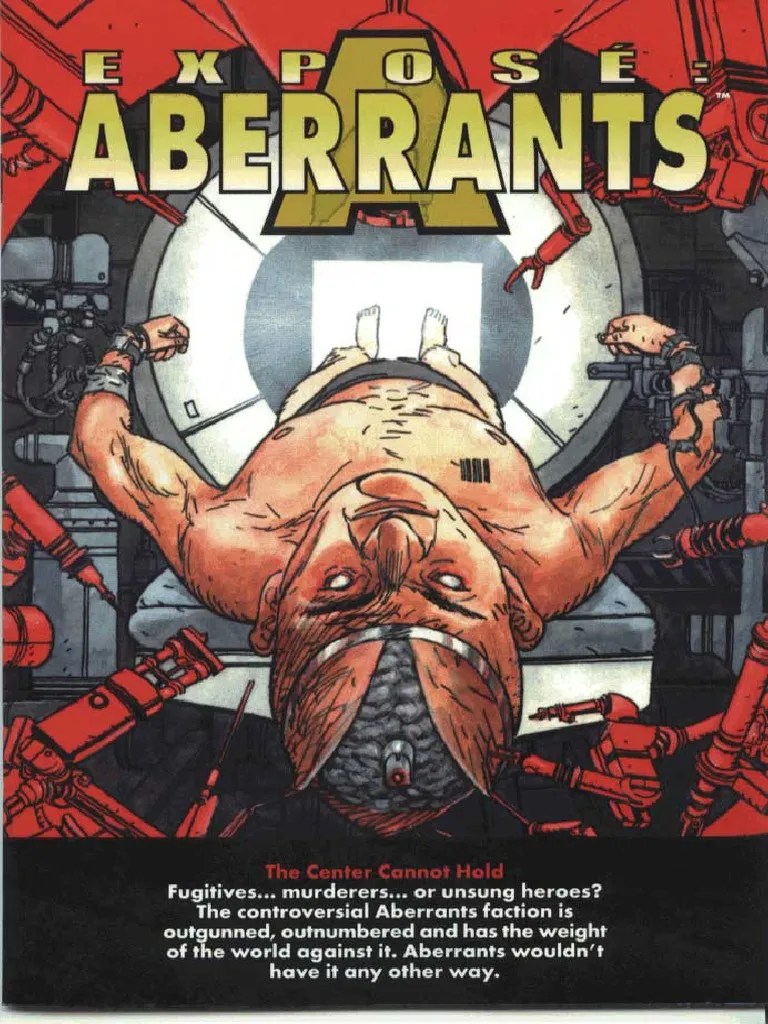
  • Aberrant readthrough: Storyteller Companion and Expose: Aberrants

    Moving on in my first-edition Aberrant readthrough, this week I will talk about the first two supplements released: the Storyteller Companion and Expose: Aberrants.

    The Storyteller Companion is divided into two halves, one that provides further worldbuilding and one that is a three-act adventure. The worldbuilding is, as always with Aberrant, composed of a number of in-world documents (and a comic or two), but it can be roughly broken down into two parts: business and religion.

    The business part is mostly forgettable, but it does establish that industrial espionage, and security against the same, are two things that novas are frequently employed for. That’s good, it means that you can run any number of “steal the McGuffin” or “find out who stole the McGuffin” type scenarios.

    The religion part is a little more varied. The Pope has formally declared novas to be human (which maybe kinda totally had less to do with theology and more to do with Mega-Charismatic nova celebrity Alejandra meeting with him just before), and the crustier elements of the clergy are plotting to have him assassinated by hired novas. The Unitarians are super-optimistic and friendly to novas, because of course they are, and American fundamentalists (because remember that we’re back in the 90s, so fundies are of course the epitome of all earthly evil) are bigoted and ignorant and hate novas. Israel is claiming that God hasn’t erupted a single nova in Israel because Jews are too awesome to need them, but they are totally lying and all Israeli novas have just been quietly recruited into the armed forces. Shiite Muslims think novas are the work of the devil (and the fact that a nova set to be executed freaked out and blew up a small town hasn’t made anyone on either side feel better about it), while Sunni Muslims are cautiously open to the idea that maybe novas are blessed by Allah… though there are heretical Sunni sects who think that they can get nova powers by killing novas and eating their “blessed” bodies. Okay, as far as geopolitical tensions that might involve the players go, a lot of those are at least decent.

    Nova cults are also a thing, especially in India, where rural novas are frequently worshipped as avatars of the gods, and in America, because skeevy cults are a hit there. One particular nova makes a habit of eating her cultists and then using Mega-Charisma to get juries to bend over backwards to excuse it as a voluntary religious practice. Ick, but kind of cool. Japan also has a growing Buddhist sect that considers novas to be divine, and some of whom have started bombing subways for no particular reason. Again, this is fairly decent and provides some information for both outright villains and for non-obvious moral questions that the players might weigh in on.

    The adventure in the second half of the book is kind of lousy, to be honest. It does provide some description of Ibiza (and perhaps more importantly its premier nova night club, the Amp Room, which was mentioned in the core book and will become relevant again later), Marrakesh and Monaco in the Nova Age, which might be handy, but the story itself is a bland railroad where the players should preferably do as little as possible because the NPCs will just fix everything on their own if the players don’t do anything as rude as trying to roleplay.

    Briefly, the players are agents of either the Aberrants, Project Utopia, or Project Proteus, and they’ve been sent to find this nova lady who maybe knows some stuff she shouldn’t. Project Proteus has also sent a one-dimensional psychopath named Chiraben after her. Like, I cannot possibly stress enough how flat this character is, he’s basically just some moronic nutcase who enjoys killing people (especially women, because of course especially women) and for some reason he keeps being given Project Proteus’ most delicate assassination jobs.

    The only other significant character is Count Orzaiz, the signature Teragen. He’s just as boring in the other direction – the text just can’t shut up about how dark and lordly and charismatic he is, and how everyone loves him (except Chiraben, because he’s dumb and smells bad). Even his freaking dad is perfect (though I will grant you that I thought it was a little bit funny that his take on Orzaiz’s wholesale adoption of Teragen philosophy amounts to, “oh, he’s acting out for attention with that whole ‘I have evolved beyond base humanity’ thing. Ah, well, boys will be boys, he’ll get over it eventually”). Orzaiz is the one who keeps fixing everything, by the way – the supposed climax of the story is basically just him going up to Chiraben and paying him some money to go away and stop bugging him, whereafter he proceeds to bang the nova the players were sent to capture into joining the Teragen. Yes, really.

    Expose: Aberrant is the splatbook (or as close to this game comes) for, well, the Aberrant faction, but since there is very little to be said about it, it’s just this little 26-page thing. It’s a splatpamphlet, basically. Most of the pagecount is taken up by a lot information about how the inept assassination (by Chiraben, naturally) that set off the metaplot was very unconvincingly covered up, which, since we already know what happened there, it’s terribly uninteresting.

    That said, there is some guidance for how to portray the Aberrants. There are basically three mini-factions among them, the quiet supporters who are trying to infiltrate Utopia to find out the truth, the fugitives who have gone on the run and try to uncover the truth along the way, and the I-Can’t-Believe-It’s-Not-The-Teragen who think they already know as much of the truth as they care to and are just flat out attacking Utopia’s operations.

    Interesting characters, effectively just one named Dr. Worm who’s a hyper-Nietzschean who would be perfect for the Teragen except he thinks even they aren’t hyper-individualistic enough (in fairness, he’s got a point; whether it was intentional or not, Divis Mal comes across as very much the sort of demagogue who preaches radical freedom but has very strong feelings about what people ought to do with their radical freedom once they have it). Interesting plot hooks, about one and a half – there is an example of something Utopia was doing (sponsoring the building of a dam that would drown the property of some people who didn’t want to move) that exemplifies the “serving the greater good, and brushing the cost under the carpet” thing that would actually make Utopia an interestingly grey faction. On the opposite side of things, apparently Project Proteus has secret facilities where they run horrific experiments on captive novas, which… well, it’s something concrete that we’ve been told about them doing, at least.

    What both these books mostly bring home for me is just how… completely uninterested the writers were in the Aberrant movement and Project Proteus, despite those being supposedly their main heroic faction and their main villainous faction, respectively. Even in their own book, the Aberrants get nothing in particular to do except retread points from the core. And Proteus, supposedly the overarching villain of the setting? Well, they are over there doing… like… evil stuff. Or something.

    What do the writers want to talk about? Two things, mostly. Firstly, the moral perfection of Project Utopia, and all the wonderful things they do, and how wonderful they are for doing so many wonderful things, and how wonderful it is that they are so wonderful as to do so many wonderful things. And secondly, the amoral perfection of the Teragen and how they are cool and edgy and totally don’t subscribe to your, like, slave morality, man. Notably, the Teragen are the only people allowed to criticise Utopia without being portrayed as inbred rednecks or unwashed conspiracy theorists who should keep their mouth shut about their betters – the Teragen, in contrast, are allowed to make actual arguments, and instead it’s Utopia who can never muster an argument about them that doesn’t amount to, “duhhhhh, they terrorists, terrorists baaaaad.”

    So no matter what the writers initially intended, what the game actually shaped up to be seems to be a conflict between the people who think that novas can and should make the world perfect, and the people who think that the novas certainly could do that, but why should they demean themselves to do anything for those filthy baselines? And I feel like what’s missing from that duality is any sort of moral agency for the baselines, and any sense that the novas might not have the capacity to “save the world,” to say nothing of whether they have the right. There is a faction called the Directive that’s supposed to be a mostly-baseline organisation that tries to champion baseline nation states against unchecked nova power, but there is a reason why this is the first time I’ve mentioned them, and it’s that they’re just that boring and underdeveloped.

    Honestly, that’s very in character for White Wolf. Everything is always ultimately about the shiny magical people, with everyone else being reduced to either fawning admirers, easily dispatched mooks, or faceless grey masses. It’s kind of especially blatant here, though – I recall at one point, the narration (which is not in character, in this case, but part of the GM instructions) snidely asks you why, if novas aren’t in fact superior to common mortals, you are playing as one. Yeah…

    Ah well. Next up is Year One and Project Utopia. And there, by Jove, I think I actually figured out how to play this game. I’ll warn you, though, the answer a little bit of a anticlimax.