Category: Aberrant

  • Aberrant readthrough: Storyteller Companion and Expose: Aberrants

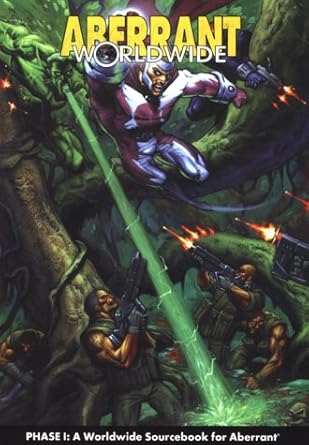
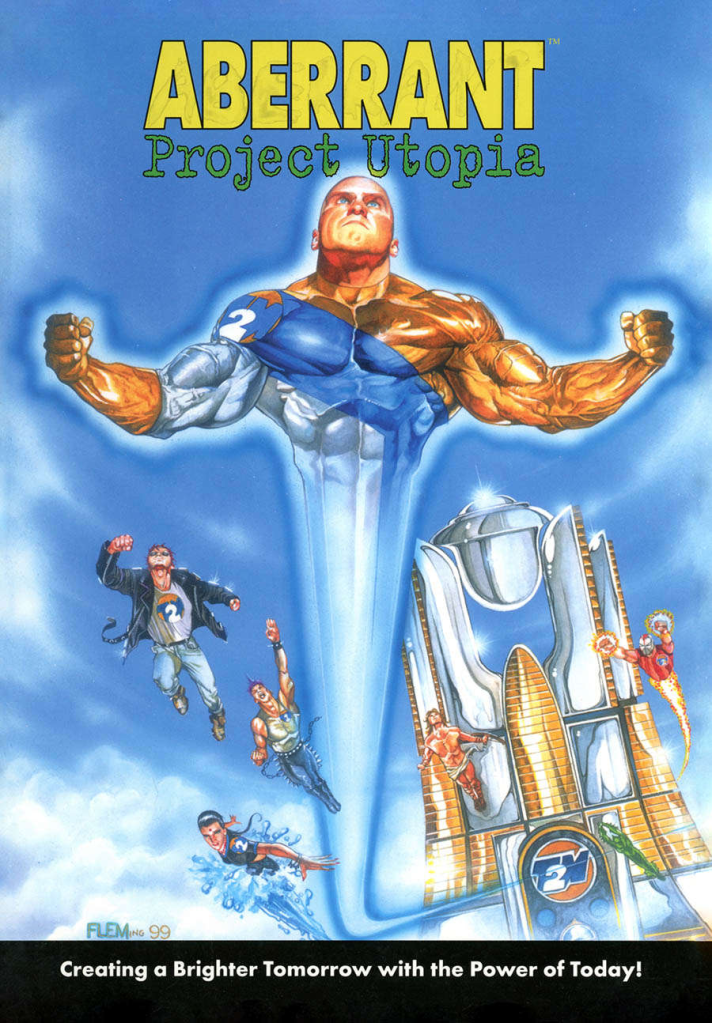
    Moving on in my first-edition Aberrant readthrough, this week I will talk about the first two supplements released: the Storyteller Companion and Expose: Aberrants.

    The Storyteller Companion is divided into two halves, one that provides further worldbuilding and one that is a three-act adventure. The worldbuilding is, as always with Aberrant, composed of a number of in-world documents (and a comic or two), but it can be roughly broken down into two parts: business and religion.

    The business part is mostly forgettable, but it does establish that industrial espionage, and security against the same, are two things that novas are frequently employed for. That’s good, it means that you can run any number of “steal the McGuffin” or “find out who stole the McGuffin” type scenarios.

    The religion part is a little more varied. The Pope has formally declared novas to be human (which maybe kinda totally had less to do with theology and more to do with Mega-Charismatic nova celebrity Alejandra meeting with him just before), and the crustier elements of the clergy are plotting to have him assassinated by hired novas. The Unitarians are super-optimistic and friendly to novas, because of course they are, and American fundamentalists (because remember that we’re back in the 90s, so fundies are of course the epitome of all earthly evil) are bigoted and ignorant and hate novas. Israel is claiming that God hasn’t erupted a single nova in Israel because Jews are too awesome to need them, but they are totally lying and all Israeli novas have just been quietly recruited into the armed forces. Shiite Muslims think novas are the work of the devil (and the fact that a nova set to be executed freaked out and blew up a small town hasn’t made anyone on either side feel better about it), while Sunni Muslims are cautiously open to the idea that maybe novas are blessed by Allah… though there are heretical Sunni sects who think that they can get nova powers by killing novas and eating their “blessed” bodies. Okay, as far as geopolitical tensions that might involve the players go, a lot of those are at least decent.

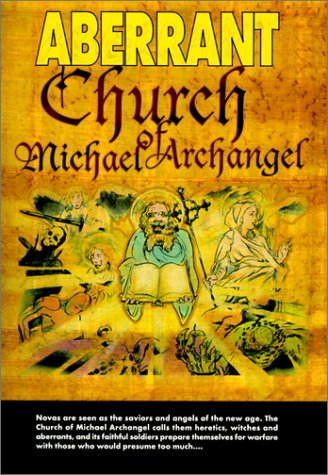
    Nova cults are also a thing, especially in India, where rural novas are frequently worshipped as avatars of the gods, and in America, because skeevy cults are a hit there. One particular nova makes a habit of eating her cultists and then using Mega-Charisma to get juries to bend over backwards to excuse it as a voluntary religious practice. Ick, but kind of cool. Japan also has a growing Buddhist sect that considers novas to be divine, and some of whom have started bombing subways for no particular reason. Again, this is fairly decent and provides some information for both outright villains and for non-obvious moral questions that the players might weigh in on.

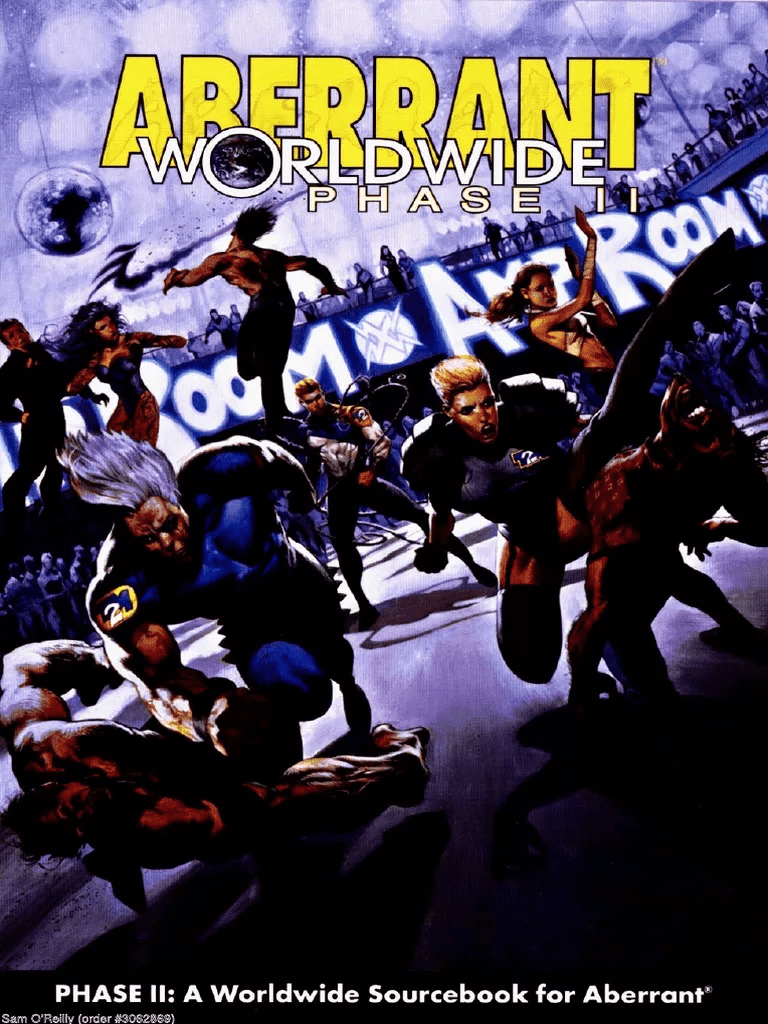
    The adventure in the second half of the book is kind of lousy, to be honest. It does provide some description of Ibiza (and perhaps more importantly its premier nova night club, the Amp Room, which was mentioned in the core book and will become relevant again later), Marrakesh and Monaco in the Nova Age, which might be handy, but the story itself is a bland railroad where the players should preferably do as little as possible because the NPCs will just fix everything on their own if the players don’t do anything as rude as trying to roleplay.

    Briefly, the players are agents of either the Aberrants, Project Utopia, or Project Proteus, and they’ve been sent to find this nova lady who maybe knows some stuff she shouldn’t. Project Proteus has also sent a one-dimensional psychopath named Chiraben after her. Like, I cannot possibly stress enough how flat this character is, he’s basically just some moronic nutcase who enjoys killing people (especially women, because of course especially women) and for some reason he keeps being given Project Proteus’ most delicate assassination jobs.

    The only other significant character is Count Orzaiz, the signature Teragen. He’s just as boring in the other direction – the text just can’t shut up about how dark and lordly and charismatic he is, and how everyone loves him (except Chiraben, because he’s dumb and smells bad). Even his freaking dad is perfect (though I will grant you that I thought it was a little bit funny that his take on Orzaiz’s wholesale adoption of Teragen philosophy amounts to, “oh, he’s acting out for attention with that whole ‘I have evolved beyond base humanity’ thing. Ah, well, boys will be boys, he’ll get over it eventually”). Orzaiz is the one who keeps fixing everything, by the way – the supposed climax of the story is basically just him going up to Chiraben and paying him some money to go away and stop bugging him, whereafter he proceeds to bang the nova the players were sent to capture into joining the Teragen. Yes, really.

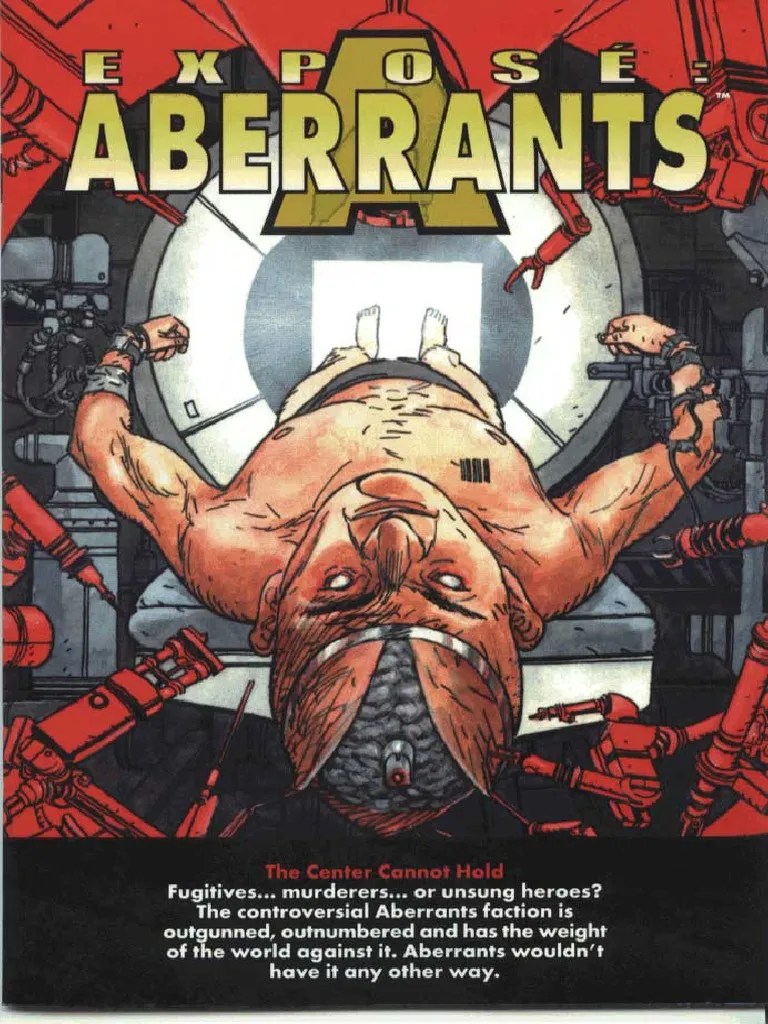
    Expose: Aberrant is the splatbook (or as close to this game comes) for, well, the Aberrant faction, but since there is very little to be said about it, it’s just this little 26-page thing. It’s a splatpamphlet, basically. Most of the pagecount is taken up by a lot information about how the inept assassination (by Chiraben, naturally) that set off the metaplot was very unconvincingly covered up, which, since we already know what happened there, it’s terribly uninteresting.

    That said, there is some guidance for how to portray the Aberrants. There are basically three mini-factions among them, the quiet supporters who are trying to infiltrate Utopia to find out the truth, the fugitives who have gone on the run and try to uncover the truth along the way, and the I-Can’t-Believe-It’s-Not-The-Teragen who think they already know as much of the truth as they care to and are just flat out attacking Utopia’s operations.

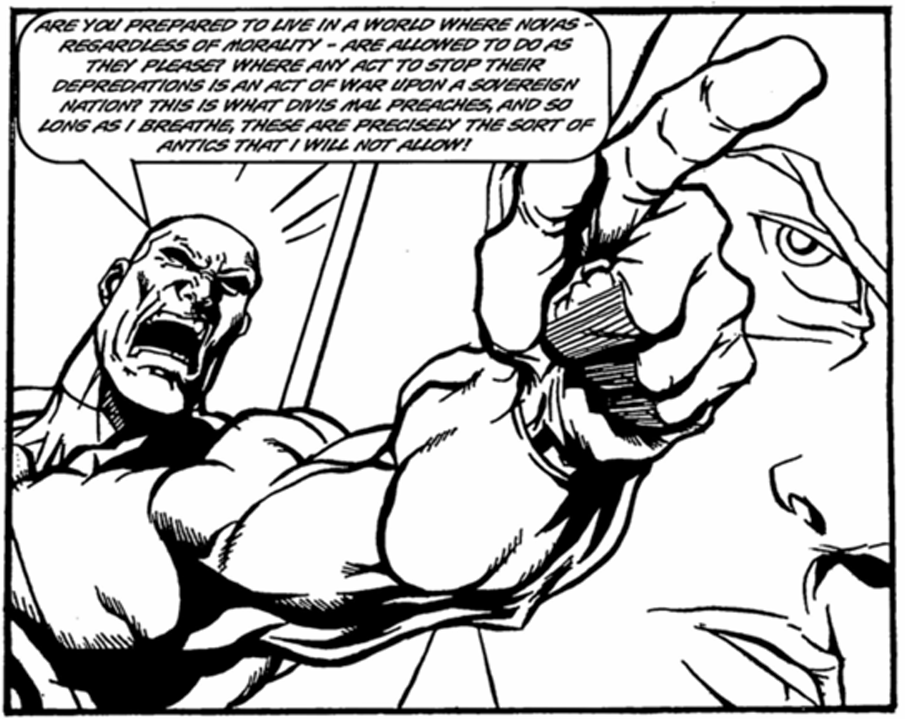
    Interesting characters, effectively just one named Dr. Worm who’s a hyper-Nietzschean who would be perfect for the Teragen except he thinks even they aren’t hyper-individualistic enough (in fairness, he’s got a point; whether it was intentional or not, Divis Mal comes across as very much the sort of demagogue who preaches radical freedom but has very strong feelings about what people ought to do with their radical freedom once they have it). Interesting plot hooks, about one and a half – there is an example of something Utopia was doing (sponsoring the building of a dam that would drown the property of some people who didn’t want to move) that exemplifies the “serving the greater good, and brushing the cost under the carpet” thing that would actually make Utopia an interestingly grey faction. On the opposite side of things, apparently Project Proteus has secret facilities where they run horrific experiments on captive novas, which… well, it’s something concrete that we’ve been told about them doing, at least.

    What both these books mostly bring home for me is just how… completely uninterested the writers were in the Aberrant movement and Project Proteus, despite those being supposedly their main heroic faction and their main villainous faction, respectively. Even in their own book, the Aberrants get nothing in particular to do except retread points from the core. And Proteus, supposedly the overarching villain of the setting? Well, they are over there doing… like… evil stuff. Or something.

    What do the writers want to talk about? Two things, mostly. Firstly, the moral perfection of Project Utopia, and all the wonderful things they do, and how wonderful they are for doing so many wonderful things, and how wonderful it is that they are so wonderful as to do so many wonderful things. And secondly, the amoral perfection of the Teragen and how they are cool and edgy and totally don’t subscribe to your, like, slave morality, man. Notably, the Teragen are the only people allowed to criticise Utopia without being portrayed as inbred rednecks or unwashed conspiracy theorists who should keep their mouth shut about their betters – the Teragen, in contrast, are allowed to make actual arguments, and instead it’s Utopia who can never muster an argument about them that doesn’t amount to, “duhhhhh, they terrorists, terrorists baaaaad.”

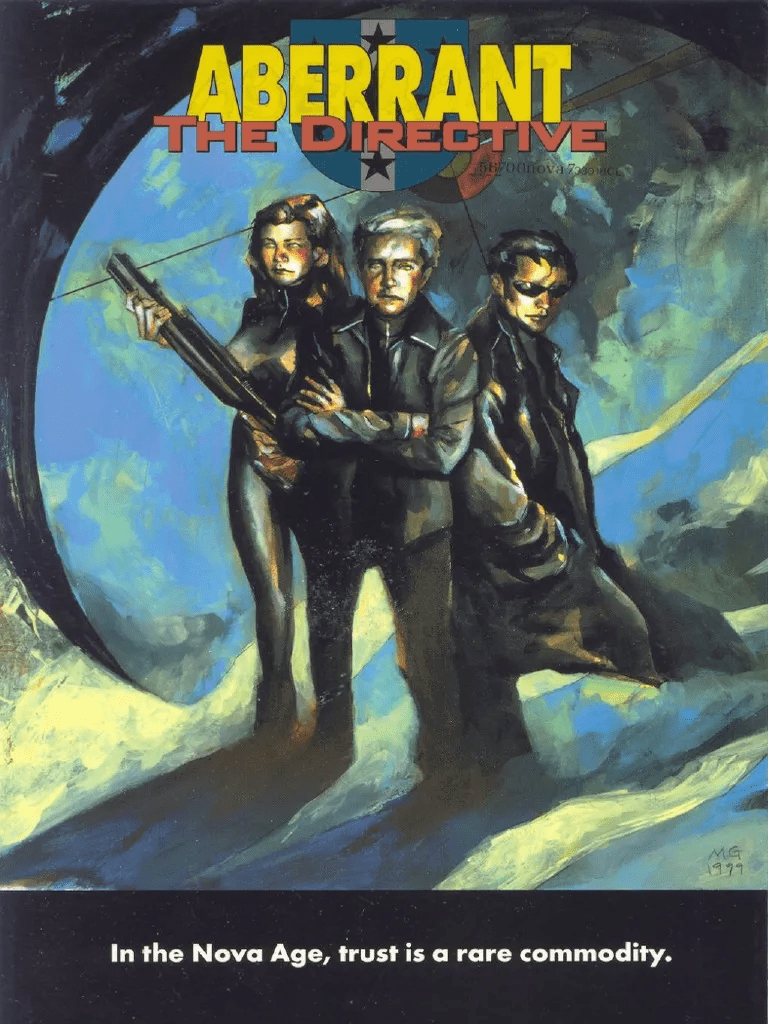
    So no matter what the writers initially intended, what the game actually shaped up to be seems to be a conflict between the people who think that novas can and should make the world perfect, and the people who think that the novas certainly could do that, but why should they demean themselves to do anything for those filthy baselines? And I feel like what’s missing from that duality is any sort of moral agency for the baselines, and any sense that the novas might not have the capacity to “save the world,” to say nothing of whether they have the right. There is a faction called the Directive that’s supposed to be a mostly-baseline organisation that tries to champion baseline nation states against unchecked nova power, but there is a reason why this is the first time I’ve mentioned them, and it’s that they’re just that boring and underdeveloped.

    Honestly, that’s very in character for White Wolf. Everything is always ultimately about the shiny magical people, with everyone else being reduced to either fawning admirers, easily dispatched mooks, or faceless grey masses. It’s kind of especially blatant here, though – I recall at one point, the narration (which is not in character, in this case, but part of the GM instructions) snidely asks you why, if novas aren’t in fact superior to common mortals, you are playing as one. Yeah…

    Ah well. Next up is Year One and Project Utopia. And there, by Jove, I think I actually figured out how to play this game. I’ll warn you, though, the answer a little bit of a anticlimax.

  • Aberrant readthrough: Core

    Aberrant readthrough: Core

    The thought occurred to me that if I’m going to read my way through all of first-edition Aberrant, I might as well post my thoughts here. It’s not going to be a full readthrough, but I’ll go over each supplement in turn.

    So, starting out with the core book. It starts off without preamble with in-universe documents, and get used to that, because that’s going to be most of these books. White Wolf was always fond of that, but I don’t think it works quite as well here as in most of their other lines, for reasons I’ll get into later unless I forget.

    Anyway, to try to summarise a tremendous amount of setting lore, ten years ago (in 1998) the space station Galatea exploded and drowned the world in quantum energies, and as a result about one person in a million “erupted” into a “nova” who can manipulate the quantum forces of the universe in ways that for some reason is completely identical to stock superhero powers. The books even admit that “quantum energies” are just things like gravity and electromagnetics, but novas can still teleport and read minds and change shape and they can do it Because Quantum. Which would be fine, except the book spends long, tiresome sections technobabbling away to try to make it all seem reasonable and sciency.

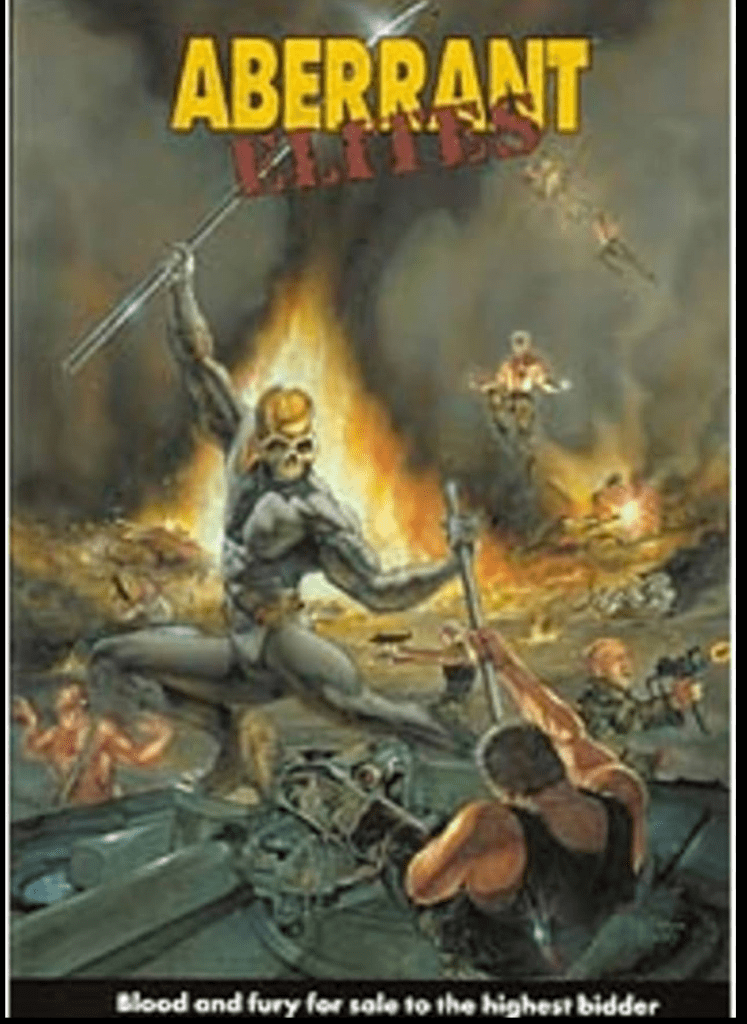
    Anyway, an NGO called Project Utopia emerged suspiciously quickly to provide guidance for novas and, using a mix of nova powers, technological breakthroughs enabled by nova powers, and public goodwill generated by the above, set about cleaning up the environment, toppling dictatorships, arranging peace treaties, and just generally fixing real-world problems. Not all novas work for Utopia, though, a lot of them have cushy corporate jobs or serve as mercenary “elites” who hire themselves out as superpowered bruisers – indeed, the primary way to wage war has become hiring some novas to fight the novas the other country is hiring.

    There aren’t supervillains per se, but there is a group called the Teragen led by a Magneto-wannabe called Divis Mal who claim that novas aren’t human anymore and therefore they have no obligation to respect “baseline” laws or ethics. Project Utopia considers them a bunch of terrorists, which is not completely true but not completely false either.

    But Teragen aside, there is a loooooot of frankly tiresome in-setting documents outlining how novas have changed fashion, music, the entertainment industry, and how everything is super-great and everyone is happy except maybe a few stupid pootiehead malcontents… and then all of a sudden we learn that ACTUALLY, there is a secret conspiracy inside Utopia called Project Proteus, and it is up to no good and have sterilised every single nova in the world. Yes, all of them. Somehow. And some chick called Slider found out and they killed her, and her layabout bestie Corbin have gone on the run accused of the crime and he’s founded a resistance movement called the Aberrants who wants to put a stop to Proteus.

    And, ugh… this plot hook, man. This freaking plot hook. It’s dead centre in the game, almost everything leads back to it and it’s just – so – STUPID. For one thing, how did Proteus even get to every single nova in the world? And how exactly did they expect this would work out, no one would ever notice that six thousand high-profile people had fertility issues all at once, and none of the super-genius intellects of the setting would ever put two and two together? And thematically, it’s just a mess. Here, have a game about playing a glamourous picture-perfect superhero! Oh, but you’ve been castrated without noticing. Yeah, that doesn’t ruin the power fantasy at all

    Honestly, it feels a bit like the guy who thought of it was very childfree and he thought it’d actually be kind of neat if all his shiny superheroes could be hot, single, and absolutely untouched by the messy business of reproduction. Because while there is some finger-wagging about how forced mass sterilisation is, like, bad and stuff, there seems to be about zero understanding of just how big a deal it would be in the real world and how hard most people would take it. It does kind of feel like the kind of idea I would have had back in my twenties, in fairness…

    But anyway, even aside from that, it’s not even especially useful as a plot hook. It’s simultaneously too big and too tightly defined. If novas are secretly being subject to genocide by the people who are supposed to direct them in building a better tomorrow, then that makes pretty much everything else they get up in the setting look stupid and pointless… but at the same time, the Aberrants-versus-Proteus conflict is just too straightforward to work as a starting point for your own ideas. Proteus isn’t a nebulous evil organisation doing all manner of inventive bad things that the players can get into – it’s doing one particular bad thing, and it’s pretty well-understood right from the start why and how it’s doing it, so all that’s really left is trying to prove it to the public. And yes, you can build a campaign around that, but that’s just it – you can build one campaign around that. It’s not something you can riff on and take in a ton of different directions.

    So, anyway, that’s the setting, and aside from (sigh) THAT THING, it’s not a bad one – certainly it feels vivid and lived-in, and there is some appeal in playing a character with superpowers in a setting where having superpowers doesn’t necessarily make you a superhero but where powers are being put to all sorts of personal, financial and political tasks. My main problem is actually that the core book spreads itself pretty thin over a ton of different parts of the setting that it wants to point to, and the fact that it insists on presenting everything as in-setting documents just make it worse, because making those informative and not just flavourful is pretty hard, and I don’t feel like the writers here were really up to the challenge. There’s a very strong feeling that this book was meant to give you a taste and nothing more. You want to actually use Project Utopia, buy their book! You want to use the Teragen? They’ll get a book! Oh, and there are these massive criminal syndicates who have adapted to nova crime-fighters by joining together, but if you want to know more about those than that they exist, you’ll need to wait for their book.

    After that, there are the rules, and… well… look, it’s the Storyteller System, okay? The rules aren’t meant to actually be used, they’re meant to sit there and look pretty. Suffice to say, you can put a nova together that is on the general level of, say, Spider-Man pretty easily, and just about any common superpower you can think of is represented somewhere. Which does of course mean that most of them is meant for fighting, in a game which keeps reminding you that it’s totally not about going out and punching bank robbers in the face, but whatever…

    The most interesting thing with the superpowers are actually the Mega-Attributes, which are relatively low-key bonuses to your regular human abilities, and the first dot in each of them comes with a free “Enhancement” that is some minor superpower tied to that Attributes. And that feels really cool, because it means that novas are, first and foremost, hyper-competent at their areas of expertise, in a way that has a lot more real-world applicability than the cheesy comicbook stuff.

    Oh, and there is this thing called Taint that you can take in order to gain new powers faster, or that you might get if you strain yourself, because this is White Wolf and there has to be something that’s gradually consuming your very soul. That said, you don’t have to take Taint (or at least not much of it) if you don’t want to, and it does serve as a handy explanation for why novas end up looking and acting a bit funky.

    Stay tuned for the Storyteller’s Companion.