Category: ports

  • R.E.S.P.E.C.T., find out what it means to me

    R.E.S.P.E.C.T., find out what it means to me

    This week’s roleplaying session was cancelled, I’m sorry to say – one player not being able to make it I can roll with, but when we’re down to half strength I have to admit that the stars are just not right. At least prepping Werewolf got me going on some alterations I’ve been meaning to make for a while now.

    For one thing, I’ve scrapped the Bonds system, which is meant to help the players start out with some pre-defined relationships to each other. Sounds good in theory, but in practice all the players I’ve ever subjected it to have hated it. As a result, I’ve been drifting away from it in my later ports. It’s only in the Werewolf port because it was my first and I was still cribbing a lot of stuff from Dungeon World and Apocalypse World.

    Still, I really do want some kind of mechanic that encourages players to act out the meeting-between-cultures aspect of the game. I feel like a major part of any World of Darkness game is people with very different viewpoints coming together and realising that they all have something to offer, and that’s really cool. And it feels especially vital to Werewolf, where the backstory has a ton of disasters and tragedies caused by one faction deciding that it was just plain right about everything.

    So here’s my new attempt: whenever a player in some way pays tribute to their Tribe’s distinctive nature (whether by words or deeds), and the other players are down with it, that player holds Respect. Respect can be spent to give bonuses to other players’ actions. Essentially, proudly representing your heritage and being open to learning from each other allows you to function better as a team.

    I’m not sure if it needs some more support. What I mean with “pay tribute to their Tribe’s nature,” I mean things like being a scheming bastard for a Shadow Lord or a street-smart survivor for a Bone Gnawer – acting out the archetype, basically. I guess that might be pretty easy for a long-time World of Darkness freak like me but a bit harder for someone I’m trying to introduce to the setting? Dunno. I’ve made the mistake of over-explaining things before, though, so I’ll leave it like this for now.

  • First free download is up!

    First free download is up!

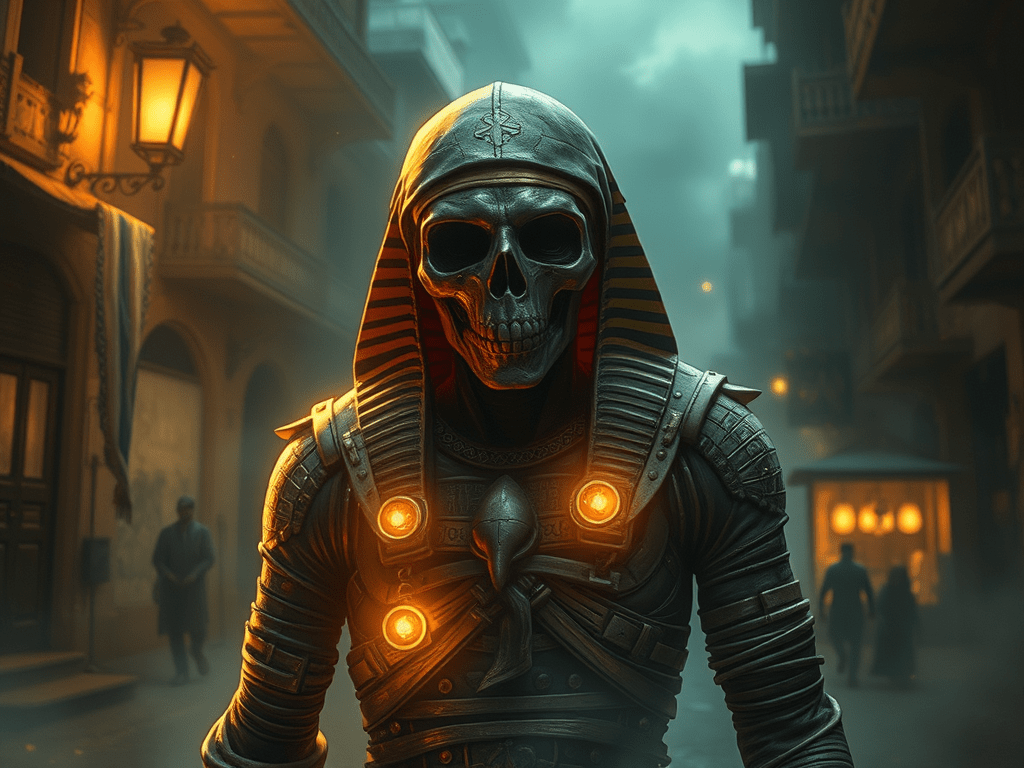
    This week, I can report a milestone in this site’s existence: I have put my first PDF up for download. It’s my Powered by the Apocalypse port of Mummy: the Resurrection. I added the fourth level of every Hekau and wrote up some obambo wraiths, so now I’m declaring it to be finished. I might add more later – there are always the need for more NPCs, and there are of course fifth, sixth, seventh and eighth levels of Hekau that I haven’t converted – but for now, anyone who wants it can go over to the download page (link to the upper right) and help themselves.

    I’m quite proud of this port, since Mummy is a game that always needed a lot more love than it got. I didn’t just need to create a bunch of rule systems, I needed to come up with an intended playstyle and setting from the rather anemic hints that exist in the official books. In the end, I tried to make it a game about sinister plots foiled and strongholds of evil infiltrated, since that seemed to be what the spells and rituals in the source material encouraged: the impression I get was of mummies as a sort of secret agents, James Bond with mystical amulets and alchemical potions instead of high-tech gadgets. And I spent a lot of time researching Cairo, Egypt, and Islam, not to get the details right (because let’s face it, I probably got most of them wrong) but to get some sort of feel for it all, some idea of how the Middle Eastern parts of the World of Darkness look and sound like.

    It’s not perfect, of course. Like I’ve talked about before, there were areas where I just had to give up, where the problems I saw with the game were inherent in the setting and I couldn’t fix them without rewriting the whole thing from scratch. For one thing, if I created my own game inspired by Mummy – and I might some day – I would dial down the way that things in the Shadowlands are impossible to manipulate because they are reflections of material things, and instead make it more like a zombie apocalypse setting or a survival horror game: everything is broken down and unhelpful, but most of it can be salvaged, repurposed or repaired, if you just work long and hard enough at it. “Maybe, if you’re persistent and lucky” is a lot more interesting to tell the players than, “no, that’s impossible.”

    Still, it’s the first officially finished project of the game-design kick I’ve been on for the last couple of years. Hopefully there’ll be many more to come.

  • The ghost of the ferry

    The ghost of the ferry

    This week, our dauntless mummies crossed the River Nile and approached the spectre fortress, where they were promptly ambushed. Nothing much else happened, it was a fairly slow session – partly because I’ve been to tired, demoralised and tooth-achey this week to really do much preparation.

    At least the players liked the wraith NPC I created on the spot, Sabriyah the anal-retentive ferrywoman. Having some quick categories to mash together is really helpful for making NPCs. For wraiths, I have one list of traits based on cause of death, and one list of traits based on their main supernatural powers, so for a ferrywoman I lumped together death by drowning (meaning her cause of death was Happenstance) and the main abilities of Usury and Argos (meaning she can transfer spiritual energy between people, all the better to collect her fee, and travel instantly between spots, suitable for if the ferry capsises).

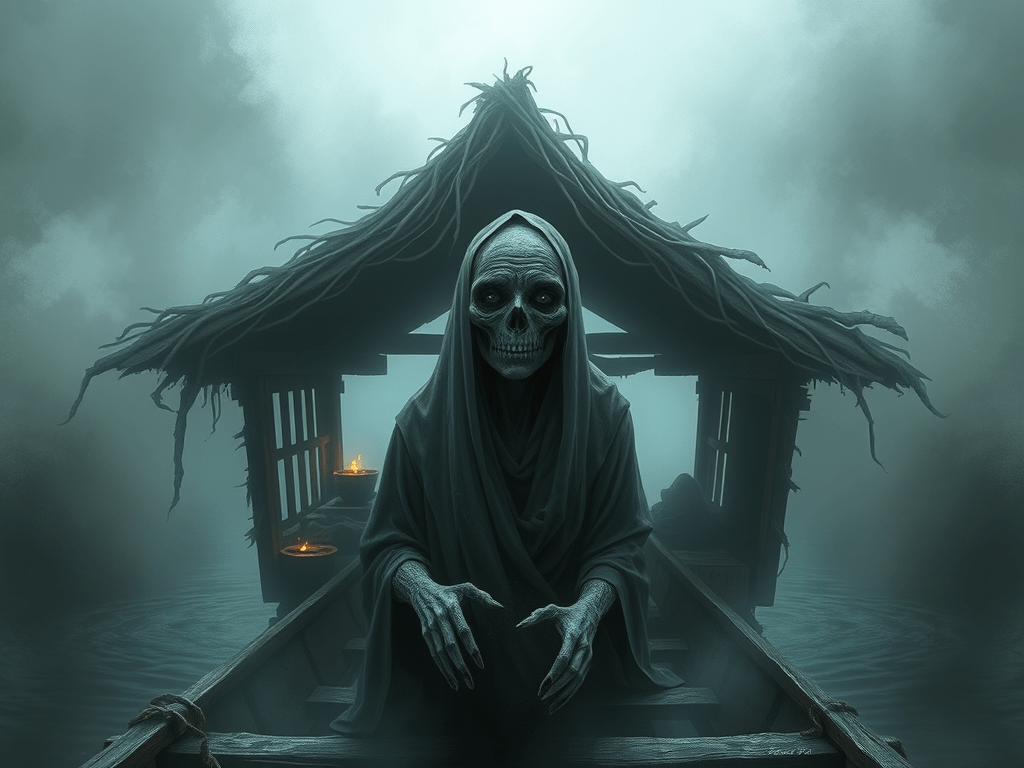
    Physically, that meant that Sabriyah had pitch-black unblinking eyes, a slack and bloated face, and an overly precise way of talking… which instantly gave me an impression of someone who seemed deeply autistic, who fussed over every detail while having very little grasp of the big picture. I decided that, having died from being insufficiently mindful of safety while out on a boat, she had emerged into the Underworld hyper-focused on always minding her Ps and Qs. She’d been sitting in her boathouse down by the Nile for years when the players found her, waiting for instructions from a Hierarchy that no longer existed in any meaningful way, because she couldn’t bring herself to act improperly. Tragic, romantic, and a bit creepy – precisely the right mix for a wraith.

    I doubt I’ll get to use her for much in the future, but it’s nice to know that I can still improvise, at least with the right tools.

  • Injuries are a pain

    Injuries are a pain

    I had reason to fiddle with my Blue Rose port this week. It’s one I’m particularly fond of, since it’s more experimental than the others – and a lot more divorced from the original rules, for that matter. Blue Rose, in both its editions, is really just D&D “but without, you know, the problematic stuff.” This is not to say that that’s without its appeal – hey, I may not be refined enough to be acceptable to the woke, but I’m not crude enough to be acceptable to the lowbrow roll-around-in-sewage crowd either! I have my own craving for prettiness and cuddliness. So sometimes I enjoy slaying monsters but in a nice, genteel, socially acceptable sort of way.

    That said, there is a considerable mismatch between the rules and the stated intent of the game. If it’s all about teh feelz, then there shouldn’t be hundreds of pages of combat rules. D&D has hundreds of pages of combat rules because it really is mostly about making other living creatures go SPLAT (and keeping them from SPLATing you first). If you want to create a game of noble brightness, cute talking animals and refined tea parties, you shouldn’t take the D&D rules and then add a few stern instructions about not using them too much. You should make a game that is about the thing you mean for the game to be about.

    So when I sat down to port Blue Rose, I made personality and disposition central to the rules. More specifically, I took the mostly-irrelevant-except-as-a-roleplaying-aid Tarot motif of the original game and put it first. Every character has three Traits: one card of the Major Arcana that represents their overall goals and ideals, one card of the Minor Arcana that represents their greatest virtue, and one reversed card of the Minor Arcana that represents their greatest personal failing. When you roll to do anything, you try to involve your Traits, and each one you can invoke gives you a bonus. It’s working out pretty well so far.

    Which brings me to the damage system. Damage systems are almost invariably the hardest part for me in making a game, because they’re so hard to keep from being fun-spoilers. The risk of getting hurt has to be omnipresent, because that’s always going to be a stake in any sort of action scene (and even Blue Rose should have action scenes). But if characters get hurt too easily, and particularly if it takes too long for them to heal up, then they can end up sidelining players for absolute ages. No fun.

    Part of the problem is of course that in real life, injury is incredibly serious. Even a strained muscle is going to cramp your style for days. A serious injury, like you can easily get in mortal combat? That’s going to leave you bedridden for months. A game where there is easy access to magical healing can get around that, but of course a game like that is high fantasy almost per definition; a world where someone can unbreak your leg with a wave of their hand is a world that is very, very far away from our own.

    I almost invariably start out making the injury rules too punishing, and then have to scale them back (while grumbling about how I am having to compromise my artistic vision just because those darn players can’t keep themselves out of harm’s way…). In this case, the way I handled injury in the game was by making players “lock” their Traits to indicate emotional distress. A locked Trait still gives a bonus when it’s invoked, but it also gives a penalty to any roll where it’s not invoked. The idea being that the more stress a character is under, the more she defaults to her fundamental convictions and has trouble seeing how anything that is unrelated to them could be important.

    So far so good. Now, the rules for healing has been rewritten to the following:

    When you give yourself time to heal, roll +Conviction. If you are in some way aided by an NPC who has Touch on you, take +1 forward to the roll. 6-, you unlocked a Trait, but your introspection allows something new to sneak up on you; the Narrator makes a move. 7-9, you unlock up to two Traits. If an NPC aided in your recovery, they put Touch on you. 10+, the same, and if you want you may also either clear Corruption or remove one person’s Touch on you (which can be the NPC who aided in your recovery, if any).

    Note: While give yourself time to heal is a fairly passive move and can seem difficult to apply Traits to, the Narrator should encourage the player to describe what she is ruminating on over her convalescence, and what lessons she has learned from the pain. As long as her description is broadly in line with a Trait, it should apply. Thus, it should actually be fairly easy to at least roll with +2 for recovering.

    Examples: Bandaging your own wounds, having a drink with your friends, enjoying some me time.

    That means that even if the roll fails, you still unlock at least one Trait, and you can potentially unlock more with a success. Hopefully that’ll make players a little sturdier and less likely to spend all their time neurotic and sulking – it’s still suppose to be a nice game, after all…
  • Gear Porn

    Gear Porn

    I ended up spending this week working on the Dark Heresy port, particularly on the gear section.

    I have to admit, I’m not really a fan of gear in roleplaying games. It just feels anal-retentive to have to list every fiddly little implement your character carries around, and to have creative ideas that you can’t implement because you just didn’t bring the right tool. I’m more about the skills and inherent properties, the things that are always true about your character. But of course this is Warhammer 40,000, and running Warhammer 40,000 without drooling over the badass toys is just making a complete mockery of the whole thing.

    I did try to streamline it a bit, though. I assigned every weapon, armour and doodad a Req value between 1 and 10, and then assigned every Career a starting amount of Req. In between every mission, your Req refills and you can spend it on requisitioning new equipment. And the effects of different items have been simplified to the point where it’s hopefully easier to remember – a lot of things just give a +1 bonus to some particular move.

    I note, not for the first time, that it’s very unclear who this port is even for. I mean, I’m pretty sure that anyone who likes Powered by the Apocalypse games is going to think it misses the point entirely by having so many over-specific rules, and anyone who likes Dark Heresy the way it is is of course not going to see the point of my converting it to an entirely different format. I guess in the end, it’s just for me, to make it possible to at some point run games in the Warhammer 40,000 universe that don’t feel quite so painful.

    Of course, disliking pain might also be missing the whole point of Warhammer 40,000…

  • Dark Heresy powerup

    Dark Heresy powerup

    Well, tying back to my thoughts from the last Dark Heresy game, me and the player talked about it after today’s session and it was agreed that the higher starting Characteristics would be a good idea, for many of the reasons I mentioned in that post. We’ll see next time how that works out, but I feel like it’s the right move.

    I did manage to write a bit on the Corruption rules this week in preparation for this session, too, so here is where they stand:

    CORRUPTION AND MUTATION

    Humanity is eternally under spiritual siege, the dark lore of Chaos threatening every second to find its way into each human’s soul. When it finds a vector, whether through unclean teachings or the direct touch of Warp entities, it threatens to remake the victim of the revelation into its twisted image. Whenever you encounter blasphemy or supernatural horrors, you gain some amount of Corruption Points. Whenever your Corruption Points equal or exceed 10, reduce them by the largest possible multiple of 10 (i.e., from 17 to 7, or from 23 to 3) and roll to battle for your very soul. This may cause you to advance your Damnation Track, which looks as follows:

    [ ] Choose a Malignancy.

    [ ] Choose a Malignancy.

    [ ] Choose a Malignancy.

    [ ] Choose a Malignancy.

    [ ] Choose a Mutation.

    [ ] Choose a Malignancy.

    [ ] Choose a Malignancy.

    [ ] Choose a Mutation.

    [ ] Choose a Malignancy.

    [ ] You permanently transform into a deranged Chaos Spawn under the GM’s control. Make a new character.

    Malignancies and Mutations are both permanent. Purity, once lost, is never regained.

    MALIGNANCIES

    • Wasted Frame. The flesh wither on your bones. Permanently reduce your Strength by 1.
    • Poor Health. Your breathing is laboured and your blood flows sluggishly. Permanently reduce your Toughness by 1.
    • Palsy. You suffer from constant tics and tremors. Permanently reduce your Agility by 1.
    • Dark-Hearted. You are filled unholy spite that you can never entirely hide from others. Permanently reduce your Fellowship by 1.
    • Morbid. Your critical thinking is constantly distracted by macabre fantasies. Permanently reduce your Intelligence by 1.
    • Malign Sight. Unclean voices whisper in your ears and nightmare visions dance in the corner of your eyes. Permanently reduce your Perception by 1.
    • Skin Affliction. You become plagued by boils, scabs and weeping sores. You are immediately noticeable and memorable. If you have or acquire the Unremarkable talent, it cancels out this Malignancy, making you recognisable to anyone who’s ever had a good look at you but not immediately noticeable in a crowd – you look terrible, but no more so than any dozen other diseased beggars. Without that talent, people stare at you in horror wherever you go and there is probably not as wretched a visage in the entire star system.
    • Night Eyes. Bright light hurts your eyes, forcing you to squint. This does not confer any sort of ability to see in the dark, so unless you have access to that from some other source, your vision is always impaired from either too much light or too little. Your visual acuity at the best of times is roughly equivalent to what it would be in darkness lit by a single candle, with all what that implies for your ability to spot things and discover people sneaking up on you.
    • Witch-Mark. You gain a cosmetic but highly obvious physical mutation, such as a small tentacle growing from your elbow or a third eye in the back of your neck. You must conceal the mutation at all cost or risk being executed for being a mutant.
    • Night Terrors. Like the Horrific Nightmares Disorder.
    • Strange Addiction. Like the Addiction Disorder, but instead of a normal drug, you are addicted to some strange substance, like rose petals or widows’ tears.
    • Ashen Taste. Food and drink tastes foul to you, and you can’t bring yourself to ingest more than absolutely necessary. As a result, you are perpetually weak with hunger. Whenever you achieve a result of 10-14 on a roll to refuse to fall, take -2 ongoing to further rolls to refuse to fall instead of -1 ongoing.
    • Irrational Nausea. Something entirely innocent causes you to feel sick at the sight of it. When you face your anathema, roll +Toughness. 9-, you become violently ill and must spend the next scene doing little more than puking your guts out. 10-14, you master your treacherous belly, but take -1 ongoing while you remain in the presence of the anathema. 15+, you manage to push down your bile. For a weakness, choose one of:
      • Flowers in bloom
      • Human laughter
      • Fresh food
      • Prayer books and holy items
      • Bare skin (other than faces and hands)
    • Blackouts. You suffer regular blackouts. As a GM move, the GM can declare that the consequences of something you have no recollection of doing suddenly catch up with you.
    • Hatred. You develop an irrational hatred for some group of people. This is not the sort of holy fury that the Imperium approves of; not only do you have no socially acceptable reason to hate the group, but instead of being strengthened by your hatred you loathe them so much that you can barely function when one of them is around. You take -1 ongoing to all Fellowship and Willpower rolls at such times. Choose one of the groups below:
      • Soldiers and warriors.
      • Priests and the deeply religious.
      • Scholars and bureaucrats.
      • Lawkeeper and authority figures.
      • Common labourers and the poor.
      • Tech-priests and technomancers.
      • Criminals and outlaws.
    • Bloodlust. When the battle frenzy is upon you, mere victory is not enough; you must see the light die in the foe’s eyes. If enemies flee from you, you must chase them by whatever available means is most efficient, even if that might catch you in a trap or if it pulls you away from your true objectives.
    • Distrustful. You cannot bring yourself to trust a stranger, and it makes interaction with them problematic. When making a Fellowship roll that involves strangers, treat any result of 10+ as a result of 10-14.
    • Self-Scarification. Like the Self-Mortification Disorder, except instead of wholesome religious flagellation your self-harm takes the form of carving elaborate occult symbols into your flesh with a blade.
    • Vivisector. You are driven to cut up living creatures and study their insides. While PETA has been disbanded for many thousands of years, this behaviour draws its share of ire. As a move, the GM can proclaim that you sliced up something you really shouldn’t, whether someone’s pet, a valuable prisoner, or a creature with a big, angry mate.

    As you can see, the Mutations are still missing, but since by these rules no one can get a Mutation before taking a whole lot of Malignancies, I still have some time to work on converting those.

    No work done on the GM Moves, though. I really do need to sit down with one. I feel like I’m getting better at bringing the grimdark (this session included stifling bureaucracy in the face of humanitarian crisis, misanthropic religious fanaticism, and a band of renegade plague victims, so I think I did okay), but I still don’t feel like I’ve done a very good job of codifying it.

  • Mummy fatigue

    Mummy fatigue

    Another session of Mummy went down reasonably successfully. The players interrogated the evil sorcerer they captured last time and gave me a chance to try to roleplay a Nephandus. It’s not an easy thing, because Nephandi are supposed to be inherently and irredeemably bad, but they’re not supposed to be cartoonish about it; they genuinely believe that the absolute best thing they can do with their lives is try to damn the entire world. I did my best to express a philosophy along the lines of, “existence is a cruel lie, and that means cruelty and lies are what everything is all about, and therefore the only thing a person of integrity can do is be as cruel and deceitful as possible.” Which… feels sort of apropos for the teenage angst-fest that is the World of Darkness, to be honest.

    I don’t know, though, I keep pounding my head against the nature of the Underworld. It just feels like you can’t be true to the stated rules of the setting without running a boring game. Everything about the Underworld is meant to make you feel helpless and like you can’t make a difference, but roleplaying is all about making meaningful choices. I’ve tried to come up with a solution, but honestly, I’m starting to think that there isn’t one – that what I really should do is just write my own game that tries to do what Mummy tries to do, but to do it properly.

    So all right, then. Perhaps I should call this port finished, at least in the sense of “it ain’t gonna get any better than this.” I should start looking at my original games again anyway…

  • Fiddling with Underworld rules

    Fiddling with Underworld rules

    In the World of Darkness, the Underworld is where ghosts hang out. It’s the main setting for Wraith: the Oblivion and a secondary setting for Mummy: the Resurrection (as in, wraiths spend all their time there because they’re dead, and mummies spend part of their time there preparing to come back from death). It’s a pretty cool and Gothic place, where everyone walks around wearing their fatal wounds on full display and your trusty sword was probably some unfortunate slave who got melted down for his plasm.

    The problem is, it’s also a pain in the ass to run games in, because a lot of things are more flavourful than practical – not to mention, not particularly well defined as to how they work in practice (see Changeling: the Dreaming and its “chimerical reality” for a similar problem). For one thing, it’s never quite clear if the Shadowlands (the part of the Underworld that lies closest to the Land of the Living, and from which you can affect it with magic) is a place in and of itself that just happens to be close to the Land of the Living, or if it is the Land of the Living as experienced by the disembodied ghosts that are haunting it. When writing my Mummy port, I’ve had to flesh out a number of things, and I’m still not sure about some of my decisions.

    Case in point, the fact that there is very little actual matter in the Shadowlands beyond the plasm of the wraiths themselves (which is why they practice soulforging to get their gear). That’s very bleak and evocative – it’s a world where production and commerce literally uses the working class as gristle for the wheels, it’s all very punk and rage-against-the-machine. But what it means in practice is that you have to constantly veto the things your players try to do, because they have once again forgotten that they have no tools, not even so much as a strip of cloth to bind a wound with (in the Underworld, your clothes are part of your body and can’t be removed).

    I mean, I love in theory, because it feeds the nightmarish feel of the Underworld – in a bad dream, you are always facing doors that won’t open and find yourself having forgotten something important at home (including, indeed, your clothes!). But in a game where the players are supposed to be able to do stuff, that feeling of helplessness is… not helping. I’ve been grappling with that for several sessions now.

    Here’s my latest adjustment: from now on, players can spend Balance hold to cast a spell that would normally require some sort of tool or ingredient. That seems fair – wraiths, after all, don’t need tools to use their arcanoi, and mummies should surely be at least as powerful as wraiths. And it also means that Balance is still useful for something even after you’ve hoarded enough to resurrect but decided to postpone resurrection while you deal with some issue in the Underworld.

    We’ll see how it goes.

  • Dark Heresy playtest

    Dark Heresy playtest

    So, we ended up playing some more Dark Heresy this week. It involved the daring acolytes trying to escape from a collapsing mine while being gassed by inflexible authorities and trying not to be eaten by a river of daemonic slugs, so I feel that at the very least the “grimdark” was firmly in place…

    This was the first session with the new version of the rules, and I do think it went a lot more smoothly. The success chances are rather unforgiving, but that might be on point – possibly it helps with the feeling of a hostile universe where your skills are only moderately helpful? Not sure.

    I do think that there’s a problem with the stat increase Advances, though. See, I’ve streamlined everything so that there are certain Advances that just says, basically, “you get +1 to such-and-such stat.” Which is nice and simple… but it also kind of makes those Advances sort of overpowered. I mean, in the original game only the first increases to your core stats cost 100 XP apiece, everything else costs 250 XP or more, so there is some incentive to instead choose the skills or talents that cost less. Without that price hike, there’s really very little sane reason to not take stat increase Advances as long as you have any at all that are available.

    One possible solution would be to take out the stat increase Advances and instead make characters start with +1 in their core stats, +0 in their non-core stats, and -1 in their weak stats, and that pretty much just keep it like that. Maybe let them take stat increases after their first 10 or 20 Advances or something. Of course, then we don’t get that aforementioned feeling of all your traits being equally useless, so if we want that one that’s bad.

    But we’ll see how I feel after another bunch of sessions.

    Other things to work on: the corruption rules. They’re going to become relevant sooner than I thought, since two of the players are now heading into corrupted territory. Also, I need to expand the World Moves and Chaos Moves (for Imperial Worlds and Nurgle, respectively, for this particular scenario – the others can wait) and add some more granularity to them.

  • Mummy downtime

    Mummy downtime

    Okay. Okay. I admit it. I have to change the downtime rules in my Mummy: the Resurrection port. I still think the idea behind them is sound – they’re mechanics for when the party settles in for a few days to learn new spells, do surveillance, work on projects, whatever.

    The problem is that the PbtA gameplay loop makes it very hard to create a natural time to take a few days off. PbtA encourages you to keep throwing stuff at the players, to prevent those endless, boring moments when the plot can’t progress because the players are failing to do X, Y or Z that would lead to the next setpiece. In PbtA, if the players just sit around doing nothing, then the GM springs a GM move on them that forces them to take some kind of action. That’s a good thing – in fact, it’s a great thing. But it does mean that the action never really comes to a natural halt. The players never want to stop for several days, because there’s always something they need to deal with today.

    Still, I think most of this can be solved by making downtime represent, say, half an hour instead of several days; not enough time for the shit to really hit the fan for lack of player attention. While I’m at it, I might as well make it so that rituals must be cast as downtime moves; that ties the two paces of the game into the magic system neatly. It does mean that mummies now heal downright scarily fast, but fine, fine – they can literally reconstitute themselves from a single speck of ash when resurrecting, it isn’t too far-fetched that they heal pretty fast the rest of the time too, just not to the point of wounds closing instantly the way they do for werewolves.

    It still bugs me, though. Shouldn’t there be some way to make characters take breaks, even in PbtA? Dungeon World has “making camp” rules, I’m not sure why that works – yes, it’s an inherent part of standard fantasy, but urban fantasy (especially the sort that involves caster types) surely has “time to run to the library and look stuff up!” as an equally natural ingredient. So why do players never want to do that?

    Oh well.

    I’ve also started sketching on a Pendragon port. Which is also going to have downtime moves, because that’s a big part of the game. If I can’t figure out a way to get the players to return to their manors for the winter there, it may just be hopeless… Anyway, my starting point is to use the thirteen Trait pairs – Energetic/Lazy, Valorous/Cowardly, Trusting/Suspicious, etc – as the basis for all moves, making what sort of person you are matter more than your training (which will be more or less the same for all characters, after all – they’re all knights!). I’ll get back to you with any developments.