Category: Mummy the Resurrection

  • Grimdark puttering

    Grimdark puttering

    No major progress on anything important this week – I’ve been two steps away from a nervous breakdown most of the time. Still, puttering around on this and that has, surprisingly, gotten me most of the way through outlining Rank 5 of the Dark Heresy port. And that’s kind of neat, because Rank 5 is honestly where the game actually starts to happen. That’s when you get to play around with power swords and big-boy psychic powers and cybernetic implants that lets you levitate.

    The entire first half of the game is you working your way up from “Imperial Guard draftee” or “underhive scum” to actually becoming one of the people the setting tends to really focus on. Which makes senes in theory – zero to hero is a thing for a reason, right? The problem is that it cuts you off from most of the source material – not all of it, by any means, there is the occasional piece of media that follows the people way down on the ground, but still, the pickings there are a bit slim. And I think the game designers did realise that, since they went on to release special rules for playing as an Inquisitor (even if they mostly amounted to, “just start by spending a gazillion points of XP”) and all the other games in the line were about being some kind of badass.

    I don’t know. I guess I’m not that much of a fan of zero-to-hero in general. It can be cool if you’re playing a really long campaign, but most campaigns don’t last for years of real life – whatever level you start on, you’re probably not going to be moving that far from it, so I think it makes sense to put at least a decent amount of cool stuff on it.

    I’m kind of looking forward to starting to adapt the other games in the series, because there I’ll find out if the system I’ve worked out can be adjusted to higher power levels and plenty of authority. That’s honestly what I enjoy running more – not games where the players are all-powerful or anything, but games where they have juuuuust enough power to get to make demoralising hard decisions. Being powerless means freedom from responsibility, and as my players could tell you (usually with a lot of long-suffering sighs), I do so love to inflict responsibility on them.

    In other news, today’s Mummy: the Resurrection session went well. It was the thirtieth one in the campaign, proving that sometimes they really do go on for a long time (so it’s kind of a shame that this is a system where character progression is a lot more plot-dependent and thus the players still aren’t that far from where they started out). It’s odd, it’s a pretty obscure and unloved game running on a glorified set of house rules, but somehow it just clicked. I kind of feel like I should change to a different campaign soon, because Lord knows there are plenty of other games I want to try, but at the same time, it seems a shame to stop when it’s going so well. Oh well, we’ll see.
  • Houston, we have a resurrection!

    Houston, we have a resurrection!

    Today marks an occasion for my Mummy: the Resurrection campaign. We actually got to the resurrection part. The players finally returned from the Underworld, returning to life in the city morgue. Now let’s see them deal with the various parties who have developed an interest in them. And how long it takes before they stand before the Judges again, of course.

    We ended up spending a little more time in the Underworld than I intended. I’m not exactly sure what to blame that on. On the one hand, I grumble a lot about how my players keep hyper-focusing on whatever is right in front of them and ignoring the overarching situation, but in all due honesty… part of it is also that I set them to too ambitious a task while in the Underworld, having them rescue prisoners from a spectre stronghold. Which required them to first get hold of a Hierarchy cache so they wouldn’t have to do it bare-handed. And then they ran into trouble along the way, because the Shadowlands are dangerous.

    So yeah… in retrospect, I shouldn’t have gotten quite so ambitious with something I just intended to be filler. I do have this tendency to assume that things can get polished off in a session or two, but of course I also don’t want to rush through it without giving the situation proper gravitas, and then I sit there six months later and wonder why we never got to my super-cool “real” plot.

    Part of it is the nature of the World of Darkness, too. It’s supposed to be, if not “realistic,” then at least grounded in some sort of internally consistent setting. Everything is supposed to come from somewhere, everything is supposed to have context. That’s what I love about it. But it does mean that there aren’t much in the way of simple encounters – you can’t just go, “suddenly, you’re attacked by zombies!” because each individual zombie has to have its own angsty backstory or it feels like you’re phoning it in.

    Funny thing? Out of the WoD games I’ve tried, the one that runs the most smoothly is Mage: the Ascension, once I figured out how to manage it. There are still no simple encounters, but the game does encourage you to just throw more mismatched intrigues and general weirdness at the players, and then let them figure it out as best they can. Mummies and werewolves are supposed to be fighting a war. Mages are just meant to “reach enlightenment,” and the nice thing about that is that just about anything can be framed as another Very Important Step On Your Personal Journey. And of course, when the players get really interested in something random and start examining it from every angle, they are acting exactly like the sort of erratic geniuses they are meant to be.

    But yeah, as far as mission-centric games go, I probably should learn to break the missions down into smaller pieces.

  • Naming moves

    Naming moves

    This week, I’ve been taking another crack at my Mage: the Ascension port. In particular, I’ve tried to get something done with the move names.

    See, I use the same basic moves for all my WoD ports, or near enough – I figure that what a person can accomplish without superpowers in the World of Darkness is pretty consistent. But since each game has a very different tone and focus, I try to make the names of the moves imply it. Asking a player to roll to show your teeth feels very different than telling them to roll to swear holy retribution, even when the mechanics are exactly the same.

    Here is the same list of moves for Werewolf:

    1. Melee attack (Strength): Rend and tear
    2. Feats of strength (Strength): Perform a mighty feat
    3. Ranged attack (Dexterity): Take aim
    4. Feats of speed (Dexterity): Seize an opportunity
    5. Overcome injuries (Stamina): Relentlessly push on
    6. Diplomacy (Charisma): Deal honourably
    7. Manipulation (Manipulation): Cunningly manipulate
    8. Intimidation (Manipulation): Show your teeth
    9. Seduction (Appearance): Rely on animal magnetism
    10. Style (Appearance): Prowl fearlessly
    11. Knowledge (Intelligence): Display your wisdom
    12. Technology/Craft (Intelligence): Use the tools of man
    13. Perception (Perception): Sniff the air
    14. Self-control (Wits): Stay in control
    15. Pathfinding (Wits): Follow a trail

    And for Mummy:

    1. Melee attack (Strength): Smite the wicked
    2. Feats of strength (Strength): Strain your mighty thews
    3. Ranged attack (Dexterity): Let fly your vengeance
    4. Feats of speed (Dexterity): Seize the moment
    5. Overcome injuries (Stamina): Relentlessly push on
    6. Diplomacy (Charisma): Preach the truth
    7. Manipulation (Manipulation): Engage in intrigue
    8. Intimidation (Manipulation): Swear holy retribution
    9. Seduction (Appearance): Beguile with your beauty
    10. Style (Appearance): Appear haughty and regal
    11. Knowledge (Intelligence): Display wisdom and learning
    12. Technology/Craft (Intelligence): Practice artifice and craft
    13. Perception (Perception): See beneath the surface
    14. Self-control (Wits): Master your soul
    15. Pathfinding (Wits): Make the journey

    You get the idea. Werewolf is about pre-medieval tribal warriors who live half their lives as animals. So their move names are meant to invoke a primal, savage feel. Mummy, meanwhile, is a little more civilised, but still ancient – it’s faintly Biblical, about proud warrior kings and wise prophets trying to walk the righteous path.

    And then we have Mage, which I keep trying and failing to come up with something similarly flavourful for. I think a large part of the problem is that it’s harder to come up with a distinct theme for mages. Each Tradition effectively inhabits a genre all of its own, and there’s just not much overlap between a serene Akashic warrior-philosopher and an angry Virtual Adept anarchistic hacker.

    This is my attempt for this week:

    1. Melee attack (Strength): Fight for your beliefs
    2. Feats of strength (Strength): Push your limits
    3. Ranged attack (Dexterity): Strike from afar
    4. Feats of speed (Dexterity): Act with swift purpose
    5. Overcome injuries (Stamina): Endure the cost
    6. Diplomacy (Charisma): Speak for those with ears to hear
    7. Manipulation (Manipulation): Shape the narrative
    8. Intimidation (Manipulation): Make them fear your power
    9. Seduction (Appearance): Weave a sensual enchantment
    10. Style (Appearance): Come and go as you will
    11. Knowledge (Intelligence): Recall esoteric truths
    12. Technology/Craft (Intelligence): Place things in their proper alignment
    13. Perception (Perception): Spot the subtle signs
    14. Self-control (Wits): Master your inner turmoil
    15. Pathfinding (Wits): Blaze a trail

    I dunno. It’s a little better than my last effort, I think. Still not sure about some of them, especially the technology one and the diplomacy one.

  • First free download is up!

    First free download is up!

    This week, I can report a milestone in this site’s existence: I have put my first PDF up for download. It’s my Powered by the Apocalypse port of Mummy: the Resurrection. I added the fourth level of every Hekau and wrote up some obambo wraiths, so now I’m declaring it to be finished. I might add more later – there are always the need for more NPCs, and there are of course fifth, sixth, seventh and eighth levels of Hekau that I haven’t converted – but for now, anyone who wants it can go over to the download page (link to the upper right) and help themselves.

    I’m quite proud of this port, since Mummy is a game that always needed a lot more love than it got. I didn’t just need to create a bunch of rule systems, I needed to come up with an intended playstyle and setting from the rather anemic hints that exist in the official books. In the end, I tried to make it a game about sinister plots foiled and strongholds of evil infiltrated, since that seemed to be what the spells and rituals in the source material encouraged: the impression I get was of mummies as a sort of secret agents, James Bond with mystical amulets and alchemical potions instead of high-tech gadgets. And I spent a lot of time researching Cairo, Egypt, and Islam, not to get the details right (because let’s face it, I probably got most of them wrong) but to get some sort of feel for it all, some idea of how the Middle Eastern parts of the World of Darkness look and sound like.

    It’s not perfect, of course. Like I’ve talked about before, there were areas where I just had to give up, where the problems I saw with the game were inherent in the setting and I couldn’t fix them without rewriting the whole thing from scratch. For one thing, if I created my own game inspired by Mummy – and I might some day – I would dial down the way that things in the Shadowlands are impossible to manipulate because they are reflections of material things, and instead make it more like a zombie apocalypse setting or a survival horror game: everything is broken down and unhelpful, but most of it can be salvaged, repurposed or repaired, if you just work long and hard enough at it. “Maybe, if you’re persistent and lucky” is a lot more interesting to tell the players than, “no, that’s impossible.”

    Still, it’s the first officially finished project of the game-design kick I’ve been on for the last couple of years. Hopefully there’ll be many more to come.

  • The ghost of the ferry

    The ghost of the ferry

    This week, our dauntless mummies crossed the River Nile and approached the spectre fortress, where they were promptly ambushed. Nothing much else happened, it was a fairly slow session – partly because I’ve been to tired, demoralised and tooth-achey this week to really do much preparation.

    At least the players liked the wraith NPC I created on the spot, Sabriyah the anal-retentive ferrywoman. Having some quick categories to mash together is really helpful for making NPCs. For wraiths, I have one list of traits based on cause of death, and one list of traits based on their main supernatural powers, so for a ferrywoman I lumped together death by drowning (meaning her cause of death was Happenstance) and the main abilities of Usury and Argos (meaning she can transfer spiritual energy between people, all the better to collect her fee, and travel instantly between spots, suitable for if the ferry capsises).

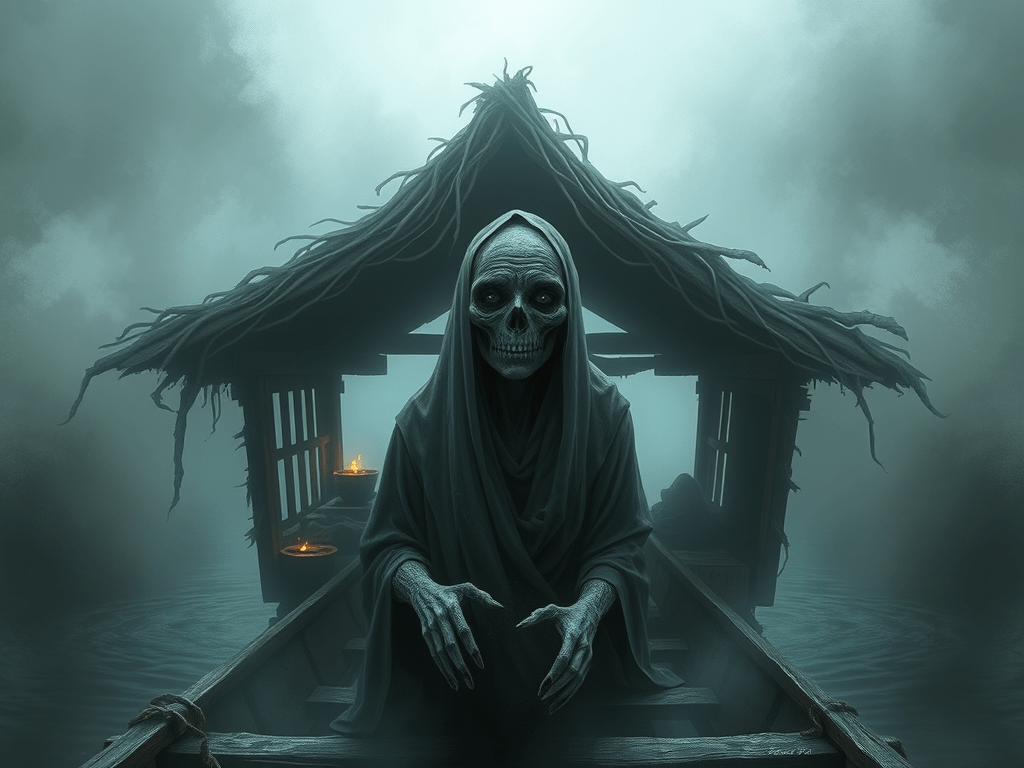
    Physically, that meant that Sabriyah had pitch-black unblinking eyes, a slack and bloated face, and an overly precise way of talking… which instantly gave me an impression of someone who seemed deeply autistic, who fussed over every detail while having very little grasp of the big picture. I decided that, having died from being insufficiently mindful of safety while out on a boat, she had emerged into the Underworld hyper-focused on always minding her Ps and Qs. She’d been sitting in her boathouse down by the Nile for years when the players found her, waiting for instructions from a Hierarchy that no longer existed in any meaningful way, because she couldn’t bring herself to act improperly. Tragic, romantic, and a bit creepy – precisely the right mix for a wraith.

    I doubt I’ll get to use her for much in the future, but it’s nice to know that I can still improvise, at least with the right tools.

  • Mummy fatigue

    Mummy fatigue

    Another session of Mummy went down reasonably successfully. The players interrogated the evil sorcerer they captured last time and gave me a chance to try to roleplay a Nephandus. It’s not an easy thing, because Nephandi are supposed to be inherently and irredeemably bad, but they’re not supposed to be cartoonish about it; they genuinely believe that the absolute best thing they can do with their lives is try to damn the entire world. I did my best to express a philosophy along the lines of, “existence is a cruel lie, and that means cruelty and lies are what everything is all about, and therefore the only thing a person of integrity can do is be as cruel and deceitful as possible.” Which… feels sort of apropos for the teenage angst-fest that is the World of Darkness, to be honest.

    I don’t know, though, I keep pounding my head against the nature of the Underworld. It just feels like you can’t be true to the stated rules of the setting without running a boring game. Everything about the Underworld is meant to make you feel helpless and like you can’t make a difference, but roleplaying is all about making meaningful choices. I’ve tried to come up with a solution, but honestly, I’m starting to think that there isn’t one – that what I really should do is just write my own game that tries to do what Mummy tries to do, but to do it properly.

    So all right, then. Perhaps I should call this port finished, at least in the sense of “it ain’t gonna get any better than this.” I should start looking at my original games again anyway…

  • Fiddling with Underworld rules

    Fiddling with Underworld rules

    In the World of Darkness, the Underworld is where ghosts hang out. It’s the main setting for Wraith: the Oblivion and a secondary setting for Mummy: the Resurrection (as in, wraiths spend all their time there because they’re dead, and mummies spend part of their time there preparing to come back from death). It’s a pretty cool and Gothic place, where everyone walks around wearing their fatal wounds on full display and your trusty sword was probably some unfortunate slave who got melted down for his plasm.

    The problem is, it’s also a pain in the ass to run games in, because a lot of things are more flavourful than practical – not to mention, not particularly well defined as to how they work in practice (see Changeling: the Dreaming and its “chimerical reality” for a similar problem). For one thing, it’s never quite clear if the Shadowlands (the part of the Underworld that lies closest to the Land of the Living, and from which you can affect it with magic) is a place in and of itself that just happens to be close to the Land of the Living, or if it is the Land of the Living as experienced by the disembodied ghosts that are haunting it. When writing my Mummy port, I’ve had to flesh out a number of things, and I’m still not sure about some of my decisions.

    Case in point, the fact that there is very little actual matter in the Shadowlands beyond the plasm of the wraiths themselves (which is why they practice soulforging to get their gear). That’s very bleak and evocative – it’s a world where production and commerce literally uses the working class as gristle for the wheels, it’s all very punk and rage-against-the-machine. But what it means in practice is that you have to constantly veto the things your players try to do, because they have once again forgotten that they have no tools, not even so much as a strip of cloth to bind a wound with (in the Underworld, your clothes are part of your body and can’t be removed).

    I mean, I love in theory, because it feeds the nightmarish feel of the Underworld – in a bad dream, you are always facing doors that won’t open and find yourself having forgotten something important at home (including, indeed, your clothes!). But in a game where the players are supposed to be able to do stuff, that feeling of helplessness is… not helping. I’ve been grappling with that for several sessions now.

    Here’s my latest adjustment: from now on, players can spend Balance hold to cast a spell that would normally require some sort of tool or ingredient. That seems fair – wraiths, after all, don’t need tools to use their arcanoi, and mummies should surely be at least as powerful as wraiths. And it also means that Balance is still useful for something even after you’ve hoarded enough to resurrect but decided to postpone resurrection while you deal with some issue in the Underworld.

    We’ll see how it goes.

  • Mummy downtime

    Mummy downtime

    Okay. Okay. I admit it. I have to change the downtime rules in my Mummy: the Resurrection port. I still think the idea behind them is sound – they’re mechanics for when the party settles in for a few days to learn new spells, do surveillance, work on projects, whatever.

    The problem is that the PbtA gameplay loop makes it very hard to create a natural time to take a few days off. PbtA encourages you to keep throwing stuff at the players, to prevent those endless, boring moments when the plot can’t progress because the players are failing to do X, Y or Z that would lead to the next setpiece. In PbtA, if the players just sit around doing nothing, then the GM springs a GM move on them that forces them to take some kind of action. That’s a good thing – in fact, it’s a great thing. But it does mean that the action never really comes to a natural halt. The players never want to stop for several days, because there’s always something they need to deal with today.

    Still, I think most of this can be solved by making downtime represent, say, half an hour instead of several days; not enough time for the shit to really hit the fan for lack of player attention. While I’m at it, I might as well make it so that rituals must be cast as downtime moves; that ties the two paces of the game into the magic system neatly. It does mean that mummies now heal downright scarily fast, but fine, fine – they can literally reconstitute themselves from a single speck of ash when resurrecting, it isn’t too far-fetched that they heal pretty fast the rest of the time too, just not to the point of wounds closing instantly the way they do for werewolves.

    It still bugs me, though. Shouldn’t there be some way to make characters take breaks, even in PbtA? Dungeon World has “making camp” rules, I’m not sure why that works – yes, it’s an inherent part of standard fantasy, but urban fantasy (especially the sort that involves caster types) surely has “time to run to the library and look stuff up!” as an equally natural ingredient. So why do players never want to do that?

    Oh well.

    I’ve also started sketching on a Pendragon port. Which is also going to have downtime moves, because that’s a big part of the game. If I can’t figure out a way to get the players to return to their manors for the winter there, it may just be hopeless… Anyway, my starting point is to use the thirteen Trait pairs – Energetic/Lazy, Valorous/Cowardly, Trusting/Suspicious, etc – as the basis for all moves, making what sort of person you are matter more than your training (which will be more or less the same for all characters, after all – they’re all knights!). I’ll get back to you with any developments.

  • The Bandage Brigade goes forth

    The Bandage Brigade goes forth

    In tonight’s game of Mummy: the Resurrection

    … ye gods almighty, I am running Mummy: the Resurrection. If you’re not familiar with it – and you’re not – it’s this weird kinda-sorta-but-not-really World of Darkness game that started out as a half-assed supplement to Vampire: the Masquerade but ill-advisedly got transformed into a weird sort of hybrid supplement that didn’t belong to any particular game line and wasn’t exactly its own game line either. The editing is a mess, the writing is hopeless, and there are a hundred and one problems that no one ever cared enough to address. So why have I been running it for the last year? I have no idea. Like most things involving my roleplaying campaigns, it just sort of happened…

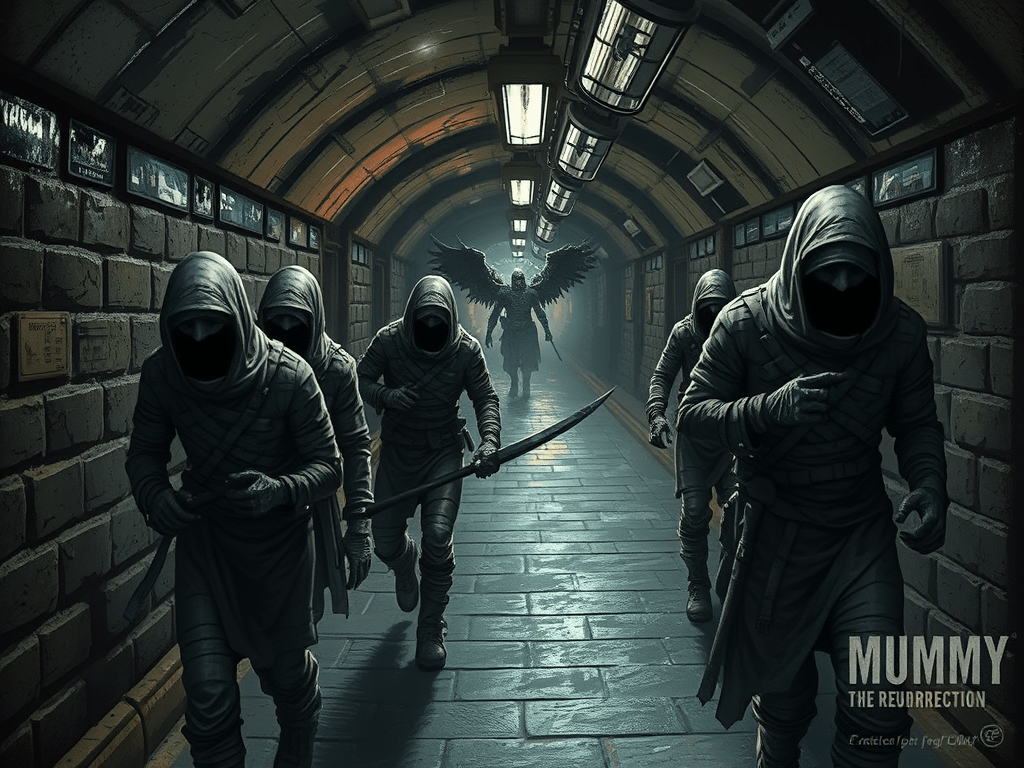
    … but anyway, in tonight’s game of Mummy: the Resurrection, our plucky band of currently-but-not-permanently-deceased immortals set out into the howling storm of the Underworld, on a quest to plunder an old Hierarchy cache and actually have something to hit spectres over the head with. They started out on an unfortunate note by botching the spells they tried to use to make themselves better suited to venture out, but they eventually got to the subway station where the cache is supposed to be hidden.

    There, they milled about aimlessly for a bit before they were suddenly attacked by a weird dude with wings and a scythe who they resolutely managed to avoid fighting, to the point where I was starting to feel like he was mostly just swinging and missing. But apparently I managed to make him seem interesting enough that now they all want to get to know him, if they can just get him to stop trying to kill them first. I guess that’s a win.

    I feel like I wasn’t entirely on the ball with this session. I was running on very little sleep, and as a result I kept defaulting to my preparations instead of improvising in ways that might make the game more interesting. In retrospect, I think I should have brought in a little more action, or at least some plot twists, the moment I saw that the players weren’t sure how to proceed. Oh well.

    I’m also starting to wonder if I’m making magic too hard in this game. So much of it relies on lengthy rituals and boosting some spells by other spells, and by the rules players only have something like a 60-70% chance to pull them off at the first try. I feel like it might make things unnecessarily hard when they have to succeed at a long string of rolls before they can get the effect they want. I don’t know, maybe I should make some spells and rituals succeed automatically as long as you invest the time and resources in them? Something to consider, I guess.