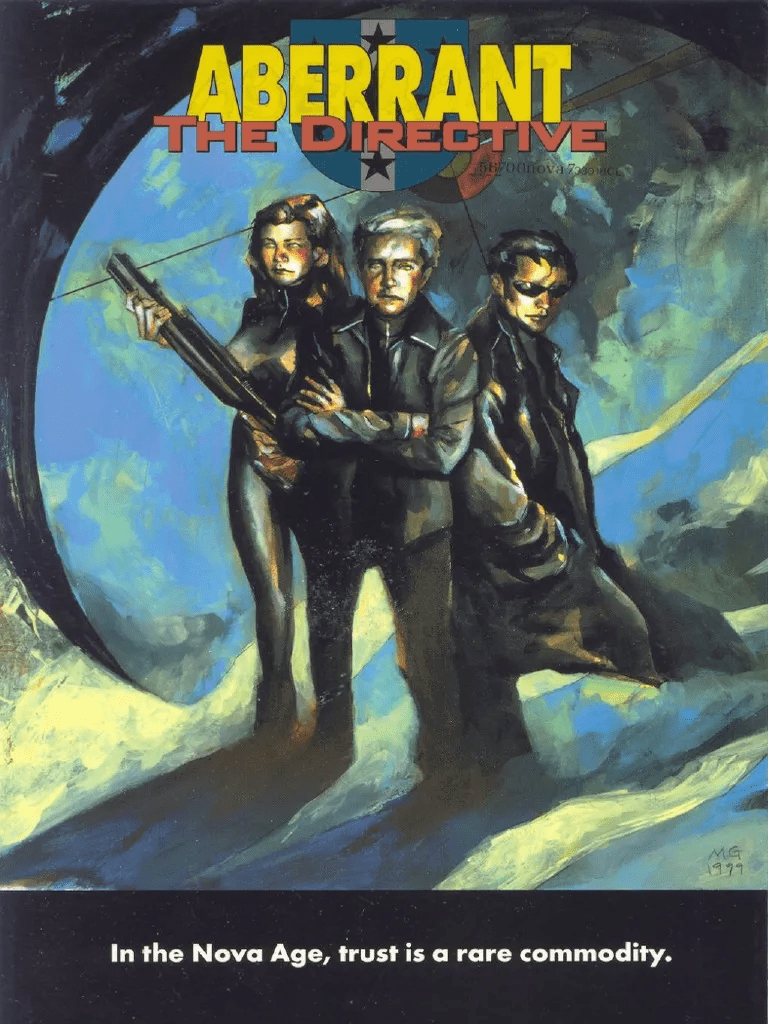
Our stalwart progress through the Aberrant canon has now passed the halfway point, and it’s time for the Directive to finally get their time in the sun. So far, what we’ve been told about the Directive has mostly consisted of, “eh, they exist, I guess.” Can their own book elevate them?
Spoiler: No… no, not really.
We start out with a piece of fiction that is at least halfway decent. Apparently one of the characters introduced in the Teragen book has taken hostages on the subway. This person is a pretty weird character who goes by “Sloppy Joe,” because he’s got no skin and all his organs are kept in place by an invisible forcefield. See what I mean about the Teragen getting all the memorable NPCs? Anyway, the Directive is on the case, but their operation is complicated because it’s not enough for them to take Joe down, they have to do it in a way that looks good, so they’re doing a very intricate tap-dancing routine with the media, Project Utopia, and local law enforcement, all of which sort of leaves their actual hostage negotiator with his ass hanging out and being forced to improvise wildly.
We then get a long and boring description of the Directive’s history, which amounts to the governments of Russia, Japan, America, Britain and Germany all having a problem with the way that people keep flying around and punching mountains these days (funnily enough), so they founded the Directive as a semi-secret international agency to keep an eye on novas. There is one notable event in the Directive’s history where some German media mogul was using his nova powers to enact subtle mind control of his viewers so the Directive exposed him and got him arrested. And… ye gods… This is what he apparently looked like:
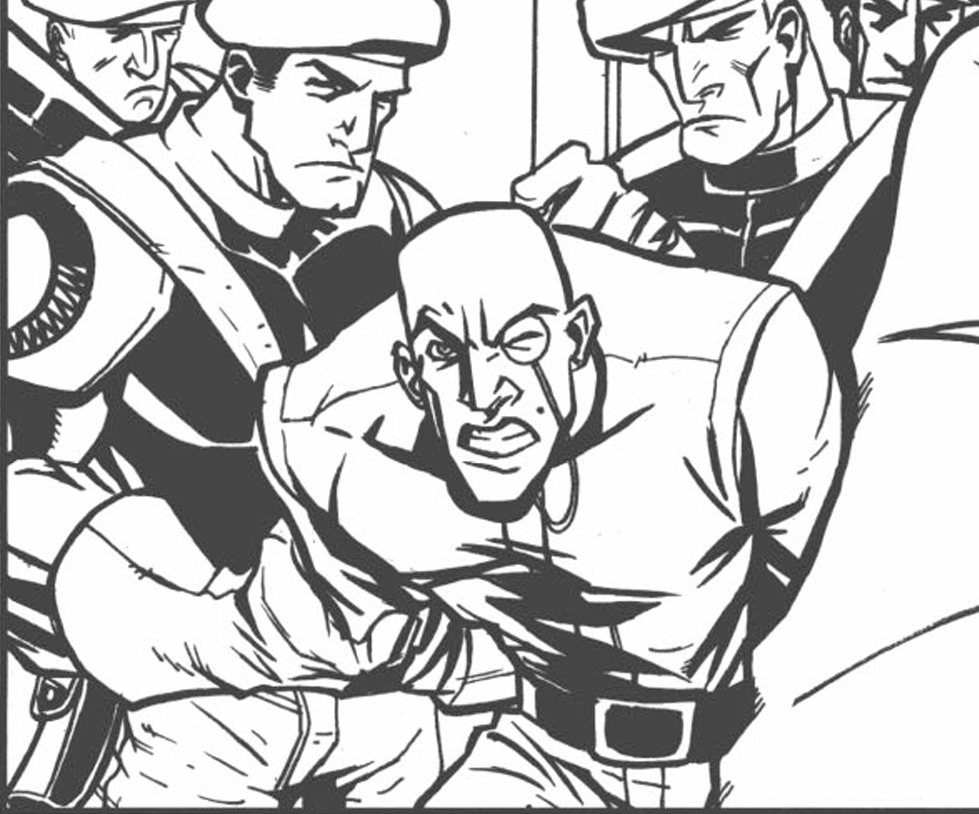
Yes. He was a bald German guy with a monocle. I’m only surprised that he wasn’t noted as being a cat person and having a name like Baron von Evilstein or something. I mean, look, I have no problem with cheesiness and cliches in roleplaying games, in fact I kind of prefer them, but Aberrant is so insistent on its po-faced seriousness that these things feel jarring. Like, this book seems to think that it’s doing John Le Carré, all dark and brooding and full of demoralising realism, but it’s taking all its inspirations from Bond movies.
Anyway, bla bla bla, the Directive is super-secret and different parts of it have no idea what other parts are doing, and each cell operates on its own judgment as much as possible, which at least makes it easier to justify some player agency in a hypothetic Directive campaign. And also create some entertaining clusterfucks where it turns out that the suspicious people the players spent the last three sessions spying on was another Directive cell that was spying on them. Anyway, they are super-skeevy and trying to blackmail, extort, strongarm and generally bully people into serving their ends, preferably without ever revealing that it’s the Directive that’s pulling the strings. They also actively try to portray themselves as a bunch of hapless bumblers so that no one feels threatened by them, which I’m not sure how well it plays with the intro fiction where they were all about polishing their brand until it glowed…
There is a mention of a new group of novas called the Protectors who have apparently buggered off to Antarctica and may be up to no good there. Okay, I approve of that in theory, this game desperately need more distinct nova “teams,” partly to function as antagonists and partly to provide examples of what a group of players could conceivably get up to and accomplish. Not sure what to do with the Protectors in their current form, though.
There is a section on spy gear that’s actually pretty good, including things like “quantum-inert” fast-solidifying foam that can’t be affected by nova powers, so if a nova gets stuck in it she’ll probably stay stuck There is a drug that can be injected through a dart and causes a nova’s powers to go completely haywire – not just shut down, but start erupting all over the place. There is gas that causes eufiber (which is the wonder-material that a lot of novas use for their costumes because it adjusts to their powers – it’s basically the Fantastic Four’s “unstable molecules” uniforms) to freeze solid, so a nova can get stuck in his spandex. All of which feels pretty nicely balanced between being useful enough that the Directive can plausibly incapacitate and imprison novas and not being so overpowered that said imprisoned novas can’t conceivably bust free again.
All in all, though, this book was a chore to get through. It’s got the same problem most of these books have, which is that no one seems to have been enthusiastic about the subject matter. Just like the Project Utopia book made me feel like the writers were apathetic at best about superheroes, this book makes me feel like the writers had no particular interest in secret agents. The Teragen book, as mentioned, is the one that actually got some love, because the writers were absolutely interested in cool, edgy posthuman monsters. And this book gets hit harder than most, because even those superpowers who do make it in have to be kept low-key and unflashy, so you don’t even have the occasional relief of seeing people shoot laserbeams at each other.
Next up is the book on elites, which I can reveal is a bit better but still suffers from many of the same flaws.


Leave a comment